Bluerides – Blue Rides - Book Liveaboards worldwideOCEAN ADVENTURES
River CruisesRiversNature & WildlifeOur Promise
River CruisesRiversNature & WildlifeOur PromiseSign In

River destinations

  • River destinations
  • Amazon
  • Danube
  • Rhine
  • Mekong
  • Nile

Ships & departures

  • River Cruise Search
  • Deals

Nature & Wildlife

  • Nature & Wildlife

Travel support

  • Our Promise
  • Contact

Contact

Get in Touch

Get in touch anytime, we're happy to help you find the right trip or sort out any question.

EmailWrite us, we usually reply within a few hours.
contact@bluerides.com
WhatsAppChat with us on WhatsApp, Mon–Fri 10:00–16:00 (CET).
Start WhatsApp Chat
PhoneCall us, we're happy to help.
Free call, Mon–Fri 10 AM – 8 PM (CET).
Europe+49 800 1144 990USA+1 888 557 7735UK+44 800 707 4152Australia+61 2 8599 6113Canada+1 888 557 7735
Which river journey is yours?Answer 8 quick questions and find the river cruise that fits you.
8 questions, 1 minute·Plus Gift
Secure Payment MethodsYour payments are fully secured with AES-256 encryption.
Powered byStripeWiseAMEXPayGoogle PaySEPABank
Imprint·Terms & Conditions·Privacy Policy·About·Contact·Liability Waiver·Affiliate Program·Cruise·
Visit us here

© 2026 Blue Rides. All rights reserved.·

Bluerides – Blue Rides - Book Liveaboards worldwideOCEAN ADVENTURES
River CruisesRiversNature & WildlifeOur Promise
River CruisesRiversNature & WildlifeOur PromiseSign In
Little cormorant in wetland habitat — Mekong, River Cruises wildlife
Home›River Cruises›River Wildlife›Little Cormorant

Little CormorantMicrocarbo nigerWhere and when to see them

Previous speciesLesser adjutantNext speciesLittle Egret

Little Cormorant at a glance

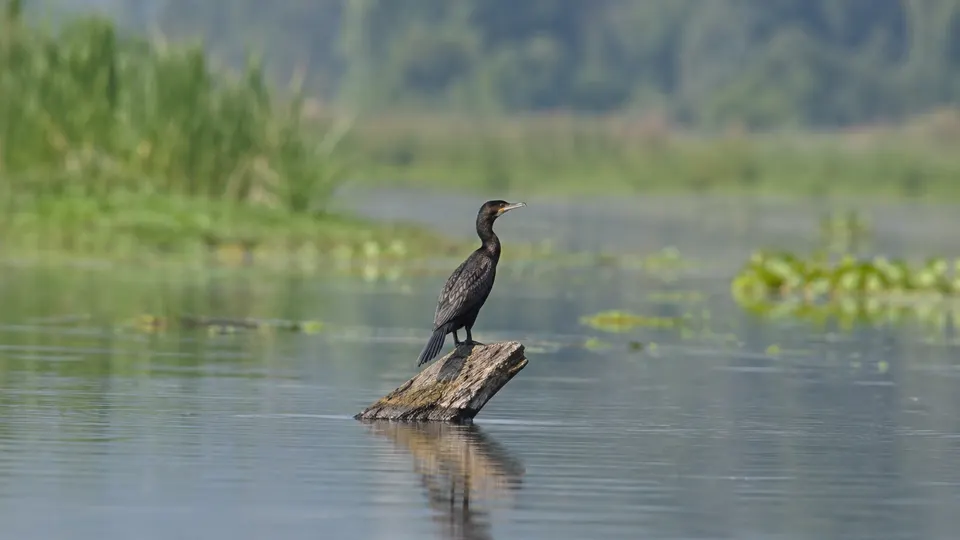
The Little Cormorant is a compact, dark fishing bird whose low swimming posture can make it surprisingly inconspicuous among flooded trees. Its hooked bill and upright resting stance identify it as a cormorant rather than a duck. The registered Mekong association is specifically Tra Su flooded forest, reached on an optional excursion from Chau Doc, Vietnam. It does not mean that every ship sailing the Mekong will pass a dependable gathering. The provincial forestry authority publishes a BirdLife/IEBR checklist naming Little Cormorant at this forest. That is useful occurrence evidence, but not a current count or an annual viewing timetable. eBird supplies the identification account used here. BirdLife lists the species as Least Concern in its 2024 assessment: https://datazone.birdlife.org/species/factsheet/little-cormorant-microcarbo-niger. Source: https://ebird.org/species/litcor1

Behaviour & reproduction

Size
Body length not verified.
Weight
Body mass not verified.
Lifespan
Species-specific lifespan not verified.
Status
Least Concern; BirdLife reports a 2024 global assessment.

Swimming birds hold most of their bodies below the surface, with head and neck raised, before diving suddenly. A fishing individual can disappear behind floating plants and emerge somewhere quite different. Resting birds often stand upright with their wings spread, a posture that can be easier to notice than feeding activity. eBird describes solitary birds and small groups around inland waters. A published study at Kallampara in Kerala observed solitary foraging in shallow water and repeated dives within feeding bouts. That research supports the description of a pursuit-diving bird, but its dive timings and tidal relationships should not be transferred to Tra Su. Watch complete sequences of surfacing, diving and resting rather than assuming that every perched bird is about to hunt. Study: https://doi.org/10.11609/jott.o1819.1382-6.

Top wildlife locations

Mekong river landscape — River Cruises wildlife habitat

Mekong

Vietnam Mekong delta: Tra Su flooded forest, optional shore excursion from Chau Doc (not main-channel deck wildlife) Viewing context: Official 2016 BirdLife/IEBR survey checklist, not a current abundance claim. Boat/boardwalk/tower viewing; crakes, Watercock and coucals elusive. Migrant kingfishers, pond herons and waders seasonal.
Explore river cruises

Destinations describe the species' habitat, not guaranteed cruise stops. Some animals require an optional inland excursion or are found in restricted reserves.

Fun facts about the Little Cormorant

  • Its bill has a hooked tip.
  • The head profile is noticeably flattened.
  • Breeding birds develop white head plumes.
  • It swims with its body low in the water.
  • Fish are caught underwater.
  • Resting birds often spread their wings.
  • Tra Su has an official historical record.

Best time to see the Little Cormorant

The official Tra Su checklist establishes that Little Cormorant has been recorded at the forest. Its publication date in 2016 is not a statement that April, or any other month, is a recurring peak. BirdLife's broad description of the species as non-migratory likewise cannot establish a year-round schedule for an individual wetland. A monthly local occurrence series or an explicit recurring viewing calendar was not verified, so the Mekong location has an empty months array. Plan the excursion around authorised access and current advice from forest staff, rather than a calendar borrowed from another Asian population. Ask whether cormorants are currently using visitor-visible water and resting places. A report of birds on a recent visit may help practical planning, but it still does not prove repeatable seasonal availability.

Little Cormorant: season matrix by destination

Highlighted months reflect the stated local evidence, not guaranteed encounters. Neutral months mean no verified monthly viewing window, not absence. Observation records and recommended viewing windows are distinct.

Mekong

The official Tra Su checklist documents historical occurrence, not monthly recurrence. Its April 2016 publication date does not establish an April viewing season.

JanFebMarAprMayJunJulAugSepOctNovDec
Explore river cruises

Where the Little Cormorant lives

Inland water bodies provide the broad setting described by eBird, while the cruise-linked location is a flooded forest rather than an exposed stretch of the Mekong main channel. At Tra Su, the relevant viewing landscape includes water between trees and places where a bird can rest above the surface. Open patches make swimming birds easier to follow; dense cover can conceal them even when they are nearby. The checklist does not map occupied trees, feeding pools or colony boundaries, so these should not be advertised as known features of a particular visitor route. Boat, boardwalk and tower observations are the registered options. Treat each as a different view of the forest-water interface, not evidence that birds use every part of the site equally.

What the Little Cormorant eats

Fish are the prey explicitly described in eBird's Little Cormorant account. Birds dive from the surface and pursue their food underwater, then return to breathe. The hooked tip of the bill is an important feature of the capture apparatus, although a distant observer may see only the swallow rather than the fish itself. The Kallampara research describes opportunistic foraging and a relationship with local tidal availability. It does not identify a Tra Su menu, and no local prey-species list or dietary proportions were verified for this profile. In particular, a fishing bird in the forest should not automatically be described as competing with commercial fisheries. Do not supply bait to make feeding visible; patient observation of natural dives is more informative and avoids changing the behaviour being described.

Species at a glance

Common name
Little Cormorant
Scientific name
Microcarbo niger
Animal group
Birds
Size
Body length not verified.
Weight
Body mass not verified.
Lifespan
Species-specific lifespan not verified.
Status
Least Concern; BirdLife reports a 2024 global assessment.
Identification
eBird describes an all-black, ducklike waterbird with a distinctly flattened head and a sharply hooked bill tip. Breeding adults show white plumes along the sides of the head. The combination of a low swimming body and an upright neck differs from the more buoyant profile of many ducks. Indian Cormorant is an important comparison: Little Cormorant is smaller, has a stouter bill and a flatter head, whereas Indian Cormorant's head is rounder. Apparent size is difficult to judge on an isolated bird, especially from a tower, so use several features together. An Oriental Darter has a much more needlelike, straight bill and exceptionally slender neck. Poor light can hide these differences; a dark waterbird lacking a clear head view should remain unidentified.

Little Cormorant: frequently asked questions

Where can I see the Little Cormorant?
Mekong. From a small boat, scan ahead along open water and then check exposed branches for upright dark shapes. On a boardwalk, stop where vegetation allows an unobstructed view rather than walking into the wetland edge. Binoculars help reveal the hooked bill and head profile without forcing an approach. If a swimming bird dives, remain still and search the surrounding surface instead of moving directly towards its last position. Watch resting birds without asking the boat operator to flush them into flight. A tower gives wider context but may not supply enough detail for a firm identification. The excursion is to Tra Su from Chau Doc, so visitors should arrange the appropriate shore activity rather than expecting equivalent views from the cruise vessel's deck.
When is the best time to see the Little Cormorant?
The official Tra Su checklist establishes that Little Cormorant has been recorded at the forest. Its publication date in 2016 is not a statement that April, or any other month, is a recurring peak. BirdLife's broad description of the species as non-migratory likewise cannot establish a year-round schedule for an individual wetland. A monthly local occurrence series or an explicit recurring viewing calendar was not verified, so the Mekong location has an empty months array. Plan the excursion around authorised access and current advice from forest staff, rather than a calendar borrowed from another Asian population. Ask whether cormorants are currently using visitor-visible water and resting places. A report of birds on a recent visit may help practical planning, but it still does not prove repeatable seasonal availability.
How big does the Little Cormorant get?
Body length not verified.. Adult weight: Body mass not verified.. Size varies with age, sex and population.
How should I behave around the Little Cormorant?
From a small boat, scan ahead along open water and then check exposed branches for upright dark shapes. On a boardwalk, stop where vegetation allows an unobstructed view rather than walking into the wetland edge. Binoculars help reveal the hooked bill and head profile without forcing an approach. If a swimming bird dives, remain still and search the surrounding surface instead of moving directly towards its last position. Watch resting birds without asking the boat operator to flush them into flight. A tower gives wider context but may not supply enough detail for a firm identification. The excursion is to Tra Su from Chau Doc, so visitors should arrange the appropriate shore activity rather than expecting equivalent views from the cruise vessel's deck.
What does the Little Cormorant eat?
Fish are the prey explicitly described in eBird's Little Cormorant account. Birds dive from the surface and pursue their food underwater, then return to breathe. The hooked tip of the bill is an important feature of the capture apparatus, although a distant observer may see only the swallow rather than the fish itself. The Kallampara research describes opportunistic foraging and a relationship with local tidal availability. It does not identify a Tra Su menu, and no local prey-species list or dietary proportions were verified for this profile. In particular, a fishing bird in the forest should not automatically be described as competing with commercial fisheries. Do not supply bait to make feeding visible; patient observation of natural dives is more informative and avoids changing the behaviour being described.
Are wildlife sightings guaranteed on a river cruise?
No. Animals move freely and routes, weather, access restrictions and local conditions influence every outing. Confirm the actual itinerary and shore program before booking.

Compare wildlife in the same destinations

Explore other birds recorded in these destinations. Similar surroundings do not mean the animals share the same habits or viewing season.

Species comparison by animal group and destination
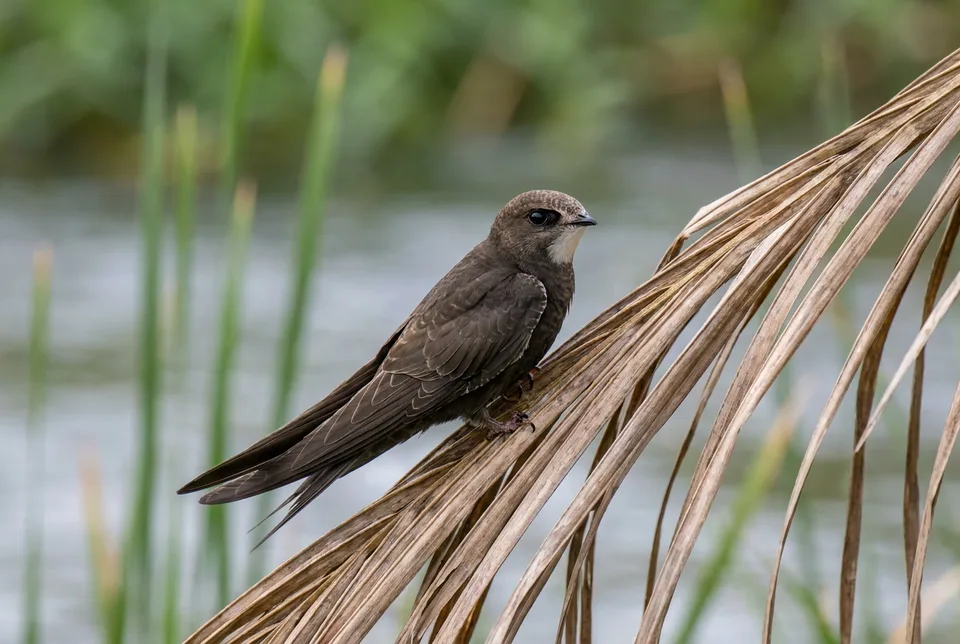
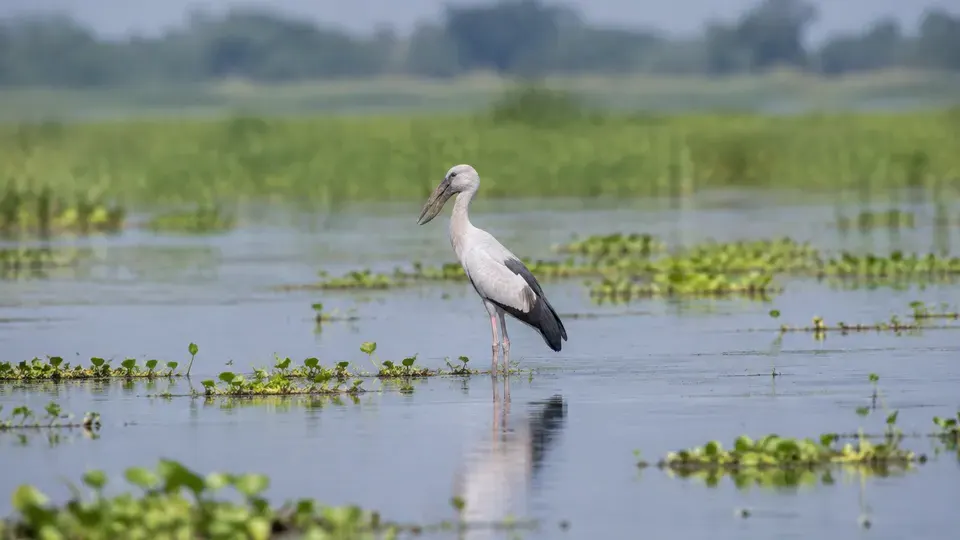
Little cormorant in wetland habitat — Mekong, River Cruises wildlifeLittle CormorantAsian openbill in wetland habitat — Mekong, River Cruises wildlifeAsian OpenbillAsian Palm Swift in wetland habitat — Mekong, River Cruises wildlifeAsian Palm Swift
Animal groupBirdsAnimal groupBirdsAnimal groupBirds
DestinationsMekongDestinationsMekongDestinationsMekong
Scientific name
Microcarbo niger
Scientific name
Scientific name
Previous speciesLesser adjutantNext speciesLittle Egret
All river wildlife
On this page
  • 01About
  • 02Behaviour & reproduction
  • 03Top wildlife locations
  • 04Fun facts
  • 05Best season
  • 06Season matrix by destination
  • 07Habitat
  • 08Diet
  • 09Species at a glance
  • 10Questions & answers
  • 11Compare

Find your river cruise

Plan your trip

Find your next river journey

Compare destinations, shore programs and dates with the animals and habitats you would love to see.

  • Daily shore excursions
  • Responsible wildlife watching
  • Boutique river ships
Explore river cruises