Bluerides – Blue Rides - Book dykkecruise over hele verdenOCEAN ADVENTURES
River CruisesRiversNature & WildlifeOur Promise
River CruisesRiversNature & WildlifeOur PromiseLogg inn

Elvereisemål

  • Elvereisemål
  • Amazonas
  • Donau
  • Rhinen
  • Mekong
  • Nilen

Skip og avganger

  • Søk etter elvecruise
  • Tilbud

Natur og dyreliv

  • Natur og dyreliv

Reisehjelp

  • Vårt løfte
  • Kontakt

Kontakt

Ta kontakt

Ta gjerne kontakt, vi hjelper deg med å finne riktig tur eller svare på spørsmål.

E-postSkriv til oss, vi svarer som regel i løpet av få timer.
contact@bluerides.com
WhatsAppSend oss en melding på WhatsApp, man–fre 10:00–16:00 (CET).
Start WhatsApp-chat
TelefonRing oss, vi hjelper deg gjerne.
Gratis samtale, man–fre 10:00–20:00 (CET).
Europa+49 800 1144 990USA+1 888 557 7735Storbritannia+44 800 707 4152Australia+61 2 8599 6113Canada+1 888 557 7735
Which river journey is yours?Answer 8 quick questions and find the river cruise that fits you.
8 questions, 1 minute·Plus Gift
Sikre betalingsmåterDine betalinger er fullt sikret med AES-256-kryptering.
Drevet avStripeWiseAMEXPayGoogle PaySEPABank
Kolofon·Vilkår og betingelser·Personvern·Om oss·Kontakt·Ansvarsfraskrivelse·Partnerprogram·Cruise·
Besøk oss her

© 2026 Blue Rides. Alle rettigheter reservert.·

Bluerides – Blue Rides - Book dykkecruise over hele verdenOCEAN ADVENTURES
River CruisesRiversNature & WildlifeOur Promise
River CruisesRiversNature & WildlifeOur PromiseLogg inn
Dunlin i våtmark — Seine, dyreliv på elvecruise
Hjem›River Cruises›River Wildlife›Dunlin

DunlinCalidris alpinaHvor og når du kan se dem

Previous speciesDouble-crested CormorantNext speciesEurasian Beaver

Dunlin at a glance

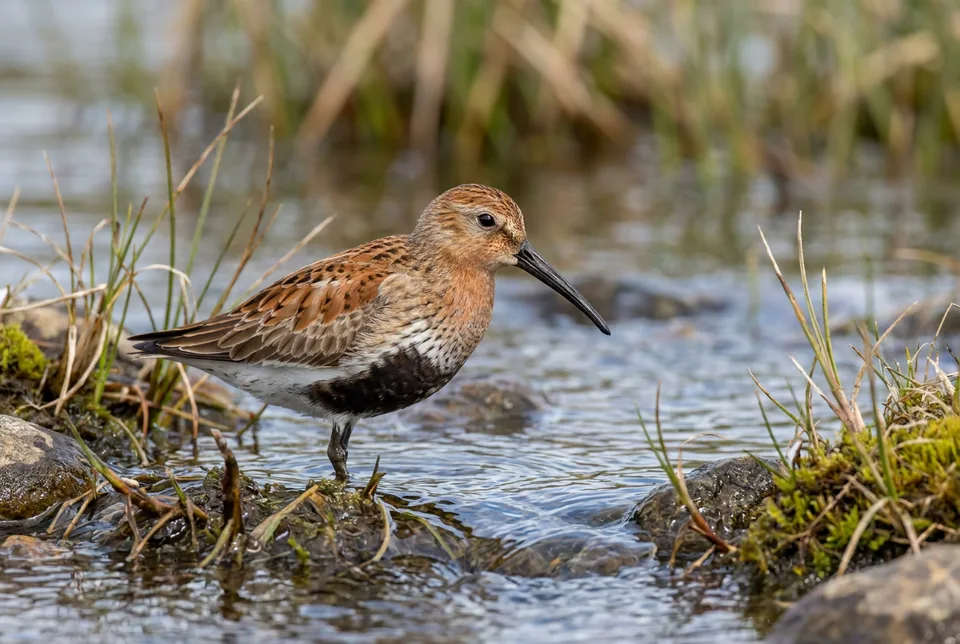
The Dunlin is a small coastal wader with dark legs and a slightly downcurved bill. In breeding plumage its black belly is conspicuous; outside that plumage, grey and brown upperparts contrast with a pale underside. It belongs to the sandpiper family and is especially associated with exposed tidal feeding grounds. Large winter flocks can be an impressive sight, but their presence depends on suitable feeding and resting habitat. A river cruise can provide access to a nearby viewing area, but the boat itinerary and the wildlife site are not interchangeable. Check whether the relevant shore visit is actually included and whether there is time for patient observation. Historical occurrence is useful context rather than a promise of a present-day encounter. A local guide can help interpret recent records and distinguish similar birds without pushing closer to them.

Behaviour & reproduction

Size
Species-specific size not verified in the consulted source text
Weight
Species-specific weight not verified
Lifespan
Species-specific lifespan not verified
Status
See sourced assessment

Winter feeding flocks sometimes number thousands. As the tide rises, birds leave submerged feeding grounds and gather on nearby shorelines, saltmarsh or fields. The RSPB describes winter populations in Britain being augmented by birds breeding farther north. Some arriving birds still retain black belly feathers from breeding plumage. These movements explain changing plumage and flock composition, rather than establishing a migration timetable for the Seine. Watch a complete sequence from a settled position: movement, pauses, reactions to neighbours and changes as water conditions alter. A brief view can be enough to appreciate the bird without interrupting its activity. Do not provoke flight for a photograph or use calls to attract attention. Keep other visitors informed if birds are resting nearby, and allow space for natural feeding and retreat. Local disturbance and tide can change what is visible during a single visit.

Top wildlife locations

Elvelandskap Seine — leveområde på elvecruise

Seine

OPTIONAL ESTUARY: ZPS Estuaire et marais de la Basse-Seine, lower tidal Seine toward Honfleur/Le Havre; includes protected flats beyond port, not Paris freshwater reaches. Winter; tidal mudflats. Tide-dependent; use authorized shore viewpoints; monitoring evidence 2015–2018, not a current sighting promise.
Explore river cruises

Destinations describe the species' habitat, not guaranteed cruise stops. Some animals require an optional inland excursion or are found in restricted reserves.

Fun facts about the Dunlin

  • The breeding plumage includes a black belly patch.
  • The bill curves slightly downwards.
  • The legs are black.
  • Winter flocks can contain thousands of birds.
  • High tides move birds off feeding mudflats.
  • Saltmarsh and shorelines can provide resting habitat.
  • A white wing stripe is visible in flight.
  • Winter birds can retain traces of breeding belly feathers.
  • The RSPB reports a British Red List designation dating from 2021.

Best time to see the Dunlin

The registered Seine evidence identifies winter use of the lower estuary. It comes from the protected-site monitoring context covering 2015–2018, not a current sighting bulletin. Winter is therefore a useful qualitative description, not a precise booking calendar. British late-summer-to-spring occurrence described by the RSPB must not be treated as a Seine-specific monthly forecast. Tide, disturbance and access are important alongside the broad season. For planning, ask about recent observations at the exact site, the tide during the available visit and any seasonal closures. A comfortable sailing season is not automatically the best wildlife season. Protected-site records describe occurrence within a particular geographical and historical context, not daily visibility. Keep flexibility in the shore programme and accept that an appropriate visit can still produce no sighting. Local weather, water conditions and disturbance may matter as much as the broad time of year.

Dunlin: season matrix by destination

Highlighted months reflect the stated local evidence, not guaranteed encounters. Neutral months mean no verified monthly viewing window, not absence. Observation records and recommended viewing windows are distinct.

Seine

janfebmaraprmaijunjulaugsepoktnovdes
Explore river cruises

Where the Dunlin lives

Tidal mudflats are the central habitat in this river profile. Falling water exposes feeding surfaces, while the high tide pushes birds towards safer resting places. Bays, estuaries, saltmarsh edges and adjacent shorelines form a connected habitat system. A broad river channel without exposed feeding ground is not equivalent habitat. On the Seine, the relevant setting is the lower tidal estuary and its protected flats, rather than the freshwater banks through Paris. Suitable habitat is only one part of a responsible visit. Access must also be lawful, safe and compatible with reserve management. Remain on established paths or in public observation facilities, and do not cross mud, dunes or protected shore to shorten the viewing distance. Consult current access notices before setting out. The presence of a wetland on a map does not show whether it is open, visible from a cruise deck or suitable for an unsupervised landing.

What the Dunlin eats

Dunlins seek small animal prey in wet coastal sediments, using their bills to explore feeding surfaces. Mud exposed by a falling tide provides access to food that is unavailable beneath deeper water. The RSPB specifically links the species to feeding areas uncovered as the tide recedes. Feeding flocks should be watched without being displaced: time spent repeatedly flying away from people is time unavailable for feeding or resting. Natural food availability changes with water levels, exposed surfaces and local conditions. Feeding observations are most useful when made quietly over time rather than by following one bird along the shore. Never bait wildlife or throw food from the deck, a path or a hide. If a bird repeatedly stops feeding to watch your group, increase the distance. A telescope or long lens can show natural searching behaviour while leaving the bird access to its preferred feeding and resting space.

Species at a glance

Common name
Dunlin
Scientific name
Calidris alpina
Animal group
Birds
Size
Species-specific size not verified in the consulted source text
Weight
Species-specific weight not verified
Lifespan
Species-specific lifespan not verified
Status
RSPB reports UK Red List status from 2021; this is a UK assessment, not a verified current global category.
Identification
Look for a small wader with black legs, a dark, slightly downcurved bill and a seasonal change in belly pattern. The breeding adult has a striking black belly patch; nonbreeding birds look much plainer, with brown-grey upperparts and pale underparts. Aves de Portugal also describes a white wing stripe and a white rump divided by a dark central stripe in flight. Use several features together rather than relying only on size. Use binoculars first to locate the bird, then a telescope if available to check fine details from the permitted viewpoint. Compare more than one feature, because posture, distance and strong reflections can change its apparent shape and colour. A photograph is helpful only if obtained without disturbing the bird. If important marks remain hidden, leave the identification provisional rather than moving into protected habitat or flushing the bird to force a clearer view.

Dunlin: frequently asked questions

Where can I see the Dunlin?
Seine. Use authorized shore viewpoints, public paths and hides, with binoculars or a telescope rather than a close approach. OPTIONAL ESTUARY: ZPS Estuaire et marais de la Basse-Seine, lower tidal Seine toward Honfleur/Le Havre; includes protected flats beyond port, not Paris freshwater reaches. Winter; tidal mudflats. Tide-dependent; use authorized shore viewpoints; monitoring evidence 2015–2018, not a current sighting promise. Keep away from nests and roosts, never feed birds and avoid playback. Check current access restrictions before the visit; a cruise stop does not automatically include permission to enter a reserve. Allow birds to move and feed naturally, and do not follow them across exposed flats. Sightings are not guaranteed. Plan enough time to watch quietly, respect any temporary closure and ask local staff which public viewpoint currently offers a suitable view without disturbing wildlife.
When is the best time to see the Dunlin?
The registered Seine evidence identifies winter use of the lower estuary. It comes from the protected-site monitoring context covering 2015–2018, not a current sighting bulletin. Winter is therefore a useful qualitative description, not a precise booking calendar. British late-summer-to-spring occurrence described by the RSPB must not be treated as a Seine-specific monthly forecast. Tide, disturbance and access are important alongside the broad season. For planning, ask about recent observations at the exact site, the tide during the available visit and any seasonal closures. A comfortable sailing season is not automatically the best wildlife season. Protected-site records describe occurrence within a particular geographical and historical context, not daily visibility. Keep flexibility in the shore programme and accept that an appropriate visit can still produce no sighting. Local weather, water conditions and disturbance may matter as much as the broad time of year.
How big does the Dunlin get?
Species-specific size not verified in the consulted source text. Adult weight: Species-specific weight not verified. Size varies with age, sex and population.
How should I behave around the Dunlin?
Use authorized shore viewpoints, public paths and hides, with binoculars or a telescope rather than a close approach. OPTIONAL ESTUARY: ZPS Estuaire et marais de la Basse-Seine, lower tidal Seine toward Honfleur/Le Havre; includes protected flats beyond port, not Paris freshwater reaches. Winter; tidal mudflats. Tide-dependent; use authorized shore viewpoints; monitoring evidence 2015–2018, not a current sighting promise. Keep away from nests and roosts, never feed birds and avoid playback. Check current access restrictions before the visit; a cruise stop does not automatically include permission to enter a reserve. Allow birds to move and feed naturally, and do not follow them across exposed flats. Sightings are not guaranteed. Plan enough time to watch quietly, respect any temporary closure and ask local staff which public viewpoint currently offers a suitable view without disturbing wildlife.
What does the Dunlin eat?
Dunlins seek small animal prey in wet coastal sediments, using their bills to explore feeding surfaces. Mud exposed by a falling tide provides access to food that is unavailable beneath deeper water. The RSPB specifically links the species to feeding areas uncovered as the tide recedes. Feeding flocks should be watched without being displaced: time spent repeatedly flying away from people is time unavailable for feeding or resting. Natural food availability changes with water levels, exposed surfaces and local conditions. Feeding observations are most useful when made quietly over time rather than by following one bird along the shore. Never bait wildlife or throw food from the deck, a path or a hide. If a bird repeatedly stops feeding to watch your group, increase the distance. A telescope or long lens can show natural searching behaviour while leaving the bird access to its preferred feeding and resting space.
Are wildlife sightings guaranteed on a river cruise?
No. Animals move freely and routes, weather, access restrictions and local conditions influence every outing. Confirm the actual itinerary and shore program before booking.

Compare wildlife in the same destinations

Explore other birds recorded in these destinations. Similar surroundings do not mean the animals share the same habits or viewing season.

Species comparison by animal group and destination
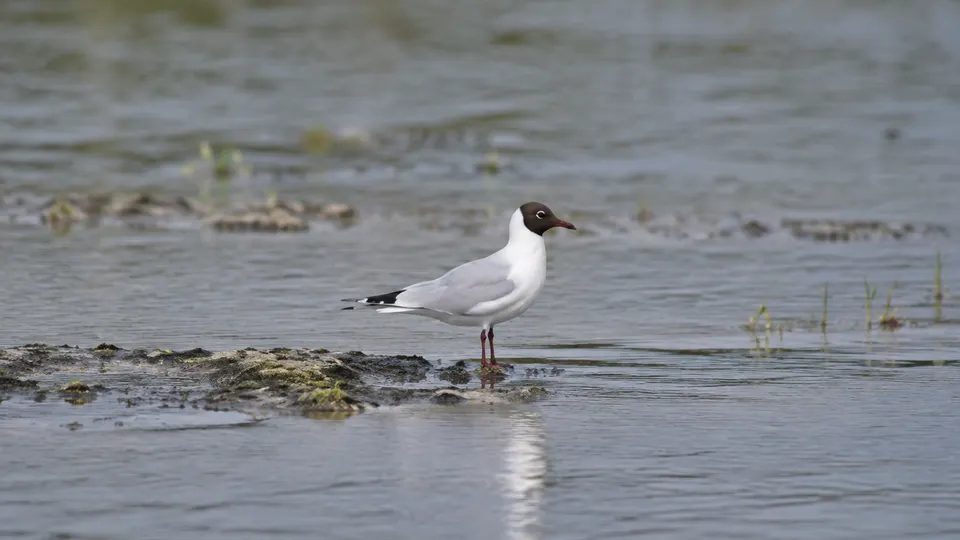
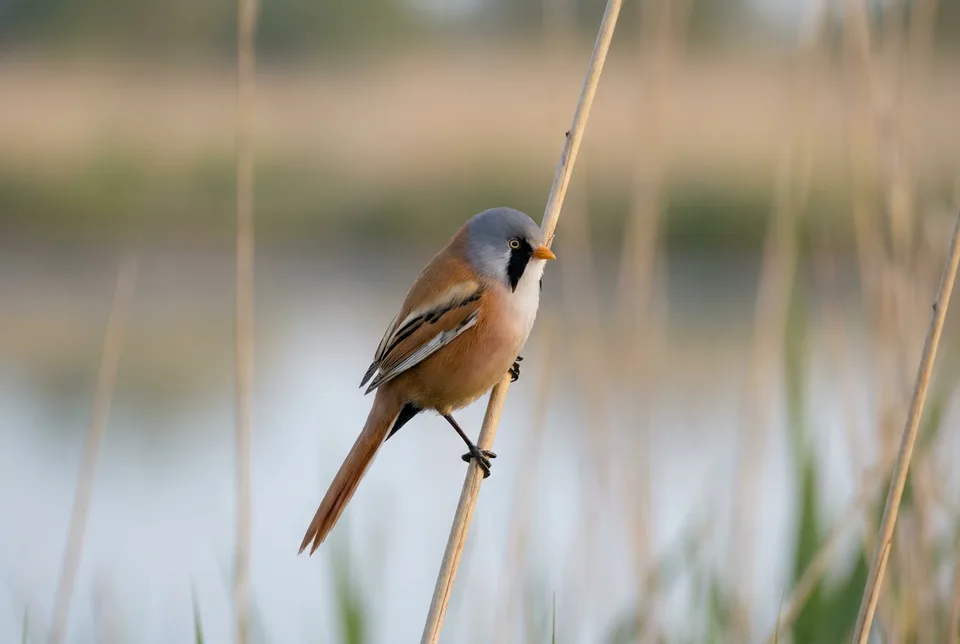
Dunlin i våtmark — Seine, dyreliv på elvecruiseDunlinBearded Reedling i våtmark — Seine, dyreliv på elvecruiseBearded ReedlingBlack-headed gull i våtmark — Saone, Seine, Nile, Douro, dyreliv på elvecruiseBlack-Headed Gull
Animal groupBirdsAnimal groupBirdsAnimal groupBirds
DestinationsSeineDestinationsSeineDestinationsSaone, Seine, Nile, Douro
Scientific name
Calidris alpina

Calidris alpina

Scientific name
Scientific name
Size
Species-specific size not verified in the consulted source text
Size
Size
Weight
Species-specific weight not verified
Weight
Weight
Lifespan
Species-specific lifespan not verified
Lifespan
Lifespan
Status
See sourced assessment
Status
Status
Identification
Look for a small wader with black legs, a dark, slightly downcurved bill and a seasonal change in belly pattern.

Look for a small wader with black legs, a dark, slightly downcurved bill and a seasonal change in belly pattern. The breeding adult has a striking black belly patch; nonbreeding birds look much plainer, with brown-grey upperparts and pale underparts. Aves de Portugal also describes a white wing stripe and a white rump divided by a dark central stripe in flight. Use several features together rather than relying only on size. Use binoculars first to locate the bird, then a telescope if available to check fine details from the permitted viewpoint. Compare more than one feature, because posture, distance and strong reflections can change its apparent shape and colour. A photograph is helpful only if obtained without disturbing the bird. If important marks remain hidden, leave the identification provisional rather than moving into protected habitat or flushing the bird to force a clearer view.

Identification
Identification
Habitat
Tidal mudflats are the central habitat in this river profile.

Tidal mudflats are the central habitat in this river profile. Falling water exposes feeding surfaces, while the high tide pushes birds towards safer resting places. Bays, estuaries, saltmarsh edges and adjacent shorelines form a connected habitat system. A broad river channel without exposed feeding ground is not equivalent habitat. On the Seine, the relevant setting is the lower tidal estuary and its protected flats, rather than the freshwater banks through Paris. Suitable habitat is only one part of a responsible visit. Access must also be lawful, safe and compatible with reserve management. Remain on established paths or in public observation facilities, and do not cross mud, dunes or protected shore to shorten the viewing distance. Consult current access notices before setting out. The presence of a wetland on a map does not show whether it is open, visible from a cruise deck or suitable for an unsupervised landing.

Habitat
Habitat
Diet
Dunlins seek small animal prey in wet coastal sediments, using their bills to explore feeding surfaces.

Dunlins seek small animal prey in wet coastal sediments, using their bills to explore feeding surfaces. Mud exposed by a falling tide provides access to food that is unavailable beneath deeper water. The RSPB specifically links the species to feeding areas uncovered as the tide recedes. Feeding flocks should be watched without being displaced: time spent repeatedly flying away from people is time unavailable for feeding or resting. Natural food availability changes with water levels, exposed surfaces and local conditions. Feeding observations are most useful when made quietly over time rather than by following one bird along the shore. Never bait wildlife or throw food from the deck, a path or a hide. If a bird repeatedly stops feeding to watch your group, increase the distance. A telescope or long lens can show natural searching behaviour while leaving the bird access to its preferred feeding and resting space.

Diet
Diet
Best season
The registered Seine evidence identifies winter use of the lower estuary.

The registered Seine evidence identifies winter use of the lower estuary. It comes from the protected-site monitoring context covering 2015–2018, not a current sighting bulletin. Winter is therefore a useful qualitative description, not a precise booking calendar. British late-summer-to-spring occurrence described by the RSPB must not be treated as a Seine-specific monthly forecast. Tide, disturbance and access are important alongside the broad season. For planning, ask about recent observations at the exact site, the tide during the available visit and any seasonal closures. A comfortable sailing season is not automatically the best wildlife season. Protected-site records describe occurrence within a particular geographical and historical context, not daily visibility. Keep flexibility in the shore programme and accept that an appropriate visit can still produce no sighting. Local weather, water conditions and disturbance may matter as much as the broad time of year.

Best season
Best season
Season matrix by destination
SeineNo verified monthly viewing evidence

No verified monthly viewing evidence

Season matrix by destinationSeason matrix by destination
Previous speciesDouble-crested CormorantNext speciesEurasian Beaver
All river wildlife
On this page
  • 01About
  • 02Behaviour & reproduction
  • 03Top wildlife locations
  • 04Fun facts
  • 05Best season
  • 06Season matrix by destination
  • 07Habitat
  • 08Diet
  • 09Species at a glance
  • 10Questions & answers
  • 11Compare

Find your river cruise

Planlegg reisen

Find your next river journey

Compare destinations, shore programs and dates with the animals and habitats you would love to see.

  • Daily shore excursions
  • Responsible wildlife watching
  • Boutique river ships
Explore river cruises