Double-crested CormorantNannopterum auritumWaar en wanneer je ze kunt zien
Double-crested Cormorant at a glance
The double-crested cormorant is a familiar fish-eating bird along New England's coast and inland waters. Adults appear mostly dark, with orange facial skin and a long neck that gives them a distinctive upright resting posture. The two small breeding crests are often far less obvious than the name suggests. Colonies can occupy rocky islands, trees or artificial structures, and seasonal gatherings may include both local breeders and migrants.
Behaviour & reproduction
Size
70–90 cm long; 114–123 cm wingspan
Weight
1.2–2.5 kg
Lifespan
Not reliably established
Status
Least Concern
Cormorants pursue fish beneath the surface and often emerge some distance from where they disappeared. Between feeding bouts they rest on rocks, pilings or branches, sometimes spreading their wings. They nest colonially, bringing sticks and other material to platforms on the ground or in trees. Birds commute in lines or loose formations, and communal roosts can grow large outside the nesting season when suitable feeding and resting areas coincide. Cormorants pursue fish beneath the surface and often emerge some distance from where they disappeared. Between feeding bouts they rest on rocks, pilings or branches, sometimes spreading their wings. They nest colonially, bringing sticks and other material to platforms on the ground or in trees. Birds commute in lines or loose formations, and communal roosts can grow large outside the nesting season when suitable feeding and resting areas coincide. This 'wing spreading' behavior is thought to aid in drying their wettable feathers, which lack the full waterproofing oils found in many other aquatic birds. Their social nature extends beyond breeding, as they often forage in coordinated groups to herd fish.
Top wildlife locations
Columbia
Riparian and refuge habitats along the Columbia in the Pacific Northwest. Wildlife access depends on the river reach and the actual shore program.
Destinations describe the species' habitat, not guaranteed cruise stops. Some animals require an optional inland excursion or are found in restricted reserves.
Fun facts about the Double-crested Cormorant
The paired head crests are seasonal and can be surprisingly inconspicuous.
Its eyes are vivid blue-green at close range.
All four toes are connected by webbing.
Young birds often have a noticeably paler throat and breast than adults.
Best time to see the Double-crested Cormorant
Wildlife opportunities depend on the river reach, water levels and species. River-specific viewing months have not been confirmed; general species seasons are not a local sighting forecast.
Double-crested Cormorant: season matrix by destination
Travel and observation windows vary by region. Highlighted months are an orientation for planning, not confirmed sightings or a guarantee of access.
Columbia
No river-specific wildlife calendar is confirmed. Check the actual river reach, local conditions and excursion access with your operator.
Sheltered bays, estuaries, rocky coasts, rivers and lakes all support this adaptable species. Safe roosts and nearby fish are more important than a single shoreline type. New England's harbours and coastal islands provide particularly accessible opportunities for distant land-based observation. Sheltered bays, estuaries, rocky coasts, rivers and lakes all support this adaptable species. Safe roosts and nearby fish are more important than a single shoreline type. New England's harbours and coastal islands provide particularly accessible opportunities for distant land-based observation. Inland populations also utilize large rivers, reservoirs, and human-made impoundments. The species often nests on small, predator-free islands or in dead trees standing in water.
What the Double-crested Cormorant eats
Fish dominate, especially small or moderately sized species that can be swallowed whole. The prey mix changes among marine, estuarine and freshwater habitats. Crustaceans and other aquatic animals are occasional additions, and feeding is usually opportunistic rather than narrowly specialized. Fish dominate, especially small or moderately sized species that can be swallowed whole. The prey mix changes among marine, estuarine and freshwater habitats. Crustaceans and other aquatic animals are occasional additions, and feeding is usually opportunistic rather than narrowly specialized. Their diet typically consists of bottom-dwelling fish species, which they efficiently capture by diving. Common prey include sculpins, sticklebacks, and juvenile flounders.
Species at a glance
Common name
Double-crested Cormorant
Scientific name
Nannopterum auritum
Animal group
Birds
Size
70–90 cm long; 114–123 cm wingspan
Weight
1.2–2.5 kg
Lifespan
Not reliably established
Status
Least Concern
Identification
Its orange throat skin and smaller build distinguish it from the great cormorant, whose adult breeding plumage includes a prominent white throat border and thigh patch. Its orange throat skin and smaller build distinguish it from the great cormorant, whose adult breeding plumage includes a prominent white throat border and thigh patch. Adults are entirely black with a slight green or purplish sheen on their plumage. Juveniles typically show brownish plumage on their back and head, with a paler chest and belly that gradually darkens with age.
Columbia, Mississippi. Watch harbour roosts from public paths without approaching occupied rocks or nesting trees. Keep dogs leashed near colonies and avoid disturbing birds drying their plumage. Never touch an entangled bird; contact trained wildlife responders. Watch harbour roosts from public paths without approaching occupied rocks or nesting trees. Keep dogs leashed near colonies and avoid disturbing birds drying their plumage. Never touch an entangled bird; contact trained wildlife responders. From cruise ship decks, scan for birds perched prominently on buoys, navigational markers, or offshore rocks. Their distinctive silhouette is easy to spot against the horizon.
When is the best time to see the Double-crested Cormorant?
Ask about the specific river reach and shore excursion. No local monthly sighting calendar is confirmed.
How big does the Double-crested Cormorant get?
70–90 cm long; 114–123 cm wingspan. Adult weight: 1.2–2.5 kg. Size varies with age, sex and population.
How should I behave around the Double-crested Cormorant?
Watch harbour roosts from public paths without approaching occupied rocks or nesting trees. Keep dogs leashed near colonies and avoid disturbing birds drying their plumage. Never touch an entangled bird; contact trained wildlife responders. Watch harbour roosts from public paths without approaching occupied rocks or nesting trees. Keep dogs leashed near colonies and avoid disturbing birds drying their plumage. Never touch an entangled bird; contact trained wildlife responders. From cruise ship decks, scan for birds perched prominently on buoys, navigational markers, or offshore rocks. Their distinctive silhouette is easy to spot against the horizon.
What does the Double-crested Cormorant eat?
Fish dominate, especially small or moderately sized species that can be swallowed whole. The prey mix changes among marine, estuarine and freshwater habitats. Crustaceans and other aquatic animals are occasional additions, and feeding is usually opportunistic rather than narrowly specialized. Fish dominate, especially small or moderately sized species that can be swallowed whole. The prey mix changes among marine, estuarine and freshwater habitats. Crustaceans and other aquatic animals are occasional additions, and feeding is usually opportunistic rather than narrowly specialized. Their diet typically consists of bottom-dwelling fish species, which they efficiently capture by diving. Common prey include sculpins, sticklebacks, and juvenile flounders.
Are wildlife sightings guaranteed on a river cruise?
No. Animals move freely and routes, weather, access restrictions and local conditions influence every outing. Confirm the actual itinerary and shore program before booking.
Compare wildlife in the same destinations
Explore other birds recorded in these destinations. Similar surroundings do not mean the animals share the same habits or viewing season.
Species comparison by animal group and destination






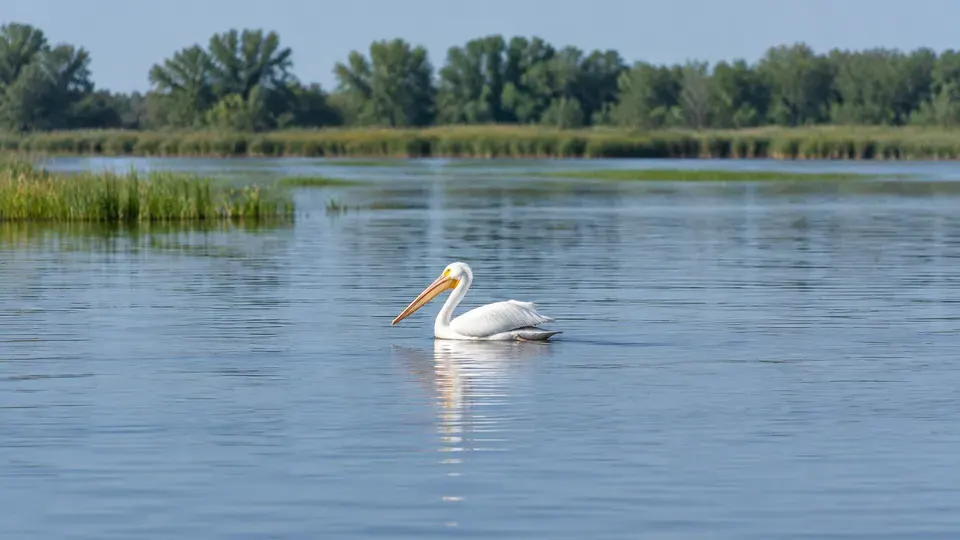 American White Pelican
 Bald Eagle
