Bluerides – Blue Rides - 전 세계 다이빙 리브어보드 예약OCEAN ADVENTURES
River CruisesRiversNature & WildlifeOur Promise
River CruisesRiversNature & WildlifeOur Promise로그인

강 크루즈 여행지

  • 강 크루즈 여행지
  • 아마존강
  • 다뉴브강
  • 라인강
  • 메콩강
  • 나일강

선박 및 출발 일정

  • 리버 크루즈 검색
  • 특가

자연과 야생동물

  • 자연과 야생동물

여행 지원

  • 우리의 약속
  • 문의하기

문의

문의하기

언제든 연락 주세요, 여행 선택부터 궁금한 점까지 기꺼이 도와드립니다.

이메일메일을 보내주세요. 보통 몇 시간 내에 답변드립니다.
contact@bluerides.com
WhatsAppWhatsApp으로 문의 주세요. 월–금 10:00–16:00 (CET).
WhatsApp 채팅 시작
전화전화 주세요, 기꺼이 도와드립니다.
무료 통화, 월–금 10:00–20:00 (CET).
유럽+49 800 1144 990미국+1 888 557 7735영국+44 800 707 4152호주+61 2 8599 6113캐나다+1 888 557 7735
Which river journey is yours?Answer 8 quick questions and find the river cruise that fits you.
8 questions, 1 minute·Plus Gift
안전한 결제 수단결제는 AES-256 암호화로 완벽하게 보호됩니다.
제공StripeWiseAMEXPayGoogle PaySEPABank
각인·이용약관·개인정보 처리방침·회사 소개·문의하기·책임 면제 동의서·제휴 프로그램·Cruise·
여기서 팔로우하세요

© 2026 Blue Rides. 모든 권리 보유.·

Bluerides – Blue Rides - 전 세계 다이빙 리브어보드 예약OCEAN ADVENTURES
River CruisesRiversNature & WildlifeOur Promise
River CruisesRiversNature & WildlifeOur Promise로그인
습지의 Bufflehead — Columbia, Mississippi, 리버 크루즈 야생동물
홈›River Cruises›River Wildlife›Bufflehead

BuffleheadBucephala albeola만날 수 있는 장소와 시기

Previous speciesBrown-throated SlothNext speciesCackling Goose

Bufflehead at a glance

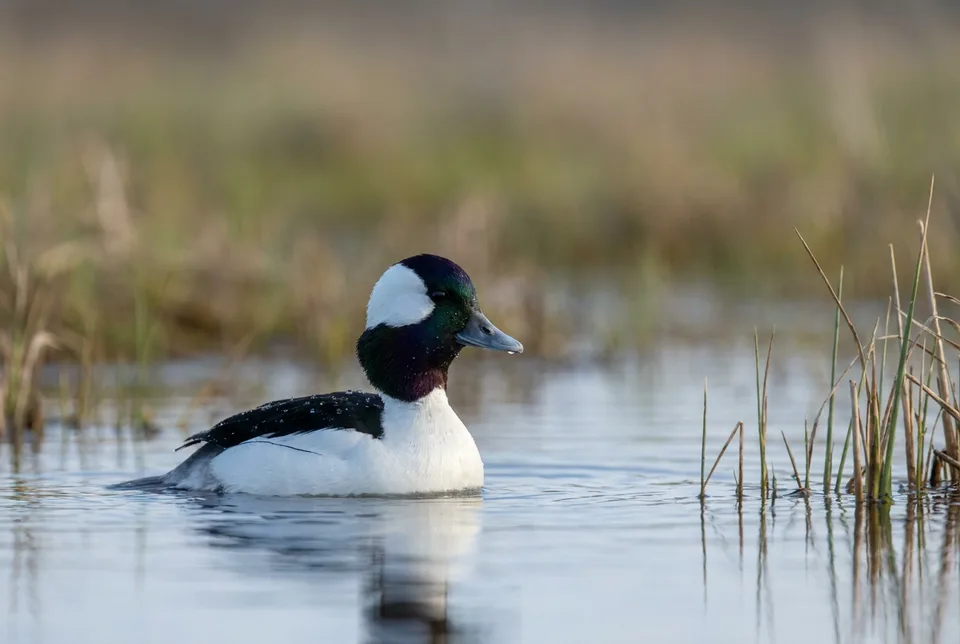
The Bufflehead is a compact diving duck with a disproportionately prominent head and a distinctive contrast between male and female plumages. Males can look strikingly black and white at distance, while females are darker and show a smaller pale cheek patch. Cornell describes an important ecological connection to woodpeckers: nesting cavities are commonly old Northern Flicker holes, small enough to exclude larger cavity-nesting ducks. The registered river associations are Umatilla National Wildlife Refuge and the John Day pool on the Columbia, and the Upper Mississippi River refuge corridor from Wabasha to Rock Island. These are separate local evidence problems. The Upper Mississippi refuge explicitly mentions Bufflehead among mixed diving ducks, while the Columbia registry association requires its own seasonal verification. Neither should be treated as proof of local breeding, and neither allows a national migration map to substitute for reach-specific viewing advice.
Behaviour & reproduction

Size
Not independently verified for this draft
Weight
Not independently verified for this draft
Lifespan
Not independently verified for this draft
Status
See sourced assessment

Bufflehead repeatedly dive while feeding, often disappearing for short intervals and resurfacing nearby. Cornell notes that prey is commonly swallowed underwater, so a visitor may observe a successful feeding sequence without seeing an item in the bill. This distinguishes the experience from watching a heron bring a fish above the surface. Small groups can be easier to follow than large mixed rafts, although mixed flocks provide useful size comparisons. Nesting behaviour is quite different from open-water feeding: the species uses cavities, especially those excavated by Northern Flickers. That dependency belongs to its breeding ecology and does not establish nesting in either registered river reach. Watch voluntary dives and resurfacing without approaching until birds repeatedly abandon feeding. A vessel’s movement can shift a flock even when no obvious alarm call is heard. Allow space around resting and feeding birds and respect refuge closures rather than following them into sheltered areas.

Top wildlife locations

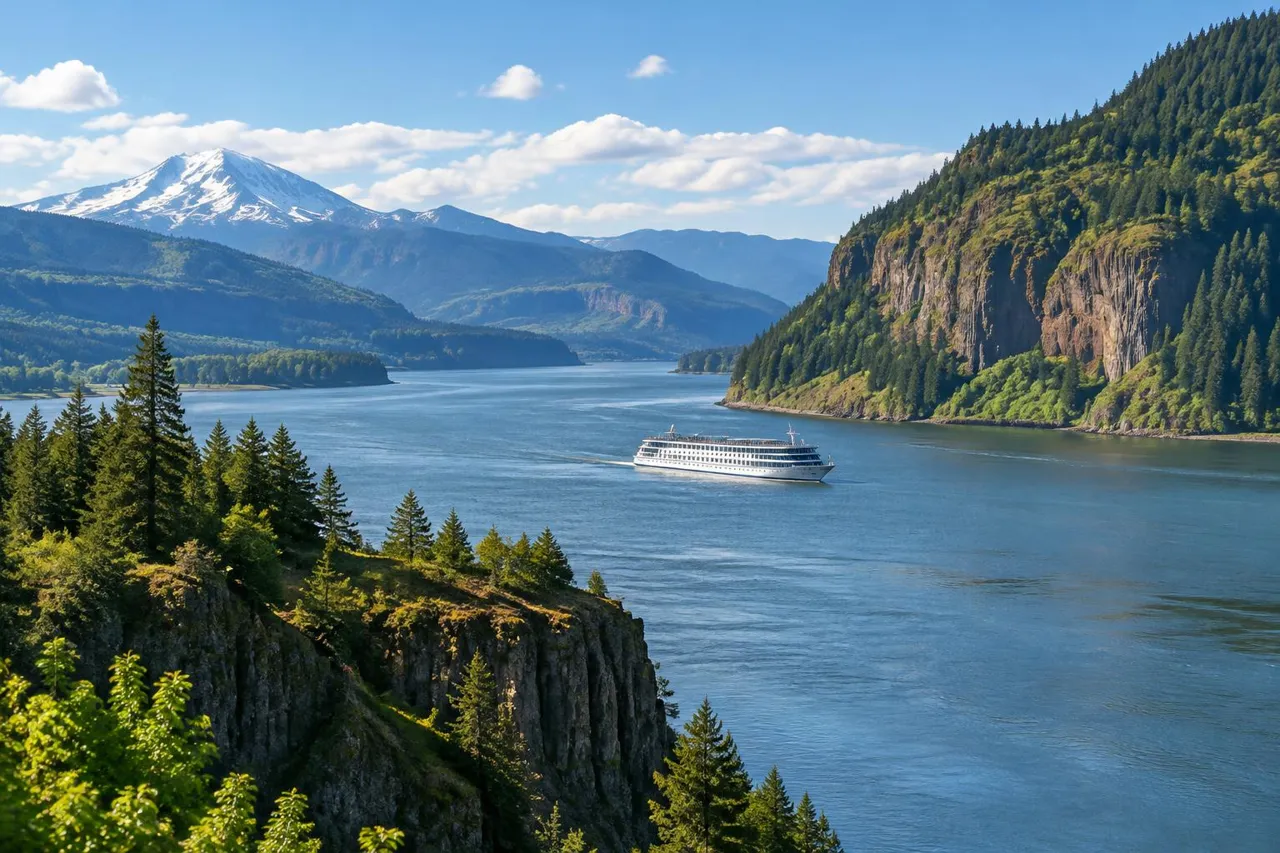
Columbia 강 풍경 — 리버 크루즈 야생동물 서식지

Columbia

Umatilla NWR / John Day pool, Boardman–Irrigon; sheltered refuge waters and sloughs.
Explore river cruises
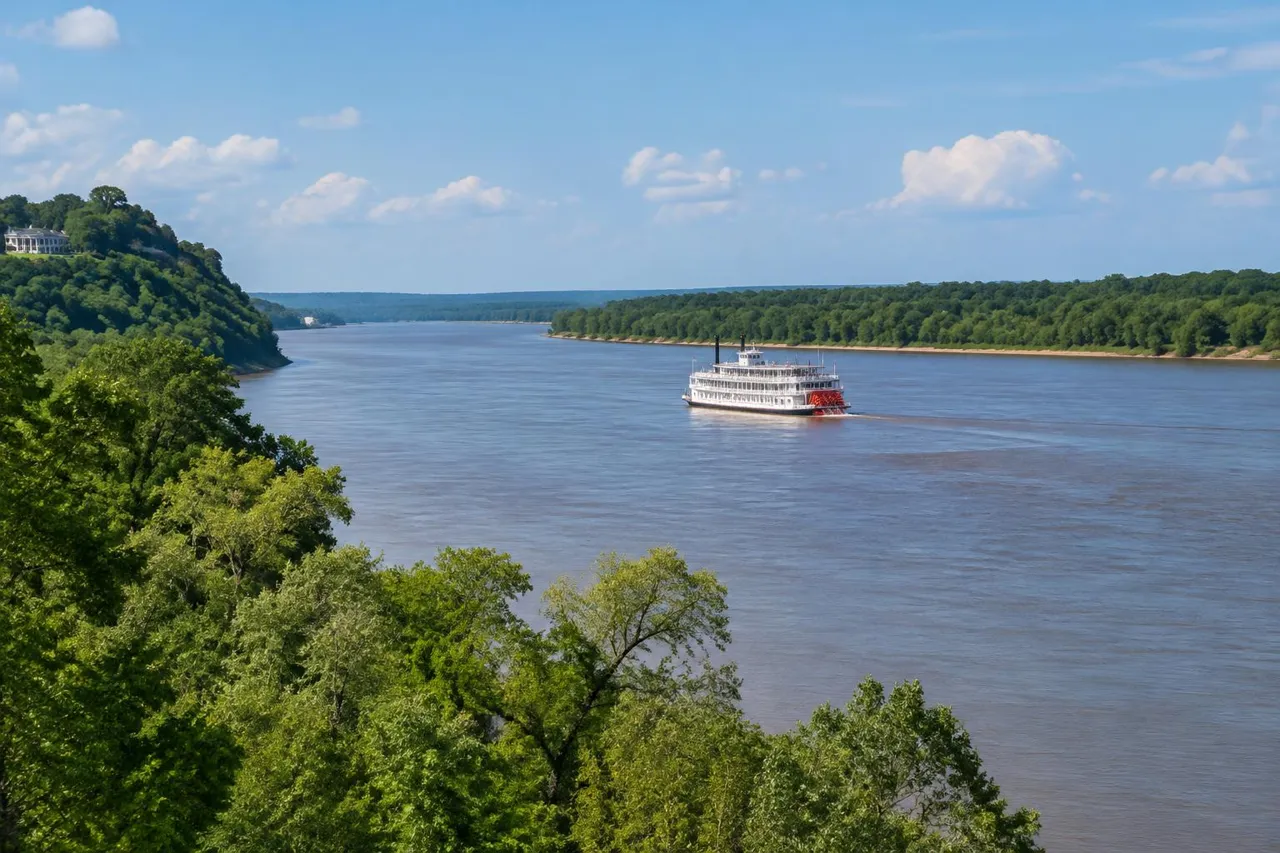
Mississippi 강 풍경 — 리버 크루즈 야생동물 서식지

Mississippi

Upper Mississippi River NWR, Wabasha MN–Rock Island IL; legal overlooks and sheltered backwater viewing.

Explore river cruises

Destinations describe the species' habitat, not guaranteed cruise stops. Some animals require an optional inland excursion or are found in restricted reserves.

Fun facts about the Bufflehead

  • It is a diving duck.
  • Food is often swallowed underwater.
  • Freshwater prey include aquatic insect larvae.
  • Snails and clams can also be eaten.
  • It commonly uses old Northern Flicker nesting holes.
  • Small cavities can exclude larger competing ducks.
  • Males and females have different head patterns.
  • Sheltered inland river bays can provide habitat.
  • The Upper Mississippi source supports a qualitative autumn association, not exact months.

Best time to see the Bufflehead

The Upper Mississippi refuge’s birding guidance names Bufflehead among ducks that may occur together in its autumn diving-duck discussion. This supports a qualitative local autumn association, but the reviewed species passage does not provide a defensible numeric month range, peak date or guarantee for every refuge unit. The Mississippi location therefore retains empty months while explaining the qualitative evidence. For Umatilla, the official refuge page discusses protection of wintering waterfowl generally, not Bufflehead specifically. That general statement cannot establish Bufflehead winter months, and county-wide eBird dates are geographically broader than the registered refuge reach. The Columbia location also retains empty months. Cornell’s range-wide migration descriptions remain background biology rather than a substitute calendar. Ask each refuge separately about recent observations, ice or water conditions and accessible viewpoints. A seasonal tendency is not the same as a precise forecast for a particular cruise departure.

Bufflehead: season matrix by destination

Highlighted months reflect the stated local evidence, not guaranteed encounters. Neutral months mean no verified monthly viewing window, not absence. Observation records and recommended viewing windows are distinct.

Columbia

Registry association retained; species-specific local seasonal passage not independently verified.

1월2월3월4월5월6월7월8월9월10월11월12월
Explore river cruises

Mississippi

FWS names Bufflehead in autumn diving-duck guidance. Exact local viewing months remain unverified.

1월2월3월4월5월6월7월8월9월10월11월12월
Explore river cruises

Where the Bufflehead lives

Cornell describes breeding near ponds and lakes in boreal forest and aspen parkland, with cavity availability important to distribution. Outside breeding contexts, Bufflehead use sheltered coastal water and inland ponds, lakes, impoundments and bays along slow-moving rivers. That inland description is relevant to both registered corridors, but it does not identify an occupied pool. On the Columbia, the registry specifies Umatilla refuge and the John Day pool near Boardman–Irrigon. On the Upper Mississippi, refuge backwaters and accessible river overlooks provide a more precise habitat framework than the river name alone. Exposed fast water is not equivalent to a sheltered feeding bay. Ask refuge staff which legal viewpoints currently overlook suitable water and whether birds are being seen there. Do not infer nesting from proximity to trees, and do not assume every protected island is accessible simply because it appears close to a public boat route.

What the Bufflehead eats

Cornell provides unusually detailed feeding information for this species. Bufflehead dive for aquatic invertebrates, crustaceans and mollusks, and freshwater foods include insect larvae, amphipods, snails and clams. Some plant material is also taken in parts of the annual cycle. Marine prey listed in the same account should not automatically be assigned to birds feeding in Columbia or Upper Mississippi freshwater. The underwater swallowing habit explains why the diet is not easily reconstructed from casual surface observation. A succession of dives demonstrates feeding effort, not the identity or number of prey captured. No reach-specific prey-frequency study was verified here, so local dietary proportions remain unknown. Observe from a stable viewpoint and avoid throwing food or disturbing bottom sediments to attract ducks. The relevant conservation feature is a functioning shallow-water food resource, not a manufactured concentration beside a boat.

Species at a glance

Common name
Bufflehead
Scientific name
Bucephala albeola
Animal group
Birds
Size
Not independently verified for this draft
Weight
Not independently verified for this draft
Lifespan
Not independently verified for this draft
Status
A current formal global conservation assessment was not independently verified for this draft.
Identification
A male Bufflehead combines a compact body with a large-looking head and a conspicuous white head patch contrasting with dark iridescent areas. At distance the iridescence may simply appear black, so the pattern and proportions matter more than seeing a particular sheen. Females are darker overall with a smaller pale cheek patch. Repeated diving is a supporting behavioural clue but is shared with several other ducks. Compare head shape, bill proportions and the placement of pale areas rather than identifying every small black-and-white diver as Bufflehead. Mixed flocks can help establish relative size, though birds at different distances should not be compared directly. Cornell’s cavity-nesting information is not an identification feature for a distant waterbird and should not replace visible characters. If glare obscures the face, wait for a change in angle rather than forcing a confident answer from a silhouette.

Bufflehead: frequently asked questions

Where can I see the Bufflehead?
Columbia, Mississippi. Scan sheltered bays and backwaters carefully, returning to apparently empty patches after a moment because feeding birds may be submerged. A small head appearing among larger ducks can be overlooked if the observer moves on too quickly. Follow one bird through several dives to understand its shape and plumage, but keep enough distance that feeding continues naturally. A telescope is useful for separating females from other compact diving ducks. On the Upper Mississippi, check current refuge recommendations for legal overlooks and mixed diving-duck concentrations. At Umatilla, follow public access rules and island closures; general winter-waterfowl protection is not permission to approach resting flocks. Do not flush birds for wing views or drive a boat through a raft. Record the actual location and date, because a useful refuge-specific observation is stronger evidence than a vague report from the entire Columbia or Mississippi river system.
When is the best time to see the Bufflehead?
The Upper Mississippi refuge’s birding guidance names Bufflehead among ducks that may occur together in its autumn diving-duck discussion. This supports a qualitative local autumn association, but the reviewed species passage does not provide a defensible numeric month range, peak date or guarantee for every refuge unit. The Mississippi location therefore retains empty months while explaining the qualitative evidence. For Umatilla, the official refuge page discusses protection of wintering waterfowl generally, not Bufflehead specifically. That general statement cannot establish Bufflehead winter months, and county-wide eBird dates are geographically broader than the registered refuge reach. The Columbia location also retains empty months. Cornell’s range-wide migration descriptions remain background biology rather than a substitute calendar. Ask each refuge separately about recent observations, ice or water conditions and accessible viewpoints. A seasonal tendency is not the same as a precise forecast for a particular cruise departure.
How big does the Bufflehead get?
Not independently verified for this draft. Adult weight: Not independently verified for this draft. Size varies with age, sex and population.
How should I behave around the Bufflehead?
Scan sheltered bays and backwaters carefully, returning to apparently empty patches after a moment because feeding birds may be submerged. A small head appearing among larger ducks can be overlooked if the observer moves on too quickly. Follow one bird through several dives to understand its shape and plumage, but keep enough distance that feeding continues naturally. A telescope is useful for separating females from other compact diving ducks. On the Upper Mississippi, check current refuge recommendations for legal overlooks and mixed diving-duck concentrations. At Umatilla, follow public access rules and island closures; general winter-waterfowl protection is not permission to approach resting flocks. Do not flush birds for wing views or drive a boat through a raft. Record the actual location and date, because a useful refuge-specific observation is stronger evidence than a vague report from the entire Columbia or Mississippi river system.
What does the Bufflehead eat?
Cornell provides unusually detailed feeding information for this species. Bufflehead dive for aquatic invertebrates, crustaceans and mollusks, and freshwater foods include insect larvae, amphipods, snails and clams. Some plant material is also taken in parts of the annual cycle. Marine prey listed in the same account should not automatically be assigned to birds feeding in Columbia or Upper Mississippi freshwater. The underwater swallowing habit explains why the diet is not easily reconstructed from casual surface observation. A succession of dives demonstrates feeding effort, not the identity or number of prey captured. No reach-specific prey-frequency study was verified here, so local dietary proportions remain unknown. Observe from a stable viewpoint and avoid throwing food or disturbing bottom sediments to attract ducks. The relevant conservation feature is a functioning shallow-water food resource, not a manufactured concentration beside a boat.
Are wildlife sightings guaranteed on a river cruise?
No. Animals move freely and routes, weather, access restrictions and local conditions influence every outing. Confirm the actual itinerary and shore program before booking.

Compare wildlife in the same destinations

Explore other birds recorded in these destinations. Similar surroundings do not mean the animals share the same habits or viewing season.

Species comparison by animal group and destination
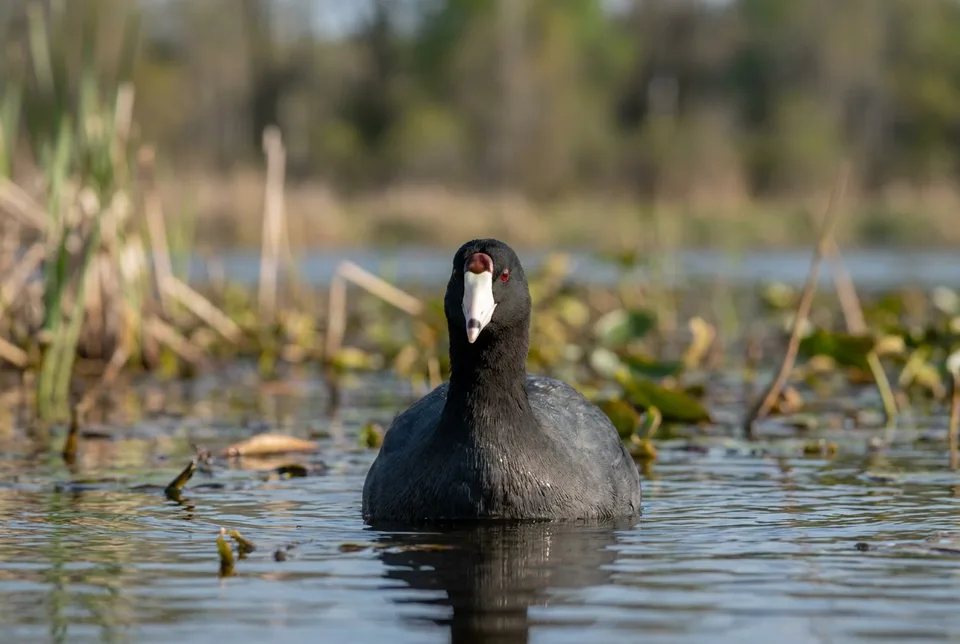
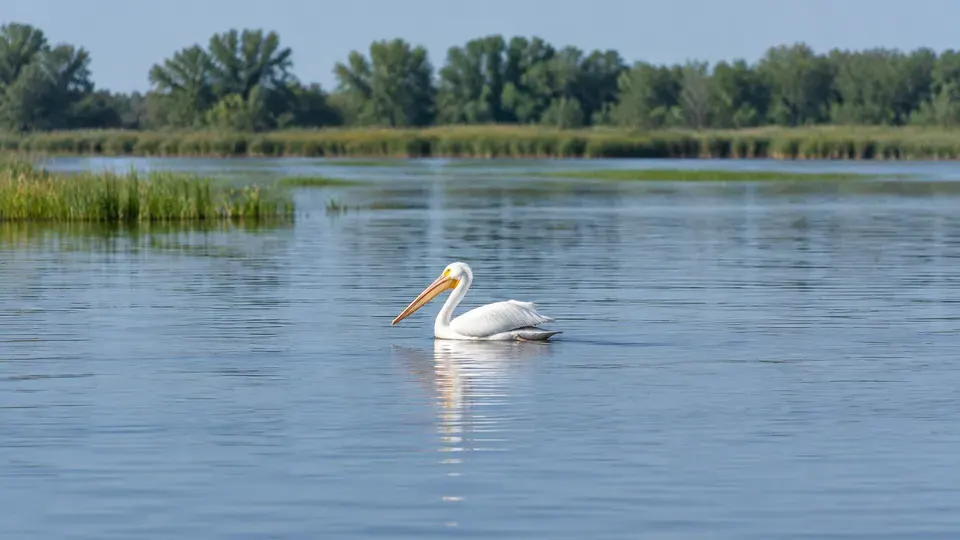
습지의 Bufflehead — Columbia, Mississippi, 리버 크루즈 야생동물Bufflehead습지의 American Coot — Columbia, 리버 크루즈 야생동물American Coot습지의 American white pelican — Columbia, Mississippi, 리버 크루즈 야생동물American White Pelican
Animal groupBirdsAnimal groupBirdsAnimal groupBirds
DestinationsColumbia, MississippiDestinationsColumbiaDestinationsColumbia, Mississippi
Scientific name
Bucephala albeola

Bucephala albeola

Scientific name
Scientific name
Size
Not independently verified for this draft
Size
Size
Weight
Not independently verified for this draft
Weight
Weight
Lifespan
Not independently verified for this draft
Lifespan
Lifespan
Status
See sourced assessment
Status
Status
Identification
A male Bufflehead combines a compact body with a large-looking head and a conspicuous white head patch contrasting with dark iridescent areas.

A male Bufflehead combines a compact body with a large-looking head and a conspicuous white head patch contrasting with dark iridescent areas. At distance the iridescence may simply appear black, so the pattern and proportions matter more than seeing a particular sheen. Females are darker overall with a smaller pale cheek patch. Repeated diving is a supporting behavioural clue but is shared with several other ducks. Compare head shape, bill proportions and the placement of pale areas rather than identifying every small black-and-white diver as Bufflehead. Mixed flocks can help establish relative size, though birds at different distances should not be compared directly. Cornell’s cavity-nesting information is not an identification feature for a distant waterbird and should not replace visible characters. If glare obscures the face, wait for a change in angle rather than forcing a confident answer from a silhouette.

Identification
Identification
Habitat
Cornell describes breeding near ponds and lakes in boreal forest and aspen parkland, with cavity availability important to distribution.

Cornell describes breeding near ponds and lakes in boreal forest and aspen parkland, with cavity availability important to distribution. Outside breeding contexts, Bufflehead use sheltered coastal water and inland ponds, lakes, impoundments and bays along slow-moving rivers. That inland description is relevant to both registered corridors, but it does not identify an occupied pool. On the Columbia, the registry specifies Umatilla refuge and the John Day pool near Boardman–Irrigon. On the Upper Mississippi, refuge backwaters and accessible river overlooks provide a more precise habitat framework than the river name alone. Exposed fast water is not equivalent to a sheltered feeding bay. Ask refuge staff which legal viewpoints currently overlook suitable water and whether birds are being seen there. Do not infer nesting from proximity to trees, and do not assume every protected island is accessible simply because it appears close to a public boat route.

Habitat
Habitat
Diet
Cornell provides unusually detailed feeding information for this species.

Cornell provides unusually detailed feeding information for this species. Bufflehead dive for aquatic invertebrates, crustaceans and mollusks, and freshwater foods include insect larvae, amphipods, snails and clams. Some plant material is also taken in parts of the annual cycle. Marine prey listed in the same account should not automatically be assigned to birds feeding in Columbia or Upper Mississippi freshwater. The underwater swallowing habit explains why the diet is not easily reconstructed from casual surface observation. A succession of dives demonstrates feeding effort, not the identity or number of prey captured. No reach-specific prey-frequency study was verified here, so local dietary proportions remain unknown. Observe from a stable viewpoint and avoid throwing food or disturbing bottom sediments to attract ducks. The relevant conservation feature is a functioning shallow-water food resource, not a manufactured concentration beside a boat.

Diet
Diet
Best season
The Upper Mississippi refuge’s birding guidance names Bufflehead among ducks that may occur together in its autumn diving-duck discussion.

The Upper Mississippi refuge’s birding guidance names Bufflehead among ducks that may occur together in its autumn diving-duck discussion. This supports a qualitative local autumn association, but the reviewed species passage does not provide a defensible numeric month range, peak date or guarantee for every refuge unit. The Mississippi location therefore retains empty months while explaining the qualitative evidence. For Umatilla, the official refuge page discusses protection of wintering waterfowl generally, not Bufflehead specifically. That general statement cannot establish Bufflehead winter months, and county-wide eBird dates are geographically broader than the registered refuge reach. The Columbia location also retains empty months. Cornell’s range-wide migration descriptions remain background biology rather than a substitute calendar. Ask each refuge separately about recent observations, ice or water conditions and accessible viewpoints. A seasonal tendency is not the same as a precise forecast for a particular cruise departure.

Best season
Best season
Season matrix by destination
ColumbiaNo verified monthly viewing evidence

Registry association retained; species-specific local seasonal passage not independently verified.

MississippiNo verified monthly viewing evidence

FWS names Bufflehead in autumn diving-duck guidance. Exact local viewing months remain unverified.

Season matrix by destinationSeason matrix by destination
Previous speciesBrown-throated SlothNext speciesCackling Goose
All river wildlife
On this page
  • 01About
  • 02Behaviour & reproduction
  • 03Top wildlife locations
  • 04Fun facts
  • 05Best season
  • 06Season matrix by destination
  • 07Habitat
  • 08Diet
  • 09Species at a glance
  • 10Questions & answers
  • 11Compare

Find your river cruise

여행을 계획하세요

Find your next river journey

Compare destinations, shore programs and dates with the animals and habitats you would love to see.

  • Daily shore excursions
  • Responsible wildlife watching
  • Boutique river ships
Explore river cruises