Bluerides – Blue Rides - Prenota crociere subacquee in tutto il mondoOCEAN ADVENTURES
Crociere fluvialiFiumiNatura e fauna selvaticaLa nostra promessa
Crociere fluvialiFiumiNatura e fauna selvaticaLa nostra promessaAccedi

Destinazioni fluviali

  • Destinazioni fluviali
  • Amazon
  • Danube
  • Rhine
  • Mekong
  • Nile

Navi e partenze

  • Ricerca crociere fluviali
  • Offerte

Natura e fauna selvatica

  • Natura e fauna selvatica

Assistenza di viaggio

  • La nostra promessa
  • Contatti

Contatti

Contattaci

Scrivici quando vuoi: ti aiutiamo a scegliere il viaggio o a risolvere ogni dubbio.

E-mailScrivici: di solito rispondiamo in poche ore.
contact@bluerides.com
WhatsAppScrivici su WhatsApp, lun–ven 10:00–16:00 (CET).
Avvia la chat WhatsApp
TelefonoChiamaci, saremo felici di aiutarti.
Chiamata gratuita, lun–ven 10:00–20:00 (CET).
Europa+49 800 1144 990USA+1 888 557 7735Regno Unito+44 800 707 4152Australia+61 2 8599 6113Canada+1 888 557 7735
Which river journey is yours?Answer 8 quick questions and find the river cruise that fits you.
8 questions, 1 minute·Plus Gift
Metodi di pagamento sicuriI tuoi pagamenti sono completamente protetti con crittografia AES-256.
Realizzato daStripeWiseAMEXPayGoogle PaySEPABank
Impronta·Termini e condizioni·Informativa sulla privacy·Chi siamo·Contatto·Esonero di Responsabilità·Programma di affiliazione·Cruise·
Seguici qui

© 2026 Blue Rides. Tutti i diritti riservati.·

Bluerides – Blue Rides - Prenota crociere subacquee in tutto il mondoOCEAN ADVENTURES
Crociere fluvialiFiumiNatura e fauna selvaticaLa nostra promessa
Crociere fluvialiFiumiNatura e fauna selvaticaLa nostra promessaAccedi
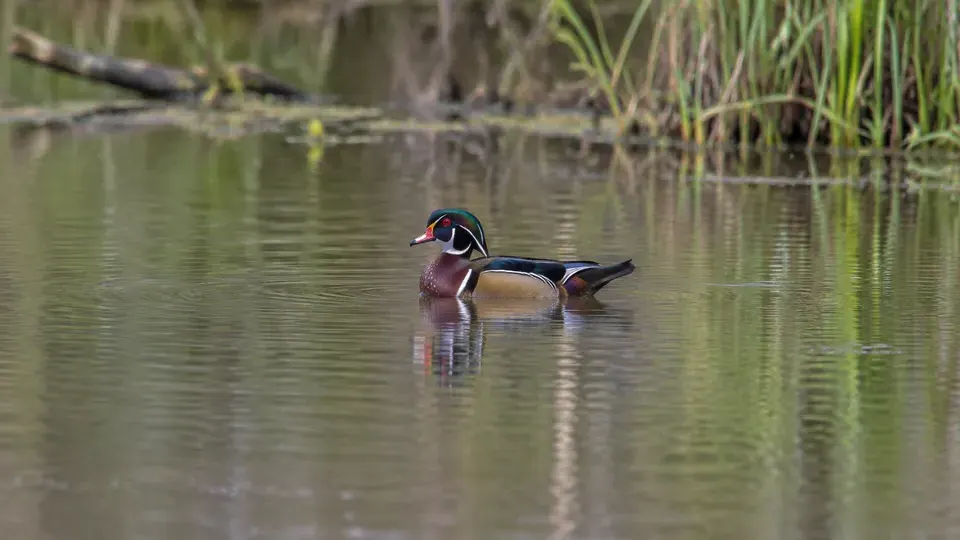
Wood duck in una zona umida — Columbia, Mississippi, fauna delle crociere fluviali
Home›Crociere fluviali›Fauna fluviale›Wood Duck

Wood DuckAix sponsaDove e quando osservarli

Specie precedenteWire-tailed ManakinSpecie successivaWood Sandpiper

Wood Duck in sintesi

The Wood Duck is a North American freshwater duck whose unusual combination of tree nesting, strong claws and elaborate male plumage sets it apart from the familiar open-water diving ducks. It belongs to the genus Aix, alongside the Mandarin Duck, but a colourful drake should still be identified from its complete pattern rather than colour alone. The male has a crested green head, red eye and bill, chestnut breast and contrasting pale markings; the female has a grey-brown head with a conspicuous white eye surround. Both have a boxy head and relatively long tail. For this river registry the relevant populations are those recorded at Umatilla National Wildlife Refuge on the Columbia and in the Upper Mississippi River refuge. Those are specific wetland associations, not evidence that every navigable stretch supports equal numbers. Sheltered edges and floodplain woodland are more informative search targets than the centre of a busy shipping channel.
Comportamento e riproduzione

Dimensioni
47–54 cm body length
Peso
454–862 g
Longevità
Species-specific wild lifespan not independently verified
Stato
See sourced assessment

Wood Ducks spend much of their time swimming or walking near cover, but they also perch on branches and use their claws to grip bark. Nesting females depend on existing tree cavities or suitable nest boxes: they cannot excavate a cavity for themselves. Pairs inspect potential sites, with the male waiting outside while the female investigates. Females line the cavity with down and incubate the eggs; the young hatch with down and are able to leave the nest soon afterwards. Ducklings jump from the entrance and follow the female towards water, rather than being carried there. Females sometimes lay eggs in another Wood Duck's nest, producing unusually large combined clutches. This is not evidence that one female can successfully rear every egg in such a nest. In flight, a high-held head, narrow neck and long tail help distinguish the species. Alarmed birds can disappear rapidly into flooded woodland, so repeated flushing is particularly unhelpful.

Migliori località per la fauna

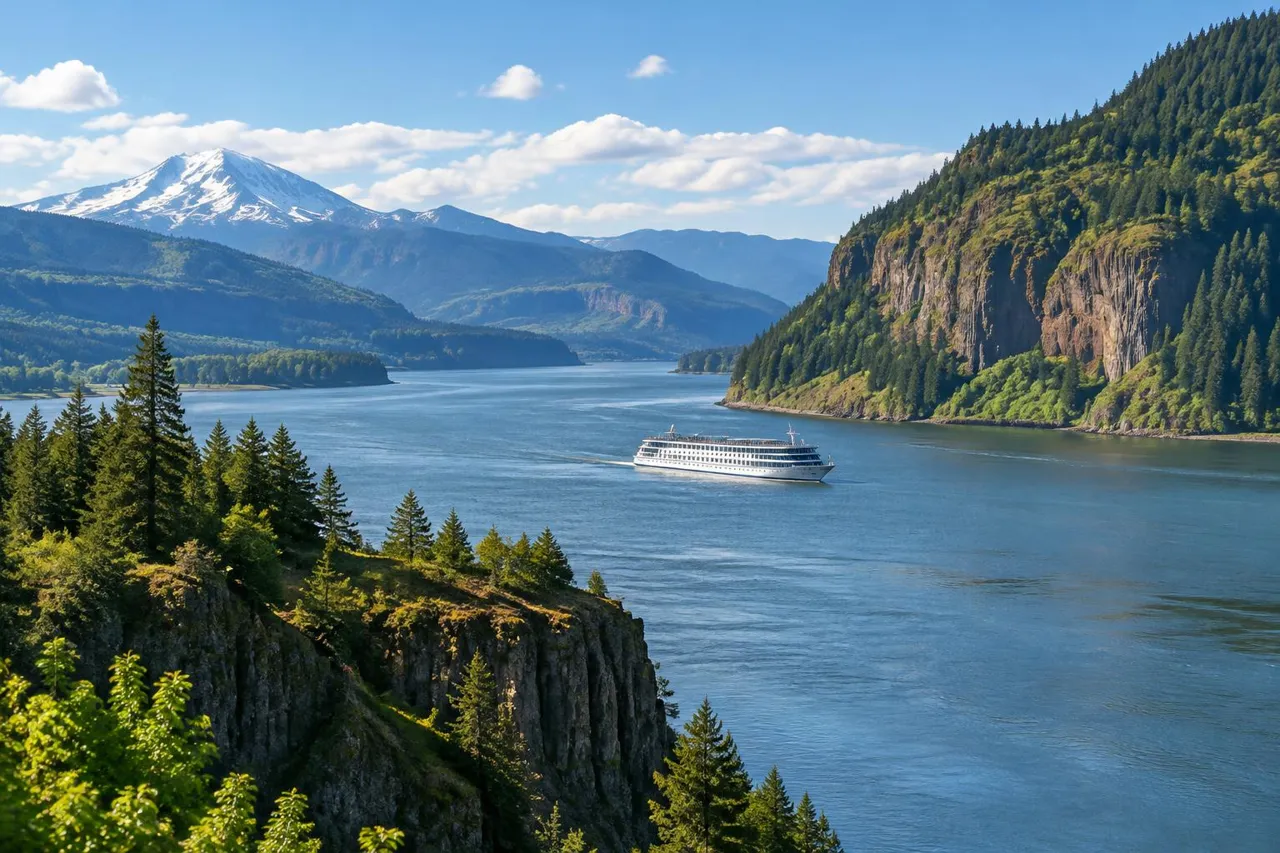
Paesaggio fluviale Columbia — habitat delle crociere fluviali

Columbia

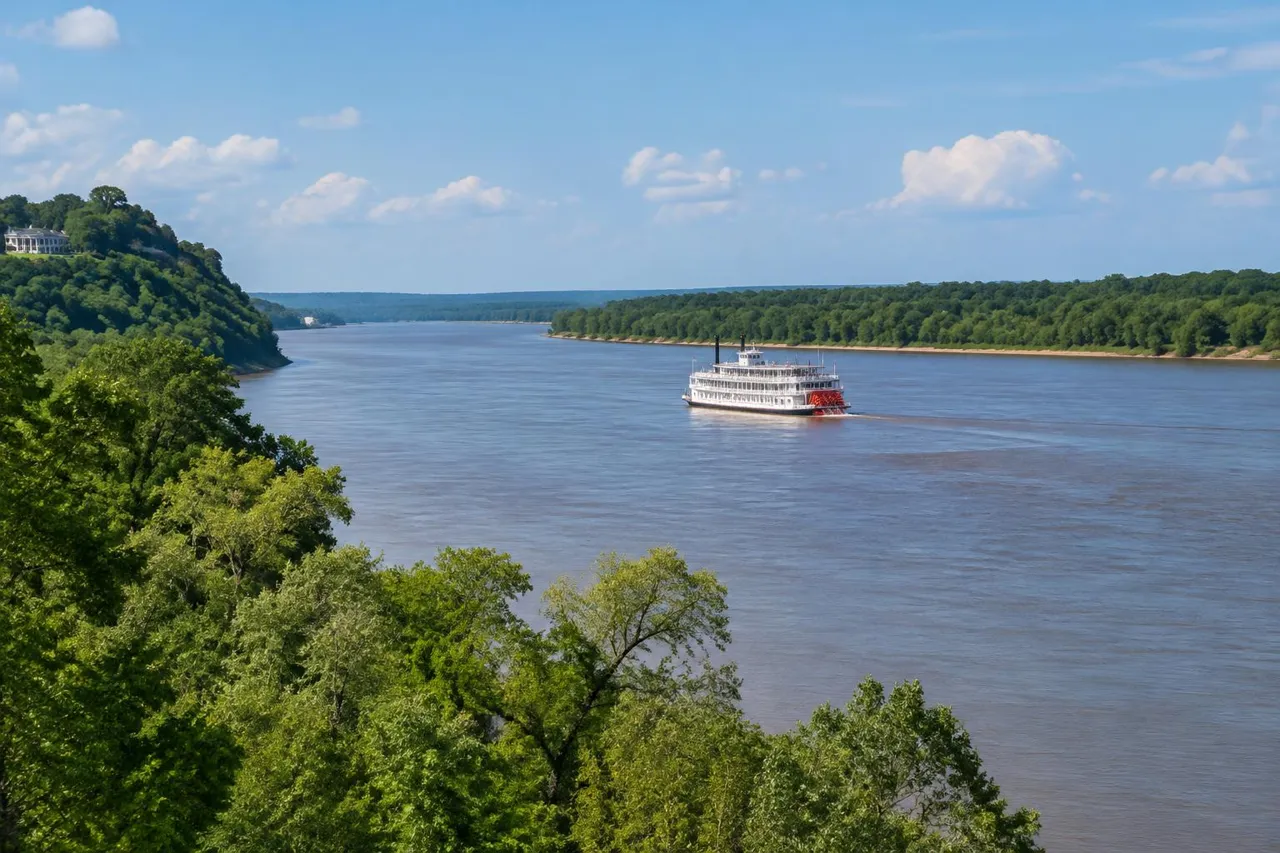
Columbia — Umatilla NWR / John Day pool, Boardman–Irrigon

Esplora le crociere fluviali
Paesaggio fluviale Mississippi — habitat delle crociere fluviali

Mississippi

Upper Mississippi — Upper Mississippi River NWR, Wabasha MN–Rock Island IL

Esplora le crociere fluviali

Le destinazioni descrivono l'habitat della specie, non le tappe garantite della crociera. Alcuni animali richiedono un'escursione facoltativa nell'entroterra o si trovano in riserve protette.

Curiosità su: il Wood Duck

  • Wood Ducks cannot excavate their own nest cavities.
  • Females line the cavity with down.
  • Ducklings leave elevated nests by jumping.
  • The feet have claws useful for gripping branches.
  • Females may lay eggs in another female’s nest.
  • Acorns form part of the natural diet.
  • Plant food dominates many studied diets.
  • The female has a white teardrop-shaped eye surround.
  • The species uses nest boxes as well as natural cavities.

Il periodo migliore per avvistare: il Wood Duck

No numerical viewing calendar is established here for the Columbia association. The Umatilla checklist confirms the species, but a checklist entry alone does not establish months of reliable occurrence around Boardman and Irrigon. For the Upper Mississippi, the refuge's own birding account explicitly places nesting Wood Ducks in bottomland forest during the summer months. That is useful species-specific local information, but it is a breeding statement without named viewing months, so it has not been converted into a summer month array. Neither a continent-wide migration map nor a general waterfowl season supplies the missing local monthly evidence. Ask refuge staff about recent sightings and which backwaters are accessible on the intended visit. Nesting birds may remain concealed, and a breeding record does not promise visible families from a cruise deck. The appropriate result is two qualified habitat recommendations with unknown numerical viewing months, rather than an apparently precise calendar assembled from unrelated ducks or neighbouring refuges.

Wood Duck: stagionalità per destinazione

Highlighted months reflect the stated local evidence, not guaranteed encounters. Neutral months mean no verified monthly viewing window, not absence. Observation records and recommended viewing windows are distinct.

Columbia

Exact species-specific local viewing months are unverified; no months inferred from broader range, climate or general site seasons.

genfebmaraprmaggiulugagosetottnovdic
Esplora le crociere fluviali

Mississippi

The official refuge checklist records this species in the listed locally defined seasons, including rare occurrences where coded, providing local guidance rather than a guarantee of sightings.

genfebmaraprmaggiulugagosetottnovdic
Esplora le crociere fluviali

Dove vive: il Wood Duck

Bottomland forests, wooded swamps, freshwater marshes and beaver ponds are characteristic Wood Duck habitats. Cornell also emphasises streams of many sizes, including rivers, where vegetation and fallen trees break up otherwise open water. Suitable areas combine feeding water with dense hiding cover; an uninterrupted reservoir shoreline is not equivalent to a wooded slough. The Umatilla registry association concerns the John Day pool around Boardman and Irrigon, including refuge wetlands, rather than the entire Columbia basin. The Upper Mississippi association concerns the refuge corridor from Wabasha to Rock Island, with bottomland woodland and backwaters particularly relevant. Nesting cavities need not be immediately over water: Cornell records use of sites some distance away. Retaining mature trees, safe cavity trees and varied wetland vegetation therefore matters as much as maintaining the water surface. Nest boxes are a management tool, not an invitation to inspect occupied nests. Use authorised trails and overlooks to observe these connected habitats.

Cosa mangia: il Wood Duck

Wood Ducks eat both plant and animal material, with seeds, fruits and nuts making up most of the diet in the studies summarised by Cornell. Acorns are particularly associated with their use of wooded wetlands, but the menu also includes aquatic seeds, duckweed, berries and agricultural grain where available. Insects and other small invertebrates, including beetles, flies, caterpillars, snails and isopods, supply additional food. A feeding bird may take items from the surface, reach among vegetation or forage on land; finding it away from open water is therefore not automatically unusual. Cornell reports that plant material can account for eighty percent or more of the diet, while also noting considerable variation among studies. That figure describes published diet samples, not a fixed recipe for every age or season. Floodplain vegetation and the availability of shallow feeding places influence what birds can obtain locally. Watch natural feeding without offering bread, grain or other bait.

Specie in sintesi

Nome comune
Wood Duck
Scientific name
Aix sponsa
Gruppo animale
Birds
Dimensioni
47–54 cm body length; 66–73 cm wingspan
Peso
454–862 g
Longevità
Species-specific wild lifespan not independently verified
Stato
Low conservation concern in Cornell account; formal current global category not independently checked
Identificazione
The breeding male's green crest, bold white head lines, chestnut breast, buff flanks and red eye create a distinctive pattern. Females are more subdued, with a greyish crested head, white teardrop-shaped eye surround and brown body. Look for the outline as well as the colour: the boxy head, slim neck and long broad tail are useful even when light makes iridescent colours disappear. In flight the wings look relatively short and the head is held high. Females show a blue wing patch edged with white, but a fleeting wing patch should not replace an overall assessment. Males in eclipse plumage lose much of the bright breeding appearance while retaining useful bill and eye characters. Young birds also require more care than a fully patterned adult drake. Mandarin Ducks and escaped ornamental waterfowl can complicate identification outside normal expectations. Record several features, location and photographs when possible rather than assigning every crested, colourful duck to this species.

Wood Duck: domande frequenti

Dove posso vedere il Wood Duck?
Columbia, Mississippi. Search sheltered sloughs and wooded margins slowly from an established viewpoint. A scope is useful for distant pairs, while binoculars help resolve birds partly concealed among branches. Pause before approaching water because resting Wood Ducks can flush before an observer notices them. Watch for the female's white eye surround as well as the male's more conspicuous head pattern; a quiet brown bird is easily overlooked. At Umatilla use current refuge access information for wetland viewpoints around the registered Columbia reach. On the Upper Mississippi, refuge overlooks or an authorised backwater excursion may offer better habitat coverage than the main navigation channel. Avoid approaching cavities, nest boxes or ducklings, and never attempt to make young jump for photographs. A bird that stops feeding, swims away repeatedly or raises an alarm is signalling that more distance is needed. Observation should document natural use of cover, not force the duck into an open patch of water.
Qual è il periodo migliore per vedere il Wood Duck?
No numerical viewing calendar is established here for the Columbia association. The Umatilla checklist confirms the species, but a checklist entry alone does not establish months of reliable occurrence around Boardman and Irrigon. For the Upper Mississippi, the refuge's own birding account explicitly places nesting Wood Ducks in bottomland forest during the summer months. That is useful species-specific local information, but it is a breeding statement without named viewing months, so it has not been converted into a summer month array. Neither a continent-wide migration map nor a general waterfowl season supplies the missing local monthly evidence. Ask refuge staff about recent sightings and which backwaters are accessible on the intended visit. Nesting birds may remain concealed, and a breeding record does not promise visible families from a cruise deck. The appropriate result is two qualified habitat recommendations with unknown numerical viewing months, rather than an apparently precise calendar assembled from unrelated ducks or neighbouring refuges.
Quanto può diventare grande il Wood Duck?
47–54 cm body length; 66–73 cm wingspan. Peso da adulto: 454–862 g. Le dimensioni variano in base all'età, al sesso e alla popolazione.
Come devo comportarmi in presenza di il Wood Duck?
Search sheltered sloughs and wooded margins slowly from an established viewpoint. A scope is useful for distant pairs, while binoculars help resolve birds partly concealed among branches. Pause before approaching water because resting Wood Ducks can flush before an observer notices them. Watch for the female's white eye surround as well as the male's more conspicuous head pattern; a quiet brown bird is easily overlooked. At Umatilla use current refuge access information for wetland viewpoints around the registered Columbia reach. On the Upper Mississippi, refuge overlooks or an authorised backwater excursion may offer better habitat coverage than the main navigation channel. Avoid approaching cavities, nest boxes or ducklings, and never attempt to make young jump for photographs. A bird that stops feeding, swims away repeatedly or raises an alarm is signalling that more distance is needed. Observation should document natural use of cover, not force the duck into an open patch of water.
Cosa mangia il Wood Duck?
Wood Ducks eat both plant and animal material, with seeds, fruits and nuts making up most of the diet in the studies summarised by Cornell. Acorns are particularly associated with their use of wooded wetlands, but the menu also includes aquatic seeds, duckweed, berries and agricultural grain where available. Insects and other small invertebrates, including beetles, flies, caterpillars, snails and isopods, supply additional food. A feeding bird may take items from the surface, reach among vegetation or forage on land; finding it away from open water is therefore not automatically unusual. Cornell reports that plant material can account for eighty percent or more of the diet, while also noting considerable variation among studies. That figure describes published diet samples, not a fixed recipe for every age or season. Floodplain vegetation and the availability of shallow feeding places influence what birds can obtain locally. Watch natural feeding without offering bread, grain or other bait.
Gli avvistamenti di fauna selvatica sono garantiti durante una crociera fluviale?
No. Gli animali si muovono liberamente e gli itinerari, il meteo, le restrizioni di accesso e le condizioni locali influenzano ogni uscita. Conferma l'itinerario effettivo e il programma a terra prima di prenotare.

Confronta la fauna nelle stesse destinazioni

Esplora altri esemplari di birds registrati in queste destinazioni. Habitat simili non implicano che gli animali condividano le stesse abitudini o la stessa stagione di avvistamento.

Confronto delle specie per gruppo animale e destinazione
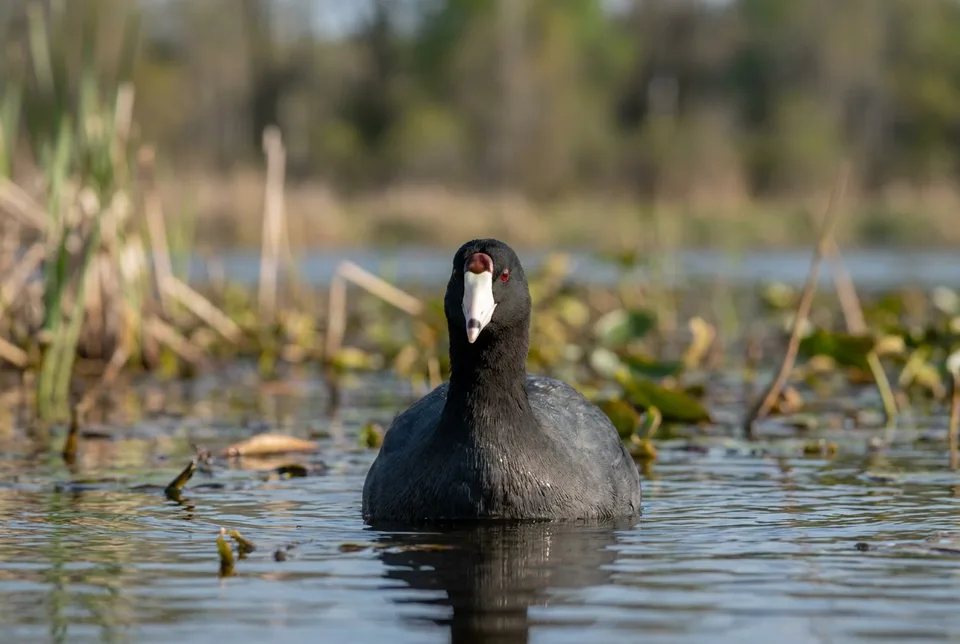
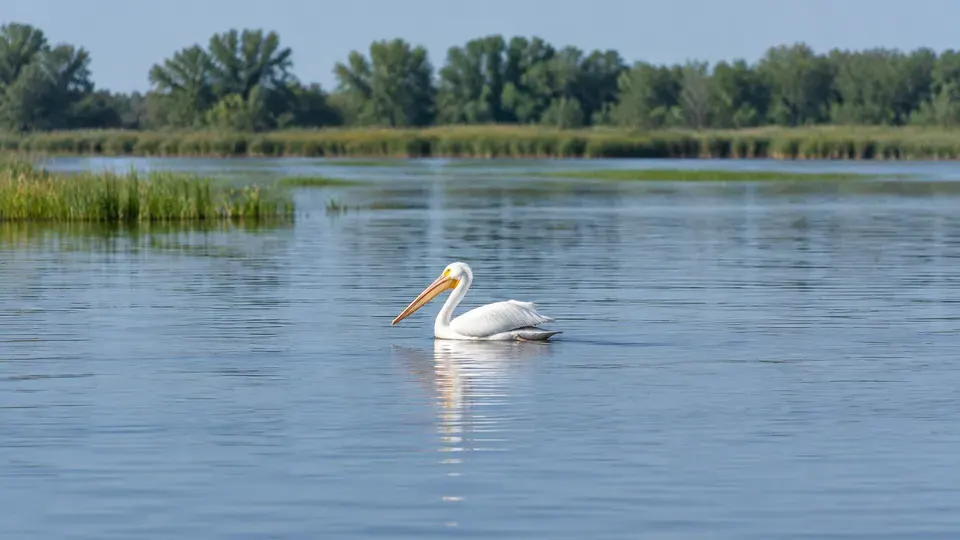
Wood duck in una zona umida — Columbia, Mississippi, fauna delle crociere fluvialiWood DuckAmerican Coot in una zona umida — Columbia, fauna delle crociere fluvialiAmerican CootAmerican white pelican in una zona umida — Columbia, Mississippi, fauna delle crociere fluvialiAmerican White Pelican
Gruppo animaleBirdsGruppo animaleBirdsGruppo animaleBirds
DestinazioniColumbia, MississippiDestinazioniColumbiaDestinazioniColumbia, Mississippi
Scientific name
Aix sponsa

Aix sponsa

Scientific name
Scientific name
Dimensioni
47–54 cm body length
Dimensioni
Dimensioni
Peso
454–862 g
Peso
Peso
Longevità
Species-specific wild lifespan not independently verified
Longevità
Longevità
Stato
See sourced assessment
Stato
Stato
Identificazione
The breeding male's green crest, bold white head lines, chestnut breast, buff flanks and red eye create a distinctive pattern.

The breeding male's green crest, bold white head lines, chestnut breast, buff flanks and red eye create a distinctive pattern. Females are more subdued, with a greyish crested head, white teardrop-shaped eye surround and brown body. Look for the outline as well as the colour: the boxy head, slim neck and long broad tail are useful even when light makes iridescent colours disappear. In flight the wings look relatively short and the head is held high. Females show a blue wing patch edged with white, but a fleeting wing patch should not replace an overall assessment. Males in eclipse plumage lose much of the bright breeding appearance while retaining useful bill and eye characters. Young birds also require more care than a fully patterned adult drake. Mandarin Ducks and escaped ornamental waterfowl can complicate identification outside normal expectations. Record several features, location and photographs when possible rather than assigning every crested, colourful duck to this species.

Identificazione
Identificazione
Habitat
Bottomland forests, wooded swamps, freshwater marshes and beaver ponds are characteristic Wood Duck habitats.

Bottomland forests, wooded swamps, freshwater marshes and beaver ponds are characteristic Wood Duck habitats. Cornell also emphasises streams of many sizes, including rivers, where vegetation and fallen trees break up otherwise open water. Suitable areas combine feeding water with dense hiding cover; an uninterrupted reservoir shoreline is not equivalent to a wooded slough. The Umatilla registry association concerns the John Day pool around Boardman and Irrigon, including refuge wetlands, rather than the entire Columbia basin. The Upper Mississippi association concerns the refuge corridor from Wabasha to Rock Island, with bottomland woodland and backwaters particularly relevant. Nesting cavities need not be immediately over water: Cornell records use of sites some distance away. Retaining mature trees, safe cavity trees and varied wetland vegetation therefore matters as much as maintaining the water surface. Nest boxes are a management tool, not an invitation to inspect occupied nests. Use authorised trails and overlooks to observe these connected habitats.

Habitat
Habitat
Dieta
Wood Ducks eat both plant and animal material, with seeds, fruits and nuts making up most of the diet in the studies summarised by Cornell.

Wood Ducks eat both plant and animal material, with seeds, fruits and nuts making up most of the diet in the studies summarised by Cornell. Acorns are particularly associated with their use of wooded wetlands, but the menu also includes aquatic seeds, duckweed, berries and agricultural grain where available. Insects and other small invertebrates, including beetles, flies, caterpillars, snails and isopods, supply additional food. A feeding bird may take items from the surface, reach among vegetation or forage on land; finding it away from open water is therefore not automatically unusual. Cornell reports that plant material can account for eighty percent or more of the diet, while also noting considerable variation among studies. That figure describes published diet samples, not a fixed recipe for every age or season. Floodplain vegetation and the availability of shallow feeding places influence what birds can obtain locally. Watch natural feeding without offering bread, grain or other bait.

Dieta
Dieta
Stagione migliore
No numerical viewing calendar is established here for the Columbia association.

No numerical viewing calendar is established here for the Columbia association. The Umatilla checklist confirms the species, but a checklist entry alone does not establish months of reliable occurrence around Boardman and Irrigon. For the Upper Mississippi, the refuge's own birding account explicitly places nesting Wood Ducks in bottomland forest during the summer months. That is useful species-specific local information, but it is a breeding statement without named viewing months, so it has not been converted into a summer month array. Neither a continent-wide migration map nor a general waterfowl season supplies the missing local monthly evidence. Ask refuge staff about recent sightings and which backwaters are accessible on the intended visit. Nesting birds may remain concealed, and a breeding record does not promise visible families from a cruise deck. The appropriate result is two qualified habitat recommendations with unknown numerical viewing months, rather than an apparently precise calendar assembled from unrelated ducks or neighbouring refuges.

Stagione migliore
Stagione migliore
Tabella stagionale per destinazione
ColumbiaNo verified monthly viewing evidence

Exact species-specific local viewing months are unverified; no months inferred from broader range, climate or general site seasons.

Mississippigen · feb · mar · apr · mag · giu · lug · ago · set · ott · nov · dic

The official refuge checklist records this species in the listed locally defined seasons, including rare occurrences where coded, providing local guidance rather than a guarantee of sightings.

Tabella stagionale per destinazioneTabella stagionale per destinazione
Specie precedenteWire-tailed ManakinSpecie successivaWood Sandpiper
Tutta la fauna fluviale
On this page
  • 01Informazioni su
  • 02Comportamento e riproduzione
  • 03Migliori località per la fauna
  • 04Curiosità
  • 05Stagione migliore
  • 06Tabella stagionale per destinazione
  • 07Habitat
  • 08Dieta
  • 09Specie in sintesi
  • 10Domande e risposte
  • 11Confronta

Find your river cruise

Pianifica il tuo viaggio

Trova il tuo prossimo viaggio fluviale

Confronta destinazioni, programmi a terra e date in base agli animali e agli habitat che desideri scoprire.

  • Escursioni a terra giornaliere
  • Osservazione responsabile della fauna
  • Navi fluviali boutique
Esplora le crociere fluviali