Bluerides – Blue Rides - Prenota crociere subacquee in tutto il mondoOCEAN ADVENTURES
Crociere fluvialiFiumiNatura e fauna selvaticaLa nostra promessa
Crociere fluvialiFiumiNatura e fauna selvaticaLa nostra promessaAccedi

Destinazioni fluviali

  • Destinazioni fluviali
  • Amazon
  • Danube
  • Rhine
  • Mekong
  • Nile

Navi e partenze

  • Ricerca crociere fluviali
  • Offerte

Natura e fauna selvatica

  • Natura e fauna selvatica

Assistenza di viaggio

  • La nostra promessa
  • Contatti

Contatti

Contattaci

Scrivici quando vuoi: ti aiutiamo a scegliere il viaggio o a risolvere ogni dubbio.

E-mailScrivici: di solito rispondiamo in poche ore.
contact@bluerides.com
WhatsAppScrivici su WhatsApp, lun–ven 10:00–16:00 (CET).
Avvia la chat WhatsApp
TelefonoChiamaci, saremo felici di aiutarti.
Chiamata gratuita, lun–ven 10:00–20:00 (CET).
Europa+49 800 1144 990USA+1 888 557 7735Regno Unito+44 800 707 4152Australia+61 2 8599 6113Canada+1 888 557 7735
Which river journey is yours?Answer 8 quick questions and find the river cruise that fits you.
8 questions, 1 minute·Plus Gift
Metodi di pagamento sicuriI tuoi pagamenti sono completamente protetti con crittografia AES-256.
Realizzato daStripeWiseAMEXPayGoogle PaySEPABank
Impronta·Termini e condizioni·Informativa sulla privacy·Chi siamo·Contatto·Esonero di Responsabilità·Programma di affiliazione·Cruise·
Seguici qui

© 2026 Blue Rides. Tutti i diritti riservati.·

Bluerides – Blue Rides - Prenota crociere subacquee in tutto il mondoOCEAN ADVENTURES
Crociere fluvialiFiumiNatura e fauna selvaticaLa nostra promessa
Crociere fluvialiFiumiNatura e fauna selvaticaLa nostra promessaAccedi
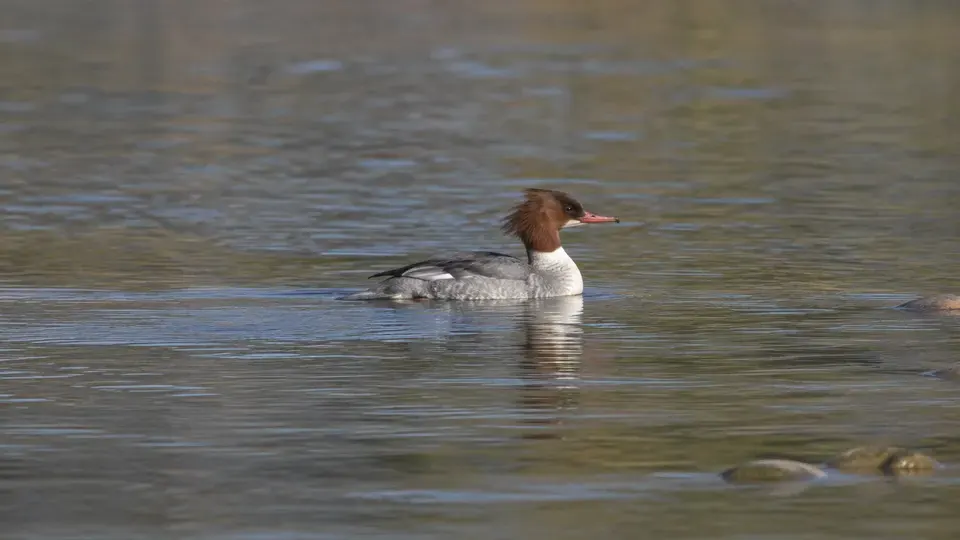
Common merganser in una zona umida — Columbia, Rhine, fauna delle crociere fluviali
Home›Crociere fluviali›Fauna fluviale›Common Merganser

Common MerganserMergus merganserDove e quando osservarli

Specie precedenteCommon KestrelSpecie successivaCommon Pochard

Common Merganser in sintesi

A Common Merganser brings a different feeding strategy to a river duck flock. Its narrow red bill is built for gripping prey rather than sifting seeds, and its streamlined body follows fish beneath the surface. Adult males show a dark green head against a largely white body; females have a cinnamon head and grey body, with a short loose crest. Cornell describes birds drifting along streams, resting on midstream rocks and gathering on larger waters outside the breeding season. The Columbia and Upper Mississippi records identify places to check, not a guarantee that a broad navigation channel will hold a visible flock. Clear water, quieter shorelines and suitable resting places can make a more useful search image than the expectation of a conventional puddle-duck feeding group.
Comportamento e riproduzione

Dimensioni
Not verified
Peso
Not verified
Longevità
Not verified
Stato
Cornell: Low Concern; not an IUCN category.

Common Mergansers hunt by diving, often looking into the water before submerging to pursue prey. Their bills have sharp serrations that help retain slippery fish; those edges are not true teeth. Birds may pause on rocks or other exposed resting places between feeding bouts. Tree cavities are important nesting sites, linking this apparently open-water hunter to mature forest. The female selects a cavity and leads the young after they leave the nest. Newly hatched young initially rely heavily on aquatic invertebrates before switching towards fish. A family moving through an eddy therefore offers a different feeding picture from a winter group pursuing schooling fish. Keep the group’s route open and watch from the bank rather than following closely with a boat, which can repeatedly displace both adults and young.

Migliori località per la fauna

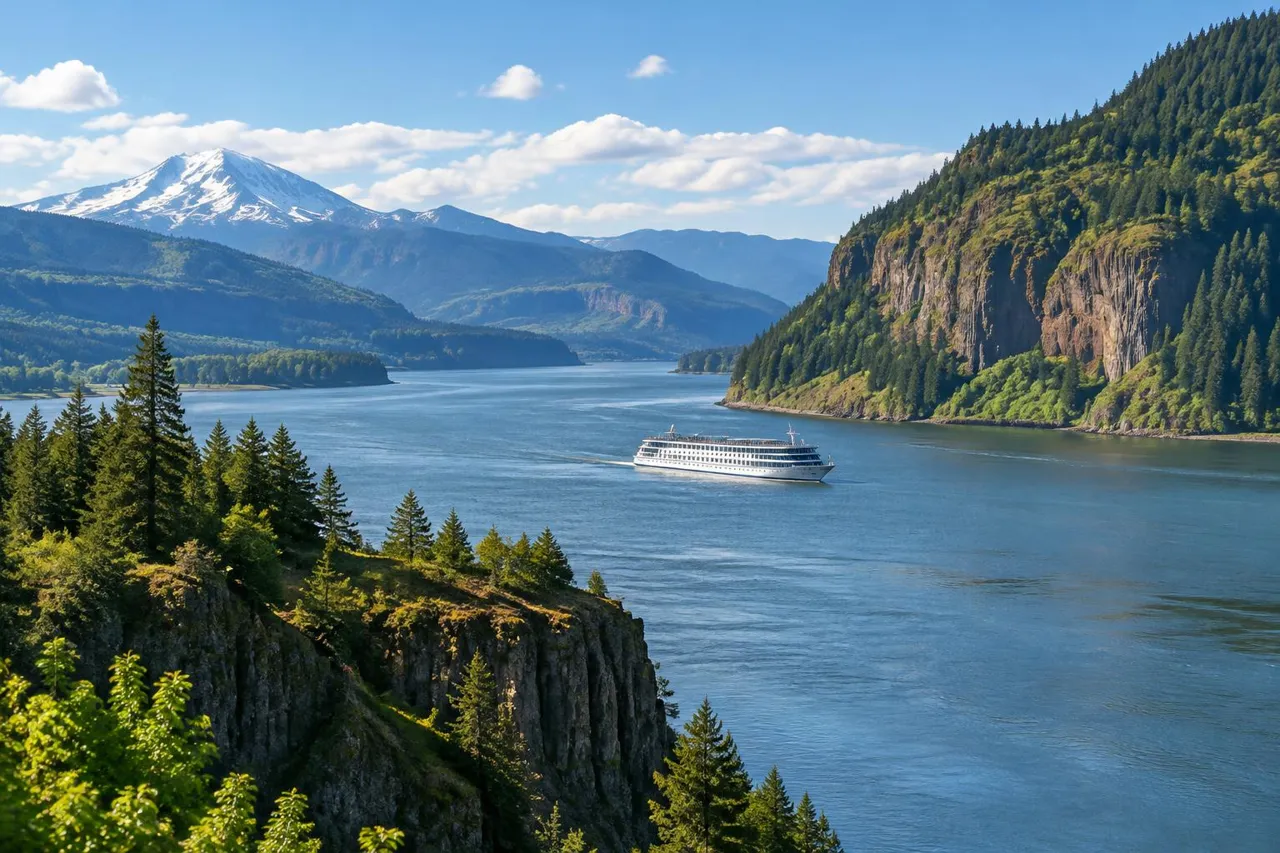
Paesaggio fluviale Columbia — habitat delle crociere fluviali

Columbia

Most records cover Umatilla refuge backwaters along the Columbia near Boardman–Irrigon. Seasonal waterfowl may be best in winter rather than the sailing season. Bighorn sheep require a separate Hells Canyon excursion on the Snake River.
Esplora le crociere fluviali
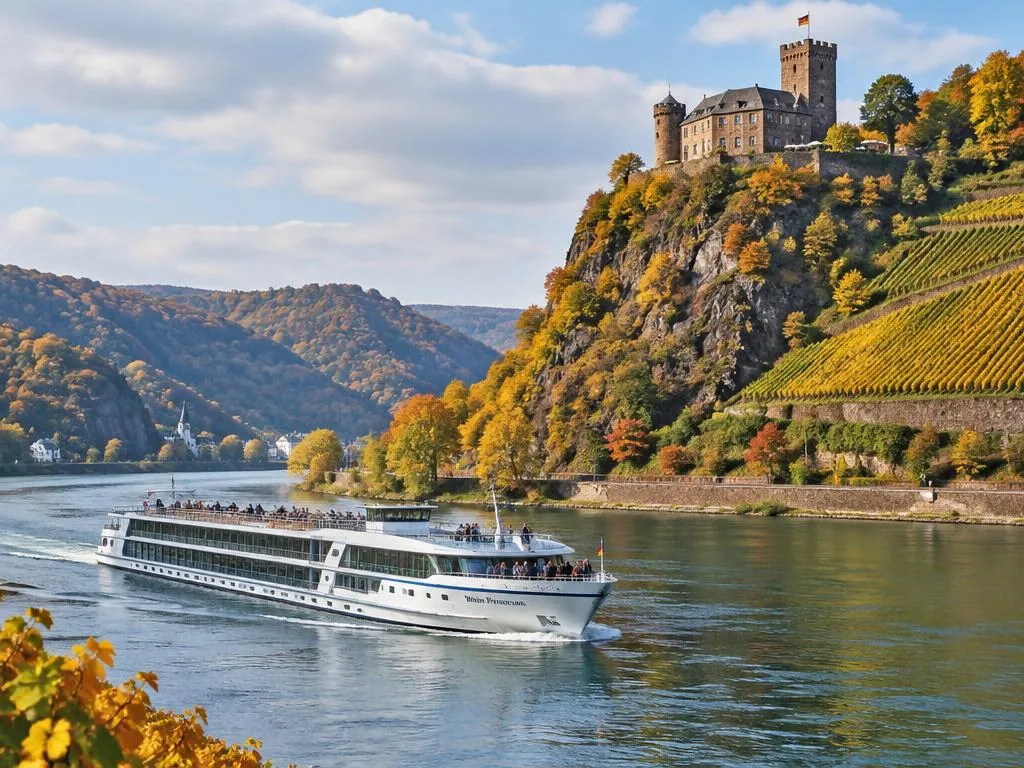
Paesaggio fluviale Rhine — habitat delle crociere fluviali

Rhine

Records refer to named Upper/Middle/Lower Rhine birding sites and optional riverside, vineyard or floodplain excursions. Several ducks are winter visitors; no animal is guaranteed on every Basel–Amsterdam sailing.

Esplora le crociere fluviali

Le destinazioni descrivono l'habitat della specie, non le tappe garantite della crociera. Alcuni animali richiedono un'escursione facoltativa nell'entroterra o si trovano in riserve protette.

Curiosità su: il Common Merganser

  • The slender bill has serrated edges.
  • Fish dominate the diet.
  • Young initially eat many aquatic invertebrates.
  • Mature trees provide nesting cavities.
  • Females have cinnamon-coloured heads.
  • Males have dark green heads.
  • Birds may rest on midstream rocks.
  • Winter groups use larger waters.
  • Some birds also winter in coastal bays.

Il periodo migliore per avvistare: il Common Merganser

No numerical local viewing calendar is verified for the registered Columbia, Rhine associations. Cornell distinguishes northern river use in the breeding season from gatherings on larger waters in winter. Neither description supplies a reach-specific monthly record, and accessible ice-free water can redistribute birds over short distances.

Common Merganser: stagionalità per destinazione

Highlighted months reflect the stated local evidence, not guaranteed encounters. Neutral months mean no verified monthly viewing window, not absence. Observation records and recommended viewing windows are distinct.

Columbia

Non è confermato alcun calendario faunistico specifico per il fiume. Verifica il tratto fluviale effettivo, le condizioni locali e l'accesso alle escursioni con il tuo operatore.

genfebmaraprmaggiulugagosetottnovdic
Esplora le crociere fluviali

Rhine

Non è confermato alcun calendario faunistico specifico per il fiume. Verifica il tratto fluviale effettivo, le condizioni locali e l'accesso alle escursioni con il tuo operatore.

genfebmaraprmaggiulugagosetottnovdic
Esplora le crociere fluviali

Dove vive: il Common Merganser

Northern forested lakes and rivers provide breeding habitat, particularly where mature trees contain suitable cavities. Outside the breeding season, larger rivers, reservoirs and lakes become important, with some birds also using bays and estuaries. Cornell notes a preference for freshwater wintering habitat, but this is not an absolute exclusion of salt water. Clear water supports visual hunting, while resting rocks and sheltered margins can make birds easier to find. The Umatilla/John Day pool and Upper Mississippi refuge associations should be read at their registered scales, not extended to every tributary in either basin. Look across open pools and along quiet banks from legal access points, keeping wooded margins in the habitat picture. A cavity tree is a nesting resource, not a target for close inspection or a reason to leave a trail.

Cosa mangia: il Common Merganser

Fish dominate the Common Merganser’s diet, particularly in winter, but Cornell records a broader menu including aquatic invertebrates and occasional other prey. Slender serrated bills help grasp food, and the birds locate prey by sight in clear water. Streams, rivers and lakes can provide different fish communities, so a surfaced merganser is not necessarily carrying the same species as its neighbour. Young birds begin with many aquatic invertebrates and increase their use of fish as they grow. That age-related change matters when watching a family group: brief pecks and shallow searches are not evidence of failed fishing. The observer can usually document a capture or swallowing action more reliably than identify a small wet prey item at distance. Avoid baiting fish or birds to create a feeding opportunity.

Specie in sintesi

Nome comune
Common Merganser
Scientific name
Mergus merganser
Gruppo animale
Birds
Dimensioni
Not verified in the accessible source text.
Peso
Not verified in the accessible source text.
Longevità
Wild lifespan not verified in the accessible source text.
Stato
Cornell: Low Concern; not an IUCN category.
Identificazione
Adult males have a dark green head, largely white body and slender red bill, producing strong dark-and-light contrast even when the head looks black in shade. Females show a cinnamon head, short crest and grey body; the head colour is clearly defined against paler lower parts. The bill is much narrower than that of a Mallard or other familiar dabbling duck. Hooded Mergansers are more compact and have a very different fan-shaped crest, while other mergansers can require detailed comparison. In flight, the heavy streamlined body and conspicuous white wing areas are useful supporting features. Colour alone is not enough for females or birds in transitional plumage. Obtain a side view showing bill, head, neck boundary and body together, and retain an uncertain merganser identification when those details cannot be resolved.

Common Merganser: domande frequenti

Dove posso vedere il Common Merganser?
Columbia, Rhine. Scan exposed rocks, quiet shorelines and mixed diving-duck flocks before searching the centre of the river. Bright males can stand out at a distance, while females may blend into shaded banks until they move. Watch a group through several dive cycles, allowing submerged individuals to reappear before deciding how many are present. A scope is useful on broad pools; binoculars are better for tracking a family moving past a close but undisturbed bank. At the Columbia and Upper Mississippi sites, choose current authorised viewpoints rather than approaching birds from the water. Do not stand between a brood and its next sheltered eddy. If resting birds slide into the river as you approach, the movement is a warning to increase distance rather than an invitation to photograph them swimming away.
Qual è il periodo migliore per vedere il Common Merganser?
No numerical local viewing calendar is verified for the registered Columbia, Rhine associations. Cornell distinguishes northern river use in the breeding season from gatherings on larger waters in winter. Neither description supplies a reach-specific monthly record, and accessible ice-free water can redistribute birds over short distances.
Quanto può diventare grande il Common Merganser?
Not verified in the accessible source text.. Peso da adulto: Not verified in the accessible source text.. Le dimensioni variano in base all'età, al sesso e alla popolazione.
Come devo comportarmi in presenza di il Common Merganser?
Scan exposed rocks, quiet shorelines and mixed diving-duck flocks before searching the centre of the river. Bright males can stand out at a distance, while females may blend into shaded banks until they move. Watch a group through several dive cycles, allowing submerged individuals to reappear before deciding how many are present. A scope is useful on broad pools; binoculars are better for tracking a family moving past a close but undisturbed bank. At the Columbia and Upper Mississippi sites, choose current authorised viewpoints rather than approaching birds from the water. Do not stand between a brood and its next sheltered eddy. If resting birds slide into the river as you approach, the movement is a warning to increase distance rather than an invitation to photograph them swimming away.
Cosa mangia il Common Merganser?
Fish dominate the Common Merganser’s diet, particularly in winter, but Cornell records a broader menu including aquatic invertebrates and occasional other prey. Slender serrated bills help grasp food, and the birds locate prey by sight in clear water. Streams, rivers and lakes can provide different fish communities, so a surfaced merganser is not necessarily carrying the same species as its neighbour. Young birds begin with many aquatic invertebrates and increase their use of fish as they grow. That age-related change matters when watching a family group: brief pecks and shallow searches are not evidence of failed fishing. The observer can usually document a capture or swallowing action more reliably than identify a small wet prey item at distance. Avoid baiting fish or birds to create a feeding opportunity.
Gli avvistamenti di fauna selvatica sono garantiti durante una crociera fluviale?
No. Gli animali si muovono liberamente e gli itinerari, il meteo, le restrizioni di accesso e le condizioni locali influenzano ogni uscita. Conferma l'itinerario effettivo e il programma a terra prima di prenotare.

Confronta la fauna nelle stesse destinazioni

Esplora altri esemplari di birds registrati in queste destinazioni. Habitat simili non implicano che gli animali condividano le stesse abitudini o la stessa stagione di avvistamento.

Confronto delle specie per gruppo animale e destinazione
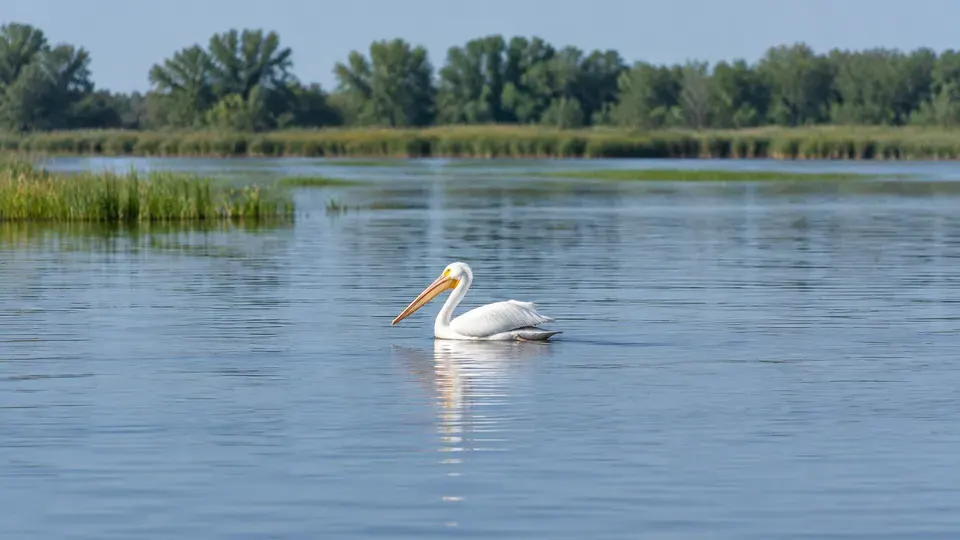
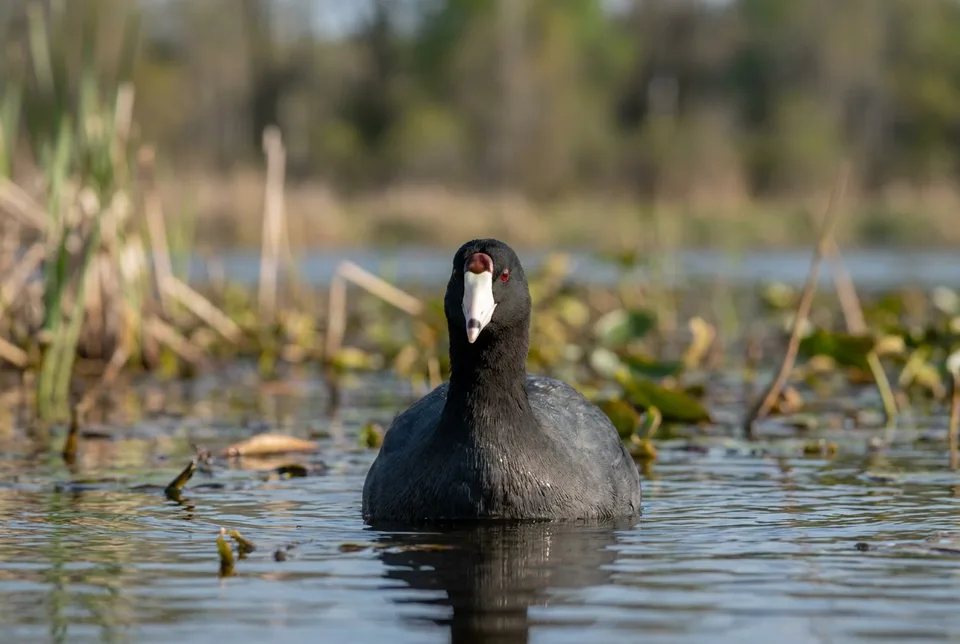
Common merganser in una zona umida — Columbia, Rhine, fauna delle crociere fluvialiCommon MerganserAmerican Coot in una zona umida — Columbia, fauna delle crociere fluvialiAmerican CootAmerican white pelican in una zona umida — Columbia, Mississippi, fauna delle crociere fluvialiAmerican White Pelican
Gruppo animaleBirdsGruppo animaleBirdsGruppo animaleBirds
DestinazioniColumbia, RhineDestinazioniColumbiaDestinazioniColumbia, Mississippi
Scientific name
Mergus merganser

Mergus merganser

Scientific name
Scientific name
Dimensioni
Not verified
Dimensioni
Dimensioni
Peso
Not verified
Peso
Peso
Longevità
Not verified
Longevità
Longevità
Stato
Cornell: Low Concern; not an IUCN category.
Stato
Stato
Identificazione
Adult males have a dark green head, largely white body and slender red bill, producing strong dark-and-light contrast even when the head looks black in shade.

Adult males have a dark green head, largely white body and slender red bill, producing strong dark-and-light contrast even when the head looks black in shade. Females show a cinnamon head, short crest and grey body; the head colour is clearly defined against paler lower parts. The bill is much narrower than that of a Mallard or other familiar dabbling duck. Hooded Mergansers are more compact and have a very different fan-shaped crest, while other mergansers can require detailed comparison. In flight, the heavy streamlined body and conspicuous white wing areas are useful supporting features. Colour alone is not enough for females or birds in transitional plumage. Obtain a side view showing bill, head, neck boundary and body together, and retain an uncertain merganser identification when those details cannot be resolved.

Identificazione
Identificazione
Habitat
Northern forested lakes and rivers provide breeding habitat, particularly where mature trees contain suitable cavities.

Northern forested lakes and rivers provide breeding habitat, particularly where mature trees contain suitable cavities. Outside the breeding season, larger rivers, reservoirs and lakes become important, with some birds also using bays and estuaries. Cornell notes a preference for freshwater wintering habitat, but this is not an absolute exclusion of salt water. Clear water supports visual hunting, while resting rocks and sheltered margins can make birds easier to find. The Umatilla/John Day pool and Upper Mississippi refuge associations should be read at their registered scales, not extended to every tributary in either basin. Look across open pools and along quiet banks from legal access points, keeping wooded margins in the habitat picture. A cavity tree is a nesting resource, not a target for close inspection or a reason to leave a trail.

Habitat
Habitat
Dieta
Fish dominate the Common Merganser’s diet, particularly in winter, but Cornell records a broader menu including aquatic invertebrates and occasional other prey.

Fish dominate the Common Merganser’s diet, particularly in winter, but Cornell records a broader menu including aquatic invertebrates and occasional other prey. Slender serrated bills help grasp food, and the birds locate prey by sight in clear water. Streams, rivers and lakes can provide different fish communities, so a surfaced merganser is not necessarily carrying the same species as its neighbour. Young birds begin with many aquatic invertebrates and increase their use of fish as they grow. That age-related change matters when watching a family group: brief pecks and shallow searches are not evidence of failed fishing. The observer can usually document a capture or swallowing action more reliably than identify a small wet prey item at distance. Avoid baiting fish or birds to create a feeding opportunity.

Dieta
Dieta
Stagione migliore
No numerical local viewing calendar is verified for the registered Columbia, Rhine associations.

No numerical local viewing calendar is verified for the registered Columbia, Rhine associations. Cornell distinguishes northern river use in the breeding season from gatherings on larger waters in winter. Neither description supplies a reach-specific monthly record, and accessible ice-free water can redistribute birds over short distances.

Stagione migliore
Stagione migliore
Tabella stagionale per destinazione
ColumbiaNo verified monthly viewing evidence

No verified monthly viewing evidence

RhineNo verified monthly viewing evidence

No verified monthly viewing evidence

Tabella stagionale per destinazioneTabella stagionale per destinazione
Specie precedenteCommon KestrelSpecie successivaCommon Pochard
Tutta la fauna fluviale
On this page
  • 01Informazioni su
  • 02Comportamento e riproduzione
  • 03Migliori località per la fauna
  • 04Curiosità
  • 05Stagione migliore
  • 06Tabella stagionale per destinazione
  • 07Habitat
  • 08Dieta
  • 09Specie in sintesi
  • 10Domande e risposte
  • 11Confronta

Find your river cruise

Pianifica il tuo viaggio

Trova il tuo prossimo viaggio fluviale

Confronta destinazioni, programmi a terra e date in base agli animali e agli habitat che desideri scoprire.

  • Escursioni a terra giornaliere
  • Osservazione responsabile della fauna
  • Navi fluviali boutique
Esplora le crociere fluviali