Bluerides – Blue Rides - दुनिया भर में लिवअबोर्ड डाइविंग बुक करेंOCEAN ADVENTURES
रिवर क्रूज़नदियाँप्रकृति और वन्यजीवहमारा वादा
रिवर क्रूज़नदियाँप्रकृति और वन्यजीवहमारा वादासाइन इन करें

River गंतव्य

  • River गंतव्य
  • Amazon
  • Danube
  • Rhine
  • Mekong
  • Nile

जहाज़ और प्रस्थान

  • River Cruise खोजें
  • ऑफ़र

प्रकृति और वन्यजीव

  • प्रकृति और वन्यजीव

यात्रा सहायता

  • हमारा वादा
  • संपर्क

संपर्क करें

संपर्क करें

कभी भी संपर्क करें, हम आपकी यात्रा चुनने या किसी भी सवाल में मदद करने को तैयार हैं।

ईमेलहमें लिखें, आमतौर पर कुछ ही घंटों में जवाब देते हैं।
contact@bluerides.com
व्हाट्सएपव्हाट्सएप पर हमसे चैट करें, सोम–शुक्र 10:00–16:00 (CET)।
WhatsApp चैट शुरू करें
फ़ोनहमें कॉल करें, हम खुशी से मदद करेंगे।
फ्री कॉल, सोम–शुक्र 10:00–20:00 (CET)।
यूरोप+49 800 1144 990यूएसए+1 888 557 7735यूके+44 800 707 4152ऑस्ट्रेलिया+61 2 8599 6113कनाडा+1 888 557 7735
Which river journey is yours?Answer 8 quick questions and find the river cruise that fits you.
8 questions, 1 minute·Plus Gift
सुरक्षित भुगतान विधियाँआपके भुगतान AES-256 एन्क्रिप्शन द्वारा पूरी तरह सुरक्षित हैं।
द्वारा संचालितStripeWiseAMEXPayGoogle PaySEPABank
छाप·नियम और शर्तें·गोपनीयता नीति·हमारे बारे में·संपर्क करें·दायित्व अस्वीकरण·संबद्ध कार्यक्रम·Cruise·
यहाँ हमसे जुड़ें

© 2026 Blue Rides. सर्वाधिकार सुरक्षित।·

Bluerides – Blue Rides - दुनिया भर में लिवअबोर्ड डाइविंग बुक करेंOCEAN ADVENTURES
रिवर क्रूज़नदियाँप्रकृति और वन्यजीवहमारा वादा
रिवर क्रूज़नदियाँप्रकृति और वन्यजीवहमारा वादासाइन इन करें
आर्द्रभूमि में Proboscis bat — Amazon, नदी क्रूज़ के वन्यजीव
होम›रिवर क्रूज़›नदी के वन्यजीव›Proboscis Bat

Proboscis BatRhynchonycteris nasoइन्हें कहाँ और कब देखें

पिछली प्रजातिPlumbeous Kiteअगली प्रजातिPurple Heron

Proboscis Bat एक नज़र में

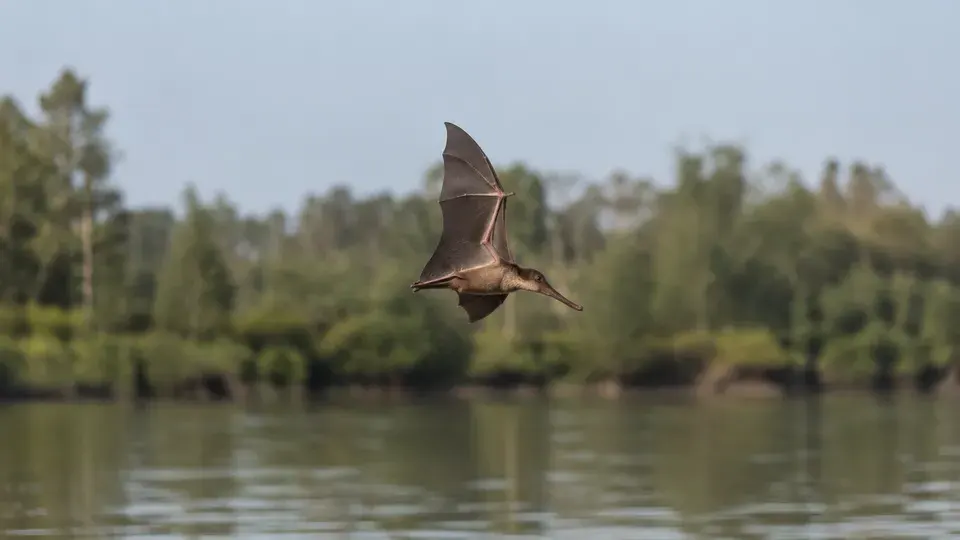
The Proboscis Bat is one of the most easily overlooked mammals on an Amazon excursion. Rather than hiding inside a dark cavity, it often rests openly on bark above water, where its mottled coat can resemble part of the tree. Its elongated muzzle gives the animal its name. Animal Diversity Web describes a very small insect-eating bat with pale markings on the back and distinctive tufts along the forearms. The registered river association is the Peruvian Iquitos–Nauta, Ucayali and connected tributary cruise route. A guide who knows how to search shoreline trunks may reveal a day roost from a respectful distance. Such a sighting is very different from identifying a bat passing rapidly overhead at night, when appearance alone is usually inadequate for a confident species record. Species reference: https://animaldiversity.org/accounts/Rhynchonycteris_naso/

व्यवहार और प्रजनन

आकार
A reliable standard body-length range was not verified; the retrieved ADW account has ambiguous length wording.
वजन
3.8–3.9 g in the ADW account; pregnant females may reach 6 g.
जीवनकाल
Species-specific lifespan not verified.
स्थिति
Least Concern, as reported by Animal Diversity Web; a newer original assessment was not verified.

Proboscis Bats are social and can arrange themselves in lines on their roosting surface. Larger groups may form other patterns or divide into smaller clusters. The ADW account describes colonies using several roost sites and moving when disturbed, which is a strong reason not to push a boat too close. Individuals sometimes rock gently in synchrony; this behaviour has been discussed as part of their camouflage rather than evidence that the animals want attention. Foraging normally begins around dusk and takes place low above water. Mothers carry attached young, so a roost can include particularly disturbance-sensitive animals even when the adults appear motionless. A colony that suddenly takes flight has not provided a better wildlife encounter: it has lost the security of its resting position.

वन्यजीवों के प्रमुख स्थान

Amazon का नदी दृश्य — नदी क्रूज़ के वन्यजीवों का आवास

Amazon

Peru — Iquitos/Nauta, Ucayali and connected tributaries (2017 cruise) Guided skiff/side-channel viewing; not guaranteed from main ship. Night outing; roosts by day for proboscis bats.
रिवर क्रूज एक्सप्लोर करें

गंतव्य प्रजातियों के प्राकृतिक आवास का वर्णन करते हैं, न कि क्रूज के निश्चित पड़ावों का। कुछ जानवरों को देखने के लिए वैकल्पिक अंतर्देशीय भ्रमण की आवश्यकता होती है या वे केवल प्रतिबंधित रिजर्व में पाए जाते हैं।

Proboscis Bat के बारे में रोचक तथ्य

  • Its muzzle is elongated.
  • It often rests openly on bark over water.
  • Small roosting groups can form a line.
  • Pale tufts occur along the forearms.
  • The back carries an hourglass-like pale pattern.
  • Its diet is insectivorous.
  • ADW reports synchronized gentle rocking.
  • A species-specific lifespan record was not found by the ADW author.

Proboscis Bat को देखने का सबसे अच्छा समय

The route-specific evidence is a single 2017 cruise list, not a recurring monthly roost survey. It cannot establish a numerical season, even if the species is broadly described as resident in parts of its range. The Amazon location therefore has no assigned months. The practical distinction for visitors is between daytime roost viewing and an authorised night outing. A daylight search can offer a stationary view of identifiable features, while a night excursion may reveal bats whose identity remains uncertain without specialist methods. Ask the local guide about accessible roosts and current restrictions rather than choosing dates from regional rainfall patterns. Water level can change a boat’s approach angle, but no unverified flood-season rule is substituted for a documented observation calendar in this profile.

Proboscis Bat: गंतव्य के अनुसार सीजन मैट्रिक्स

Highlighted months reflect the stated local evidence, not guaranteed encounters. Neutral months mean no verified monthly viewing window, not absence. Observation records and recommended viewing windows are distinct.

Amazon

The March 2017 cruise list is a single dated itinerary, not a recurring seasonal source. No months assigned.

जन॰फ़र॰मार्चअप्रैलमईजूनजुल॰अग॰सित॰अक्टू॰नव॰दिस॰
रिवर क्रूज एक्सप्लोर करें

Proboscis Bat कहाँ रहता है

This species is closely associated with tropical lowland watercourses. ADW describes roosts on trunks and roots overhanging water, often in relatively well-lit situations, and reports use of some human-made structures too. Slowly or moderately moving water is more relevant than exposed fast current. On the Peruvian itinerary, sheltered tributary edges and side channels offer the appropriate search setting, but the species’ general habitat preference does not establish a roost on every suitable trunk. Roost position and bark pattern can make animals almost invisible from a moving boat. The important habitat connection is both structural and aquatic: a stable resting surface near water sits beside the airspace in which insects are hunted. Retaining overhanging shoreline trees protects something that a clear open-water view alone would fail to reveal.

Proboscis Bat क्या खाता है

Proboscis Bats eat insects rather than fruit, nectar, fish or blood. The ADW account identifies flies, especially midges and mosquitoes, as important prey, with beetles and caddisflies also found in stomach-content studies. Hunting occurs in the air over water, where suitable insects can be abundant. These findings explain why the bat belongs in a river-wildlife collection without implying that it removes any measured number of mosquitoes from a particular cruise landing. No local Peruvian prey percentages or feeding-rate estimate were verified. A daytime roosting observation will generally show resting behaviour, not feeding, and visitors should not try to provoke flight to demonstrate the animal’s hunting ability. Avoid presenting generalized claims about bat pest control as a quantified ecological service supplied by this species at this reach.

प्रजातियों पर एक नज़र

सामान्य नाम
Proboscis Bat
Scientific name
Rhynchonycteris naso
पशु समूह
Mammals
आकार
A reliable standard body-length range was not verified; the retrieved ADW account has ambiguous length wording.
वजन
3.8–3.9 g in the ADW account; pregnant females may reach 6 g.
जीवनकाल
Species-specific lifespan not verified.
स्थिति
Least Concern, as reported by Animal Diversity Web; a newer original assessment was not verified.
पहचान
The bat has grey-grizzled brown upperparts with two pale lines forming an hourglass-like pattern across the lower back and rump. The underside is paler, while the ears and wing membranes are darker. The muzzle is conspicuously elongated, and regularly spaced pale fur tufts along the forearms are useful supporting marks. ADW distinguishes the species from related sac-winged bats partly through those facial and forearm features. A row of tiny shapes on bark is a promising clue but not a complete identification by itself. Look for the combination of roost position, pelage pattern and body structure. Numerical size deserves particular caution: the retrieved account’s length wording is ambiguous and its stated wingspan appears inconsistent, so those values are not repeated here as established measurements.

Proboscis Bat: अक्सर पूछे जाने वाले प्रश्न

तुम Proboscis Bat कहाँ देख सकते हो?
Amazon. Let the guide locate the roost before the boat approaches the supporting tree. Use binoculars from a steady position and keep the hull, paddles and hands away from the bark. Do not touch animals, peel bark, shine a powerful light into the group or request repeated passes. A pale hourglass-like back pattern, long muzzle and forearm tufts are best assessed with magnification and a photograph taken without disturbance. Watch for movement within the colony without trying to make it move. If animals become alert or fly, withdraw rather than following them to their next resting place. Identification of night-flying bats requires different evidence; a brief shape crossing a spotlight is not enough. Follow the guide’s instructions and local biosecurity rules, and never handle a bat found grounded or injured.
Proboscis Bat देखने का सबसे अच्छा समय कब है?
The route-specific evidence is a single 2017 cruise list, not a recurring monthly roost survey. It cannot establish a numerical season, even if the species is broadly described as resident in parts of its range. The Amazon location therefore has no assigned months. The practical distinction for visitors is between daytime roost viewing and an authorised night outing. A daylight search can offer a stationary view of identifiable features, while a night excursion may reveal bats whose identity remains uncertain without specialist methods. Ask the local guide about accessible roosts and current restrictions rather than choosing dates from regional rainfall patterns. Water level can change a boat’s approach angle, but no unverified flood-season rule is substituted for a documented observation calendar in this profile.
Proboscis Bat कितने बड़े होते हैं?
A reliable standard body-length range was not verified; the retrieved ADW account has ambiguous length wording.। वयस्क वजन: 3.8–3.9 g in the ADW account; pregnant females may reach 6 g.। आकार उम्र, लिंग और आबादी के साथ बदलता रहता है।
Proboscis Bat के आस-पास मुझे कैसा व्यवहार करना चाहिए?
Let the guide locate the roost before the boat approaches the supporting tree. Use binoculars from a steady position and keep the hull, paddles and hands away from the bark. Do not touch animals, peel bark, shine a powerful light into the group or request repeated passes. A pale hourglass-like back pattern, long muzzle and forearm tufts are best assessed with magnification and a photograph taken without disturbance. Watch for movement within the colony without trying to make it move. If animals become alert or fly, withdraw rather than following them to their next resting place. Identification of night-flying bats requires different evidence; a brief shape crossing a spotlight is not enough. Follow the guide’s instructions and local biosecurity rules, and never handle a bat found grounded or injured.
Proboscis Bat क्या खाते हैं?
Proboscis Bats eat insects rather than fruit, nectar, fish or blood. The ADW account identifies flies, especially midges and mosquitoes, as important prey, with beetles and caddisflies also found in stomach-content studies. Hunting occurs in the air over water, where suitable insects can be abundant. These findings explain why the bat belongs in a river-wildlife collection without implying that it removes any measured number of mosquitoes from a particular cruise landing. No local Peruvian prey percentages or feeding-rate estimate were verified. A daytime roosting observation will generally show resting behaviour, not feeding, and visitors should not try to provoke flight to demonstrate the animal’s hunting ability. Avoid presenting generalized claims about bat pest control as a quantified ecological service supplied by this species at this reach.
क्या रिवर क्रूज पर वन्यजीवों का दिखना निश्चित है?
नहीं। जानवर स्वतंत्र रूप से घूमते हैं और मार्ग, मौसम, पहुंच प्रतिबंध और स्थानीय स्थितियां हर यात्रा को प्रभावित करती हैं। बुकिंग से पहले वास्तविक यात्रा कार्यक्रम और तट कार्यक्रम की पुष्टि करें।

उन्हीं गंतव्यों में वन्यजीवों की तुलना करें

इन गंतव्यों में दर्ज अन्य mammals को एक्सप्लोर करें। समान परिवेश का अर्थ यह नहीं है कि जानवरों की आदतें या देखने का सीजन भी एक जैसा होगा।

पशु समूह और गंतव्य के अनुसार प्रजातियों की तुलना
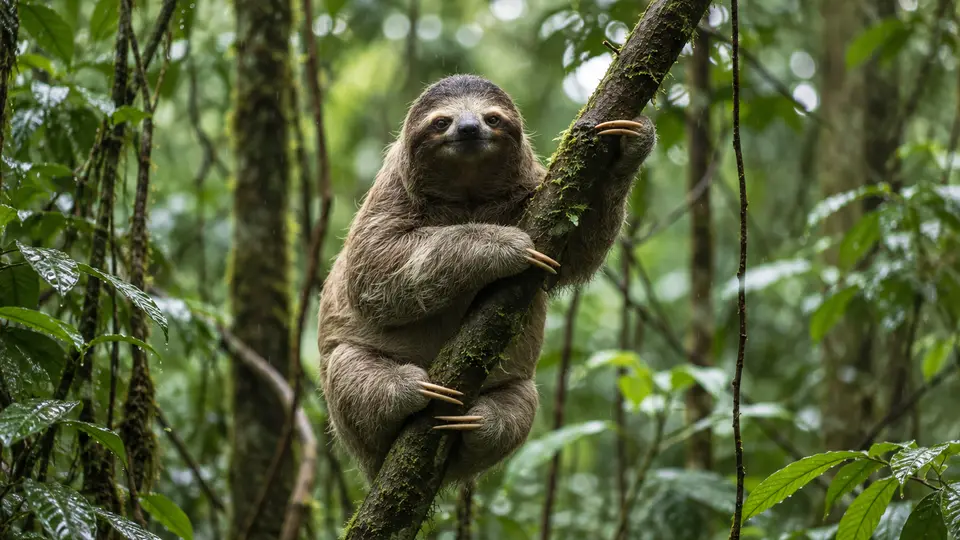
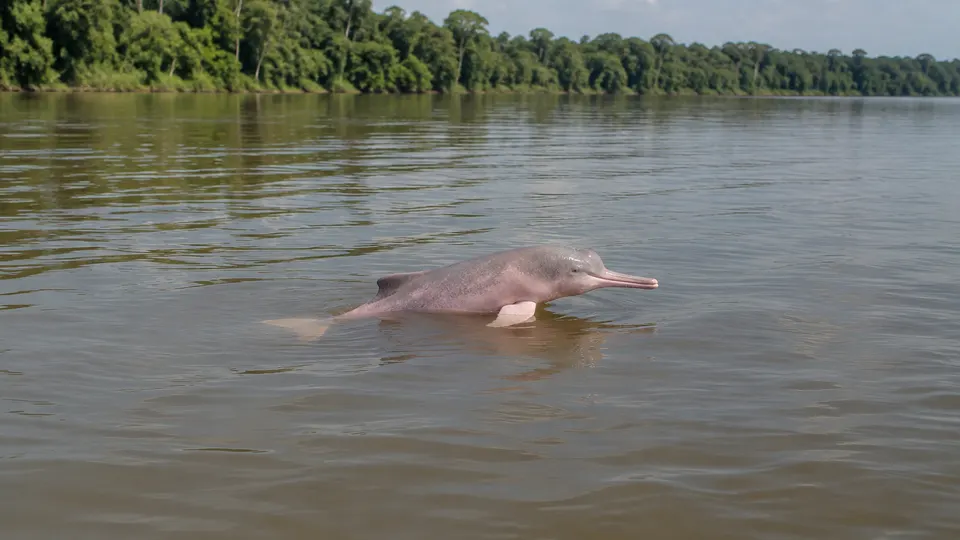
आर्द्रभूमि में Proboscis bat — Amazon, नदी क्रूज़ के वन्यजीवProboscis Batआर्द्रभूमि में Amazon river dolphin — Amazon, नदी क्रूज़ के वन्यजीवAmazon River Dolphinआर्द्रभूमि में Brown-throated sloth — Amazon, नदी क्रूज़ के वन्यजीवBrown-throated Sloth
पशु समूहMammalsपशु समूहMammalsपशु समूहMammals
डेस्टिनेशनAmazonडेस्टिनेशनAmazonडेस्टिनेशनAmazon
Scientific name
Rhynchonycteris naso

Rhynchonycteris naso

Scientific name
Scientific name
आकार
A reliable standard body-length range was not verified; the retrieved ADW account has ambiguous length wording.
आकार
आकार
वजन
3.8–3.9 g in the ADW account; pregnant females may reach 6 g.
वजन
वजन
जीवनकाल
Species-specific lifespan not verified.
जीवनकाल
जीवनकाल
स्थिति
Least Concern, as reported by Animal Diversity Web; a newer original assessment was not verified.
स्थिति
स्थिति
पहचान
The bat has grey-grizzled brown upperparts with two pale lines forming an hourglass-like pattern across the lower back and rump.

The bat has grey-grizzled brown upperparts with two pale lines forming an hourglass-like pattern across the lower back and rump. The underside is paler, while the ears and wing membranes are darker. The muzzle is conspicuously elongated, and regularly spaced pale fur tufts along the forearms are useful supporting marks. ADW distinguishes the species from related sac-winged bats partly through those facial and forearm features. A row of tiny shapes on bark is a promising clue but not a complete identification by itself. Look for the combination of roost position, pelage pattern and body structure. Numerical size deserves particular caution: the retrieved account’s length wording is ambiguous and its stated wingspan appears inconsistent, so those values are not repeated here as established measurements.

पहचान
पहचान
आवास
This species is closely associated with tropical lowland watercourses.

This species is closely associated with tropical lowland watercourses. ADW describes roosts on trunks and roots overhanging water, often in relatively well-lit situations, and reports use of some human-made structures too. Slowly or moderately moving water is more relevant than exposed fast current. On the Peruvian itinerary, sheltered tributary edges and side channels offer the appropriate search setting, but the species’ general habitat preference does not establish a roost on every suitable trunk. Roost position and bark pattern can make animals almost invisible from a moving boat. The important habitat connection is both structural and aquatic: a stable resting surface near water sits beside the airspace in which insects are hunted. Retaining overhanging shoreline trees protects something that a clear open-water view alone would fail to reveal.

आवास
आवास
आहार
Proboscis Bats eat insects rather than fruit, nectar, fish or blood.

Proboscis Bats eat insects rather than fruit, nectar, fish or blood. The ADW account identifies flies, especially midges and mosquitoes, as important prey, with beetles and caddisflies also found in stomach-content studies. Hunting occurs in the air over water, where suitable insects can be abundant. These findings explain why the bat belongs in a river-wildlife collection without implying that it removes any measured number of mosquitoes from a particular cruise landing. No local Peruvian prey percentages or feeding-rate estimate were verified. A daytime roosting observation will generally show resting behaviour, not feeding, and visitors should not try to provoke flight to demonstrate the animal’s hunting ability. Avoid presenting generalized claims about bat pest control as a quantified ecological service supplied by this species at this reach.

आहार
आहार
सबसे अच्छा मौसम
The route-specific evidence is a single 2017 cruise list, not a recurring monthly roost survey.

The route-specific evidence is a single 2017 cruise list, not a recurring monthly roost survey. It cannot establish a numerical season, even if the species is broadly described as resident in parts of its range. The Amazon location therefore has no assigned months. The practical distinction for visitors is between daytime roost viewing and an authorised night outing. A daylight search can offer a stationary view of identifiable features, while a night excursion may reveal bats whose identity remains uncertain without specialist methods. Ask the local guide about accessible roosts and current restrictions rather than choosing dates from regional rainfall patterns. Water level can change a boat’s approach angle, but no unverified flood-season rule is substituted for a documented observation calendar in this profile.

सबसे अच्छा मौसम
सबसे अच्छा मौसम
गंतव्य के अनुसार सीजन मैट्रिक्स
AmazonNo verified monthly viewing evidence

The March 2017 cruise list is a single dated itinerary, not a recurring seasonal source. No months assigned.

गंतव्य के अनुसार सीजन मैट्रिक्सगंतव्य के अनुसार सीजन मैट्रिक्स
पिछली प्रजातिPlumbeous Kiteअगली प्रजातिPurple Heron
नदी के सभी वन्यजीव
On this page
  • 01लगभग
  • 02व्यवहार और प्रजनन
  • 03वन्यजीवों के प्रमुख स्थान
  • 04रोचक तथ्य
  • 05सबसे अच्छा मौसम
  • 06गंतव्य के अनुसार सीजन मैट्रिक्स
  • 07आवास
  • 08आहार
  • 09प्रजातियों पर एक नज़र
  • 10प्रश्न और उत्तर
  • 11तुलना करें

Find your river cruise

अपनी यात्रा की योजना बनाएं

अपना अगला रिवर क्रूज़ सफर खोजो

उन गंतव्यों, तटवर्ती कार्यक्रमों और तारीखों की तुलना करें जहाँ आप अपने पसंदीदा जानवरों और उनके प्राकृतिक आवासों को देख सकें।

  • दैनिक तटवर्ती भ्रमण
  • जिम्मेदारी के साथ वन्यजीव दर्शन
  • बुटीक रिवर शिप्स
रिवर क्रूज एक्सप्लोर करें