Bluerides – Blue Rides - दुनिया भर में लिवअबोर्ड डाइविंग बुक करेंOCEAN ADVENTURES
रिवर क्रूज़नदियाँप्रकृति और वन्यजीवहमारा वादा
रिवर क्रूज़नदियाँप्रकृति और वन्यजीवहमारा वादासाइन इन करें

River गंतव्य

  • River गंतव्य
  • Amazon
  • Danube
  • Rhine
  • Mekong
  • Nile

जहाज़ और प्रस्थान

  • River Cruise खोजें
  • ऑफ़र

प्रकृति और वन्यजीव

  • प्रकृति और वन्यजीव

यात्रा सहायता

  • हमारा वादा
  • संपर्क

संपर्क करें

संपर्क करें

कभी भी संपर्क करें, हम आपकी यात्रा चुनने या किसी भी सवाल में मदद करने को तैयार हैं।

ईमेलहमें लिखें, आमतौर पर कुछ ही घंटों में जवाब देते हैं।
contact@bluerides.com
व्हाट्सएपव्हाट्सएप पर हमसे चैट करें, सोम–शुक्र 10:00–16:00 (CET)।
WhatsApp चैट शुरू करें
फ़ोनहमें कॉल करें, हम खुशी से मदद करेंगे।
फ्री कॉल, सोम–शुक्र 10:00–20:00 (CET)।
यूरोप+49 800 1144 990यूएसए+1 888 557 7735यूके+44 800 707 4152ऑस्ट्रेलिया+61 2 8599 6113कनाडा+1 888 557 7735
Which river journey is yours?Answer 8 quick questions and find the river cruise that fits you.
8 questions, 1 minute·Plus Gift
सुरक्षित भुगतान विधियाँआपके भुगतान AES-256 एन्क्रिप्शन द्वारा पूरी तरह सुरक्षित हैं।
द्वारा संचालितStripeWiseAMEXPayGoogle PaySEPABank
छाप·नियम और शर्तें·गोपनीयता नीति·हमारे बारे में·संपर्क करें·दायित्व अस्वीकरण·संबद्ध कार्यक्रम·Cruise·
यहाँ हमसे जुड़ें

© 2026 Blue Rides. सर्वाधिकार सुरक्षित।·

Bluerides – Blue Rides - दुनिया भर में लिवअबोर्ड डाइविंग बुक करेंOCEAN ADVENTURES
रिवर क्रूज़नदियाँप्रकृति और वन्यजीवहमारा वादा
रिवर क्रूज़नदियाँप्रकृति और वन्यजीवहमारा वादासाइन इन करें
आर्द्रभूमि में Common sandpiper — Danube, Rhine, Douro, नदी क्रूज़ के वन्यजीव
होम›रिवर क्रूज़›नदी के वन्यजीव›Common sandpiper

Common sandpiperActitis hypoleucosइन्हें कहाँ और कब देखें

पिछली प्रजातिCommon Redshankअगली प्रजातिCommon Snipe

Common sandpiper एक नज़र में

The Common Sandpiper is a small brown-and-white wader best recognized by its restless bobbing movement. Brown upperparts contrast with a clean white belly, and a small white projection rises at each side of the neck. Unlike shorebirds that typically gather in huge feeding flocks, it is often encountered in small numbers along a water edge. This profile covers separate registered stretches of the Danube, Rhine and Douro, each with its own limits. A river cruise can provide access to a nearby viewing area, but the boat itinerary and the wildlife site are not interchangeable. Check whether the relevant shore visit is actually included and whether there is time for patient observation. Historical occurrence is useful context rather than a promise of a present-day encounter. A local guide can help interpret recent records and distinguish similar birds without pushing closer to them.

व्यवहार और प्रजनन

आकार
Species-specific size not verified in the consulted source text
वजन
Species-specific weight not verified
जीवनकाल
Species-specific lifespan not verified
स्थिति
See sourced assessment

The bird repeatedly bobs its rear body and tail, a movement often called teetering. Its low flight over water alternates shallow wingbeats with brief glides on stiff, bowed wings. The RSPB describes a three-note flight call that may attract attention before the bird is seen. Donau-Auen independently describes the characteristic flight and a bird pumping its tail while sitting on a stone. Observe these behaviours without deliberately approaching close enough to make it fly. Watch a complete sequence from a settled position: movement, pauses, reactions to neighbours and changes as water conditions alter. A brief view can be enough to appreciate the bird without interrupting its activity. Do not provoke flight for a photograph or use calls to attract attention. Keep other visitors informed if birds are resting nearby, and allow space for natural feeding and retreat. Local disturbance and tide can change what is visible during a single visit.

वन्यजीवों के प्रमुख स्थान

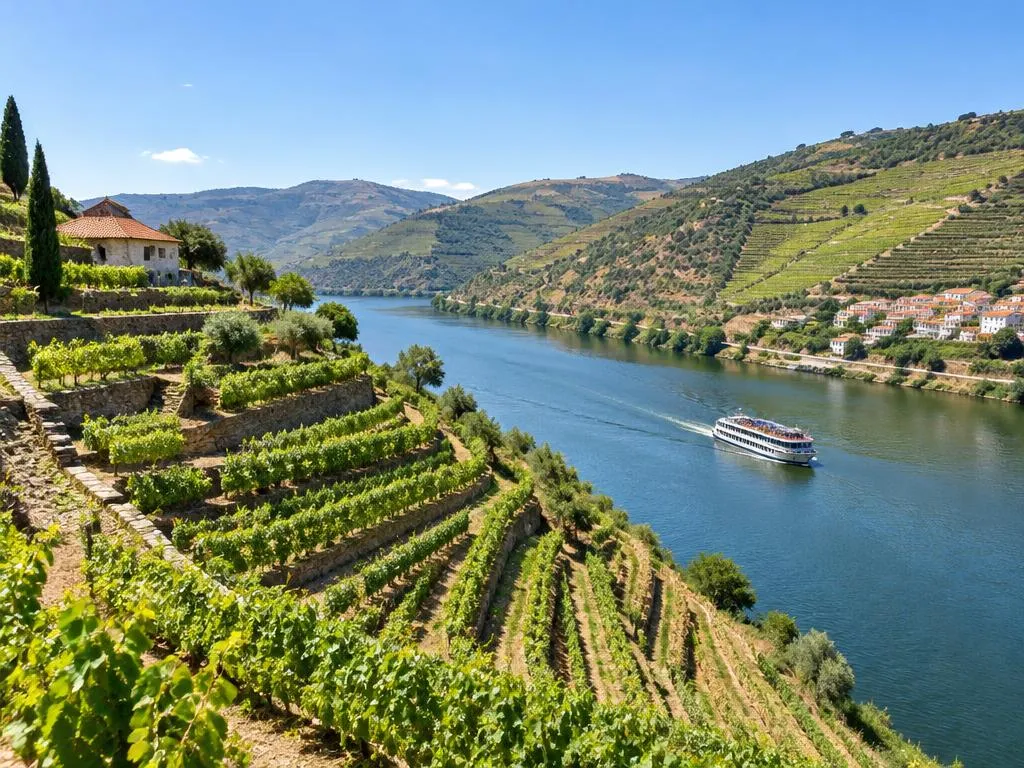
Danube का नदी दृश्य — नदी क्रूज़ के वन्यजीवों का आवास

Danube

Austria: Donau-Auen floodplains east of Vienna towards Hainburg, on Vienna–Bratislava reach; optional shore/backwater excursion, not Passau or Budapest. Best on spring/autumn passage; exposed stones and shorelines.

रिवर क्रूज एक्सप्लोर करें
Rhine का नदी दृश्य — नदी क्रूज़ के वन्यजीवों का आवास

Rhine

Lower end of Middle Rhine: Grafenwerth–Königswinter, south of Bonn/Cologne, not Cologne city. Best winter or spring/autumn passage; view from riverbank; use telescope for ducks and gravel banks.

रिवर क्रूज एक्सप्लोर करें
Douro का नदी दृश्य — नदी क्रूज़ के वन्यजीवों का आवास

Douro

Porto / Vila Nova de Gaia: Douro estuary reserve, Afurada–Cabedelo–São Paio; NOT a claim for inland Régua–Pinhão Accessible Porto shore visit with paths and hides; waders/gulls concentrated at low tide and migration/winter. Osprey and Short-eared Owl irregular/seasonal; no guaranteed sightings.

रिवर क्रूज एक्सप्लोर करें

गंतव्य प्रजातियों के प्राकृतिक आवास का वर्णन करते हैं, न कि क्रूज के निश्चित पड़ावों का। कुछ जानवरों को देखने के लिए वैकल्पिक अंतर्देशीय भ्रमण की आवश्यकता होती है या वे केवल प्रतिबंधित रिजर्व में पाए जाते हैं।

Common sandpiper के बारे में रोचक तथ्य

  • Teetering is its characteristic bobbing movement.
  • The belly is white and unmarked.
  • White plumage rises at the sides of the neck.
  • The legs can appear greyish or greenish.
  • Flight often stays close to the water.
  • Shallow wingbeats alternate with short glides.
  • The RSPB describes a three-note flight call.
  • The species uses fresh, brackish and salt water habitats.
  • Aves de Portugal specifically highlights winter occurrence at the Douro estuary.

Common sandpiper को देखने का सबसे अच्छा समय

Aves de Portugal specifically describes Common Sandpipers at the Douro estuary especially in winter. That exact local qualitative statement supports winter prose, not a guessed set of numbered months. The Danube registry emphasizes spring and autumn passage; the Rhine registry adds winter to spring and autumn passage. These are different local contexts, and no single season should be assigned indiscriminately to all three rivers. National year-round presence in Portugal is broader than any individual viewing site. For planning, ask about recent observations at the exact site, the tide during the available visit and any seasonal closures. A comfortable sailing season is not automatically the best wildlife season. Protected-site records describe occurrence within a particular geographical and historical context, not daily visibility. Keep flexibility in the shore programme and accept that an appropriate visit can still produce no sighting. Local weather, water conditions and disturbance may matter as much as the broad time of year.

Common sandpiper: गंतव्य के अनुसार सीजन मैट्रिक्स

Highlighted months reflect the stated local evidence, not guaranteed encounters. Neutral months mean no verified monthly viewing window, not absence. Observation records and recommended viewing windows are distinct.

Danube

जन॰फ़र॰मार्चअप्रैलमईजूनजुल॰अग॰सित॰अक्टू॰नव॰दिस॰
रिवर क्रूज एक्सप्लोर करें

Rhine

जन॰फ़र॰मार्चअप्रैलमईजूनजुल॰अग॰सित॰अक्टू॰नव॰दिस॰
रिवर क्रूज एक्सप्लोर करें

Douro

जन॰फ़र॰मार्चअप्रैलमईजूनजुल॰अग॰सित॰अक्टू॰नव॰दिस॰
रिवर क्रूज एक्सप्लोर करें

Common sandpiper कहाँ रहता है

Common Sandpipers use freshwater, brackish and saline wetlands, including river margins, small weirs, flooded marshes and estuaries. Aves de Portugal notes that numbers vary with local water conditions. Exposed stones and shorelines are particularly relevant to the registered Danube and Rhine viewing contexts. The Douro record instead concerns the estuary reserve at Porto and Vila Nova de Gaia. These different water-edge habitats should not be collapsed into a claim of uniform presence throughout three river systems. Suitable habitat is only one part of a responsible visit. Access must also be lawful, safe and compatible with reserve management. Remain on established paths or in public observation facilities, and do not cross mud, dunes or protected shore to shorten the viewing distance. Consult current access notices before setting out. The presence of a wetland on a map does not show whether it is open, visible from a cruise deck or suitable for an unsupervised landing.

Common sandpiper क्या खाता है

Common Sandpipers search for small animal prey along wet margins and exposed shore surfaces. Their water-edge activity should be distinguished from simply resting on a stone: a teetering bird is not necessarily feeding at that moment. Watch for purposeful searching and brief picking movements without trying to identify tiny prey from an inadequate view. The consulted local and identification accounts do not establish prey proportions, feeding rates or a separate diet for the Danube, Rhine or Douro populations. Natural food availability changes with water levels, exposed surfaces and local conditions. Feeding observations are most useful when made quietly over time rather than by following one bird along the shore. Never bait wildlife or throw food from the deck, a path or a hide. If a bird repeatedly stops feeding to watch your group, increase the distance. A telescope or long lens can show natural searching behaviour while leaving the bird access to its preferred feeding and resting space.

प्रजातियों पर एक नज़र

सामान्य नाम
Common sandpiper
Scientific name
Actitis hypoleucos
पशु समूह
Birds
आकार
Species-specific size not verified in the consulted source text
वजन
Species-specific weight not verified
जीवनकाल
Species-specific lifespan not verified
स्थिति
Aves de Portugal lists Vulnerable status in Portugal; this is not presented as a current global assessment.
पहचान
Look for brown upperparts, a white unmarked belly and the small white tongue of plumage extending up at each side of the neck. Aves de Portugal describes greyish or greenish legs. Persistent teetering is a strong behavioural clue, and a departing bird often flies low with stiff, bowed wings. The RSPB highlights its three-note flight call. Combining posture, neck pattern, movement and flight is more reliable than identifying any solitary brown wader by habitat alone. Use binoculars first to locate the bird, then a telescope if available to check fine details from the permitted viewpoint. Compare more than one feature, because posture, distance and strong reflections can change its apparent shape and colour. A photograph is helpful only if obtained without disturbing the bird. If important marks remain hidden, leave the identification provisional rather than moving into protected habitat or flushing the bird to force a clearer view.

Common sandpiper: अक्सर पूछे जाने वाले प्रश्न

तुम Common sandpiper कहाँ देख सकते हो?
Danube, Rhine, Douro. Use authorized shore viewpoints, public paths and hides, with binoculars or a telescope rather than a close approach. Austria: Donau-Auen floodplains east of Vienna towards Hainburg, on Vienna–Bratislava reach; optional shore/backwater excursion, not Passau or Budapest. Best on spring/autumn passage; exposed stones and shorelines. Lower end of Middle Rhine: Grafenwerth–Königswinter, south of Bonn/Cologne, not Cologne city. Best winter or spring/autumn passage; view from riverbank; use telescope for ducks and gravel banks. Porto / Vila Nova de Gaia: Douro estuary reserve, Afurada–Cabedelo–São Paio; NOT a claim for inland Régua–Pinhão Accessible Porto shore visit with paths and hides; waders/gulls concentrated at low tide and migration/winter. Osprey and Short-eared Owl irregular/seasonal; no guaranteed sightings. Keep away from nests and roosts, never feed birds and avoid playback. Check current access restrictions before the visit; a cruise stop does not automatically include permission to enter a reserve. Allow birds to move and feed naturally, and do not follow them across exposed flats. Sightings are not guaranteed.
Common sandpiper देखने का सबसे अच्छा समय कब है?
Aves de Portugal specifically describes Common Sandpipers at the Douro estuary especially in winter. That exact local qualitative statement supports winter prose, not a guessed set of numbered months. The Danube registry emphasizes spring and autumn passage; the Rhine registry adds winter to spring and autumn passage. These are different local contexts, and no single season should be assigned indiscriminately to all three rivers. National year-round presence in Portugal is broader than any individual viewing site. For planning, ask about recent observations at the exact site, the tide during the available visit and any seasonal closures. A comfortable sailing season is not automatically the best wildlife season. Protected-site records describe occurrence within a particular geographical and historical context, not daily visibility. Keep flexibility in the shore programme and accept that an appropriate visit can still produce no sighting. Local weather, water conditions and disturbance may matter as much as the broad time of year.
Common sandpiper कितने बड़े होते हैं?
Species-specific size not verified in the consulted source text। वयस्क वजन: Species-specific weight not verified। आकार उम्र, लिंग और आबादी के साथ बदलता रहता है।
Common sandpiper के आस-पास मुझे कैसा व्यवहार करना चाहिए?
Use authorized shore viewpoints, public paths and hides, with binoculars or a telescope rather than a close approach. Austria: Donau-Auen floodplains east of Vienna towards Hainburg, on Vienna–Bratislava reach; optional shore/backwater excursion, not Passau or Budapest. Best on spring/autumn passage; exposed stones and shorelines. Lower end of Middle Rhine: Grafenwerth–Königswinter, south of Bonn/Cologne, not Cologne city. Best winter or spring/autumn passage; view from riverbank; use telescope for ducks and gravel banks. Porto / Vila Nova de Gaia: Douro estuary reserve, Afurada–Cabedelo–São Paio; NOT a claim for inland Régua–Pinhão Accessible Porto shore visit with paths and hides; waders/gulls concentrated at low tide and migration/winter. Osprey and Short-eared Owl irregular/seasonal; no guaranteed sightings. Keep away from nests and roosts, never feed birds and avoid playback. Check current access restrictions before the visit; a cruise stop does not automatically include permission to enter a reserve. Allow birds to move and feed naturally, and do not follow them across exposed flats. Sightings are not guaranteed.
Common sandpiper क्या खाते हैं?
Common Sandpipers search for small animal prey along wet margins and exposed shore surfaces. Their water-edge activity should be distinguished from simply resting on a stone: a teetering bird is not necessarily feeding at that moment. Watch for purposeful searching and brief picking movements without trying to identify tiny prey from an inadequate view. The consulted local and identification accounts do not establish prey proportions, feeding rates or a separate diet for the Danube, Rhine or Douro populations. Natural food availability changes with water levels, exposed surfaces and local conditions. Feeding observations are most useful when made quietly over time rather than by following one bird along the shore. Never bait wildlife or throw food from the deck, a path or a hide. If a bird repeatedly stops feeding to watch your group, increase the distance. A telescope or long lens can show natural searching behaviour while leaving the bird access to its preferred feeding and resting space.
क्या रिवर क्रूज पर वन्यजीवों का दिखना निश्चित है?
नहीं। जानवर स्वतंत्र रूप से घूमते हैं और मार्ग, मौसम, पहुंच प्रतिबंध और स्थानीय स्थितियां हर यात्रा को प्रभावित करती हैं। बुकिंग से पहले वास्तविक यात्रा कार्यक्रम और तट कार्यक्रम की पुष्टि करें।

उन्हीं गंतव्यों में वन्यजीवों की तुलना करें

इन गंतव्यों में दर्ज अन्य birds को एक्सप्लोर करें। समान परिवेश का अर्थ यह नहीं है कि जानवरों की आदतें या देखने का सीजन भी एक जैसा होगा।

पशु समूह और गंतव्य के अनुसार प्रजातियों की तुलना
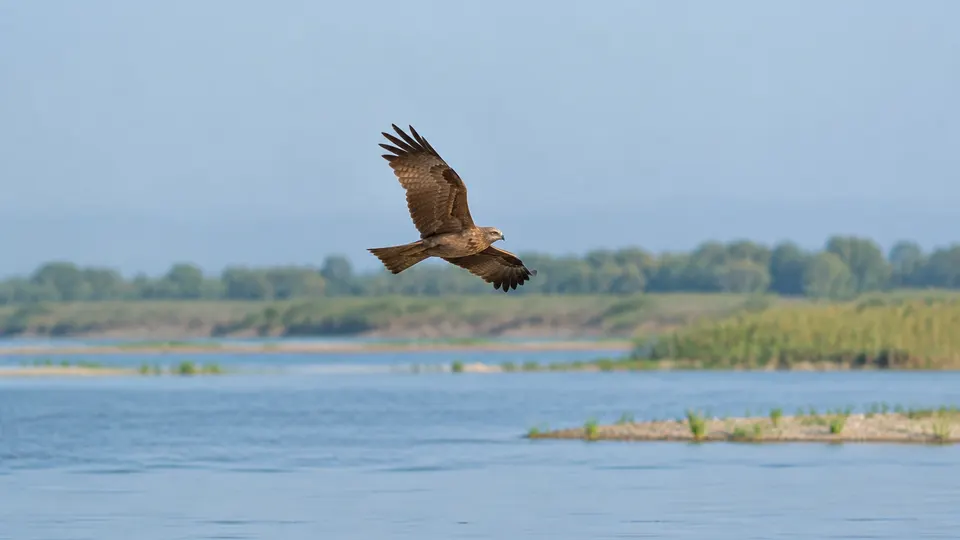
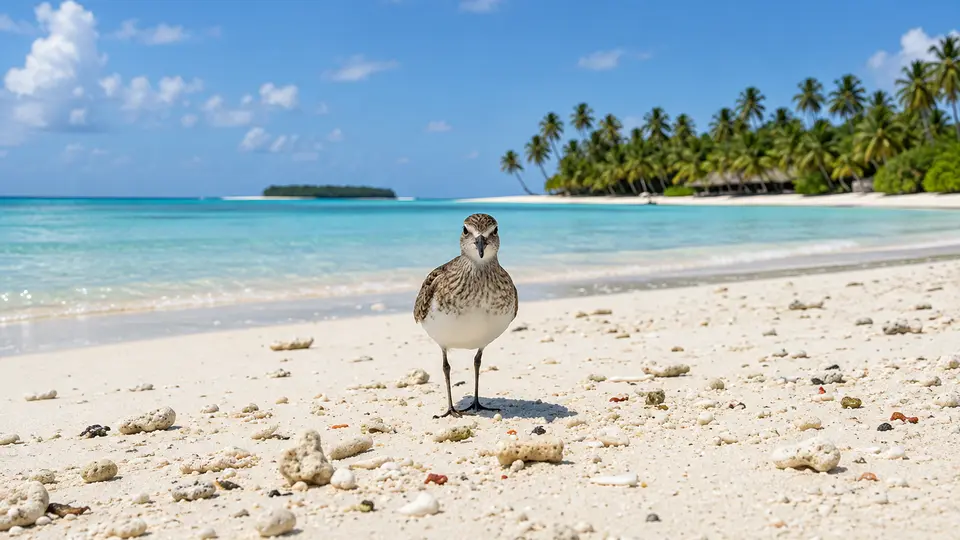
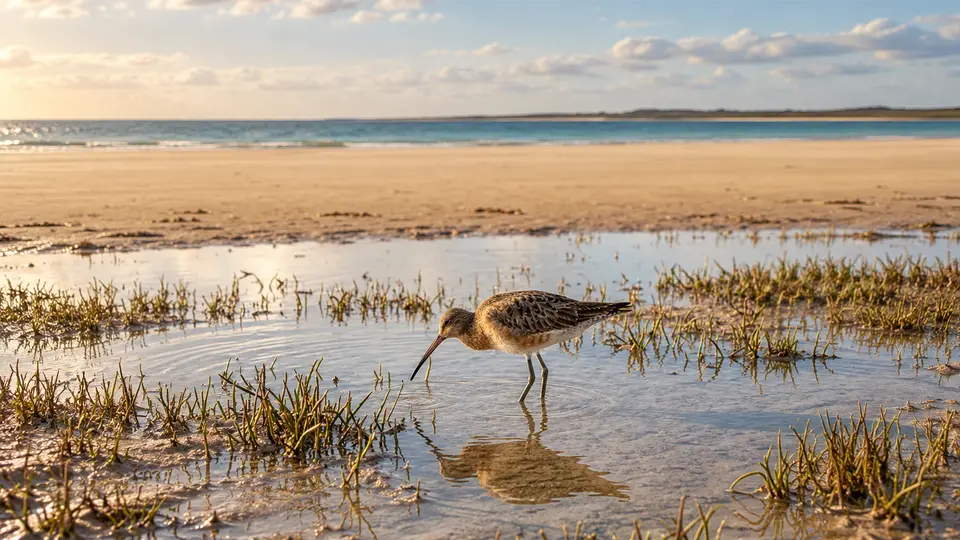
आर्द्रभूमि में Common sandpiper — Danube, Rhine, Douro, नदी क्रूज़ के वन्यजीवCommon sandpiperआर्द्रभूमि में Bar-tailed godwit — Douro, नदी क्रूज़ के वन्यजीवBar-tailed godwitआर्द्रभूमि में Black kite — Danube, Rhine, नदी क्रूज़ के वन्यजीवBlack Kite
पशु समूहBirdsपशु समूहBirdsपशु समूहBirds
डेस्टिनेशनDanube, Rhine, Douroडेस्टिनेशनDouroडेस्टिनेशनDanube, Rhine
Scientific name
Actitis hypoleucos

Actitis hypoleucos

Scientific name
Scientific name
आकार
Species-specific size not verified in the consulted source text
आकार
आकार
वजन
Species-specific weight not verified
वजन
वजन
जीवनकाल
Species-specific lifespan not verified
जीवनकाल
जीवनकाल
स्थिति
See sourced assessment
स्थिति
स्थिति
पहचान
Look for brown upperparts, a white unmarked belly and the small white tongue of plumage extending up at each side of the neck.

Look for brown upperparts, a white unmarked belly and the small white tongue of plumage extending up at each side of the neck. Aves de Portugal describes greyish or greenish legs. Persistent teetering is a strong behavioural clue, and a departing bird often flies low with stiff, bowed wings. The RSPB highlights its three-note flight call. Combining posture, neck pattern, movement and flight is more reliable than identifying any solitary brown wader by habitat alone. Use binoculars first to locate the bird, then a telescope if available to check fine details from the permitted viewpoint. Compare more than one feature, because posture, distance and strong reflections can change its apparent shape and colour. A photograph is helpful only if obtained without disturbing the bird. If important marks remain hidden, leave the identification provisional rather than moving into protected habitat or flushing the bird to force a clearer view.

पहचान
पहचान
आवास
Common Sandpipers use freshwater, brackish and saline wetlands, including river margins, small weirs, flooded marshes and estuaries.

Common Sandpipers use freshwater, brackish and saline wetlands, including river margins, small weirs, flooded marshes and estuaries. Aves de Portugal notes that numbers vary with local water conditions. Exposed stones and shorelines are particularly relevant to the registered Danube and Rhine viewing contexts. The Douro record instead concerns the estuary reserve at Porto and Vila Nova de Gaia. These different water-edge habitats should not be collapsed into a claim of uniform presence throughout three river systems. Suitable habitat is only one part of a responsible visit. Access must also be lawful, safe and compatible with reserve management. Remain on established paths or in public observation facilities, and do not cross mud, dunes or protected shore to shorten the viewing distance. Consult current access notices before setting out. The presence of a wetland on a map does not show whether it is open, visible from a cruise deck or suitable for an unsupervised landing.

आवास
आवास
आहार
Common Sandpipers search for small animal prey along wet margins and exposed shore surfaces.

Common Sandpipers search for small animal prey along wet margins and exposed shore surfaces. Their water-edge activity should be distinguished from simply resting on a stone: a teetering bird is not necessarily feeding at that moment. Watch for purposeful searching and brief picking movements without trying to identify tiny prey from an inadequate view. The consulted local and identification accounts do not establish prey proportions, feeding rates or a separate diet for the Danube, Rhine or Douro populations. Natural food availability changes with water levels, exposed surfaces and local conditions. Feeding observations are most useful when made quietly over time rather than by following one bird along the shore. Never bait wildlife or throw food from the deck, a path or a hide. If a bird repeatedly stops feeding to watch your group, increase the distance. A telescope or long lens can show natural searching behaviour while leaving the bird access to its preferred feeding and resting space.

आहार
आहार
सबसे अच्छा मौसम
Aves de Portugal specifically describes Common Sandpipers at the Douro estuary especially in winter.

Aves de Portugal specifically describes Common Sandpipers at the Douro estuary especially in winter. That exact local qualitative statement supports winter prose, not a guessed set of numbered months. The Danube registry emphasizes spring and autumn passage; the Rhine registry adds winter to spring and autumn passage. These are different local contexts, and no single season should be assigned indiscriminately to all three rivers. National year-round presence in Portugal is broader than any individual viewing site. For planning, ask about recent observations at the exact site, the tide during the available visit and any seasonal closures. A comfortable sailing season is not automatically the best wildlife season. Protected-site records describe occurrence within a particular geographical and historical context, not daily visibility. Keep flexibility in the shore programme and accept that an appropriate visit can still produce no sighting. Local weather, water conditions and disturbance may matter as much as the broad time of year.

सबसे अच्छा मौसम
सबसे अच्छा मौसम
गंतव्य के अनुसार सीजन मैट्रिक्स
DanubeNo verified monthly viewing evidence

No verified monthly viewing evidence

RhineNo verified monthly viewing evidence

No verified monthly viewing evidence

DouroNo verified monthly viewing evidence

No verified monthly viewing evidence

गंतव्य के अनुसार सीजन मैट्रिक्सगंतव्य के अनुसार सीजन मैट्रिक्स
पिछली प्रजातिCommon Redshankअगली प्रजातिCommon Snipe
नदी के सभी वन्यजीव
On this page
  • 01लगभग
  • 02व्यवहार और प्रजनन
  • 03वन्यजीवों के प्रमुख स्थान
  • 04रोचक तथ्य
  • 05सबसे अच्छा मौसम
  • 06गंतव्य के अनुसार सीजन मैट्रिक्स
  • 07आवास
  • 08आहार
  • 09प्रजातियों पर एक नज़र
  • 10प्रश्न और उत्तर
  • 11तुलना करें

Find your river cruise

अपनी यात्रा की योजना बनाएं

अपना अगला रिवर क्रूज़ सफर खोजो

उन गंतव्यों, तटवर्ती कार्यक्रमों और तारीखों की तुलना करें जहाँ आप अपने पसंदीदा जानवरों और उनके प्राकृतिक आवासों को देख सकें।

  • दैनिक तटवर्ती भ्रमण
  • जिम्मेदारी के साथ वन्यजीव दर्शन
  • बुटीक रिवर शिप्स
रिवर क्रूज एक्सप्लोर करें