À propos de Camano Islet
L'îlot Camano offre une expérience de plongée accessible et douce au sein de l'archipel des Galápagos, se distinguant comme un site adapté aux plongeurs moins expérimentés. Contrairement à de nombreux sites plus exigeants de la région, il offre aux plongeurs débutants l'opportunité de découvrir la riche biodiversité sous-marine des Galápagos dans un environnement calme et confortable. La topographie se caractérise généralement par des courants faibles et des profondeurs moindres, créant un cadre détendu pour ceux qui ont moins de plongées à leur actif. Cette configuration te permet d'explorer confortablement le paysage sous-marin sans les conditions exigeantes que l'on trouve ailleurs dans les îles. Bien que les détails structurels spécifiques ne soient pas fournis dans les sources, la description générale suggère un environnement de type récifal propice à une exploration facile. Bien que les observations détaillées de la vie marine ne soient pas explicitement listées pour l'îlot Camano, les sites adaptés aux débutants aux Galápagos abritent généralement une variété de poissons de récif colorés et de tortues de mer. Il est également possible de rencontrer des espèces de requins résidentes, ce qui te permet d'apprécier la faune emblématique des Galápagos dans un cadre paisible. En pratique, le site se caractérise par des courants généralement faibles, ce qui en fait une plongée détendue adaptée à la plupart des plongeurs certifiés. Cet environnement peu exigeant permet une mise à l'eau confortable et une plongée agréable, contrastant avec les courants souvent forts rencontrés sur d'autres sites des Galápagos. Il représente un lieu de choix pour les plongeurs qui cherchent une introduction plus douce au célèbre monde sous-marin de la région.
Points forts
Destination de plongée toute l'annéeConfluence des grands courants océaniquesRequins-baleines (saisonniers)Bancs de requins-marteauxOtaries des GalápagosIgnes marines (saisonnières)Courants forts et thermoclinesBiodiversité marine exceptionnelle
Calendrier saisonnier
Meilleurs mois pour plonger
Jan
Fév
Mar
Avr
Mai
Juin
Juil
Août
Sep
Oct
Nov
Déc
Excellent
Bon
Fiche du site de plongée: Camano Islet
- Profondeur
- 70–114 ft
- Courant
- Modérée à Très fort
- Visibilité
- 15–30 m
- Température de l'eau
- 19–26°C
- Mise à l'eau
- Croisière plongée / Annexe
- Niveau
- Confirmé, expérience du courant indispensable
- Type de plongée
- Big animals, Dérivante, Pélagique
- Région / port
- Galápagos Islands
- Coordonnées
- -0.28386, -91.070359
Conditions & courants
À l'îlot Camano, les courants sont généralement faibles, ce qui contribue à un environnement de plongée détendu et adapté à la plupart des plongeurs certifiés. Cela contraste fortement avec de nombreux autres sites des Galápagos qui présentent souvent des courants forts, en particulier pendant la saison fraîche de juin à novembre. Ces conditions plus calmes signifient que les plongeurs moins avancés peuvent gérer confortablement leur flottabilité et leur navigation sans avoir besoin de techniques avancées de plongée en courant, comme les entrées négatives ou les crochets de récif. La visibilité peut varier à travers les Galápagos, mais les conditions clémentes de l'îlot Camano permettent généralement de vivre une expérience agréable. Cela en fait un lieu idéal pour les plongeurs qui préfèrent une exploration plus tranquille, sans houle importante ni les défis posés par les forts courants pélagiques, garantissant ainsi une expérience de plongée agréable.
Faune marine et probabilité d'observation

Hammerhead sharks
Year-round, larger schools Dec-May · fréquent
Whale sharks
June-November · occasionnel
Manta rays
March-May · occasionnel
Galapagos sharks
Year-round · fréquent
Silky sharks
Year-round · occasionnel
Sea lions
Year-round · fréquent
Green sea turtles
Year-round · fréquent
Moray eels
Year-round · fréquent
White-tip reef sharks
Year-round · fréquent
Galapagos grunts
Year-round · fréquent
Bluestripe snappers
Year-round · fréquentProfil et déroulé de la plongée
Galápagos diving often involves negative entries into strong currents, with dive leaders typically assessing the prevailing conditions to determine the best approach. Divers should expect to drift with the current for much of the dive, using reef hooks when observing marine life in stationary positions. The dive profile is often multi-level, starting deeper to seek out pelagics and then gradually ascending along reefs or walls. Given the strong surge and potential for downcurrents, maintaining neutral buoyancy and being prepared for rapid depth changes is crucial. Safety stops are typically performed in the blue, potentially deploying a surface marker buoy (SMB) upon ascent, as currents can carry divers a considerable distance from the initial entry point. Dive times are often limited by air consumption in strenuous conditions and cold water.
Photographie sous-marine
Galápagos diving, with its strong currents and large pelagic subjects, demands careful planning for photography. Wide-angle lenses are essential for capturing schooling hammerheads, manta rays, and whale sharks. Due to often-turbid waters from nutrient-rich currents, close focus wide-angle techniques are beneficial. Strobes are crucial to add color and contrast, especially for deeper subjects or when visibility is reduced. Buoyancy control and efficient movement are paramount; flailing or uncontrolled movements will disturb marine life and compromise shot stability. Keeping a low profile close to rocks can help wildlife approach, but always be aware of potential hazards like scorpionfish. Photographing in strong surge requires anticipation and timing, often using the natural sway to position for shots.
À combiner avec ces sites
- North Seymour
Often a checkout dive site with diverse marine life and land tours.
- Gordon Rocks
Known for strong currents and hammerhead sharks.
- Cousin's Rock
Pinnacle dive with abundant reef fish and pelagic encounters.
- Kicker Rock (León Dormido)
Famous for shark encounters, including hammerheads and Galápagos sharks.
- Isla Tortuga - South Wall
Wall diving with potential for pelagic sightings.
Accès et logistique
Access to the Galápagos Islands typically begins with international flights into mainland Ecuador, either Guayaquil (GSP) or Quito (UIO), followed by a domestic flight to Baltra Island (GPS) or San Cristóbal Island (SCY). Most diving at premier sites, including Camano Islet, is conducted via liveaboard vessels, offering trips typically ranging from 7 to 10 nights. Liveaboards depart from and return to Baltra Island, near Santa Cruz, or San Cristóbal. Upon arrival at Baltra, divers transfer directly to their liveaboard. Park entry fees are required for all visitors to the Galápagos National Park, and a transit control card must also be purchased. Itineraries often combine dives at central islands with longer transits to more remote northern sites like Wolf and Darwin.
Sécurité et environnement
Diving in the Galápagos demands a high level of diver preparedness due to strong currents, significant surge, and cold water thermoclines. Divers should hold advanced certifications and possess extensive experience in current diving. It is highly recommended to carry a surface marker buoy (SMB), an Emergency Position Indicating Radio Beacon (EPIRB), or a personal locator device for safety in case of separation from the group or boat. Decompression sickness is a risk, so strict adherence to dive plans and slow ascents are critical. The nearest recompression chamber is located in Puerto Ayora on Santa Cruz Island. Medical evacuation from remote dive sites can be challenging and time-consuming. Comprehensive dive accident insurance and travel insurance with emergency evacuation coverage are essential for all divers visiting the Galápagos.
Pour qui — et pour qui pas
Adapté à
- Experienced divers comfortable with strong currents
- Advanced Open Water Divers
- Divers seeking large pelagic encounters
- Underwater photographers with wide-angle setups
- Those equipped for cold water and thermoclines
Moins adapté à
- Beginner divers or those with limited experience
- Divers uncomfortable with negative entries
- Individuals prone to seasickness in choppy conditions
- Divers without excellent buoyancy control skills
- Those without proper thermal protection for cold water
FAQ
FAQ Camano Islet
What is the best time of year to dive in the Galápagos for whale sharks?
The peak season for whale shark encounters in the Galápagos is generally from June to November. During these cooler months, the nutrient-rich upwellings attract these majestic creatures to the islands. While sightings are never guaranteed, this period offers the highest probability for divers hoping to swim with whale sharks.
How strong are the currents in the Galápagos?
The currents in the Galápagos can be very strong, often exceeding 5 knots at popular dive sites. These powerful currents are a result of major oceanic flows converging around the islands. Divers must be proficient in drift diving techniques and prepared for vigorous conditions, sometimes requiring the use of reef hooks to stay in place.
Is the water cold in the Galápagos, and what wetsuit should I bring?
Water temperatures in the Galápagos can vary significantly, ranging from 19-23°C (66-73°F) during the cooler season (June-November) and 22-26°C (72-79°F) in the warmer months (December-May). Additionally, thermoclines can cause sudden drops to 12-15°C. A 7mm wetsuit, possibly with a hood and gloves, is highly recommended for thermal comfort, especially during the colder months or longer dives.
Do I need special certifications to dive in the Galápagos?
While PADI or SSI certification is mandatory, the Galápagos generally requires divers to be Advanced Open Water certified or equivalent, with significant experience in strong currents. Some sites may have minimum logged dive requirements of 10, 15, or even 30 dives. Beginner divers may find easier sites during the warmer months, but the destination is primarily suited for experienced divers.
What kind of marine life can I expect to see while diving in the Galápagos?
The Galápagos Islands are a hotspot for diverse marine life. Divers frequently encounter schooling hammerhead sharks, Galápagos sharks, and white-tip reef sharks. Depending on the season, you might also see whale sharks, giant manta rays, marine iguanas, playful sea lions, green sea turtles, and various schooling fish like bluestripe snappers and Galápagos grunts.
Pourquoi plonger Camano Islet en croisière ?
Camano Islet est un site emblématique de Galápagos. Une croisière te loge sur l'eau et propose trois à quatre plongées guidées par jour, dont des plongées à l'aube et de nuit que les bateaux à la journée offrent rarement. Tu évites le retour quotidien au port et atteins des sites plus tranquilles de la même région en un seul voyage.
Voici les croisières qui incluent Camano Islet dans leurs itinéraires en Galápagos.
Croisières plongée à Camano Islet
Ces croisières plongée peuvent visiter Camano Islet sur certains itinéraires — les sites exacts dépendent du départ, de la météo et des conditions.
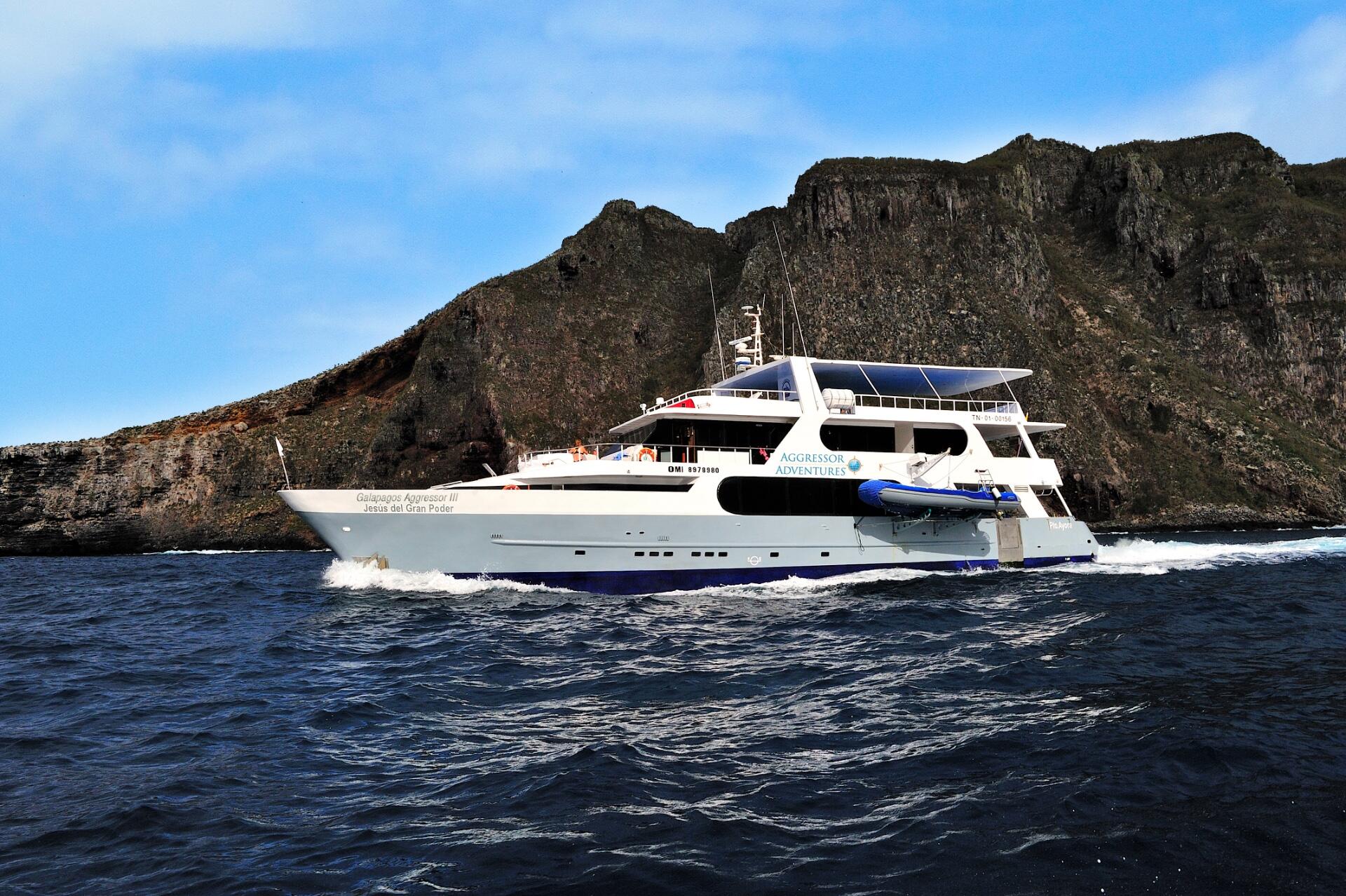
Galapagos Aggressor III
Galápagos
16 plongeurs30.5 m
€803/jour
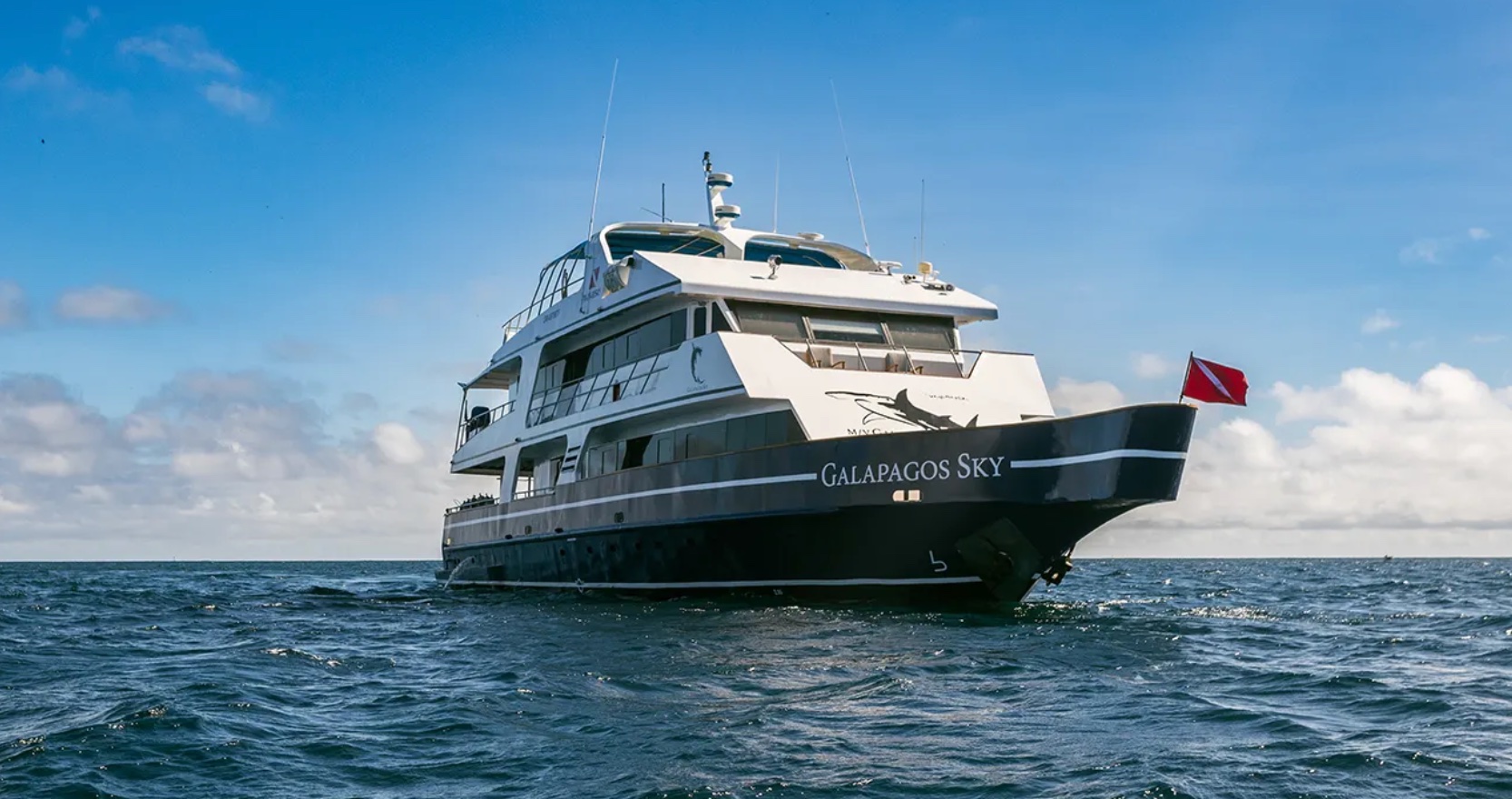
Galapagos Sky
Galápagos
16 plongeurs
€824/jour
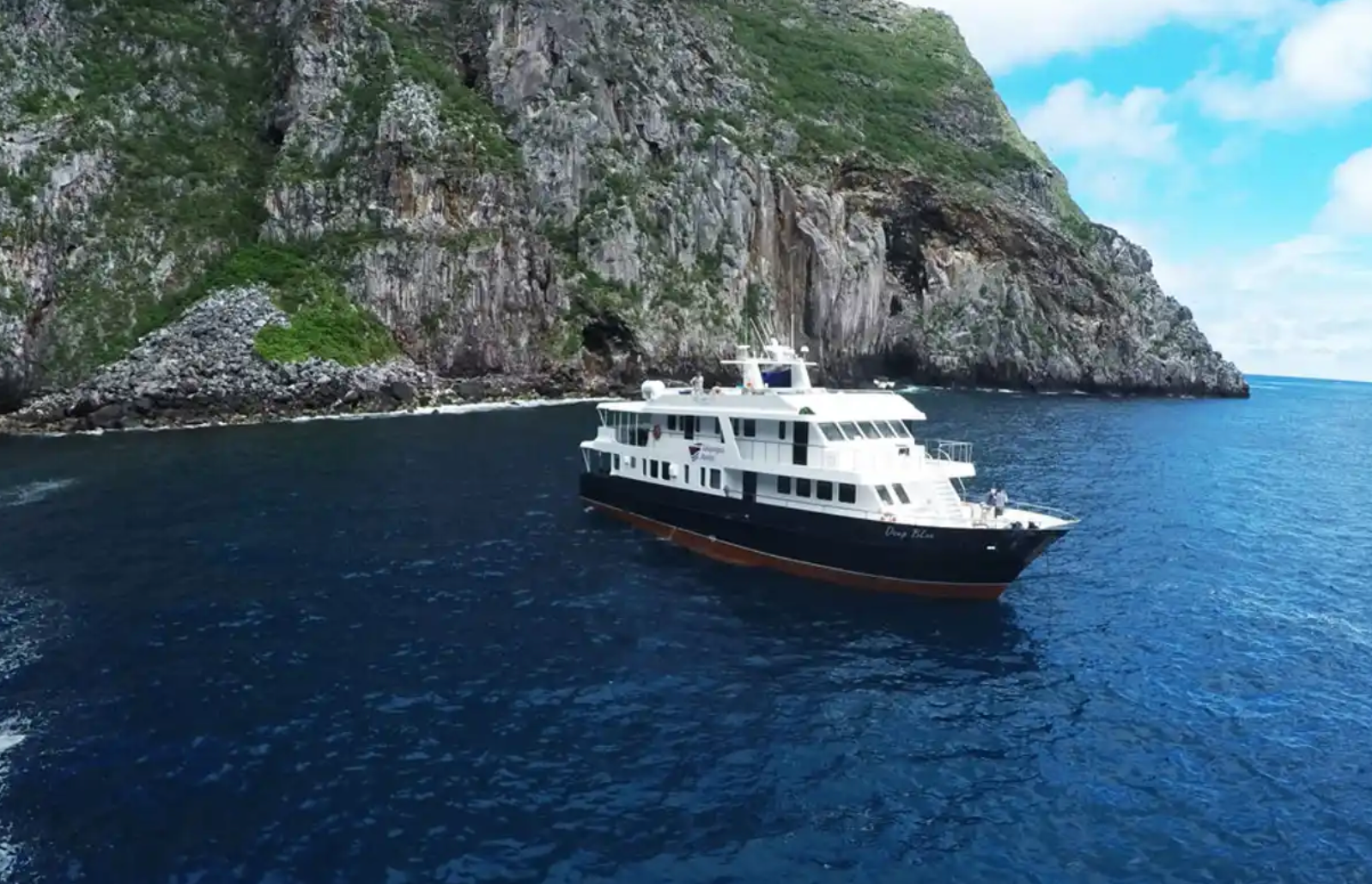
Galapagos Master
Galápagos
16 plongeurs
€589/jour
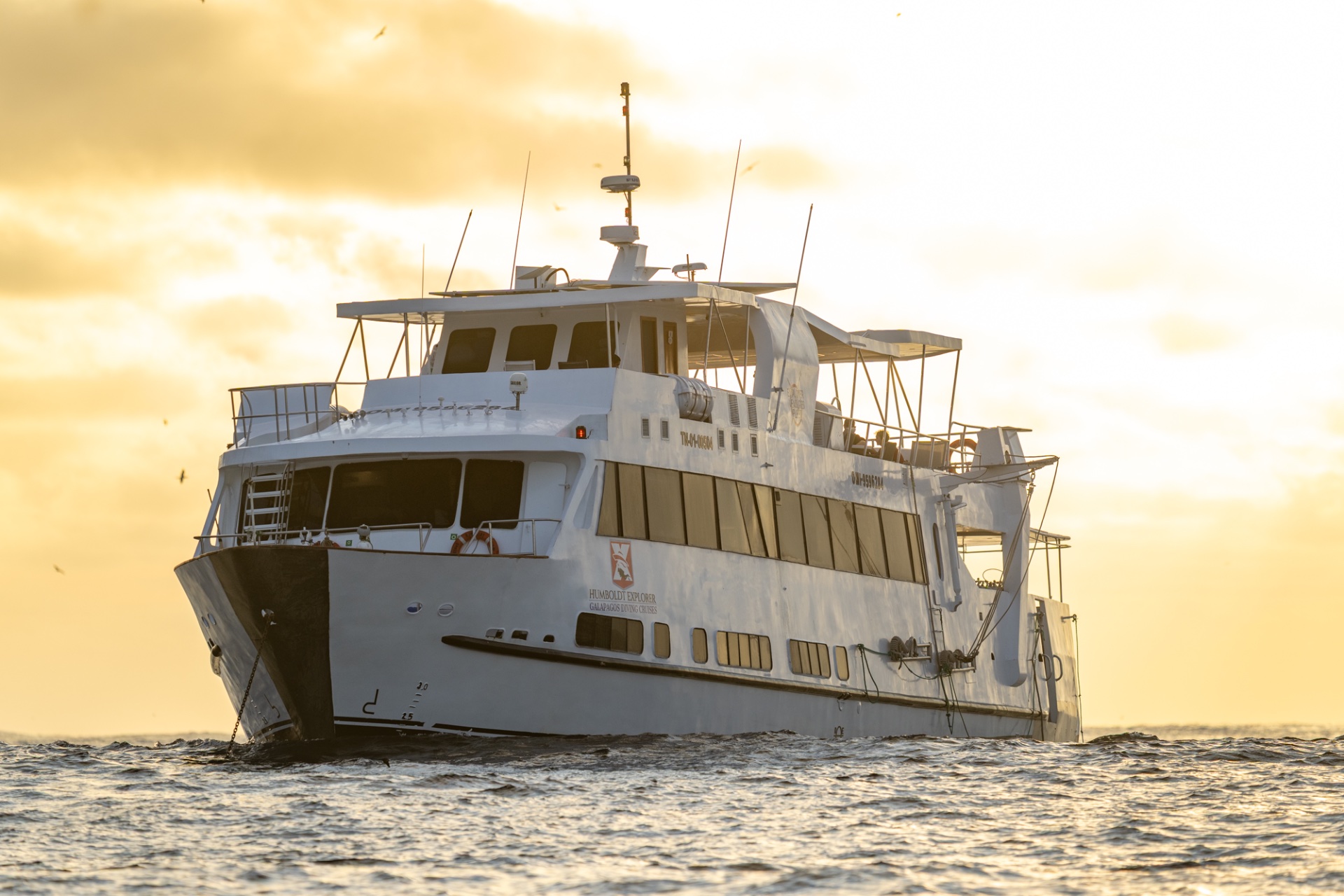
Humboldt Explorer
Galápagos
16 plongeurs
€538/jour
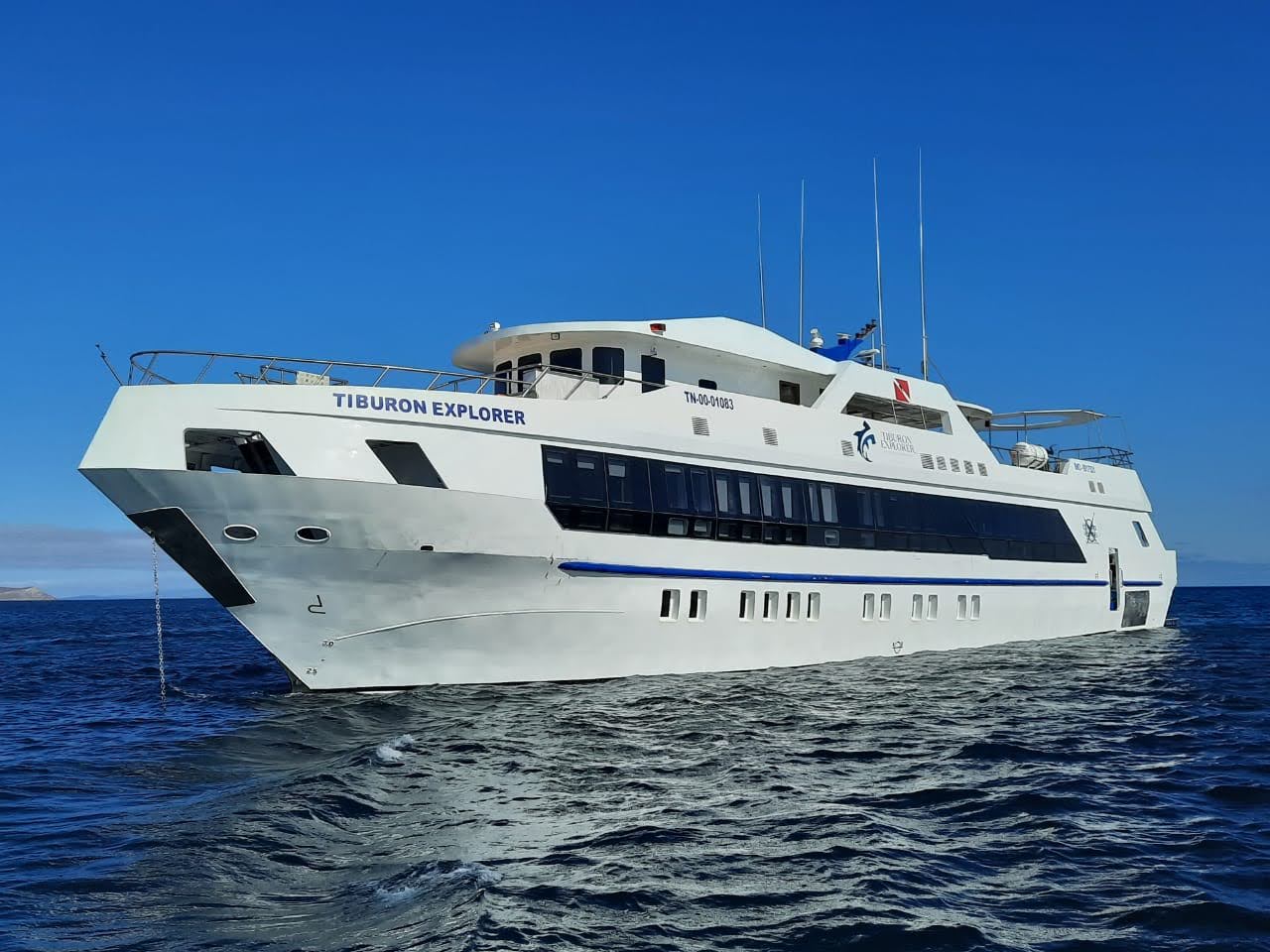
Tiburon Explorer
Galápagos
16 plongeurs
€813/jour
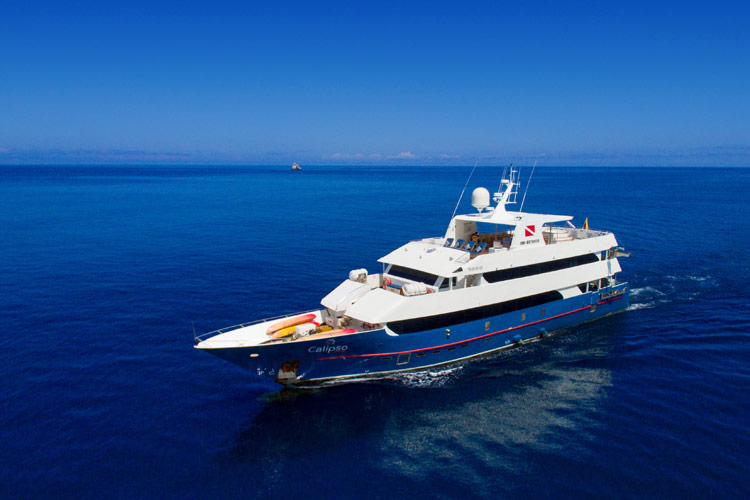
Calipso
Galápagos
16 plongeurs
€721/jour
Sites de plongée similaires à Camano Islet
Même ambiance, mêmes eaux : six autres sites appréciés pour les mêmes raisons.Comparez les saisons, l'accès et les itinéraires de liveaboard, puis choisissez le site qui correspond à votre voyage.
© Esri — Maxar, Earthstar, GIS
Floreana - La Couronne du Diable
Galápagos
Devil's Crown, situé au large de l'île Floreana aux Galápagos, est réputé pour être l'une des destinations de plongée et de PMT les plus spectaculaires de l'archipel.
- Adapté à
- Débutant
- Courant
- Fort
- Accès
- Croisière uniquement
- Profondeur
- 3–15 m
- Thème
- Récif
© Esri — Maxar, Earthstar, GIS
Îles Plaza
Galápagos
Les îles Plaza, et plus particulièrement l'île Plaza Sud, sont un site de plongée remarquable de l'archipel des Galápagos, réputé pour offrir une expérience adaptée aux plongeurs…
- Adapté à
- Débutant
- Courant
- Faible
- Accès
- Croisière ou bateau à la journée
- Profondeur
- —
- Thème
- Récif
Pinzon est situé au cœur de l'archipel des Galápagos, une zone caractérisée par des eaux généralement plus chaudes et plus protégées que les régions du nord ou de l'ouest.
- Adapté à
- Avancé
- Courant
- Fort
- Accès
- Croisière ou bateau à la journée
- Profondeur
- ≤ 18 m
- Thème
- Récif / Dérivante
L'île de Santa Fe, également connue sous son nom anglais Barrington, est un site de plongée unique de l'archipel des Galápagos, remarquable par son âge géologique important et son fort degré d'endémisme.
- Adapté à
- Débutant
- Courant
- Faible
- Accès
- Croisière ou bateau à la journée
- Profondeur
- 5–30 m
- Thème
- Récif
© Esri — Maxar, Earthstar, GIS
El Arenal - Santiago
Galápagos
El Arenal, situé près de l'île Darwin dans le nord de l'archipel des Galápagos, est considéré comme l'un des meilleurs sites de plongée au monde.
- Adapté à
- Intermédiaire
- Courant
- Fort
- Accès
- Croisière uniquement
- Profondeur
- 3–18 m
- Thème
- Récif
© Esri — Maxar, Earthstar, GIS
Cap Douglas - Fernandina
Galápagos
Cape Douglas, situé au large de l'île sauvage de Fernandina aux Galápagos, offre une expérience de plongée unique au monde, axée sur sa faune marine endémique.
- Adapté à
- Avancé
- Courant
- Fort
- Accès
- Croisière uniquement
- Profondeur
- 5–33 m
- Thème
- Récif