Bluerides – Blue Rides - Varaa sukellusristeilyjä maailmanlaajuisestiOCEAN ADVENTURES
JokiristeilytJoetLuonto & eläimistöLupauksemme
JokiristeilytJoetLuonto & eläimistöLupauksemmeKirjaudu

Jokikohteet

  • Jokikohteet
  • Amazon
  • Tonava
  • Rein
  • Mekong
  • Niili

Laivat & lähdöt

  • Jokiristeilyhaku
  • Tarjoukset

Luonto & eläimistö

  • Luonto & eläimistö

Matkustustuki

  • Lupauksemme
  • Ota yhteyttä

Yhteystiedot

Ota yhteyttä

Ota rohkeasti yhteyttä, autamme sinua matkan valinnassa ja kaikissa kysymyksissä.

SähköpostiLähetä viesti, vastaamme yleensä muutamassa tunnissa.
contact@bluerides.com
WhatsAppJuttele kanssamme WhatsAppissa, ma–pe 10:00–16:00 (CET).
Aloita WhatsApp-keskustelu
PuhelinSoita meille, autamme mielellämme.
Ilmainen puhelu, ma–pe 10:00–20:00 (CET).
Eurooppa+49 800 1144 990USA+1 888 557 7735Iso-Britannia+44 800 707 4152Australia+61 2 8599 6113Kanada+1 888 557 7735
Which river journey is yours?Answer 8 quick questions and find the river cruise that fits you.
8 questions, 1 minute·Plus Gift
Turvalliset maksutavatMaksusi on täysin suojattu AES-256-salauksella.
Palvelun tarjoaaStripeWiseAMEXPayGoogle PaySEPABank
Julkaisutiedot·Käyttöehdot·Tietosuojakäytäntö·Meistä·Yhteystiedot·Vastuuvapautus·Kumppaniohjelma·Cruise·
Seuraa meitä täällä

© 2026 Blue Rides. Kaikki oikeudet pidätetään.·

Bluerides – Blue Rides - Varaa sukellusristeilyjä maailmanlaajuisestiOCEAN ADVENTURES
JokiristeilytJoetLuonto & eläimistöLupauksemme
JokiristeilytJoetLuonto & eläimistöLupauksemmeKirjaudu
Painted stork kosteikossa — Mekong, jokiristeilyjen eläimet
Etusivu›Jokiristeilyt›Jokien eläimistö›Painted Stork

Painted StorkMycteria leucocephalaMissä ja milloin niitä voi nähdä

Edellinen lajiOspreySeuraava lajiPied Kingfisher

Painted Stork pähkinänkuoressa

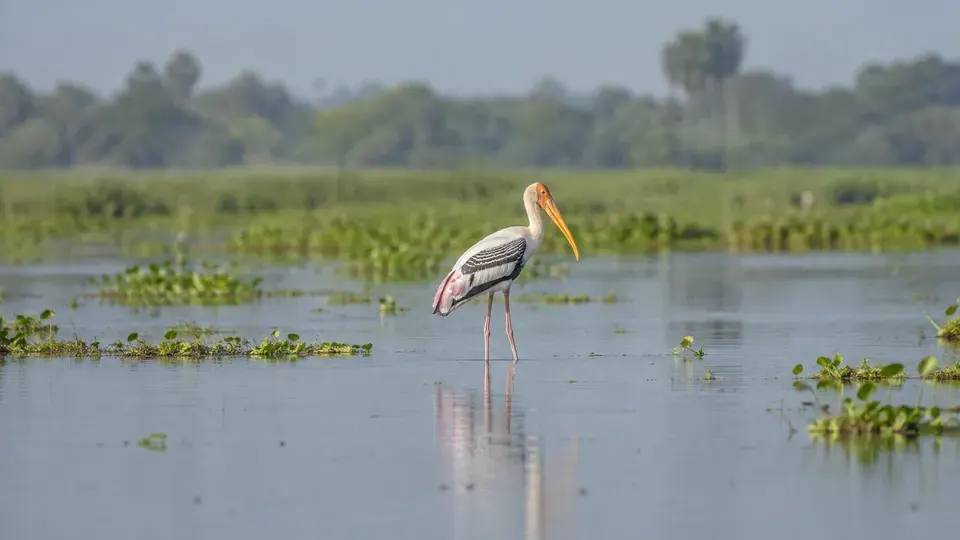
The Painted Stork brings a remarkable combination of white plumage, black wing markings and pink tertials to Asian wetlands. Its long yellow bill bends downward near the tip, while an orange adult face provides another conspicuous identification feature. The scientific name is Mycteria leucocephala, and the bird belongs to the stork family rather than the herons. For this River profile, the geographical connection is deliberately narrow: Cambodia's Prek Toal waterbird colony on Tonle Sap, reached on an optional dedicated wetland excursion via Siem Reap. The Cambodian Bird Guide Association's checklist dated 27 December 2018 explicitly lists the species there. That record does not establish sightings from a vessel cruising near Phnom Penh or at every Mekong stop. BirdLife's 2023 update moved the species from Near Threatened to Least Concern, crediting wetland management and reduced persecution. Improved global status does not remove the need to protect individual colonies or check current excursion arrangements.

Käyttäytyminen ja lisääntyminen

Koko
Large stork
Paino
Species-specific weight not verified
Elinikä
Species-specific lifespan not verified
Tila
See sourced assessment

Painted Storks breed in crowded colonies, often alongside other waterbirds, rather than nesting as isolated pairs in every available wetland. eBird describes a characteristic flight posture in which the head and neck droop, sometimes almost to belly level. That posture is useful when a distant bird's colours disappear against a bright sky. Feeding behaviour has also been studied directly: research at fourteen sites in India's Delhi region followed 131 individuals during 2004–2006 and confirmed tactile foraging. The birds in that study fed singly or in groups of up to eighteen, showing that colonial nesting does not require every feeding party to be large. These observations explain species behaviour but do not provide Prek Toal flock sizes or breeding dates. At the Cambodian colony, allow guides to choose an appropriate viewing position. A bird returning to its nest should have an unobstructed route, and a photograph never justifies crowding branches or pursuing a departing flock.

Parhaat luontokohteet

Jokimaisema Mekong — jokiristeilyjen elinympäristö

Mekong

Cambodia: Prek Toal, Tonle Sap OPTIONAL dedicated wetland excursion via Siem Reap; not Phnom Penh cruising. The 27 December 2018 Prek Toal colony checklist explicitly lists this species. This association is not extended to Tra Su or any other cruise stop. Current access and sightings require confirmation with a local guide.
Tutustu jokiristeilyihin

Kohteet kuvaavat lajin elinympäristöä, eivätkä ne ole taattuja pysähdyspaikkoja risteilyllä. Joidenkin eläinten näkeminen vaatii valinnaisen retken sisämaahan tai ne elävät rajoitetuilla suojelualueilla.

Hauskoja faktoja lajista Painted Stork

  • Its pink tertials are wing feathers, not an all-over pink body colour.
  • The adult has a bright orange face.
  • The yellow bill curves downward near its tip.
  • Immatures lack the adult chest band.
  • Its head and neck typically droop in flight.
  • It breeds in crowded colonies, often with other waterbirds.
  • Delhi research confirmed tactile fish-catching in the birds studied.
  • About eighty percent of fish fed to chicks in that Delhi study were under ten centimetres.
  • BirdLife moved the species from Near Threatened to Least Concern in 2023.

Paras aika nähdä Painted Stork

No recurring species-specific Prek Toal viewing window is adopted here, so the monthly calendar remains empty. This is an evidence limitation, not a claim that Painted Storks are absent throughout the year. Sam Veasna's species page explicitly says the bird comes to Prek Toal around December to nest in tree canopies and bushes. That is useful local arrival context, but it does not establish a complete annual viewing interval. The same page recommends December to May while listing several Cambodian sites, so its recommendation is not treated as a Prek Toal-only monthly range. A separate tour page describes the whole colony as busiest between December and April; that is likewise not a species calendar. Before booking, ask about recent Painted Stork observations, current colony access and water conditions on the proposed date. A guide's current report is more useful for a particular departure than converting broad seasonal marketing into a guarantee.

Painted Stork: sesonkimatriisi kohteittain

Highlighted months reflect the stated local evidence, not guaranteed encounters. Neutral months mean no verified monthly viewing window, not absence. Observation records and recommended viewing windows are distinct.

Mekong

No recurring species-specific Prek Toal monthly viewing window established. Colony-wide dry-season timing is not adopted as a species calendar. Sam Veasna mentions arrival around December at Prek Toal, but its December–May recommendation lists multiple sites; the full interval is not verified as Prek Toal-only.

tammihelmimaalishuhtitoukokesäheinäelosyyslokamarrasjoulu
Tutustu jokiristeilyihin

Missä Painted Stork elää

Wetlands, marshes and flooded agricultural fields are the broad habitat types highlighted in eBird's Painted Stork account. They offer a more useful ecological description than the word river alone: shallow feeding areas and a safe colony setting matter more than proximity to a navigation channel. At Prek Toal, the local excursion description identifies seasonally flooded forest and scrub, with muddy lakeshore exposed as open water retreats. This is a Tonle Sap wetland visit, not simply an extension of watching from a Mekong cruise deck. WCS identifies the great lake's large waterbird breeding colonies as globally important and includes Painted Stork among their significant species. Its older conservation labels should not replace the later BirdLife assessment. Water levels and permitted access can alter which parts of the wetland are visible. Ask which reserve area the excursion actually reaches, and do not assume that suitable-looking habitat guarantees an occupied nest or a feeding flock.

Mitä Painted Stork syö

Fish are central to the Painted Stork's feeding ecology, but the strongest evidence here comes from a geographically defined study rather than an assumed Cambodian menu. Kalam and Urfi studied foraging in the Delhi region during 2004–2006 and found the observed birds to be tactile feeders taking fish exclusively. Their results also showed that about eighty percent of fish delivered to chicks were shorter than ten centimetres. That figure describes the sampled colony and study conditions; it is not a measured Prek Toal prey distribution. The researchers recorded foot stirring and differences between vegetated and unvegetated feeding sites, illustrating why a wetland's structure can matter as well as its water area. Visitors may notice slow searching movements, but should not expect every successful capture to be visible from a boat. Never offer fish, bait a feeding area or encourage a boatman to drive birds into shallower water for easier photographs.

Laji pähkinänkuoressa

Yleiskielinen nimi
Painted Stork
Scientific name
Mycteria leucocephala
Eläinryhmä
Birds
Koko
Large stork; species-specific length not verified in the selected sources
Paino
Species-specific weight not verified
Elinikä
Species-specific lifespan not verified
Tila
Least Concern in the BirdLife 2023 Red List update, downlisted from Near Threatened. The 2018 Prek Toal checklist uses the older NT category; it is occurrence evidence, not the current status authority.
Tunnistaminen
Start with the adult's long yellow bill, which curves downward near the tip, and the bright orange bare face. eBird describes a mainly white bird with black striped wing markings, vivid pink tertials, pinkish legs and a speckled band across the chest. The pink belongs to particular wing feathers rather than covering the whole body, an important distinction when light changes apparent colour. Immatures are duller, have a brown wash and lack the adult chest band, so an unfamiliar brownish bird should not be dismissed solely because it lacks the adult pattern. In flight, check the drooping head and neck as well as the wing pattern. Compare several features before recording a distant stork; a single coloured patch is not enough. Photographs can help a guide assess a brief view afterwards, but do not move closer to a nest merely to resolve an identification. Exact species measurements and longevity remain unverified in this selected source set.

Painted Stork: usein kysytyt kysymykset

Missä voin nähdä lajin Painted Stork?
Mekong. Arrange a dedicated guided wetland excursion from the Siem Reap side if Prek Toal is part of the travel plan. The registered association is optional and should not be advertised as routine Phnom Penh cruising. Use binoculars to scan feeding areas and canopy nests from the permitted boat route or an authorised viewpoint. Adults can be recognised by their yellow downcurved bill, orange face, black-and-white wings and pink tertials, but distant juveniles may look much duller. WCS describes ranger monitoring and protection of the Prek Toal colonies, including nest counts from platforms. These conservation structures are not an invitation to approach independently or assume unrestricted visitor access. Follow the local guide's instructions, keep conversation quiet and give landing or departing birds space. Do not feed wildlife, use playback or ask for a closer approach to occupied nests. The checklist supports occurrence at the colony; it cannot promise a particular sighting on the day of your visit.
Milloin on paras aika nähdä Painted Stork?
No recurring species-specific Prek Toal viewing window is adopted here, so the monthly calendar remains empty. This is an evidence limitation, not a claim that Painted Storks are absent throughout the year. Sam Veasna's species page explicitly says the bird comes to Prek Toal around December to nest in tree canopies and bushes. That is useful local arrival context, but it does not establish a complete annual viewing interval. The same page recommends December to May while listing several Cambodian sites, so its recommendation is not treated as a Prek Toal-only monthly range. A separate tour page describes the whole colony as busiest between December and April; that is likewise not a species calendar. Before booking, ask about recent Painted Stork observations, current colony access and water conditions on the proposed date. A guide's current report is more useful for a particular departure than converting broad seasonal marketing into a guarantee.
Kuinka suureksi Painted Stork kasvaa?
Large stork; species-specific length not verified in the selected sources. Aikuisen paino: Species-specific weight not verified. Koko vaihtelee iän, sukupuolen ja populaation mukaan.
Miten minun tulisi toimia lajin Painted Stork läheisyydessä?
Arrange a dedicated guided wetland excursion from the Siem Reap side if Prek Toal is part of the travel plan. The registered association is optional and should not be advertised as routine Phnom Penh cruising. Use binoculars to scan feeding areas and canopy nests from the permitted boat route or an authorised viewpoint. Adults can be recognised by their yellow downcurved bill, orange face, black-and-white wings and pink tertials, but distant juveniles may look much duller. WCS describes ranger monitoring and protection of the Prek Toal colonies, including nest counts from platforms. These conservation structures are not an invitation to approach independently or assume unrestricted visitor access. Follow the local guide's instructions, keep conversation quiet and give landing or departing birds space. Do not feed wildlife, use playback or ask for a closer approach to occupied nests. The checklist supports occurrence at the colony; it cannot promise a particular sighting on the day of your visit.
Mitä Painted Stork syö?
Fish are central to the Painted Stork's feeding ecology, but the strongest evidence here comes from a geographically defined study rather than an assumed Cambodian menu. Kalam and Urfi studied foraging in the Delhi region during 2004–2006 and found the observed birds to be tactile feeders taking fish exclusively. Their results also showed that about eighty percent of fish delivered to chicks were shorter than ten centimetres. That figure describes the sampled colony and study conditions; it is not a measured Prek Toal prey distribution. The researchers recorded foot stirring and differences between vegetated and unvegetated feeding sites, illustrating why a wetland's structure can matter as well as its water area. Visitors may notice slow searching movements, but should not expect every successful capture to be visible from a boat. Never offer fish, bait a feeding area or encourage a boatman to drive birds into shallower water for easier photographs.
Ovatko villieläinhavainnot taattuja jokiristeilyllä?
Ei. Eläimet liikkuvat vapaasti, ja reitit, sää, pääsyrajoitukset sekä paikalliset olosuhteet vaikuttavat jokaiseen retkeen. Vahvista lopullinen matkaohjelma ja rantaretket ennen varaamista.

Vertaile saman kohteen villieläimiä

Tutustu muihin lajeihin (birds), joita on tavattu näissä kohteissa. Samankaltainen ympäristö ei tarkoita, että eläimillä on samat elintavat tai sama havainnointisesonki.

Lajivertailu eläinryhmän ja kohteen mukaan
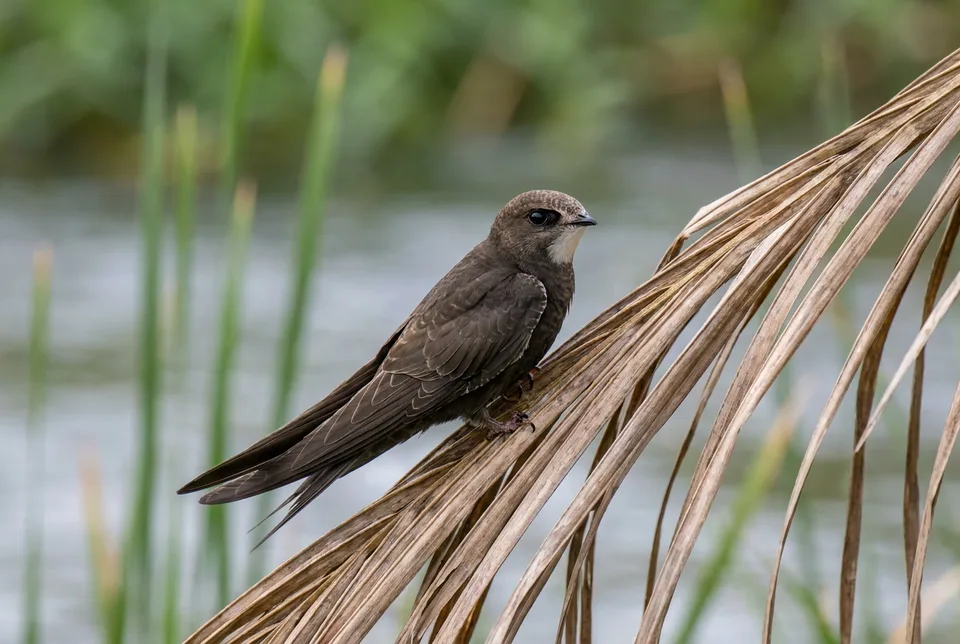
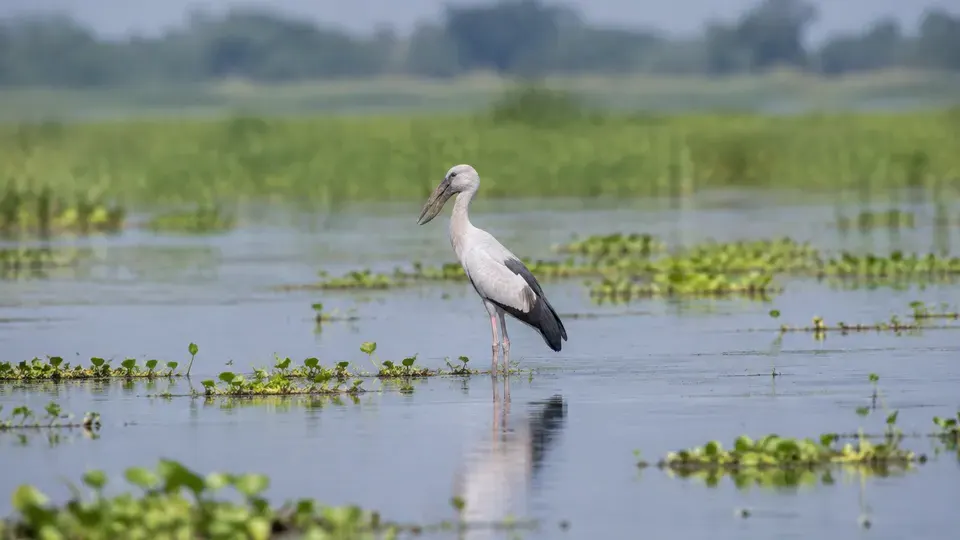
Painted stork kosteikossa — Mekong, jokiristeilyjen eläimetPainted StorkAsian openbill kosteikossa — Mekong, jokiristeilyjen eläimetAsian OpenbillAsian Palm Swift kosteikossa — Mekong, jokiristeilyjen eläimetAsian Palm Swift
EläinryhmäBirdsEläinryhmäBirdsEläinryhmäBirds
KohteetMekongKohteetMekongKohteetMekong
Scientific name
Mycteria leucocephala

Mycteria leucocephala

Scientific name
Scientific name
Koko
Large stork
Koko
Koko
Paino
Species-specific weight not verified
Paino
Paino
Elinikä
Species-specific lifespan not verified
Elinikä
Elinikä
Tila
See sourced assessment
Tila
Tila
Tunnistaminen
Start with the adult's long yellow bill, which curves downward near the tip, and the bright orange bare face.

Start with the adult's long yellow bill, which curves downward near the tip, and the bright orange bare face. eBird describes a mainly white bird with black striped wing markings, vivid pink tertials, pinkish legs and a speckled band across the chest. The pink belongs to particular wing feathers rather than covering the whole body, an important distinction when light changes apparent colour. Immatures are duller, have a brown wash and lack the adult chest band, so an unfamiliar brownish bird should not be dismissed solely because it lacks the adult pattern. In flight, check the drooping head and neck as well as the wing pattern. Compare several features before recording a distant stork; a single coloured patch is not enough. Photographs can help a guide assess a brief view afterwards, but do not move closer to a nest merely to resolve an identification. Exact species measurements and longevity remain unverified in this selected source set.

Tunnistaminen
Tunnistaminen
Elinympäristö
Wetlands, marshes and flooded agricultural fields are the broad habitat types highlighted in eBird's Painted Stork account.

Wetlands, marshes and flooded agricultural fields are the broad habitat types highlighted in eBird's Painted Stork account. They offer a more useful ecological description than the word river alone: shallow feeding areas and a safe colony setting matter more than proximity to a navigation channel. At Prek Toal, the local excursion description identifies seasonally flooded forest and scrub, with muddy lakeshore exposed as open water retreats. This is a Tonle Sap wetland visit, not simply an extension of watching from a Mekong cruise deck. WCS identifies the great lake's large waterbird breeding colonies as globally important and includes Painted Stork among their significant species. Its older conservation labels should not replace the later BirdLife assessment. Water levels and permitted access can alter which parts of the wetland are visible. Ask which reserve area the excursion actually reaches, and do not assume that suitable-looking habitat guarantees an occupied nest or a feeding flock.

Elinympäristö
Elinympäristö
Ravinto
Fish are central to the Painted Stork's feeding ecology, but the strongest evidence here comes from a geographically defined study rather than an assumed Cambodian menu.

Fish are central to the Painted Stork's feeding ecology, but the strongest evidence here comes from a geographically defined study rather than an assumed Cambodian menu. Kalam and Urfi studied foraging in the Delhi region during 2004–2006 and found the observed birds to be tactile feeders taking fish exclusively. Their results also showed that about eighty percent of fish delivered to chicks were shorter than ten centimetres. That figure describes the sampled colony and study conditions; it is not a measured Prek Toal prey distribution. The researchers recorded foot stirring and differences between vegetated and unvegetated feeding sites, illustrating why a wetland's structure can matter as well as its water area. Visitors may notice slow searching movements, but should not expect every successful capture to be visible from a boat. Never offer fish, bait a feeding area or encourage a boatman to drive birds into shallower water for easier photographs.

Ravinto
Ravinto
Paras sesonki
No recurring species-specific Prek Toal viewing window is adopted here, so the monthly calendar remains empty.

No recurring species-specific Prek Toal viewing window is adopted here, so the monthly calendar remains empty. This is an evidence limitation, not a claim that Painted Storks are absent throughout the year. Sam Veasna's species page explicitly says the bird comes to Prek Toal around December to nest in tree canopies and bushes. That is useful local arrival context, but it does not establish a complete annual viewing interval. The same page recommends December to May while listing several Cambodian sites, so its recommendation is not treated as a Prek Toal-only monthly range. A separate tour page describes the whole colony as busiest between December and April; that is likewise not a species calendar. Before booking, ask about recent Painted Stork observations, current colony access and water conditions on the proposed date. A guide's current report is more useful for a particular departure than converting broad seasonal marketing into a guarantee.

Paras sesonki
Paras sesonki
Kausitaulukko kohteittain
MekongNo verified monthly viewing evidence

No recurring species-specific Prek Toal monthly viewing window established. Colony-wide dry-season timing is not adopted as a species calendar. Sam Veasna mentions arrival around December at Prek Toal, but its December–May recommendation lists multiple sites; the full interval is not verified as Prek Toal-only.

Kausitaulukko kohteittainKausitaulukko kohteittain
Edellinen lajiOspreySeuraava lajiPied Kingfisher
Kaikki joen villieläimet
On this page
  • 01Noin
  • 02Käyttäytyminen ja lisääntyminen
  • 03Parhaat luontokohteet
  • 04Mielenkiintoisia faktoja
  • 05Paras sesonki
  • 06Kausitaulukko kohteittain
  • 07Elinympäristö
  • 08Ravinto
  • 09Laji pähkinänkuoressa
  • 10Kysymyksiä ja vastauksia
  • 11Vertaa

Find your river cruise

Suunnittele matkasi

Löydä seuraava jokimatkasi

Vertaile kohteita, rantaretkiä ja ajankohtia nähdäksesi juuri ne eläimet ja elinympäristöt, joita rakastat.

  • Päivittäiset rantaretket
  • Vastuullinen eläinten tarkkailu
  • Boutique-jokilaivat
Tutustu jokiristeilyihin