Bluerides – Blue Rides - Book Liveaboards worldwideOCEAN ADVENTURES
River CruisesRiversNature & WildlifeOur Promise
River CruisesRiversNature & WildlifeOur PromiseSign In

River destinations

  • River destinations
  • Amazon
  • Danube
  • Rhine
  • Mekong
  • Nile

Ships & departures

  • River Cruise Search
  • Deals

Nature & Wildlife

  • Nature & Wildlife

Travel support

  • Our Promise
  • Contact

Contact

Get in Touch

Get in touch anytime, we're happy to help you find the right trip or sort out any question.

EmailWrite us, we usually reply within a few hours.
contact@bluerides.com
WhatsAppChat with us on WhatsApp, Mon–Fri 10:00–16:00 (CET).
Start WhatsApp Chat
PhoneCall us, we're happy to help.
Free call, Mon–Fri 10 AM – 8 PM (CET).
Europe+49 800 1144 990USA+1 888 557 7735UK+44 800 707 4152Australia+61 2 8599 6113Canada+1 888 557 7735
Which river journey is yours?Answer 8 quick questions and find the river cruise that fits you.
8 questions, 1 minute·Plus Gift
Secure Payment MethodsYour payments are fully secured with AES-256 encryption.
Powered byStripeWiseAMEXPayGoogle PaySEPABank
Imprint·Terms & Conditions·Privacy Policy·About·Contact·Liability Waiver·Affiliate Program·Cruise·Blog·
Visit us here

© 2026 Blue Rides. All rights reserved.

Bluerides – Blue Rides - Book Liveaboards worldwideOCEAN ADVENTURES
River CruisesRiversNature & WildlifeOur Promise
River CruisesRiversNature & WildlifeOur PromiseSign In
Red-backed Shrike in wetland habitat — Rhine, River Cruises wildlifeAI-modified
Home›River Cruises›River Wildlife›Red-backed Shrike

Red-backed ShrikeLanius collurioWhere and when to see them

Previous speciesRed SquirrelNext speciesRed-crested Pochard

Red-backed Shrike at a glance

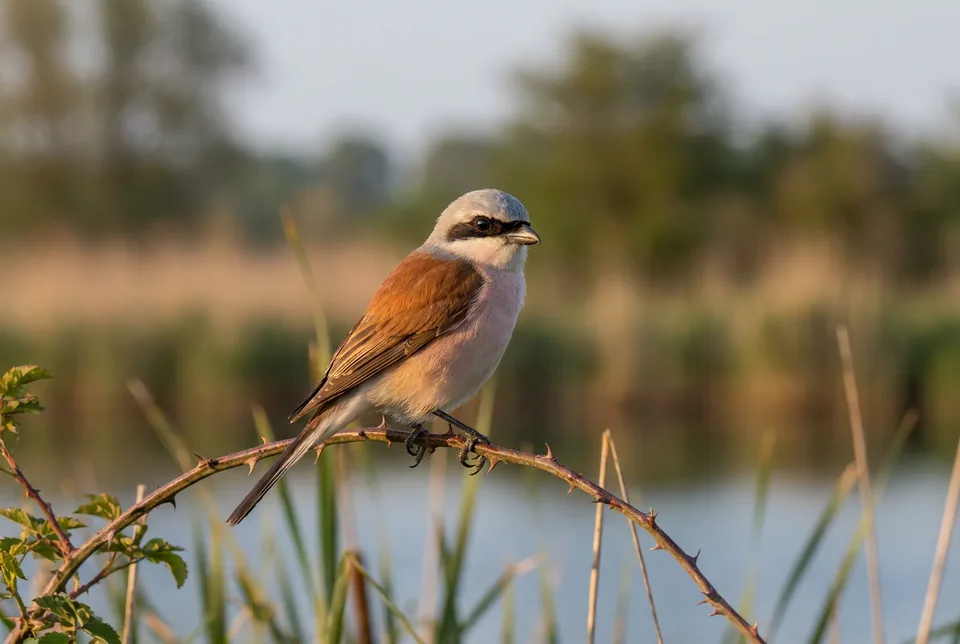
The Red-backed Shrike is a predatory songbird rather than a miniature hawk. A male combines a chestnut back with a grey head and black face mask. Its Rhine connection lies on vineyard slopes between Rüdesheim and Lorchhausen, requiring an uphill shore walk rather than a deck watch. Species reference: https://www.rspb.org.uk/birds-and-wildlife/red-backed-shrike

Behaviour & reproduction

Size
About 17 cm (6.7 in) long.
Weight
Species-specific weight not verified.
Lifespan
Species-specific lifespan not verified.
Status
The RSPB lists it as UK Red; a current global assessment was not verified.

A prominent bush top or fence post is a hunting lookout. Prey may be carried to a thorn or wedged into a branch, forming the famous shrike larder. Such storage is natural behaviour, not evidence that the bird kills without purpose. Watch from far enough away that it returns voluntarily to its perch.

Top wildlife locations

Rhine river landscape — River Cruises wildlife habitatAI-modified

Rhine

Middle Rhine: Rüdesheim–Lorchhausen vineyard slopes; optional uphill shore excursion, not boat-deck expectation. Spring/summer; search vineyard and scrub paths; uncommon/local; no guaranteed sightings.
Explore river cruises

Destinations describe the species' habitat, not guaranteed cruise stops. Some animals require an optional inland excursion or are found in restricted reserves.

Fun facts about the Red-backed Shrike

  • It is a songbird with a hooked bill.
  • Males have a black facial mask.
  • Prey may be stored on thorns.
  • Bush tops serve as hunting lookouts.
  • Females are less contrasting than adult males.
  • The registered Rhine site is above the river on vineyard slopes.

Best time to see the Red-backed Shrike

Spring and summer are the registry’s broad viewing guidance. Local monitoring establishes breeding occurrence but not a recurring visitor month range. Survey work dates cannot be converted into availability. All numerical months are withheld pending a suitable local seasonal source.

Red-backed Shrike: season matrix by destination

Highlighted months reflect the stated local evidence, not guaranteed encounters. Neutral months mean no verified monthly viewing window, not absence. Observation records and recommended viewing windows are distinct.

Rhine

Local monitoring supports occurrence in these vineyard slopes. Breeding evidence and survey dates are not converted into observation months.

JanFebMarAprMayJunJulAugSepOctNovDec
Explore river cruises

Where the Red-backed Shrike lives

Open ground interspersed with scrub provides both hunting space and lookout points. The Hessian monitoring report confirms the local importance of the vineyard mosaic, including hedges and small woody patches. A uniform closed woodland or bare river surface is not the habitat implied by this registered association.

What the Red-backed Shrike eats

Invertebrates form most of the diet, with small vertebrates also taken. The hooked bill helps process prey. The retrieved accounts do not give prey proportions for these Rhine vineyards. An insect seen in the bill can be recorded as such without guessing its species or assuming every prey delivery is destined for a larder.

Species at a glance

Common name
Red-backed Shrike
Scientific name
Lanius collurio
Animal group
Birds
Size
About 17 cm (6.7 in) long.
Weight
Species-specific weight not verified.
Lifespan
Species-specific lifespan not verified.
Status
The RSPB lists it as UK Red; a current global assessment was not verified.
Identification
The male’s grey head, black mask, chestnut mantle and pale underparts make a strong combination. Females and juveniles are less contrasting and can show fine scalloping below. Assess the robust hooked bill and posture as well as colour; an ordinary brown passerine on a hedge is not automatically a female shrike.

Red-backed Shrike: frequently asked questions

Where can I see the Red-backed Shrike?
Rhine. Walk permitted vineyard paths and inspect conspicuous tops of bushes without entering scrub. A bird repeatedly giving alarm calls or carrying food deserves additional space. Do not search for nests or manipulate stored prey. A scope can provide excellent views across open slopes without forcing a close approach.
When is the best time to see the Red-backed Shrike?
Spring and summer are the registry’s broad viewing guidance. Local monitoring establishes breeding occurrence but not a recurring visitor month range. Survey work dates cannot be converted into availability. All numerical months are withheld pending a suitable local seasonal source.
How big does the Red-backed Shrike get?
About 17 cm (6.7 in) long.. Adult weight: Species-specific weight not verified.. Size varies with age, sex and population.
How should I behave around the Red-backed Shrike?
Walk permitted vineyard paths and inspect conspicuous tops of bushes without entering scrub. A bird repeatedly giving alarm calls or carrying food deserves additional space. Do not search for nests or manipulate stored prey. A scope can provide excellent views across open slopes without forcing a close approach.
What does the Red-backed Shrike eat?
Invertebrates form most of the diet, with small vertebrates also taken. The hooked bill helps process prey. The retrieved accounts do not give prey proportions for these Rhine vineyards. An insect seen in the bill can be recorded as such without guessing its species or assuming every prey delivery is destined for a larder.
Are wildlife sightings guaranteed on a river cruise?
No. Animals move freely and routes, weather, access restrictions and local conditions influence every outing. Confirm the actual itinerary and shore program before booking.

Compare wildlife in the same destinations

Explore other birds recorded in these destinations. Similar surroundings do not mean the animals share the same habits or viewing season.

Species comparison by animal group and destination
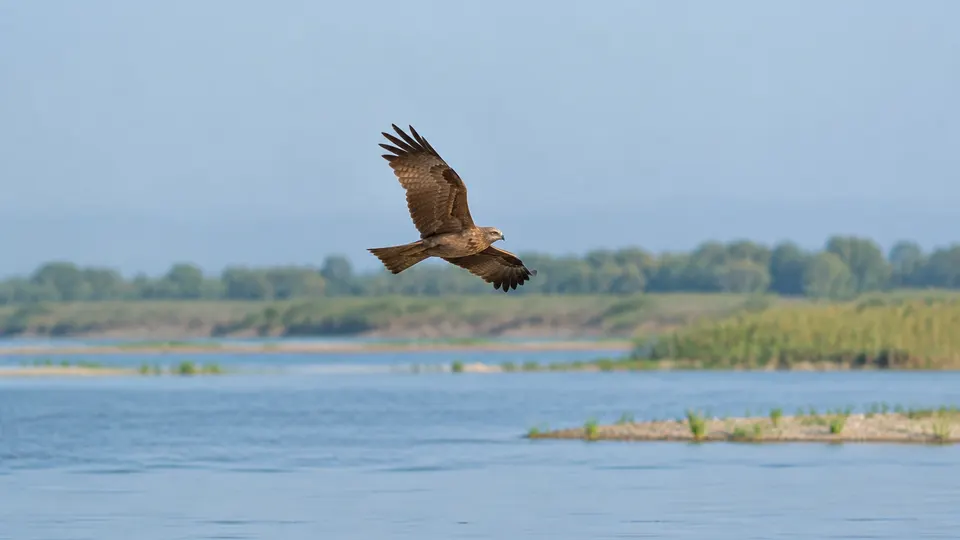
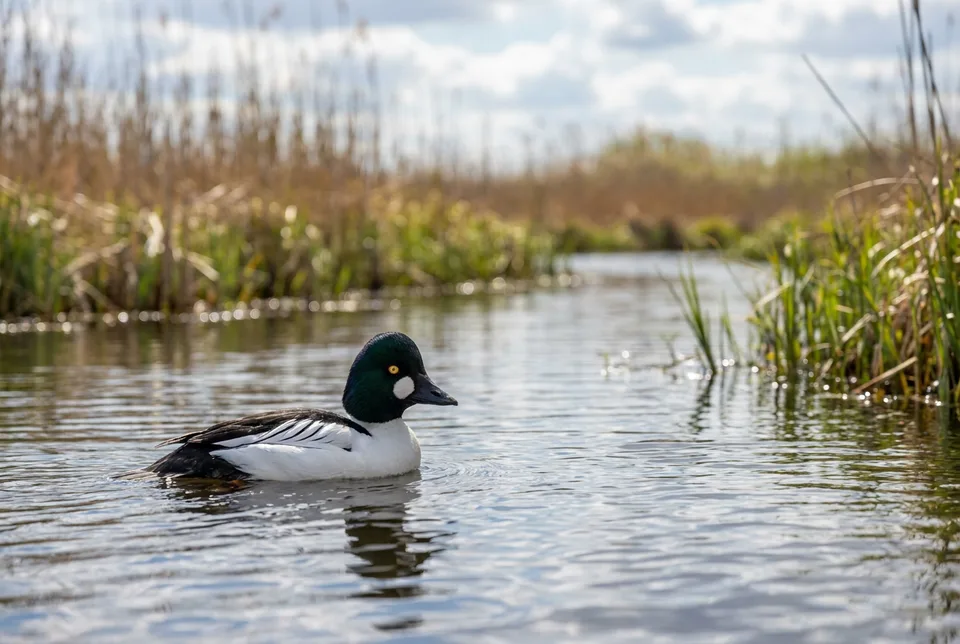
Red-backed Shrike in wetland habitat — Rhine, River Cruises wildlifeAI-modifiedRed-backed ShrikeBlack kite in wetland habitat — Danube, Rhine, River Cruises wildlifeAI-modifiedBlack KiteCommon Goldeneye in wetland habitat — Rhine, River Cruises wildlifeAI-modifiedCommon Goldeneye
Animal groupBirdsAnimal groupBirdsAnimal groupBirds
DestinationsRhineDestinationsDanube, RhineDestinationsRhine
Scientific name
Lanius collurio
Scientific name
Scientific name
Previous speciesRed SquirrelNext speciesRed-crested Pochard
All river wildlife
On this page
  • 01About
  • 02Behaviour & reproduction
  • 03Top wildlife locations
  • 04Fun facts
  • 05Best season
  • 06Season matrix by destination
  • 07Habitat
  • 08Diet
  • 09Species at a glance
  • 10Questions & answers
  • 11Compare

Find your river cruise

AI-modified
Plan your trip

Find your next river journey

Compare destinations, shore programs and dates with the animals and habitats you would love to see.

  • Daily shore excursions
  • Responsible wildlife watching
  • Boutique river ships
Explore river cruises