Bluerides – Blue Rides - Book Liveaboards worldwideOCEAN ADVENTURES
River CruisesRiversNature & WildlifeOur Promise
River CruisesRiversNature & WildlifeOur PromiseSign In

River destinations

  • River destinations
  • Amazon
  • Danube
  • Rhine
  • Mekong
  • Nile

Ships & departures

  • River Cruise Search
  • Deals

Nature & Wildlife

  • Nature & Wildlife

Travel support

  • Our Promise
  • Contact

Contact

Get in Touch

Get in touch anytime, we're happy to help you find the right trip or sort out any question.

EmailWrite us, we usually reply within a few hours.
contact@bluerides.com
WhatsAppChat with us on WhatsApp, Mon–Fri 10:00–16:00 (CET).
Start WhatsApp Chat
PhoneCall us, we're happy to help.
Free call, Mon–Fri 10 AM – 8 PM (CET).
Europe+49 800 1144 990USA+1 888 557 7735UK+44 800 707 4152Australia+61 2 8599 6113Canada+1 888 557 7735
Which river journey is yours?Answer 8 quick questions and find the river cruise that fits you.
8 questions, 1 minute·Plus Gift
Secure Payment MethodsYour payments are fully secured with AES-256 encryption.
Powered byStripeWiseAMEXPayGoogle PaySEPABank
Imprint·Terms & Conditions·Privacy Policy·About·Contact·Liability Waiver·Affiliate Program·Cruise·
Visit us here

© 2026 Blue Rides. All rights reserved.·

Bluerides – Blue Rides - Book Liveaboards worldwideOCEAN ADVENTURES
River CruisesRiversNature & WildlifeOur Promise
River CruisesRiversNature & WildlifeOur PromiseSign In
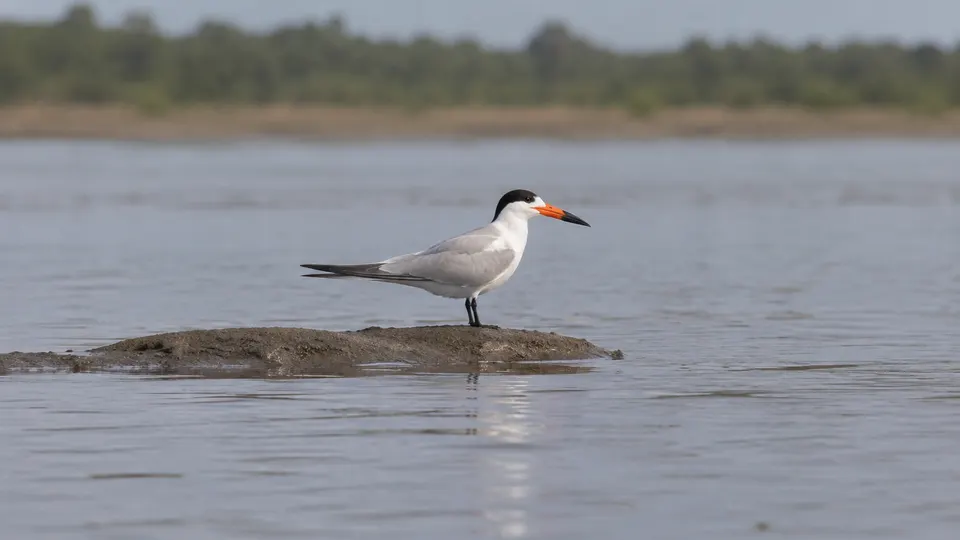
Large-billed tern in wetland habitat — Amazon, River Cruises wildlife
Home›River Cruises›River Wildlife›Large-billed Tern

Large-billed TernPhaetusa simplexWhere and when to see them

Previous speciesKilldeerNext speciesLesser adjutant

Large-billed Tern at a glance

The Large-billed Tern is a distinctive South American waterbird with an exceptionally long, thick yellow bill. It is widespread across much of tropical South America, including the Amazon Basin. Closely associated with large rivers, it feeds mainly on fish and often rests on exposed sandbars. Its bold wing pattern and powerful bill make it one of the more recognizable terns seen during an Amazon river cruise.

Behaviour & reproduction

Size
Approximately 38–42 cm long.
Weight
Approximately 208–247 g.
Lifespan
Not well documented in the wild.
Status
Least Concern (IUCN).

Large-billed Terns patrol rivers in steady flight, scanning the water for fish. They capture prey by plunging into the water or taking fish near the surface. Birds may forage alone or in loose groups, especially where fish are concentrated. Away from feeding areas, they gather on sandbars and open riverbanks to rest and preen. Breeding often takes place in colonies on exposed sand or gravel, sometimes alongside other terns and skimmers. The nest is a shallow scrape in the ground rather than a constructed platform. Adults defend nesting areas with loud calls and aerial swoops at intruders.

Top wildlife locations

Amazon river landscape — River Cruises wildlife habitat

Amazon

Evidence covers Peru’s Iquitos/Nauta tributary cruises and separately Brazil’s Rio Negro–Anavilhanas. Birds and dolphins are documented in naturalist trip reports; forest birds require skiff, canoe or shore outings. A Peru record is not a Brazil sighting promise.

Explore river cruises

Destinations describe the species' habitat, not guaranteed cruise stops. Some animals require an optional inland excursion or are found in restricted reserves.

Fun facts about the Large-billed Tern

  • It is the only living species in the genus Phaetusa.
  • Its oversized yellow bill is its most distinctive feature.
  • Its nest is a simple scrape on an exposed river island or bank.
  • Amazon river levels help determine where it can rest and breed.

Best time to see the Large-billed Tern

Wildlife opportunities depend on the river reach, water levels and species. River-specific viewing months have not been confirmed; general species seasons are not a local sighting forecast.

Large-billed Tern: season matrix by destination

Travel and observation windows vary by region. Highlighted months are an orientation for planning, not confirmed sightings or a guarantee of access.

Amazon

No river-specific wildlife calendar is confirmed. Check the actual river reach, local conditions and excursion access with your operator.

JanFebMarAprMayJunJulAugSepOctNovDec
Explore river cruises

Where the Large-billed Tern lives

In the Amazon Basin, this species is most closely associated with broad rivers and their exposed sandbars. It also uses river islands, lakes, lagoons, and other open freshwater habitats. Bare sand and gravel provide important resting and nesting sites. Seasonal changes in river level strongly influence the availability of these sites. Although primarily an inland bird, it also occurs locally in estuaries and coastal waters.

What the Large-billed Tern eats

Fish make up most of the Large-billed Tern's diet. It hunts visually over open water, diving or dipping to seize prey with its bill. It also occasionally takes insects and other small aquatic animals. Feeding locations shift with water conditions and prey availability.

Species at a glance

Common name
Large-billed Tern
Scientific name
Phaetusa simplex
Animal group
Birds
Size
Approximately 38–42 cm long.
Weight
Approximately 208–247 g.
Lifespan
Not well documented in the wild.
Status
Least Concern (IUCN).
Identification
Look for a medium-large tern with a disproportionately long, heavy yellow bill and yellowish legs. Breeding adults have a black cap, pale gray upperparts, and white underparts. In flight, broad white areas on the wings contrast sharply with the black outer flight feathers. Outside breeding condition, the forehead becomes whiter, while immature birds may show mottled upperparts and a less brightly colored bill.

Large-billed Tern: frequently asked questions

Where can I see the Large-billed Tern?
Amazon. From a river ship, use binoculars to scan exposed sandbars, river islands, and birds fishing over open channels. On small-boat excursions, approach resting groups slowly and keep enough distance that birds remain settled. Avoid landing on sandbars occupied by nesting birds, since eggs and chicks can be extremely difficult to see. If birds begin alarm-calling, circling closely, or leaving their nests, withdraw promptly and follow your guide's instructions.
When is the best time to see the Large-billed Tern?
Ask about the specific river reach and shore excursion. No local monthly sighting calendar is confirmed.
How big does the Large-billed Tern get?
Approximately 38–42 cm long.. Adult weight: Approximately 208–247 g.. Size varies with age, sex and population.
How should I behave around the Large-billed Tern?
From a river ship, use binoculars to scan exposed sandbars, river islands, and birds fishing over open channels. On small-boat excursions, approach resting groups slowly and keep enough distance that birds remain settled. Avoid landing on sandbars occupied by nesting birds, since eggs and chicks can be extremely difficult to see. If birds begin alarm-calling, circling closely, or leaving their nests, withdraw promptly and follow your guide's instructions.
What does the Large-billed Tern eat?
Fish make up most of the Large-billed Tern's diet. It hunts visually over open water, diving or dipping to seize prey with its bill. It also occasionally takes insects and other small aquatic animals. Feeding locations shift with water conditions and prey availability.
Are wildlife sightings guaranteed on a river cruise?
No. Animals move freely and routes, weather, access restrictions and local conditions influence every outing. Confirm the actual itinerary and shore program before booking.

Compare wildlife in the same destinations

Explore other birds recorded in these destinations. Similar surroundings do not mean the animals share the same habits or viewing season.

Species comparison by animal group and destination
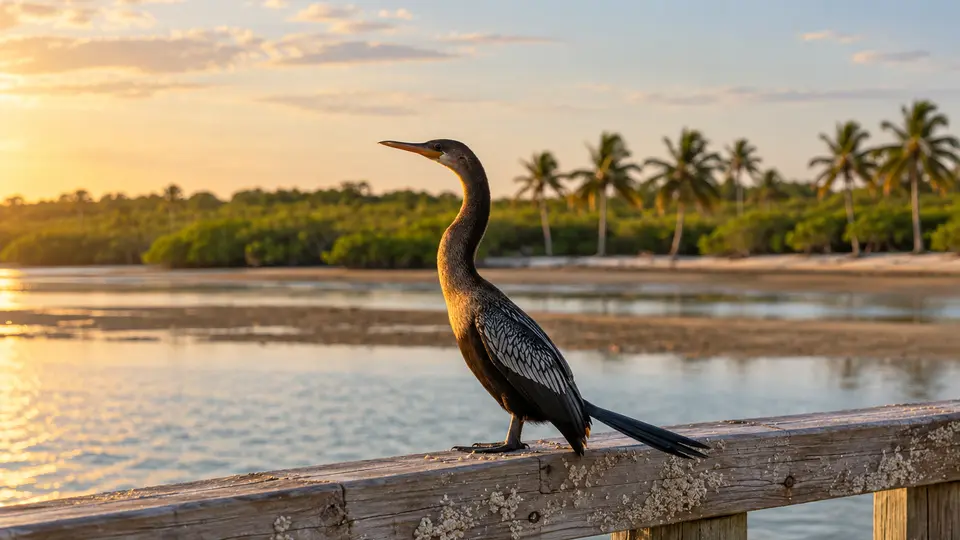
Large-billed tern in wetland habitat — Amazon, River Cruises wildlifeLarge-billed TernAmazon kingfisher in wetland habitat — Amazon, River Cruises wildlifeAmazon KingfisherAnhinga in wetland habitat — Amazon, River Cruises wildlifeAnhinga
Animal groupBirdsAnimal groupBirdsAnimal groupBirds
DestinationsAmazonDestinationsAmazonDestinationsAmazon
Previous speciesKilldeerNext speciesLesser adjutant
All river wildlife
On this page
  • 01About
  • 02Behaviour & reproduction
  • 03Top wildlife locations
  • 04Fun facts
  • 05Best season
  • 06Season matrix by destination
  • 07Habitat
  • 08Diet
  • 09Species at a glance
  • 10Questions & answers
  • 11Compare

Find your river cruise

Plan your trip

Find your next river journey

Compare destinations, shore programs and dates with the animals and habitats you would love to see.

  • Daily shore excursions
  • Responsible wildlife watching
  • Boutique river ships
Explore river cruises