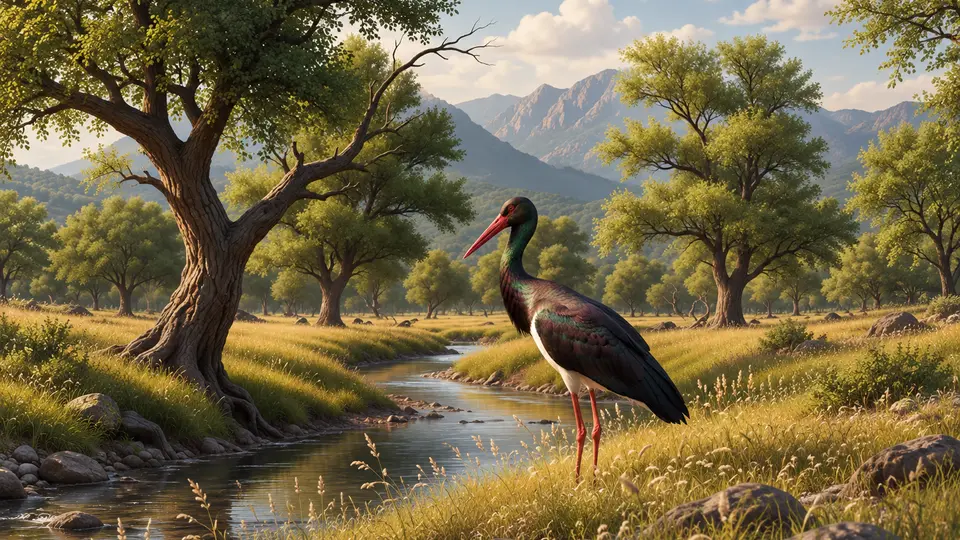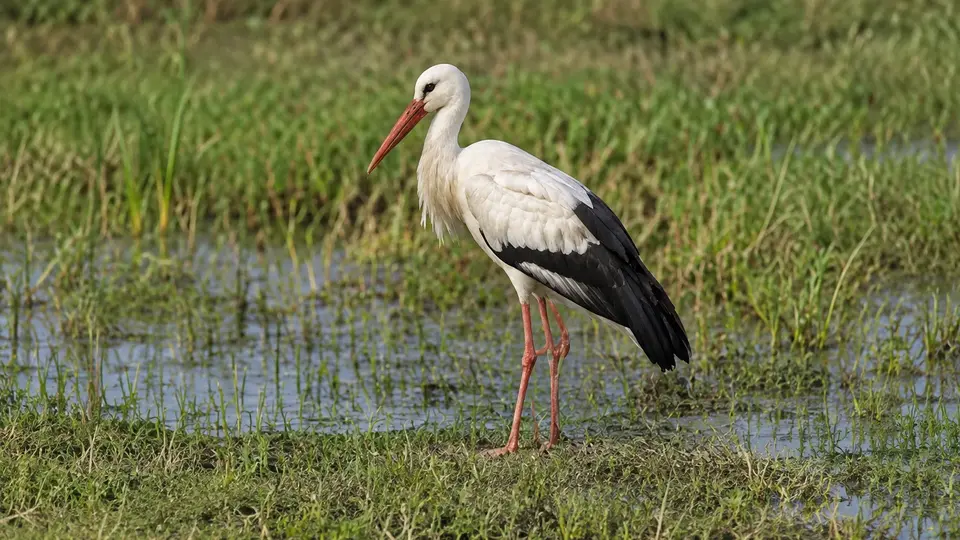
White Stork in its natural habitat

White StorkCiconia ciconiaWhere and when to see them

White Stork at a glance

The white stork is a large, long-legged bird closely associated with open farmland, wetlands and human settlements. Adults combine white plumage with black flight feathers, a red bill and red legs. Turkey lies on an important migration route between Eurasian breeding grounds and African wintering areas. Its conspicuous rooftop and pole nests make it familiar around villages, but productive feeding habitat depends on accessible grassland, shallow water and relatively low-intensity agriculture.

Behaviour & reproduction

Size
100-115 cm long; wingspan 155-215 cm
Weight
2.3-4.5 kg
Lifespan
Not reliably established
Status
Least Concern

White storks walk deliberately through short vegetation or shallow water, striking quickly at exposed prey. Breeding pairs greet one another with bill-clattering displays, often throwing their heads backward. Outside the nesting period, they can gather in substantial feeding and migration flocks. They exploit rising warm air to gain height before gliding onward, which helps explain their concentration over land bridges and their reluctance to cross broad stretches of open sea. Courtship involves elaborate displays including neck stretching, wing flapping, and mutual preening around the nest site. They are highly vocal during breeding, using a distinctive bill-clattering sound for communication and display.

Top wildlife locations

Turkey wildlife habitat

Turkey

Coastal wetland margins and open lowland farmland offer plausible viewing habitat, while major migration movements pass over the Bosporus. Many nesting villages and feeding areas require an inland excursion rather than a shoreline stop.
Destinations describe the species' habitat, not guaranteed cruise stops. Some animals require an optional inland excursion or are found in restricted reserves.

Fun facts about the White Stork

  • Adults have limited vocal abilities and use bill-clattering prominently in pair communication.
  • Nests can grow substantially when reused and repaired over successive seasons.
  • Thermal soaring allows long migration journeys with relatively little flapping.
  • Turkey connects major overland migration routes around the eastern Mediterranean.

Best time to see the White Stork

In Turkey, spring passage is generally strongest from March into May, with return migration mainly in August and September. Breeding birds remain through summer. Exact timing varies with latitude and weather, and a migration window does not imply nesting at a particular coastal site. In Turkey, late March and early April are peak times for observing large migratory flocks arriving from Africa. Juvenile birds often leave breeding grounds earlier than adults, beginning their southward journey in July.

White Stork: season matrix by destination

Travel and observation windows vary by region. Highlighted months are an orientation for planning, not confirmed sightings or a guarantee of access.

Turkey

This covers spring passage, summer residence and autumn departure; local breeding and migration peaks differ.

JanFebMarAprMayJunJulAugSepOctNovDec
Cruise ships in Turkey

Where the White Stork lives

Suitable habitat includes wet meadows, floodplains, irrigated fields, pasture and marsh margins. Nest sites are usually elevated, including trees, roofs and artificial platforms. In Turkey, coastal lowlands can provide feeding areas, although many breeding and staging sites are inland. They show a strong association with human-modified landscapes, often nesting in villages and towns across their range. In Turkey, they often nest on minarets, electricity pylons, and specially erected platforms near human settlements.

What the White Stork eats

The diet is opportunistic and mainly animal-based, including insects, earthworms, frogs, small reptiles, rodents and occasionally fish. Prey composition changes with local conditions. Recently mown fields, receding floods and agricultural disturbance can temporarily expose abundant food within easy walking reach. Their broad diet makes them adaptable to varying food availability across different habitats and seasons. During periods of abundant prey, they can consume a large proportion of their body weight daily.

Species at a glance

Common name
White Stork
Scientific name
Ciconia ciconia
Animal group
Birds
Size
100-115 cm long; wingspan 155-215 cm
Weight
2.3-4.5 kg
Lifespan
Not reliably established
Status
Least Concern
Identification
Unlike the black stork, the white stork has a predominantly white head, neck and body, contrasting with black flight feathers. Juvenile white storks have duller, brownish-black flight feathers and a greyish bill and legs, which gradually become bright red over their first few years. Look for the striking red bill and legs of adults, which are key identification features.

White Stork: frequently asked questions

Where can I see the White Stork?
Turkey. Watch feeding birds from established paths or observe migration from a safe viewpoint. Keep clear of occupied nests and electrical infrastructure, and avoid standing beneath nests where falling material or droppings may present hazards. Observe the storks' graceful soaring circles as they catch thermals, especially during midday over land. From a cruise deck, you may spot them flying high over coastal areas or even over narrower straits.
When is the best time to see the White Stork?
In Turkey, spring passage is generally strongest from March into May, with return migration mainly in August and September. Breeding birds remain through summer. Exact timing varies with latitude and weather, and a migration window does not imply nesting at a particular coastal site. In Turkey, late March and early April are peak times for observing large migratory flocks arriving from Africa. Juvenile birds often leave breeding grounds earlier than adults, beginning their southward journey in July.
How big does the White Stork get?
100-115 cm long; wingspan 155-215 cm. Adult weight: 2.3-4.5 kg. Size varies with age, sex and population.
How should I behave around the White Stork?
Watch feeding birds from established paths or observe migration from a safe viewpoint. Keep clear of occupied nests and electrical infrastructure, and avoid standing beneath nests where falling material or droppings may present hazards. Observe the storks' graceful soaring circles as they catch thermals, especially during midday over land. From a cruise deck, you may spot them flying high over coastal areas or even over narrower straits.
What does the White Stork eat?
The diet is opportunistic and mainly animal-based, including insects, earthworms, frogs, small reptiles, rodents and occasionally fish. Prey composition changes with local conditions. Recently mown fields, receding floods and agricultural disturbance can temporarily expose abundant food within easy walking reach. Their broad diet makes them adaptable to varying food availability across different habitats and seasons. During periods of abundant prey, they can consume a large proportion of their body weight daily.
Are wildlife sightings guaranteed on an adventure cruise?
No. Animals move freely and routes, weather, access restrictions and local conditions influence every outing. Confirm the actual itinerary and shore program before booking.

Compare wildlife in the same destinations

Explore other birds recorded in these destinations. Similar surroundings do not mean the animals share the same habits or viewing season.

Species comparison by animal group and destination
White StorkWhite StorkAudouin's GullAudouin's GullBlack StorkBlack Stork
Animal groupBirdsAnimal groupBirdsAnimal groupBirds
DestinationsTurkeyDestinationsCroatia, Greece, Portugal, TurkeyDestinationsPortugal, Turkey
All wildlife destinations
Plan your trip

Find your next wildlife adventure

Compare destinations, shore programs and dates with the animals and habitats you would love to see.

  • Naturalist-led shore excursions
  • Responsible wildlife watching
  • Small expedition ships