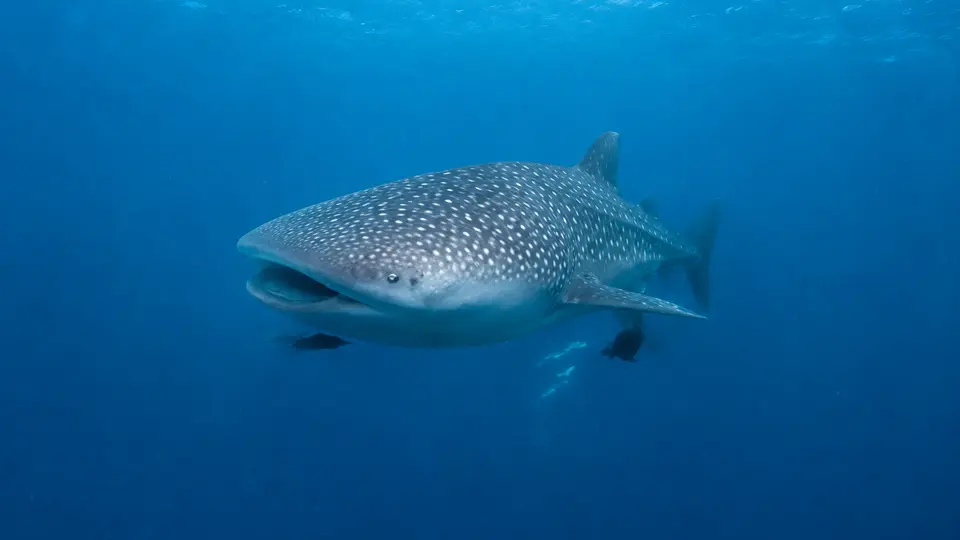
Whale Shark in its natural habitatAI-modified

Whale SharkRhincodon typusWhere and when to see them

Whale Shark at a glance

The whale shark is the largest living fish, a slow-growing shark patterned with pale spots and stripes. Despite its enormous mouth, it feeds mainly on small organisms rather than large prey. It inhabits warm seas worldwide, but movements remain incompletely understood and many familiar gatherings contain mostly immature animals. Red Sea records do not make it a predictable coastal sighting in Egypt, where any distant surface observation should be treated as an exceptional opportunity.

Behaviour & reproduction

Size
8–12 m (26–39 ft) total length
Weight
Not reliably established
Lifespan
Not reliably established
Status
Endangered

Whale sharks travel considerable distances between feeding areas, with some individuals returning to particular regions in later years. When food concentrates near the surface, they may cruise slowly with the mouth open or adopt a more upright feeding posture. Surface appearances are intermittent, and much of their activity occurs out of sight. Individuals are usually solitary away from feeding concentrations, while the locations and timing of many reproductive events remain poorly known. Whale sharks are known to undertake long migratory journeys, often covering thousands of kilometers across ocean basins. Despite their size, they are generally docile and non-aggressive, making them a fascinating subject for distant observation.

Top wildlife locations

Egypt wildlife habitatAI-modified

Egypt

Distant surface views are possible from Red Sea shores or vessel decks, but shore sightings are rare and unpredictable. No specific beach, landing or routine coastal itinerary should be presented as reliable.
Destinations describe the species' habitat, not guaranteed cruise stops. Some animals require an optional inland excursion or are found in restricted reserves.

Fun facts about the Whale Shark

  • It is a shark, not a whale.
  • Individual spot patterns can be used for photographic identification.
  • Females retain developing eggs internally and give birth to live young.
  • It has thousands of tiny teeth despite feeding by filtration.

Best time to see the Whale Shark

No robust general shore-observation season can be assigned for Egypt. Records are scattered, and seasonal patterns at other Red Sea locations should not be transferred automatically. Choose travel dates for ordinary coastal conditions, treating any distant surface sighting as incidental rather than expected. While specific 'best' seasons are hard to define for shore observation in Egypt, their presence is sometimes reported following periods of high productivity. Local conditions and specific prey availability are more influential than broad seasonal trends.

Whale Shark: season matrix by destination

Travel and observation windows vary by region. Highlighted months are an orientation for planning, not confirmed sightings or a guarantee of access.

Egypt

Evidence does not support a dependable Egypt-wide shore-viewing window; records elsewhere in the Red Sea cannot establish a local season.

JanFebMarAprMayJunJulAugSepOctNovDec
Cruise ships in Egypt

Where the Whale Shark lives

The species occupies tropical and warm subtropical seas, including continental shelves, offshore waters and island margins. Productive fronts and seasonal plankton concentrations can attract feeding animals. In Egypt, plausible surface habitat includes Red Sea coastal and offshore waters, but accessible shore encounters are rare. They are often found in coastal waters near reefs and atolls, as well as in the open ocean. Significant aggregations have been noted around certain archipelagos, often linked to plankton blooms or fish spawning events.

What the Whale Shark eats

Whale sharks filter zooplankton, small fishes, fish eggs and other small organisms from seawater. Feeding can involve forward swimming or active suction where prey is dense. Their many tiny teeth do not perform the cutting role seen in predatory sharks. Their filter-feeding mechanism involves ram filtration when swimming or active suction feeding when stationary or swimming slowly. Water is expelled through the gill slits, leaving prey trapped on specialized dermal denticles lining the gill rakers.

Species at a glance

Common name
Whale Shark
Scientific name
Rhincodon typus
Animal group
Marine life
Size
8–12 m (26–39 ft) total length
Weight
Not reliably established
Lifespan
Not reliably established
Status
Endangered
Identification
A broad flat head, enormous terminal mouth and checkerboard of pale spots distinguish whale sharks from basking sharks and other large fishes. The unique pattern of white spots and stripes on a dark grey or bluish-brown background is distinct for each individual, akin to a human fingerprint. They possess five very long gill slits on each side of their massive head.

Whale Shark: frequently asked questions

Where can I see the Whale Shark?
Egypt. Observe only from shore or a distant deck, using binoculars when a shark surfaces. Never encourage pursuit, feeding or interception by a vessel. Its large body and tail require ample space even though it is not a predatory threat to people. Maintain a respectful distance from any sighted whale shark to avoid disturbance. Observing their gentle, unhurried movements from a distance offers the best experience without interfering with their natural behavior.
When is the best time to see the Whale Shark?
No robust general shore-observation season can be assigned for Egypt. Records are scattered, and seasonal patterns at other Red Sea locations should not be transferred automatically. Choose travel dates for ordinary coastal conditions, treating any distant surface sighting as incidental rather than expected. While specific 'best' seasons are hard to define for shore observation in Egypt, their presence is sometimes reported following periods of high productivity. Local conditions and specific prey availability are more influential than broad seasonal trends.
How big does the Whale Shark get?
8–12 m (26–39 ft) total length. Adult weight: Not reliably established. Size varies with age, sex and population.
How should I behave around the Whale Shark?
Observe only from shore or a distant deck, using binoculars when a shark surfaces. Never encourage pursuit, feeding or interception by a vessel. Its large body and tail require ample space even though it is not a predatory threat to people. Maintain a respectful distance from any sighted whale shark to avoid disturbance. Observing their gentle, unhurried movements from a distance offers the best experience without interfering with their natural behavior.
What does the Whale Shark eat?
Whale sharks filter zooplankton, small fishes, fish eggs and other small organisms from seawater. Feeding can involve forward swimming or active suction where prey is dense. Their many tiny teeth do not perform the cutting role seen in predatory sharks. Their filter-feeding mechanism involves ram filtration when swimming or active suction feeding when stationary or swimming slowly. Water is expelled through the gill slits, leaving prey trapped on specialized dermal denticles lining the gill rakers.
Are wildlife sightings guaranteed on an adventure cruise?
No. Animals move freely and routes, weather, access restrictions and local conditions influence every outing. Confirm the actual itinerary and shore program before booking.

Compare wildlife in the same destinations

Explore other marine life recorded in these destinations. Similar surroundings do not mean the animals share the same habits or viewing season.

Species comparison by animal group and destination
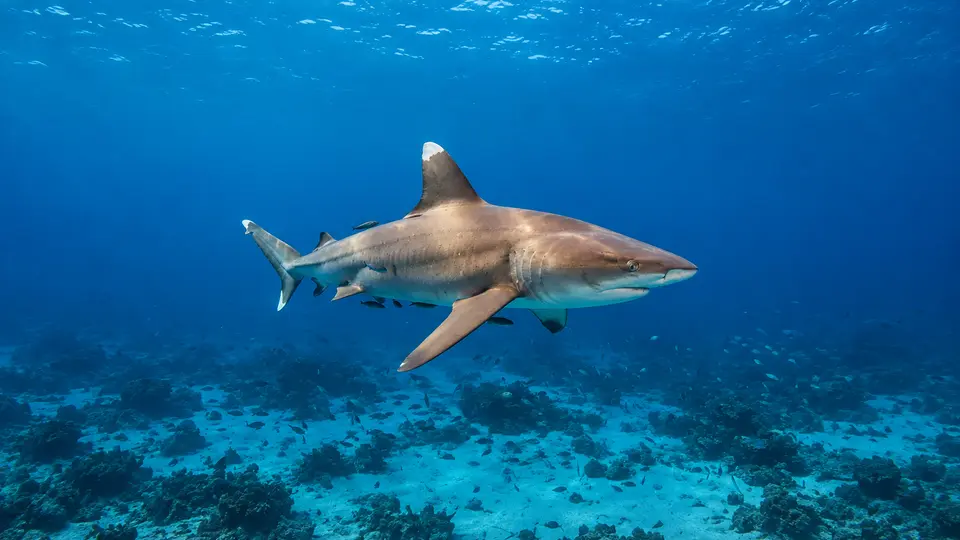
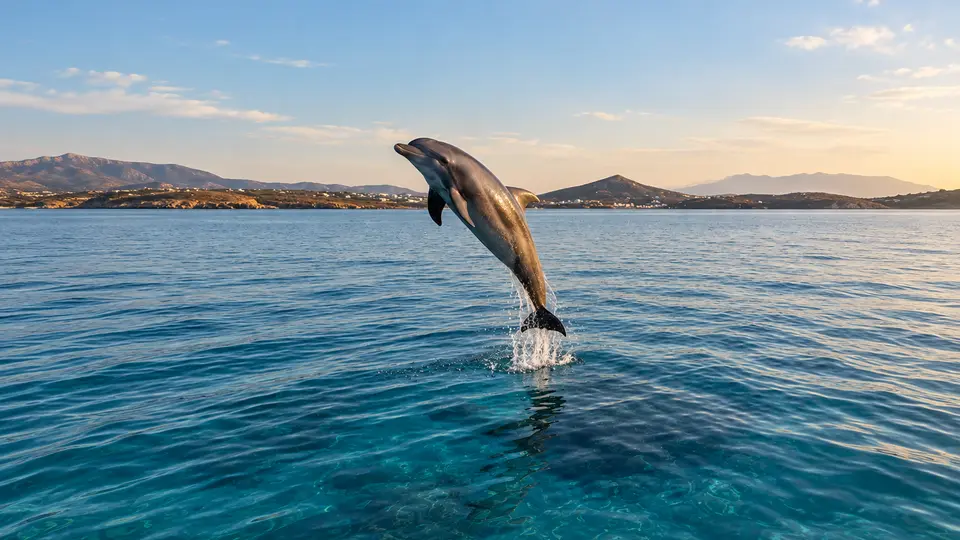
Whale SharkAI-modifiedWhale SharkOceanic Whitetip SharkAI-modifiedOceanic Whitetip SharkRisso's DolphinAI-modifiedRisso's Dolphin
Animal groupMarine lifeAnimal groupMarine lifeAnimal groupMarine life
DestinationsEgyptDestinationsEgyptDestinationsEgypt, Greece, Portugal, Scotland, Turkey, Maldives
Scientific nameRhincodon typusScientific nameScientific name
All wildlife destinations
AI-modified
Plan your trip

Find your next wildlife adventure

Compare destinations, shore programs and dates with the animals and habitats you would love to see.

  • Naturalist-led shore excursions
  • Responsible wildlife watching
  • Small expedition ships