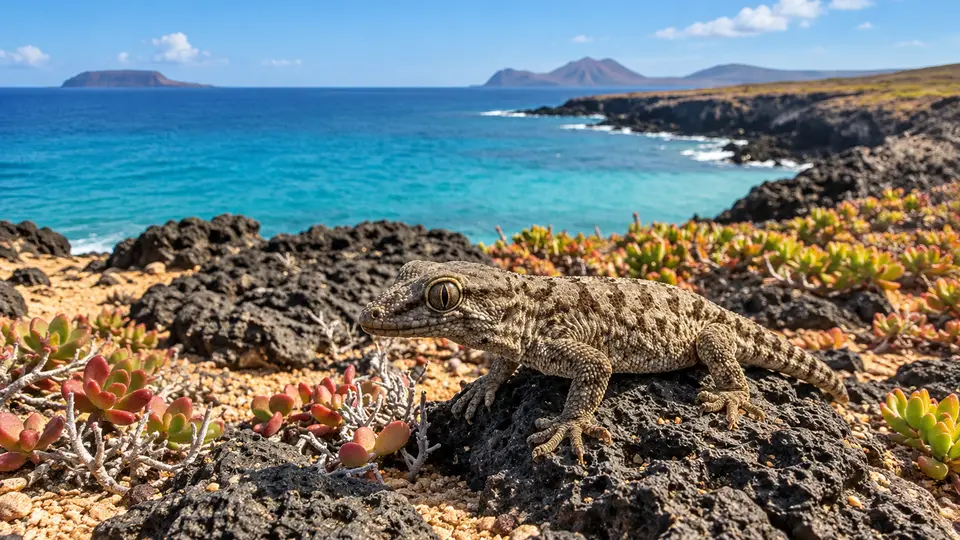
Cape Verde Wall Gecko in its natural habitatAI-modified

Cape Verde Wall GeckoTarentola caboverdianaWhere and when to see them

Cape Verde Wall Gecko at a glance

Tarentola caboverdiana is a wall gecko endemic to Santo Antão in Cape Verde under the modern, narrower interpretation of the species. Older accounts may include related island populations now treated as separate species, so island identity matters. Its rough skin, broad head and expanded toe pads suit a life on rocks and other vertical surfaces. Although modest in size, it represents a distinctive part of the archipelago's evolutionary diversification of reptiles.

Behaviour & reproduction

Size
Approximately 6–8 cm (2.4–3.1 in) snout-to-vent length
Weight
Not reliably established
Lifespan
Not reliably established
Status
Check current assessment

This gecko generally shelters in cracks during the day and emerges to forage when light levels fall. It can climb steep rock and masonry using adhesive structures beneath its toes. Individuals wait near productive feeding surfaces or move between patches where small arthropods occur. As with other wall geckos, handling can trigger tail loss, an energetically expensive defense. Resting animals should therefore be observed without lifting stones, opening crevices or blocking their retreat. Courtship involves male head-bobbing and tail-waving, followed by the male biting the female's neck during copulation. Females typically lay clutches of one or two eggs in sheltered crevices or under stones, often several times a year.

Top wildlife locations

Cape Verde wildlife habitatAI-modified

Cape Verde

On Santo Antão, rocky coastal settlements and stone walls offer plausible viewing habitat. An island-specific visit is required; observations elsewhere in Cape Verde may involve different species, and accessible sightings remain uncertain.

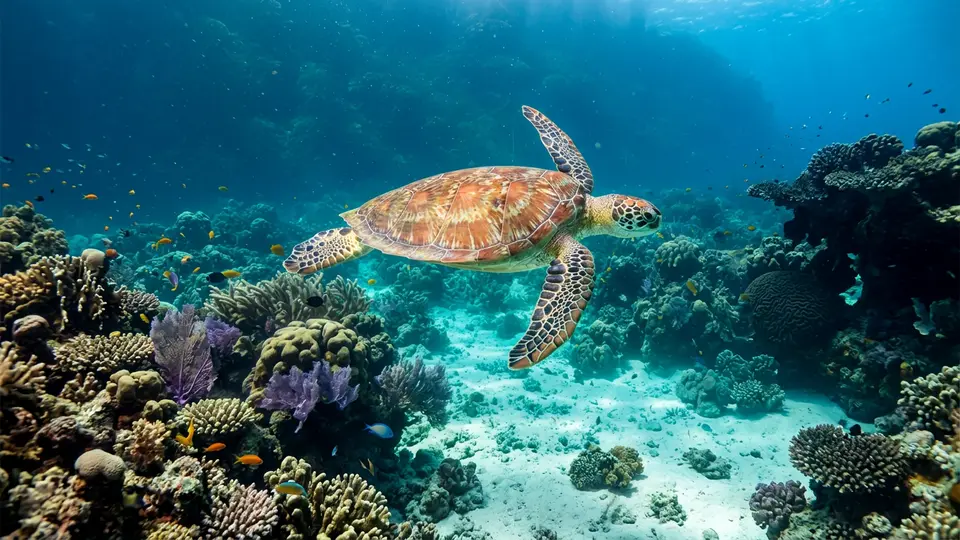
Destinations describe the species' habitat, not guaranteed cruise stops. Some animals require an optional inland excursion or are found in restricted reserves.

Fun facts about the Cape Verde Wall Gecko

  • Its modern species range is restricted to Santo Antão.
  • Several geckos formerly grouped with it are now recognized as separate island species.
  • The raised bumps on its back are enlarged scales called tubercles.
  • Its toe pads use microscopic structures to adhere to surfaces.

Best time to see the Cape Verde Wall Gecko

No robust species-specific observation calendar is established. Mild evenings with low wind are more relevant than a particular month, while local rainfall can affect insect activity. Travel plans should account for Santo Antão's varied elevations and weather rather than a presumed breeding season. Activity generally increases during warmer periods, but observations are possible year-round given suitable conditions. Local guides can often advise on specific microclimates or areas experiencing higher insect activity.

Cape Verde Wall Gecko: season matrix by destination

Travel and observation windows vary by region. Highlighted months are an orientation for planning, not confirmed sightings or a guarantee of access.

Cape Verde

There is insufficient species-specific seasonal evidence to assign a reliable window; local evening weather and confirmed island identification matter more.

JanFebMarAprMayJunJulAugSepOctNovDec
Cruise ships in Cape Verde

Where the Cape Verde Wall Gecko lives

Rocky terrain on Santo Antão provides crevices, sheltered faces and feeding surfaces. Stone walls and some buildings may also be used where conditions are suitable. Cape Verde's other islands support different geckos, so a generic coastal wall sighting cannot establish this species. This species is endemic to Santo Antão, where its distribution spans coastal to mountainous regions. It is found across a wide range of elevations on the island, adapting to different microclimates.

What the Cape Verde Wall Gecko eats

Small insects and other arthropods form the diet, taken from rock faces, walls and nearby surfaces. Prey availability changes with local moisture and vegetation. Geckos may exploit insects around buildings, but artificial lighting should not be added to create a viewing opportunity. In addition to terrestrial insects, these geckos may also consume small spiders and other opportunistic invertebrates. Their diet demonstrates adaptability to the available food sources within their varied habitats.

Species at a glance

Common name
Cape Verde Wall Gecko
Scientific name
Tarentola caboverdiana
Animal group
Reptiles
Size
Approximately 6–8 cm (2.4–3.1 in) snout-to-vent length
Weight
Not reliably established
Lifespan
Not reliably established
Status
Check current assessment
Identification
Its tuberculate back and broad adhesive toes identify a Tarentola wall gecko, but distinguishing close Cape Verde relatives reliably requires island provenance and expert examination. Key features include its robust build and often intricate dorsal patterning, which provides camouflage against rock and masonry. Compared to other Cape Verdean Tarentola species, T. caboverdiana often exhibits a more granulated appearance.

Cape Verde Wall Gecko: frequently asked questions

Where can I see the Cape Verde Wall Gecko?
Cape Verde. Inspect visible wall and rock surfaces from established paths without touching the gecko. Never pull its tail or dismantle stone refuges, and avoid unstable slopes and private buildings during evening searches. Binoculars can enhance observation of geckos on inaccessible rock faces or distant walls without disturbance. Maintaining a respectful distance is crucial for observing natural behaviors.
When is the best time to see the Cape Verde Wall Gecko?
No robust species-specific observation calendar is established. Mild evenings with low wind are more relevant than a particular month, while local rainfall can affect insect activity. Travel plans should account for Santo Antão's varied elevations and weather rather than a presumed breeding season. Activity generally increases during warmer periods, but observations are possible year-round given suitable conditions. Local guides can often advise on specific microclimates or areas experiencing higher insect activity.
How big does the Cape Verde Wall Gecko get?
Approximately 6–8 cm (2.4–3.1 in) snout-to-vent length. Adult weight: Not reliably established. Size varies with age, sex and population.
How should I behave around the Cape Verde Wall Gecko?
Inspect visible wall and rock surfaces from established paths without touching the gecko. Never pull its tail or dismantle stone refuges, and avoid unstable slopes and private buildings during evening searches. Binoculars can enhance observation of geckos on inaccessible rock faces or distant walls without disturbance. Maintaining a respectful distance is crucial for observing natural behaviors.
What does the Cape Verde Wall Gecko eat?
Small insects and other arthropods form the diet, taken from rock faces, walls and nearby surfaces. Prey availability changes with local moisture and vegetation. Geckos may exploit insects around buildings, but artificial lighting should not be added to create a viewing opportunity. In addition to terrestrial insects, these geckos may also consume small spiders and other opportunistic invertebrates. Their diet demonstrates adaptability to the available food sources within their varied habitats.
Are wildlife sightings guaranteed on an adventure cruise?
No. Animals move freely and routes, weather, access restrictions and local conditions influence every outing. Confirm the actual itinerary and shore program before booking.

Compare wildlife in the same destinations

Explore other reptiles recorded in these destinations. Similar surroundings do not mean the animals share the same habits or viewing season.

Species comparison by animal group and destination
Cape Verde Wall GeckoAI-modifiedCape Verde Wall GeckoCape Verde Giant SkinkAI-modifiedCape Verde Giant SkinkGreen Sea TurtleAI-modifiedGreen Sea Turtle
Animal groupReptilesAnimal groupReptilesAnimal groupReptiles
DestinationsCape VerdeDestinationsCape VerdeDestinationsCosta Rica, Florida, Galapagos, Mexico, Cape Verde, Egypt, Greece, Seychelles, Turkey, Indonesia, Maldives, Thailand, Vietnam, Australia, Fiji, Polynesia
Scientific nameTarentola caboverdianaScientific nameScientific name
All wildlife destinations
AI-modified
Plan your trip

Find your next wildlife adventure

Compare destinations, shore programs and dates with the animals and habitats you would love to see.

  • Naturalist-led shore excursions
  • Responsible wildlife watching
  • Small expedition ships