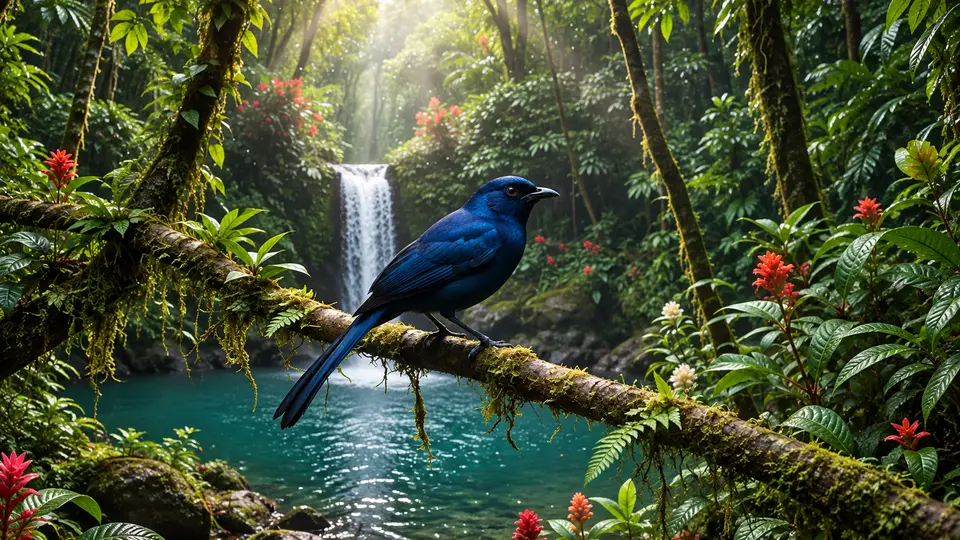
Tahiti monarch in its natural habitatAI-modified

Tahiti monarchPomarea nigraWhere and when to see them

Tahiti monarch at a glance

The Tahiti monarch is a small forest songbird found only on Tahiti. Adults are predominantly black, while younger birds pass through warmer brownish plumages. Its remaining population occupies a very limited number of valleys, where intensive conservation has helped prevent extinction. Introduced predators and invasive birds are major threats. This is not a routine coastal wildlife species: any visit must respect current conservation access arrangements and the sensitivity of its remaining territories.

Behaviour & reproduction

Size
Approximately 15 cm (5.9 in) long
Weight
Not reliably established
Lifespan
Not reliably established
Status
Critically Endangered

Tahiti monarchs search foliage, branches and open air for insects, making short sallies from perches. Territorial pairs communicate with calls and song and defend the forest around their nesting area. Both members of a pair contribute to raising young. Their limited remaining range makes repeated disturbance particularly undesirable. Conservation teams monitor breeding and control introduced threats, so visitor access must fit management priorities rather than expectations of approaching a rare bird closely. Monarch pairs typically maintain a territory of a few hectares, which they actively defend against conspecifics and potential predators. Their calls include a distinctive 'churr' alarm and more complex song phrases used for territorial advertisement. The species builds a cup-shaped nest, often in the fork of a native tree, where both parents share incubation and chick-rearing duties.

Top wildlife locations

Polynesia wildlife habitatAI-modified

Polynesia

Within this broad destination, the species occurs only on Tahiti. Coastal viewpoints are unsuitable; an authorized inland valley excursion is required, and remaining territories are sensitive conservation areas rather than standard landings.
Destinations describe the species' habitat, not guaranteed cruise stops. Some animals require an optional inland excursion or are found in restricted reserves.

Fun facts about the Tahiti monarch

  • The species survives naturally on just one island, Tahiti.
  • Young birds are brownish rather than immediately black.
  • Introduced black rats are important nest predators.
  • Recovery work includes controlling invasive birds as well as mammalian predators.

Best time to see the Tahiti monarch

No broad tourist season should be treated as a dependable monarch-viewing window. Access depends on conservation permissions, guide availability and current nesting sensitivity. Drier weather can ease valley walking, but it neither guarantees detection nor establishes an appropriate time to approach breeding territories. Breeding season typically runs from August to January, though this can vary with environmental conditions. During this period, birds are most active around their nests, but also most sensitive to disturbance. Dry season months from May to October might offer easier hiking conditions but do not necessarily improve viewing chances.

Tahiti monarch: season matrix by destination

Travel and observation windows vary by region. Highlighted months are an orientation for planning, not confirmed sightings or a guarantee of access.

Polynesia

No general access or observation calendar is supported; consult the conservation organization managing visits and current breeding restrictions.

JanFebMarAprMayJunJulAugSepOctNovDec
Cruise ships in Polynesia

Where the Tahiti monarch lives

Remaining birds inhabit a few wooded valleys on Tahiti, particularly forest along watercourses with suitable native vegetation and nesting structure. These are inland habitats reached from the coast, not beachfront woodland generally. Much apparently green landscape lacks the conditions or protection they require. They are specifically found in the upper reaches of the Papenoo, Punaruu, and Tuauru valleys. The presence of native trees like Mape (Inocarpus fagifer) and Aito (Casuarina equisetifolia) is crucial for their survival. While the coastline is easily accessible, these interior forest areas require dedicated effort and local knowledge to reach.

What the Tahiti monarch eats

The monarch feeds mainly on insects and other small arthropods. It picks prey from leaves and branches and catches some in short flights. A structurally varied forest supplies different feeding surfaces, while changes caused by invasive plants can alter those opportunities. Adult monarchs primarily consume small invertebrates such as spiders, beetles, and caterpillars. Their foraging strategy involves gleaning prey from leaf surfaces and bark, and performing short aerial pursuits. This varied diet supports both the adults and their nestlings during the breeding season.

Species at a glance

Common name
Tahiti monarch
Scientific name
Pomarea nigra
Animal group
Birds
Size
Approximately 15 cm (5.9 in) long
Weight
Not reliably established
Lifespan
Not reliably established
Status
Critically Endangered
Identification
An adult's all-black plumage and Tahiti locality separate it from other surviving Polynesian monarchs, which occupy different islands and often show contrasting colors. Juvenile Tahiti monarchs have a distinctive rusty-brown plumage which gradually transitions to the adult black. The species measures about 15 centimeters (6 inches) in length, making it a medium-sized passerine. Its relatively long tail and upright posture on perches are also key field marks.

Tahiti monarch: frequently asked questions

Where can I see the Tahiti monarch?
Polynesia. Visit only through an authorized local conservation arrangement. Stay on the agreed route, avoid playback and flash, and withdraw immediately if birds alarm or guides identify a nearby active nest. Visitors should anticipate a significant trek into dense, steep terrain, requiring good physical fitness. Binoculars are essential for distant viewing, as close approaches are not permitted and birds are often observed at a distance. Respecting the guide's instructions is paramount for both bird safety and visitor well-being.
When is the best time to see the Tahiti monarch?
No broad tourist season should be treated as a dependable monarch-viewing window. Access depends on conservation permissions, guide availability and current nesting sensitivity. Drier weather can ease valley walking, but it neither guarantees detection nor establishes an appropriate time to approach breeding territories. Breeding season typically runs from August to January, though this can vary with environmental conditions. During this period, birds are most active around their nests, but also most sensitive to disturbance. Dry season months from May to October might offer easier hiking conditions but do not necessarily improve viewing chances.
How big does the Tahiti monarch get?
Approximately 15 cm (5.9 in) long. Adult weight: Not reliably established. Size varies with age, sex and population.
How should I behave around the Tahiti monarch?
Visit only through an authorized local conservation arrangement. Stay on the agreed route, avoid playback and flash, and withdraw immediately if birds alarm or guides identify a nearby active nest. Visitors should anticipate a significant trek into dense, steep terrain, requiring good physical fitness. Binoculars are essential for distant viewing, as close approaches are not permitted and birds are often observed at a distance. Respecting the guide's instructions is paramount for both bird safety and visitor well-being.
What does the Tahiti monarch eat?
The monarch feeds mainly on insects and other small arthropods. It picks prey from leaves and branches and catches some in short flights. A structurally varied forest supplies different feeding surfaces, while changes caused by invasive plants can alter those opportunities. Adult monarchs primarily consume small invertebrates such as spiders, beetles, and caterpillars. Their foraging strategy involves gleaning prey from leaf surfaces and bark, and performing short aerial pursuits. This varied diet supports both the adults and their nestlings during the breeding season.
Are wildlife sightings guaranteed on an adventure cruise?
No. Animals move freely and routes, weather, access restrictions and local conditions influence every outing. Confirm the actual itinerary and shore program before booking.

Compare wildlife in the same destinations

Explore other birds recorded in these destinations. Similar surroundings do not mean the animals share the same habits or viewing season.

Species comparison by animal group and destination
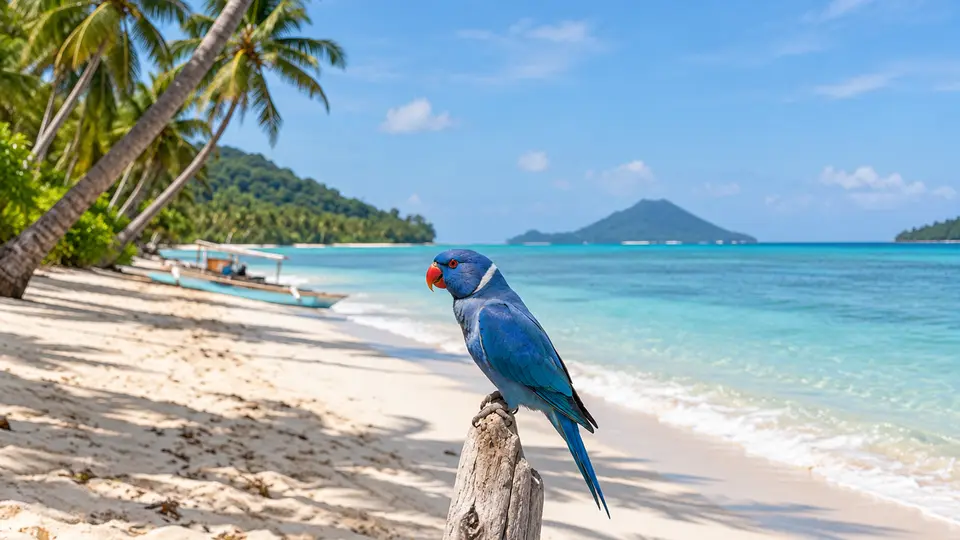
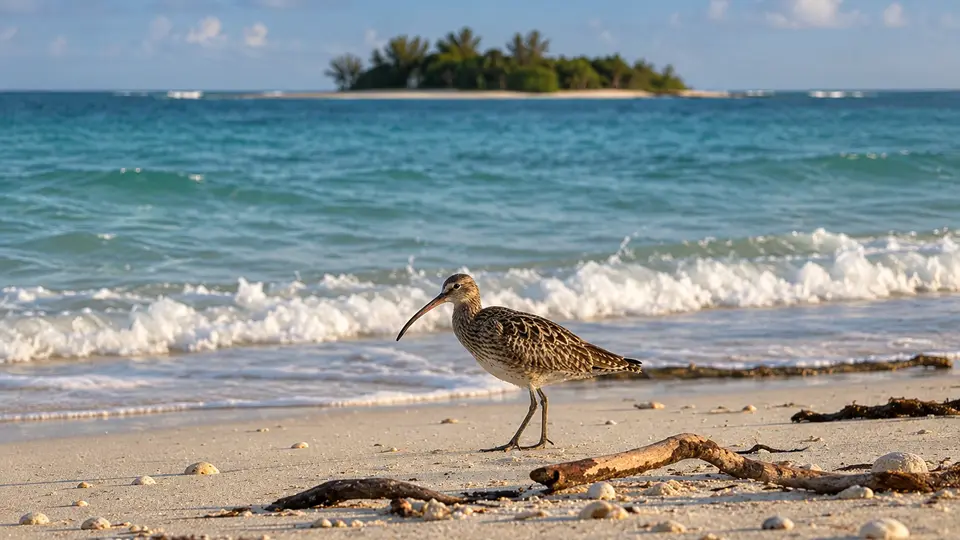
Tahiti monarchAI-modifiedTahiti monarchBlue lorikeetAI-modifiedBlue lorikeetBristle-thighed curlewAI-modifiedBristle-thighed curlew
Animal groupBirdsAnimal groupBirdsAnimal groupBirds
DestinationsPolynesiaDestinationsPolynesiaDestinationsPolynesia
Scientific namePomarea nigraScientific nameScientific name
All wildlife destinations
AI-modified
Plan your trip

Find your next wildlife adventure

Compare destinations, shore programs and dates with the animals and habitats you would love to see.

  • Naturalist-led shore excursions
  • Responsible wildlife watching
  • Small expedition ships