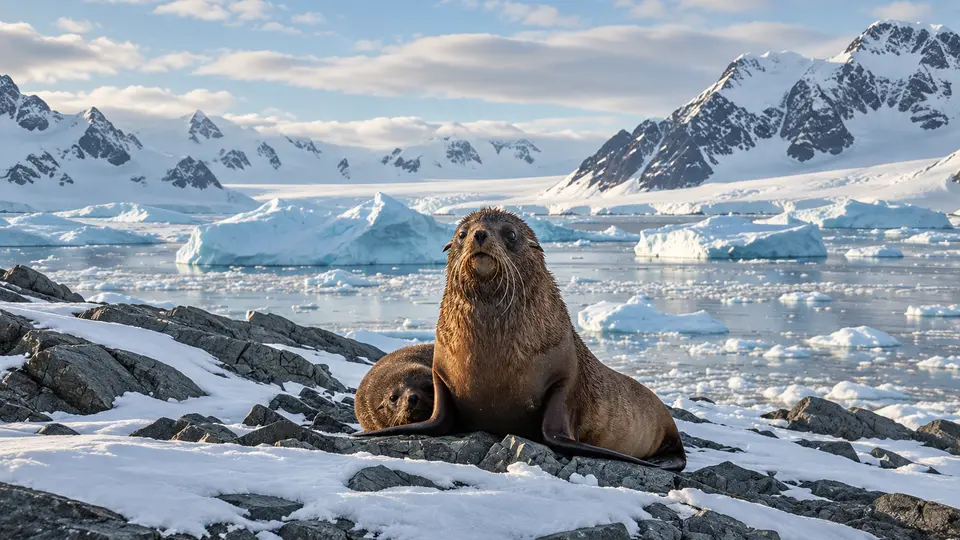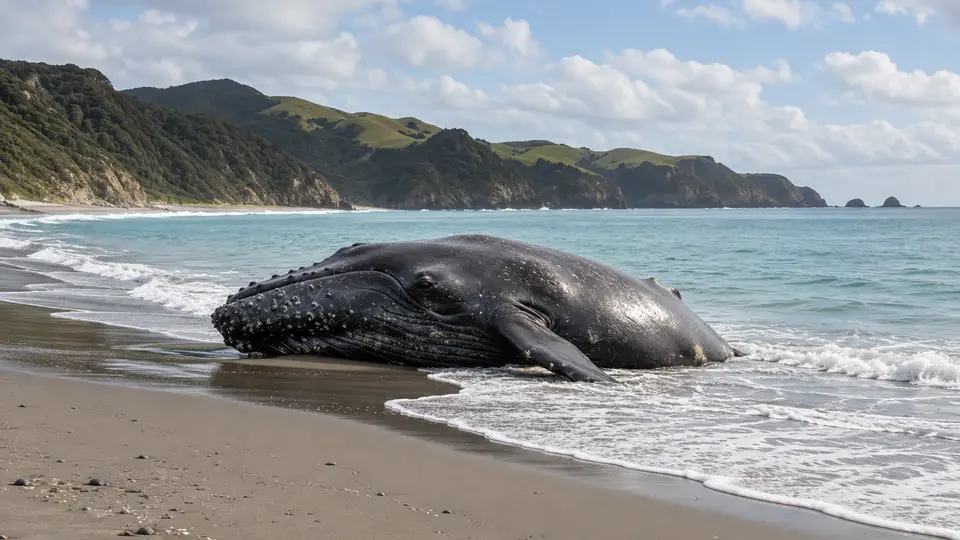
Southern Right Whale in its natural habitatAI-modified

Southern Right WhaleEubalaena australisWhere and when to see them

Southern Right Whale at a glance

The southern right whale is a large baleen whale of Southern Hemisphere seas, not a land animal. Its broad back, strongly arched mouth and rough head patches create a distinctive outline even in distant coastal views. Historical whaling devastated populations because these slow-moving whales were accessible and floated when killed. Recovery has been uneven among regions. Seasonal use of sheltered winter calving waters makes some populations suitable for land-based observation without approaching the animals.

Behaviour & reproduction

Size
13-17 m (43-56 ft) long
Weight
40-80 tonnes (44-88 short tons)
Lifespan
Not reliably established
Status
Least Concern

Whales move between feeding areas and lower-latitude winter breeding grounds, although routes and schedules vary. Mothers with calves may remain in sheltered coastal water, while social groups engage in rolling, touching and surface displays. Breaches and raised tail flukes are conspicuous but unpredictable. Feeding involves swimming through concentrations of tiny prey with the mouth open. Adults can spend long intervals relatively motionless at the surface, so distant observers need patience rather than expecting constant activity. Courtship and mating often involve multiple males competing for access to a female, frequently observed as 'mating wheels' at the surface. Calves are born after a gestation period of about 11 to 12 months, typically weighing around one ton and measuring 4.5 to 6 meters. They are also known for 'sailing,' using their raised tail flukes to catch the wind while floating at the surface.

Top wildlife locations

Antarctica wildlife habitatAI-modified

Antarctica

Distant deck views in Southern Ocean feeding waters are possible, but right whales are uncommon on typical Antarctic Peninsula routes. Coastal viewpoints are not dependable observation sites, and no dedicated landing should be assumed.

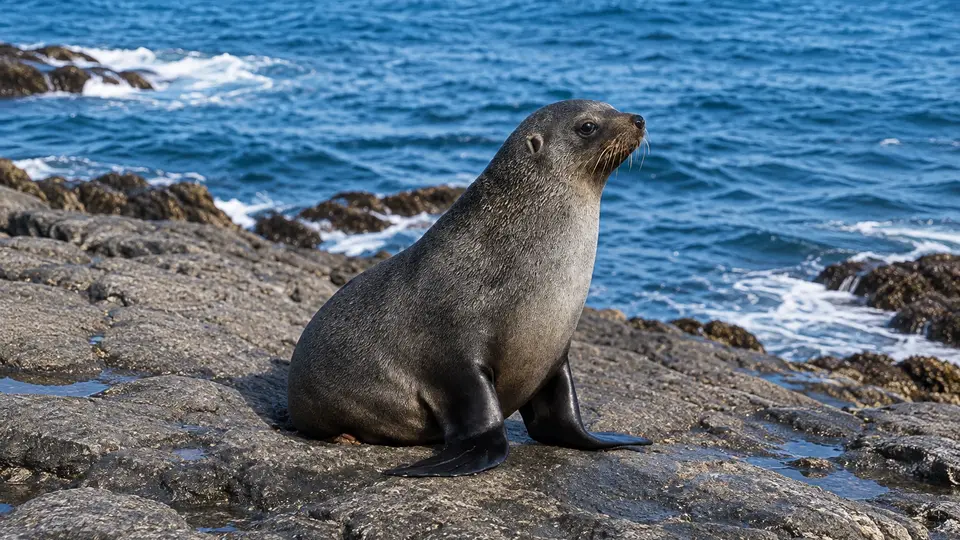
Australia wildlife habitatAI-modified

Australia

Established lookouts above sheltered southern coastal bays can provide distant winter views of adults and calves. No inland excursion is needed, but suitable access, whale presence and local viewing restrictions vary among bays.

New Zealand wildlife habitatAI-modified

New Zealand

Mainland coastal lookouts occasionally provide distant winter sightings, but encounters are uncommon. Important subantarctic wintering areas are remote with tightly controlled access and should not be assumed available through ordinary coastal travel.

Destinations describe the species' habitat, not guaranteed cruise stops. Some animals require an optional inland excursion or are found in restricted reserves.

Fun facts about the Southern Right Whale

  • Individual whales can be recognized by their unique head-callosity patterns.
  • The pale appearance of callosities largely comes from small crustaceans called whale lice.
  • The species has no dorsal fin.
  • Its long baleen plates strain tiny crustaceans rather than fish-sized prey.

Best time to see the Southern Right Whale

In southern Australia, May through October broadly covers coastal wintering, with local peaks varying. New Zealand mainland encounters are much less predictable, though winter is plausible. Antarctic summer travel overlaps potential feeding-region presence, but does not create a dependable right-whale viewing season there. In South Africa, the peak calving season typically runs from July to November, drawing many whales to sheltered bays. Patagonian waters, particularly around Valdes Peninsula, are renowned for prime viewing from June to December. While present in Antarctic waters during summer, they are less concentrated and thus less predictably encountered than other baleen whales.

Southern Right Whale: season matrix by destination

Travel and observation windows vary by region. Highlighted months are an orientation for planning, not confirmed sightings or a guarantee of access.

Antarctica

These are practical Antarctic travel months, not an established right-whale sighting peak; encounters are rare and regional feeding distributions vary.

JanFebMarAprMayJunJulAugSepOctNovDec
Cruise ships in Antarctica

Australia

This broadly matches coastal wintering and calving in southern Australia; local arrival dates, departure dates and abundance differ among regions and years.

JanFebMarAprMayJunJulAugSepOctNovDec
Cruise ships in Australia

New Zealand

Winter is a biologically plausible coastal window, especially for southern populations, but mainland sightings remain sporadic and remote wintering areas are generally impractical for ordinary visitors.

JanFebMarAprMayJunJulAugSepOctNovDec
Cruise ships in New Zealand

Where the Southern Right Whale lives

The species occupies Southern Hemisphere marine waters, using sheltered coastal bays for much winter calving and social activity. Feeding habitat includes productive offshore and subantarctic waters, sometimes extending into Antarctic regions. It should not be presented as a routine whale of every Antarctic itinerary. Adults migrate seasonally between high-latitude feeding grounds and lower-latitude breeding areas. This species shows strong site fidelity to specific coastal breeding and calving grounds across multiple generations. Historically, their range extended more broadly across temperate and subpolar waters.

What the Southern Right Whale eats

Southern right whales filter copepods and krill through long baleen plates. They feed where currents and seasonal productivity concentrate these small crustaceans, either near the surface or deeper in the water column. Coastal wintering animals may feed little compared with those on productive feeding grounds. Their feeding technique involves continuous ram filtration, where they swim slowly with their mouths open through dense prey patches. The fine baleen plates are particularly efficient at filtering out small zooplankton. Calves are nursed in warm coastal waters for several months, subsisting on their mother's rich milk.

Species at a glance

Common name
Southern Right Whale
Scientific name
Eubalaena australis
Animal group
Mammals
Size
13-17 m (43-56 ft) long
Weight
40-80 tonnes (44-88 short tons)
Lifespan
Not reliably established
Status
Least Concern
Identification
Unlike humpbacks, southern right whales lack a dorsal fin and have a strongly arched mouth, head callosities and often a V-shaped blow. The unique pattern of callosities on each whale's head, especially the bonnet, serves as a natural fingerprint for individual identification. These rough patches are home to whale lice and barnacles, which contribute to their distinctive appearance. Their smooth, dark bodies, devoid of a dorsal fin, further distinguish them from other large whale species.

Southern Right Whale: frequently asked questions

Where can I see the Southern Right Whale?
Antarctica, Australia, New Zealand. Use distant cliff or beach viewpoints, or observe from a vessel's deck under local whale rules. Never encourage an approach or crowd a mother and calf. Remain behind barriers and keep clear of surf-exposed rocks. When viewing from shore, look for their characteristic V-shaped blow, which can be seen from a considerable distance. Binoculars are essential for detailed observation of individual whale features like callosity patterns. From vessels, maintain a consistent course and speed, allowing whales to approach on their own terms.
When is the best time to see the Southern Right Whale?
In southern Australia, May through October broadly covers coastal wintering, with local peaks varying. New Zealand mainland encounters are much less predictable, though winter is plausible. Antarctic summer travel overlaps potential feeding-region presence, but does not create a dependable right-whale viewing season there. In South Africa, the peak calving season typically runs from July to November, drawing many whales to sheltered bays. Patagonian waters, particularly around Valdes Peninsula, are renowned for prime viewing from June to December. While present in Antarctic waters during summer, they are less concentrated and thus less predictably encountered than other baleen whales.
How big does the Southern Right Whale get?
13-17 m (43-56 ft) long. Adult weight: 40-80 tonnes (44-88 short tons). Size varies with age, sex and population.
How should I behave around the Southern Right Whale?
Use distant cliff or beach viewpoints, or observe from a vessel's deck under local whale rules. Never encourage an approach or crowd a mother and calf. Remain behind barriers and keep clear of surf-exposed rocks. When viewing from shore, look for their characteristic V-shaped blow, which can be seen from a considerable distance. Binoculars are essential for detailed observation of individual whale features like callosity patterns. From vessels, maintain a consistent course and speed, allowing whales to approach on their own terms.
What does the Southern Right Whale eat?
Southern right whales filter copepods and krill through long baleen plates. They feed where currents and seasonal productivity concentrate these small crustaceans, either near the surface or deeper in the water column. Coastal wintering animals may feed little compared with those on productive feeding grounds. Their feeding technique involves continuous ram filtration, where they swim slowly with their mouths open through dense prey patches. The fine baleen plates are particularly efficient at filtering out small zooplankton. Calves are nursed in warm coastal waters for several months, subsisting on their mother's rich milk.
Are wildlife sightings guaranteed on an adventure cruise?
No. Animals move freely and routes, weather, access restrictions and local conditions influence every outing. Confirm the actual itinerary and shore program before booking.

Compare wildlife in the same destinations

Explore other mammals recorded in these destinations. Similar surroundings do not mean the animals share the same habits or viewing season.

Species comparison by animal group and destination
Southern Right WhaleAI-modifiedSouthern Right WhaleAntarctic Fur SealAI-modifiedAntarctic Fur SealAustralian fur sealAI-modifiedAustralian fur seal
Animal groupMammalsAnimal groupMammalsAnimal groupMammals
DestinationsAntarctica, Australia, New ZealandDestinationsAntarcticaDestinationsAustralia
Scientific nameEubalaena australisScientific nameScientific name
All wildlife destinations
AI-modified
Plan your trip

Find your next wildlife adventure

Compare destinations, shore programs and dates with the animals and habitats you would love to see.

  • Naturalist-led shore excursions
  • Responsible wildlife watching
  • Small expedition ships