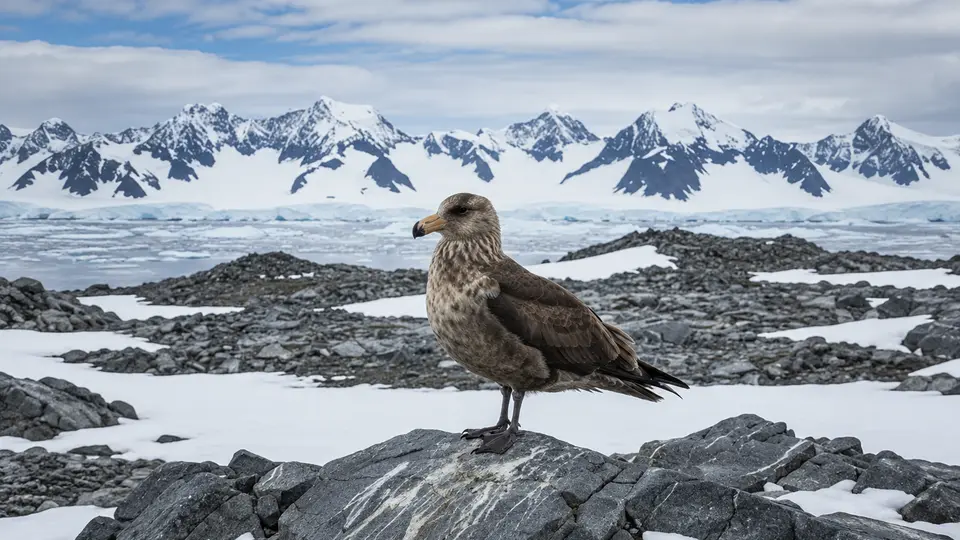
South Polar Skua in its natural habitatAI-modified

South Polar SkuaStercorarius maccormickiWhere and when to see them

South Polar Skua at a glance

The south polar skua is a powerful Antarctic seabird that combines marine hunting with opportunistic scavenging. It breeds farther south than almost any other bird and then undertakes remarkable ocean migrations, with some individuals reaching the Northern Hemisphere. Plumage varies from relatively pale-headed birds to dark forms, complicating identification. Although famous for taking penguin eggs and chicks, many populations depend heavily on fish, and feeding habits differ substantially among breeding regions.

Behaviour & reproduction

Size
50-58 cm (19.7-22.8 in) long
Weight
900-1,600 g (31.7-56.4 oz)
Lifespan
Not reliably established
Status
Least Concern

Breeding pairs defend territories on ice-free ground, often returning to familiar areas in successive years. They may pursue other seabirds until food is dropped, seize prey at sea or exploit carrion near colonies. Parents vigorously defend nests and chicks, sometimes flying close to intruders. Outside breeding, birds disperse widely over oceans. Where south polar and brown skuas meet, competition, mixed pairing and hybridization can make both behavior and identification less straightforward. Courtship displays involve aerial chases and mutual preening between paired individuals. Outside the breeding season, they are largely solitary or occur in loose aggregations at sea, showing less territoriality. They exhibit kleptoparasitism, often harassing petrels and fulmars to force them to regurgitate their meals, a behavior commonly observed at sea.

Top wildlife locations

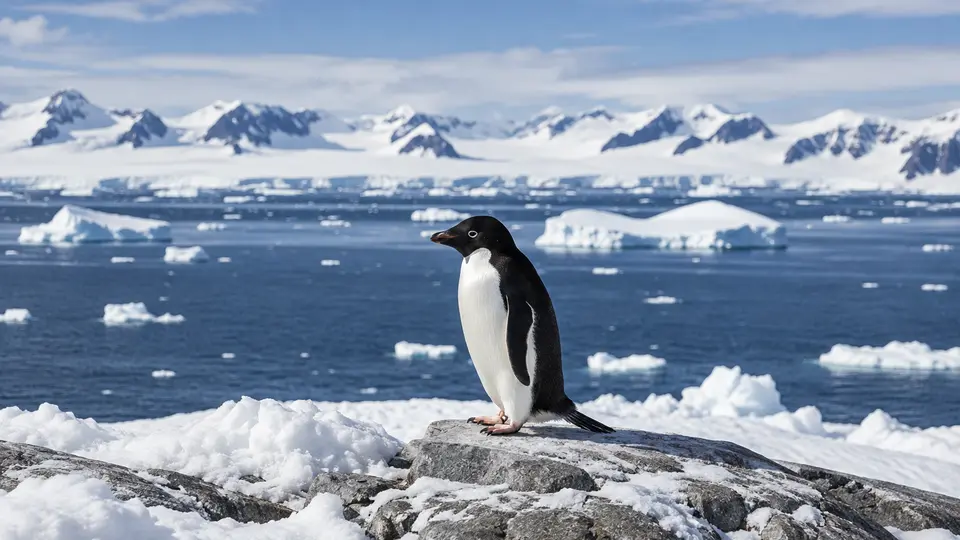
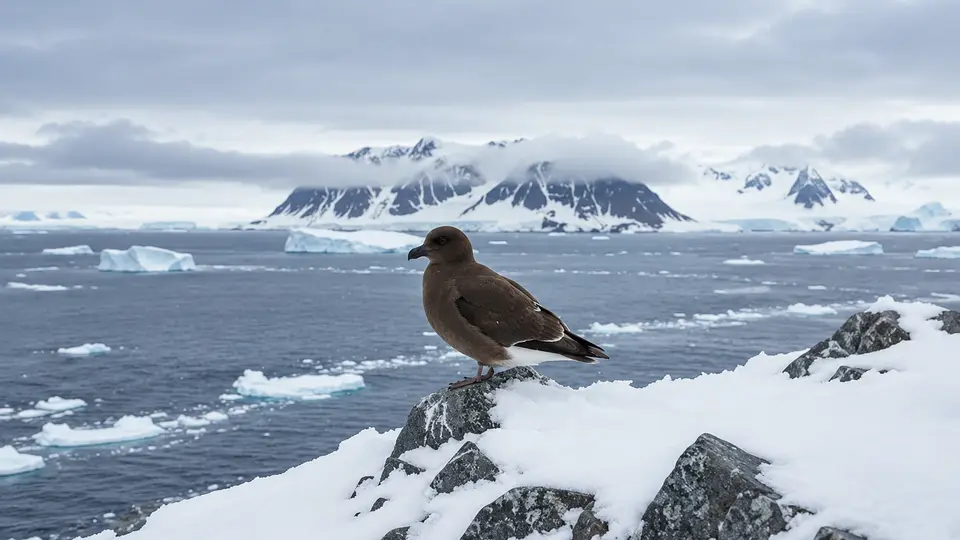
Antarctica wildlife habitatAI-modified

Antarctica

Ice-free coastal slopes and seabird-colony surroundings provide plausible guided shore viewing, with additional deck opportunities. Access is weather-controlled, and nesting territories may be excluded from visitor routes to prevent defensive encounters.
Destinations describe the species' habitat, not guaranteed cruise stops. Some animals require an optional inland excursion or are found in restricted reserves.

Fun facts about the South Polar Skua

  • The species was named for naval surgeon and explorer Robert McCormick.
  • Some individuals migrate from Antarctic breeding grounds to the North Pacific.
  • Both pale and dark plumage forms occur.
  • Hybridization with brown skuas occurs in parts of their overlapping breeding range.

Best time to see the South Polar Skua

November through March is the practical Antarctic visitor window and overlaps breeding-season presence. Nest establishment, chick rearing and departure vary with latitude and weather. Access to ice-free ground is itinerary-dependent, so this window does not imply that every coastal stop supports nesting skuas. Peak chick rearing and fledging typically occur from late December through February, offering prime viewing opportunities for parent-chick interactions. The return of skuas to their breeding grounds usually begins in late October or early November. Migration away from Antarctica generally starts in March and April, with birds dispersing northwards.

South Polar Skua: season matrix by destination

Travel and observation windows vary by region. Highlighted months are an orientation for planning, not confirmed sightings or a guarantee of access.

Antarctica

The austral summer visitor season overlaps local breeding presence; latitude, ice and operational restrictions determine actual viewing opportunities.

JanFebMarAprMayJunJulAugSepOctNovDec
Cruise ships in Antarctica

Where the South Polar Skua lives

Nesting habitat is exposed, ice-free Antarctic ground, including rocky slopes and coastal areas near productive waters. Birds forage over adjacent seas and sometimes around seabird colonies. Beyond the breeding season they occupy marine habitats across vast distances, including waters far north of Antarctica. Nests are typically found on elevated ridges, slopes, or hilltops within ice-free areas, providing good visibility for territorial defense. Although primarily coastal, some breeding colonies are established several kilometers inland in mountainous regions. Outside the breeding season, they inhabit open ocean environments, often congregating in areas with abundant food resources.

What the South Polar Skua eats

Fish are important, supplemented by carrion, marine invertebrates and food stolen from other birds. Penguin eggs and chicks are taken where available, but their importance varies by location. Feeding ecology should not be reduced to nest predation alone. Their diet can shift seasonally, with a greater reliance on penguin eggs and chicks during the early breeding season near colonies. Skua diets also include krill and other small crustaceans, particularly when foraging at sea. Opportunistic feeding extends to scavenging scraps from whaling or fishing vessels, demonstrating dietary flexibility.

Species at a glance

Common name
South Polar Skua
Scientific name
Stercorarius maccormicki
Animal group
Birds
Size
50-58 cm (19.7-22.8 in) long
Weight
900-1,600 g (31.7-56.4 oz)
Lifespan
Not reliably established
Status
Least Concern
Identification
Compared with brown skua, typical birds are smaller and slimmer with a less massive bill, but dark forms and hybrids may require expert assessment. Adult South Polar Skuas exhibit considerable plumage variation, ranging from pale gray-brown to very dark brown, often with a subtle rufous wash. They frequently display prominent white flashes at the base of the primary feathers, visible in flight, which can aid in distinguishing them from other skua species. The flight profile is strong and purposeful, with broad wings and a relatively short, wedge-shaped tail.

South Polar Skua: frequently asked questions

Where can I see the South Polar Skua?
Antarctica. Watch from designated routes or the deck, leaving a wide margin around territorial birds. If a skua calls repeatedly or makes warning passes, retreat calmly with your guide rather than approaching its inconspicuous nest. When observing from a zodiac or small boat, maintain a respectful distance from any skuas resting on ice floes or shorelines. Their distinctive bounding flight pattern, characterized by deep wing beats and glides, is often visible from the ship as they patrol coastal waters. From deck, watch for skuas trailing vessels, particularly near areas with fishing activity.
When is the best time to see the South Polar Skua?
November through March is the practical Antarctic visitor window and overlaps breeding-season presence. Nest establishment, chick rearing and departure vary with latitude and weather. Access to ice-free ground is itinerary-dependent, so this window does not imply that every coastal stop supports nesting skuas. Peak chick rearing and fledging typically occur from late December through February, offering prime viewing opportunities for parent-chick interactions. The return of skuas to their breeding grounds usually begins in late October or early November. Migration away from Antarctica generally starts in March and April, with birds dispersing northwards.
How big does the South Polar Skua get?
50-58 cm (19.7-22.8 in) long. Adult weight: 900-1,600 g (31.7-56.4 oz). Size varies with age, sex and population.
How should I behave around the South Polar Skua?
Watch from designated routes or the deck, leaving a wide margin around territorial birds. If a skua calls repeatedly or makes warning passes, retreat calmly with your guide rather than approaching its inconspicuous nest. When observing from a zodiac or small boat, maintain a respectful distance from any skuas resting on ice floes or shorelines. Their distinctive bounding flight pattern, characterized by deep wing beats and glides, is often visible from the ship as they patrol coastal waters. From deck, watch for skuas trailing vessels, particularly near areas with fishing activity.
What does the South Polar Skua eat?
Fish are important, supplemented by carrion, marine invertebrates and food stolen from other birds. Penguin eggs and chicks are taken where available, but their importance varies by location. Feeding ecology should not be reduced to nest predation alone. Their diet can shift seasonally, with a greater reliance on penguin eggs and chicks during the early breeding season near colonies. Skua diets also include krill and other small crustaceans, particularly when foraging at sea. Opportunistic feeding extends to scavenging scraps from whaling or fishing vessels, demonstrating dietary flexibility.
Are wildlife sightings guaranteed on an adventure cruise?
No. Animals move freely and routes, weather, access restrictions and local conditions influence every outing. Confirm the actual itinerary and shore program before booking.

Compare wildlife in the same destinations

Explore other birds recorded in these destinations. Similar surroundings do not mean the animals share the same habits or viewing season.

Species comparison by animal group and destination
South Polar SkuaAI-modifiedSouth Polar SkuaAdélie PenguinAI-modifiedAdélie PenguinAntarctic PetrelAI-modifiedAntarctic Petrel
Animal groupBirdsAnimal groupBirdsAnimal groupBirds
DestinationsAntarcticaDestinationsAntarcticaDestinationsAntarctica
Scientific nameStercorarius maccormickiScientific nameScientific name
All wildlife destinations
AI-modified
Plan your trip

Find your next wildlife adventure

Compare destinations, shore programs and dates with the animals and habitats you would love to see.

  • Naturalist-led shore excursions
  • Responsible wildlife watching
  • Small expedition ships