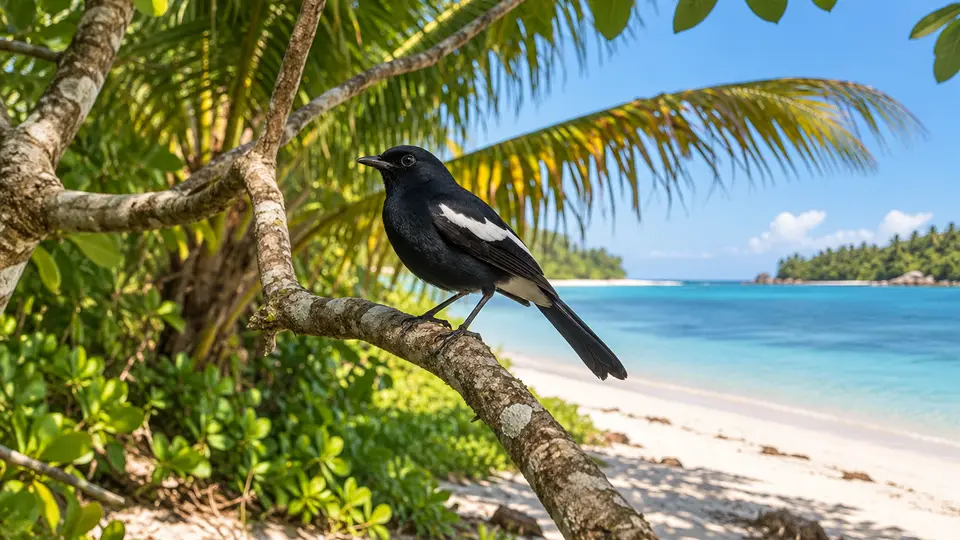
Seychelles Magpie-Robin in its natural habitatAI-modified

Seychelles Magpie-RobinCopsychus sechellarumWhere and when to see them

Seychelles Magpie-Robin at a glance

The Seychelles magpie-robin is a large, glossy island songbird whose survival depends on intensive conservation. Once reduced to a tiny population on Frégate, it now occupies several islands following habitat restoration, predator control and carefully managed transfers. Its white shoulder patches flash against otherwise black plumage. Unlike a typical canopy bird, it spends much of its feeding time on the ground, investigating leaf litter and exposed soil.

Behaviour & reproduction

Size
23–25 cm (9.1–9.8 in) long
Weight
65–80 g (2.3–2.8 oz)
Lifespan
Not reliably established
Status
Endangered

Pairs defend territories with song and conspicuous displays, often using low branches as lookout posts. They forage by hopping across the ground, pausing to inspect disturbed leaves or seize small animals. Historically, feeding opportunities included soil exposed by giant tortoises. Nesting takes place in cavities, including managed nest boxes. Young can remain within family territories, but competition for breeding space makes population growth more complicated than simply producing chicks. Courtship displays involve the male puffing out his feathers and bowing while singing to the female. Pairs are monogamous and maintain their territories year-round, defending them vigorously against rivals. They are known for their strong vocalizations, a series of clear, whistling notes, which serve both territorial and communication purposes.

Top wildlife locations

Seychelles wildlife habitatAI-modified

Seychelles

Managed islands such as Cousin and Aride offer potential observation in woodland behind the shore, subject to authorized access. The species is absent from many islands, so an ordinary beach visit is insufficient.
Destinations describe the species' habitat, not guaranteed cruise stops. Some animals require an optional inland excursion or are found in restricted reserves.

Fun facts about the Seychelles Magpie-Robin

  • The surviving wild population once numbered fewer than twenty birds.
  • Frégate was the species' last refuge before conservation transfers.
  • It can exploit insects exposed by the movements of giant tortoises.
  • Nest boxes help compensate for a shortage of suitable tree cavities.

Best time to see the Seychelles Magpie-Robin

Resident birds can potentially be observed throughout the year on islands holding managed populations. April and October often offer relatively calmer intermonsoon travel conditions. Island access, conservation restrictions and local weather matter more than a single breeding season when planning responsible shore-based observation. Breeding activity peaks during the wetter months, from October to March, providing ample invertebrate food for chicks. However, visitors should prioritize responsible tour operators who adhere to strict conservation protocols regardless of the season. The overall limited range of this species means that any island with a population offers an observation opportunity, provided access is granted.

Seychelles Magpie-Robin: season matrix by destination

Travel and observation windows vary by region. Highlighted months are an orientation for planning, not confirmed sightings or a guarantee of access.

Seychelles

These are practical intermonsoon travel windows, not a restricted breeding or sighting season; birds are resident and island access must be checked.

JanFebMarAprMayJunJulAugSepOctNovDec
Cruise ships in Seychelles

Where the Seychelles Magpie-Robin lives

This species needs wooded island habitat with shaded ground, loose leaf litter and accessible feeding patches. Mature native trees provide shelter and potential nest cavities. Well-managed gardens and restored woodland can be useful, but dense ground vegetation and introduced predators reduce habitat quality. Successful reintroduction and translocation efforts have expanded their presence to additional islands beyond their original last stronghold. Protection from invasive plant species, especially coconut plantations, and active habitat restoration are crucial for their long-term survival. The presence of suitable undergrowth for foraging and nesting, alongside a canopy for roosting, defines optimal habitat quality.

What the Seychelles Magpie-Robin eats

Ground-dwelling invertebrates form the core of its diet, including beetles, cockroaches, worms and other small prey. It also takes small vertebrates opportunistically. Conservation teams may provide supplementary food, but visitors should never imitate managed feeding or leave food near territories. Despite their generalist diet, a consistent supply of ground invertebrates, particularly during breeding season, is vital for successful rearing of young. They often forage along the forest floor, flipping leaves and probing the soil with their bills to uncover prey. While they are opportunistic, their foraging behavior is primarily adapted for detecting cryptic invertebrates.

Species at a glance

Common name
Seychelles Magpie-Robin
Scientific name
Copsychus sechellarum
Animal group
Birds
Size
23–25 cm (9.1–9.8 in) long
Weight
65–80 g (2.3–2.8 oz)
Lifespan
Not reliably established
Status
Endangered
Identification
Its large size, glossy black body and bold white shoulder patches distinguish it from the smaller, brownish Seychelles warbler and other resident songbirds. Their relatively long tail, often held cocked, is another distinguishing feature, especially when perched. Unlike some other songbirds, they lack any discernible sexual dimorphism, with both males and females sharing the same striking plumage. The juveniles are similar to adults but may have duller plumage and a less pronounced shoulder patch.

Seychelles Magpie-Robin: frequently asked questions

Where can I see the Seychelles Magpie-Robin?
Seychelles. Use authorized island trails and let birds approach naturally. Keep clear of nest boxes and supplementary feeding stations, avoid playback, and never scatter food. Even on occupied islands, access rules and territory locations can limit sightings. Be patient and still, as the birds are naturally curious and often approach observers. Maintain a quiet demeanor to avoid startling them, allowing for extended viewing periods. Binoculars are recommended for detailed observation of their subtle markings and foraging behaviors, even at relatively close range.
When is the best time to see the Seychelles Magpie-Robin?
Resident birds can potentially be observed throughout the year on islands holding managed populations. April and October often offer relatively calmer intermonsoon travel conditions. Island access, conservation restrictions and local weather matter more than a single breeding season when planning responsible shore-based observation. Breeding activity peaks during the wetter months, from October to March, providing ample invertebrate food for chicks. However, visitors should prioritize responsible tour operators who adhere to strict conservation protocols regardless of the season. The overall limited range of this species means that any island with a population offers an observation opportunity, provided access is granted.
How big does the Seychelles Magpie-Robin get?
23–25 cm (9.1–9.8 in) long. Adult weight: 65–80 g (2.3–2.8 oz). Size varies with age, sex and population.
How should I behave around the Seychelles Magpie-Robin?
Use authorized island trails and let birds approach naturally. Keep clear of nest boxes and supplementary feeding stations, avoid playback, and never scatter food. Even on occupied islands, access rules and territory locations can limit sightings. Be patient and still, as the birds are naturally curious and often approach observers. Maintain a quiet demeanor to avoid startling them, allowing for extended viewing periods. Binoculars are recommended for detailed observation of their subtle markings and foraging behaviors, even at relatively close range.
What does the Seychelles Magpie-Robin eat?
Ground-dwelling invertebrates form the core of its diet, including beetles, cockroaches, worms and other small prey. It also takes small vertebrates opportunistically. Conservation teams may provide supplementary food, but visitors should never imitate managed feeding or leave food near territories. Despite their generalist diet, a consistent supply of ground invertebrates, particularly during breeding season, is vital for successful rearing of young. They often forage along the forest floor, flipping leaves and probing the soil with their bills to uncover prey. While they are opportunistic, their foraging behavior is primarily adapted for detecting cryptic invertebrates.
Are wildlife sightings guaranteed on an adventure cruise?
No. Animals move freely and routes, weather, access restrictions and local conditions influence every outing. Confirm the actual itinerary and shore program before booking.

Compare wildlife in the same destinations

Explore other birds recorded in these destinations. Similar surroundings do not mean the animals share the same habits or viewing season.

Species comparison by animal group and destination
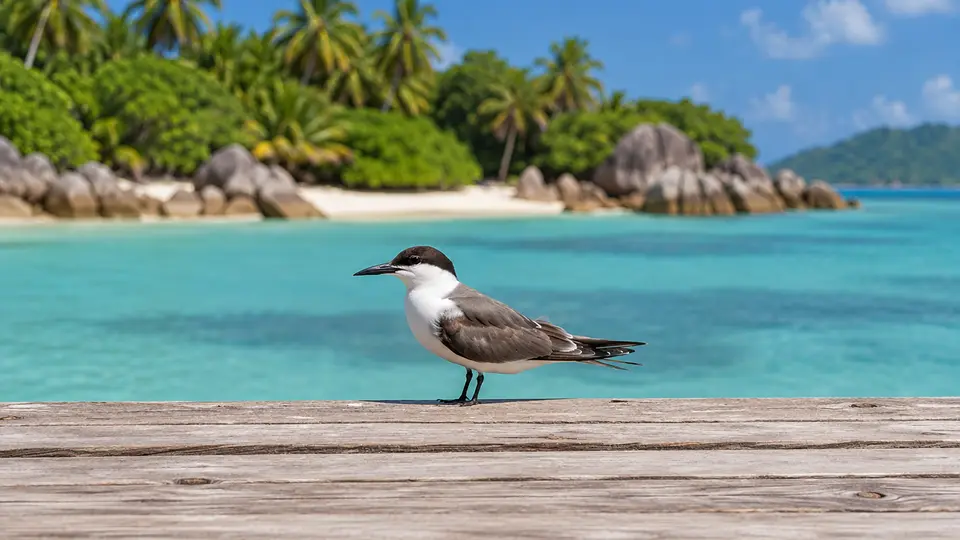
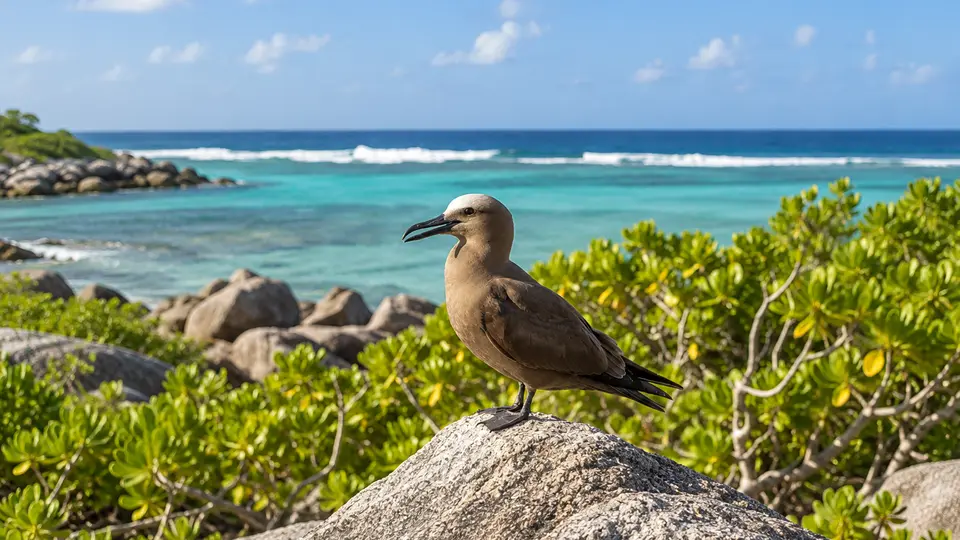
Seychelles Magpie-RobinAI-modifiedSeychelles Magpie-RobinBridled TernAI-modifiedBridled TernBrown NoddyAI-modifiedBrown Noddy
Animal groupBirdsAnimal groupBirdsAnimal groupBirds
DestinationsSeychellesDestinationsSeychellesDestinationsSeychelles, Maldives, Fiji
Scientific nameCopsychus sechellarumScientific nameScientific name
All wildlife destinations
AI-modified
Plan your trip

Find your next wildlife adventure

Compare destinations, shore programs and dates with the animals and habitats you would love to see.

  • Naturalist-led shore excursions
  • Responsible wildlife watching
  • Small expedition ships