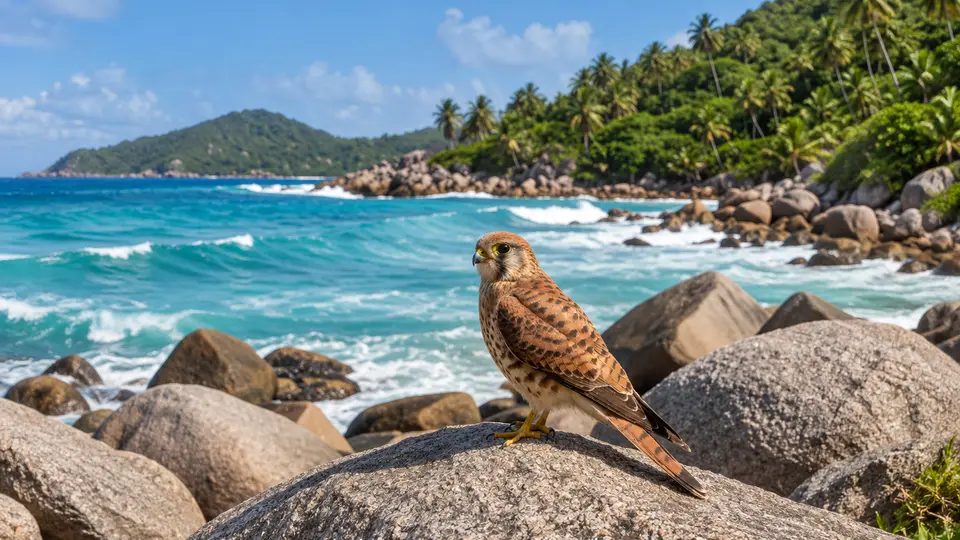
Seychelles Kestrel in its natural habitatAI-modified

Seychelles KestrelFalco araeusWhere and when to see them

Seychelles Kestrel at a glance

The Seychelles kestrel is a tiny endemic falcon with a restricted island distribution and a close ecological connection to lizards. Its small size can make it easy to miss on a high perch, even near settlements. Once feared close to extinction, it was subsequently found to be more widespread than early surveys suggested. Nevertheless, its limited range leaves it vulnerable to habitat change, disturbance and other pressures affecting small island populations.

Behaviour & reproduction

Size
18–23 cm (7.1–9.1 in) body length; 40–45 cm (15.7–17.7 in) wingspan
Weight
70–90 g (2.5–3.2 oz)
Lifespan
Not reliably established
Status
Vulnerable

Rather than relying heavily on sustained hovering, Seychelles kestrels often watch from a perch and make short attacks on prey below. Pairs defend territories and use sheltered cavities or ledges for nesting, including suitable structures in modified landscapes. Adults may remain quiet and unobtrusive between hunting attempts. During breeding, repeated visits to one crevice or building feature can reveal a nest, which should then be given ample space. Courtship displays involve aerial acrobatics and vocalizations, often performed high above nesting sites. During breeding, adults are vigilant and may vocalize loudly if disturbed near a nest. Fledglings remain dependent on parents for several weeks, practicing hunting skills before dispersal.

Top wildlife locations

Seychelles wildlife habitatAI-modified

Seychelles

Mahé's wooded slopes, rocky edges and some coastal settlements provide plausible perch-watching habitat. Inland excursions may improve coverage, but the species is localized and should not be expected on every island.
Destinations describe the species' habitat, not guaranteed cruise stops. Some animals require an optional inland excursion or are found in restricted reserves.

Fun facts about the Seychelles Kestrel

  • It is one of the smallest falcons in the world.
  • Lizards account for much of its food rather than the rodents important to many other kestrels.
  • Suitable buildings can provide nest sites as well as natural rock crevices.
  • Females are generally larger than males, a common pattern among birds of prey.

Best time to see the Seychelles Kestrel

Resident kestrels may be encountered year-round, but there is no dependable public viewing peak. April to May and October to November often offer comfortable walking conditions. Clear early mornings can help observers scan exposed perches without treating breeding activity as an invitation to approach nests. Early mornings are often best for observation as the birds are actively hunting and temperatures are cooler. Outside of breeding season, kestrels are less territorial and may be seen foraging in a wider area. Observing during the dry season (May to October) can sometimes offer clearer views due to less dense foliage.

Seychelles Kestrel: season matrix by destination

Travel and observation windows vary by region. Highlighted months are an orientation for planning, not confirmed sightings or a guarantee of access.

Seychelles

These months favour comfortable land-based observation; the kestrel is resident, and local territory occupancy matters more than general travel-season timing.

JanFebMarAprMayJunJulAugSepOctNovDec
Cruise ships in Seychelles

Where the Seychelles Kestrel lives

It occupies wooded hills, rocky slopes, forest edges and some cultivated or settled areas where prey and nesting sites remain available. Cliffs, cavities and buildings can offer shelter. Coastal viewing is possible locally, but wooded inland slopes often provide more extensive suitable habitat. They are endemic to the Seychelles, specifically Mahé, Silhouette, North, Praslin, and La Digue. This adaptability allows them to persist across a mosaic of natural and human-modified environments. They will also utilize coastal cliffs and even urban areas if food resources are available.

What the Seychelles Kestrel eats

Lizards, particularly geckos and skinks, are the principal prey. Large insects and occasional other small animals supplement the diet. Hunting typically involves detecting prey from a vantage point and making a quick descent to seize it with the feet. Prey is typically consumed rapidly after capture, sometimes while the kestrel is still airborne or at a high perch. Unlike some kestrel species, it does not typically cache food. Opportunistic feeding on carrion has been reported though it is not a primary food source.

Species at a glance

Common name
Seychelles Kestrel
Scientific name
Falco araeus
Animal group
Birds
Size
18–23 cm (7.1–9.1 in) body length; 40–45 cm (15.7–17.7 in) wingspan
Weight
70–90 g (2.5–3.2 oz)
Lifespan
Not reliably established
Status
Vulnerable
Identification
Its very small size, chestnut upperparts and falcon-shaped wings distinguish it from Seychelles' larger visiting raptors, while males typically show a grey head and tail. Females and juveniles are typically rufous brown all over, lacking the grey head and tail of adult males. Their pointed wings and relatively short tail create a distinctive silhouette in flight. While often mistaken for smaller falcons, their slightly broader wings and hovering ability differentiate them.

Seychelles Kestrel: frequently asked questions

Where can I see the Seychelles Kestrel?
Seychelles. Scan rocky slopes and treetop perches from established paths. Keep well away from occupied ledges or building cavities, avoid playback, and never use live prey or food to draw a bird closer. Listen for their distinctive high-pitched 'ki-ki-ki' call, which can often betray their presence even before they are seen. A good pair of binoculars is essential for distinguishing identification features and observing hunting behavior. Look for them perched on prominent snags or communication antennae in developed areas.
When is the best time to see the Seychelles Kestrel?
Resident kestrels may be encountered year-round, but there is no dependable public viewing peak. April to May and October to November often offer comfortable walking conditions. Clear early mornings can help observers scan exposed perches without treating breeding activity as an invitation to approach nests. Early mornings are often best for observation as the birds are actively hunting and temperatures are cooler. Outside of breeding season, kestrels are less territorial and may be seen foraging in a wider area. Observing during the dry season (May to October) can sometimes offer clearer views due to less dense foliage.
How big does the Seychelles Kestrel get?
18–23 cm (7.1–9.1 in) body length; 40–45 cm (15.7–17.7 in) wingspan. Adult weight: 70–90 g (2.5–3.2 oz). Size varies with age, sex and population.
How should I behave around the Seychelles Kestrel?
Scan rocky slopes and treetop perches from established paths. Keep well away from occupied ledges or building cavities, avoid playback, and never use live prey or food to draw a bird closer. Listen for their distinctive high-pitched 'ki-ki-ki' call, which can often betray their presence even before they are seen. A good pair of binoculars is essential for distinguishing identification features and observing hunting behavior. Look for them perched on prominent snags or communication antennae in developed areas.
What does the Seychelles Kestrel eat?
Lizards, particularly geckos and skinks, are the principal prey. Large insects and occasional other small animals supplement the diet. Hunting typically involves detecting prey from a vantage point and making a quick descent to seize it with the feet. Prey is typically consumed rapidly after capture, sometimes while the kestrel is still airborne or at a high perch. Unlike some kestrel species, it does not typically cache food. Opportunistic feeding on carrion has been reported though it is not a primary food source.
Are wildlife sightings guaranteed on an adventure cruise?
No. Animals move freely and routes, weather, access restrictions and local conditions influence every outing. Confirm the actual itinerary and shore program before booking.

Compare wildlife in the same destinations

Explore other birds recorded in these destinations. Similar surroundings do not mean the animals share the same habits or viewing season.

Species comparison by animal group and destination
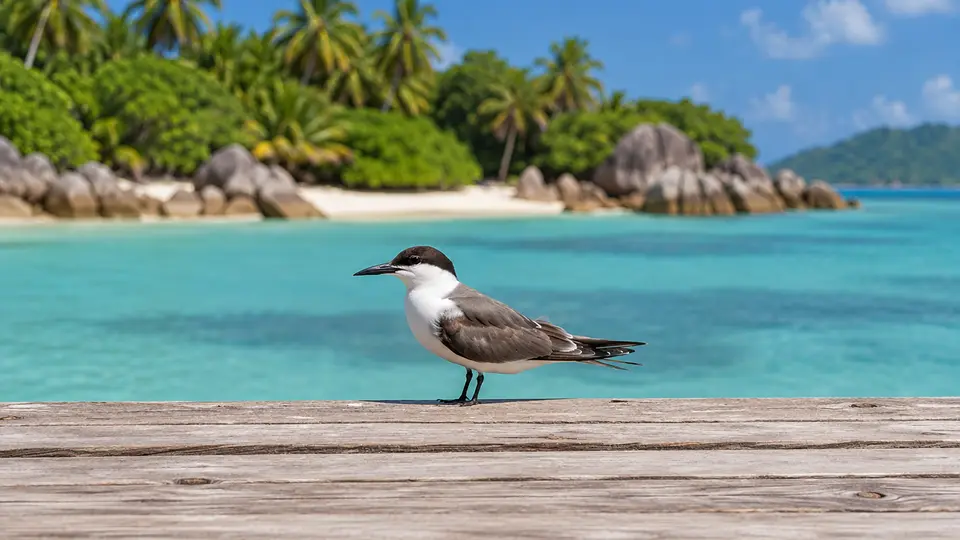
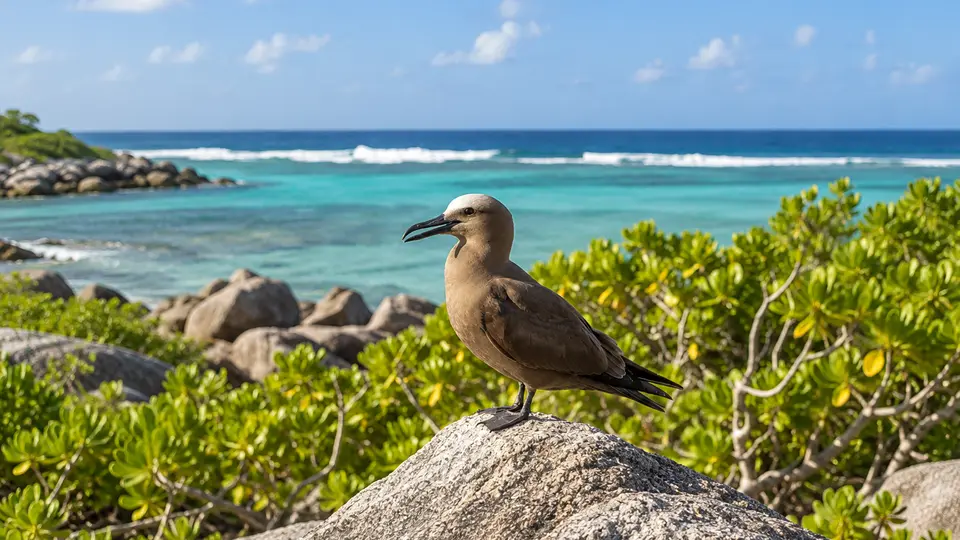
Seychelles KestrelAI-modifiedSeychelles KestrelBridled TernAI-modifiedBridled TernBrown NoddyAI-modifiedBrown Noddy
Animal groupBirdsAnimal groupBirdsAnimal groupBirds
DestinationsSeychellesDestinationsSeychellesDestinationsSeychelles, Maldives, Fiji
Scientific nameFalco araeusScientific nameScientific name
All wildlife destinations
AI-modified
Plan your trip

Find your next wildlife adventure

Compare destinations, shore programs and dates with the animals and habitats you would love to see.

  • Naturalist-led shore excursions
  • Responsible wildlife watching
  • Small expedition ships