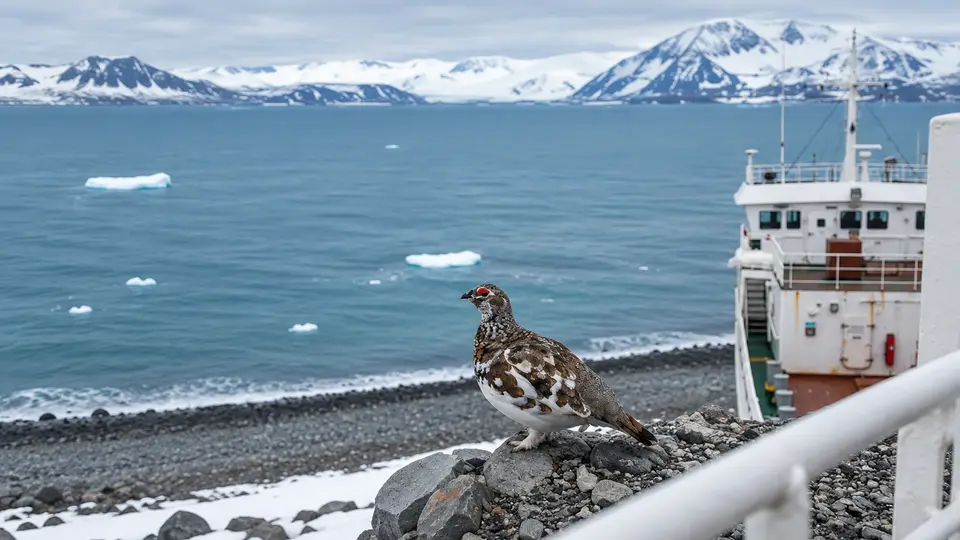
Svalbard Ptarmigan in its natural habitatAI-modified

Svalbard PtarmiganLagopus mutaWhere and when to see them

Svalbard Ptarmigan at a glance

The Svalbard ptarmigan is the distinctive local subspecies of the rock ptarmigan, a grouse distributed across Arctic and alpine regions. It remains in Svalbard throughout the year, surviving polar darkness through seasonal adjustments in plumage, food use and body reserves. White winter feathers give way to mottled summer camouflage. Although comparatively large and often apparently approachable, it is a wild bird whose short breeding season and demanding winters leave little margin for unnecessary disturbance.

Behaviour & reproduction

Size
32-40 cm (12.6-15.7 in) long
Weight
400-1,000 g (14.1-35.3 oz), seasonally variable
Lifespan
Not reliably established
Status
Least Concern

Males advertise territories in spring with calls and displays, while females choose concealed ground nests. Chicks leave the nest soon after hatching and follow their mother while feeding themselves. Outside breeding, birds may gather in loose groups and move among feeding areas. Svalbard birds build substantial fat reserves before winter and reduce energy expenditure during the darkest months. Seasonal plumage changes occur on different schedules in males and females. They are typically ground dwelling birds, rarely taking to flight unless disturbed or moving between feeding areas. Rock ptarmigan exhibit strong site fidelity, often returning to the same breeding and wintering grounds year after year. During severe blizzards, they may burrow into snowdrifts for insulation and protection from the elements.

Top wildlife locations

Norway wildlife habitatAI-modified

Norway

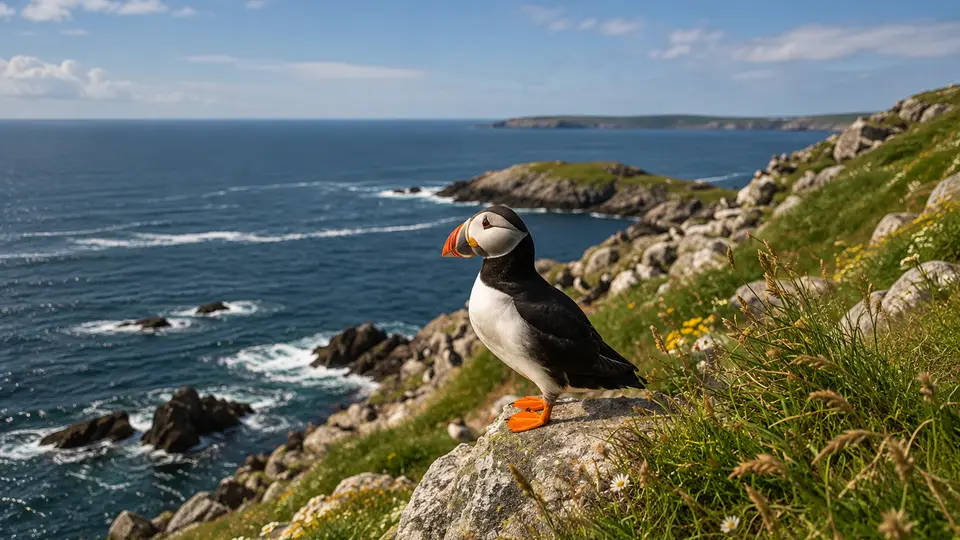
Svalbard coastal tundra and rocky valley slopes provide plausible habitat on authorized walking routes. Mainland Norway has other rock ptarmigan populations, usually requiring mountain excursions rather than ordinary coastal shore viewing.

Arctic wildlife habitatAI-modified

Arctic

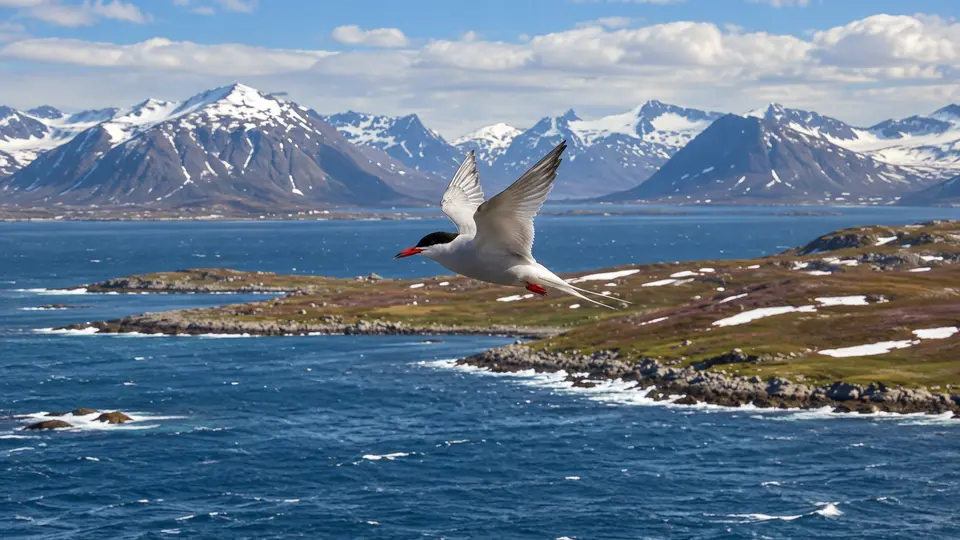
Rocky coastal tundra supports rock ptarmigan in parts of the Arctic, but the Svalbard form occurs only in Svalbard. Other regions hold different populations, and many suitable areas remain inaccessible.

Destinations describe the species' habitat, not guaranteed cruise stops. Some animals require an optional inland excursion or are found in restricted reserves.

Fun facts about the Svalbard Ptarmigan

  • The Svalbard subspecies is named Lagopus muta hyperborea.
  • It is Svalbard's only land bird that remains throughout the winter.
  • Feathers covering the feet provide insulation and improve support on snow.
  • Svalbard birds accumulate unusually substantial seasonal fat reserves.

Best time to see the Svalbard Ptarmigan

Late spring through summer offers daylight and accessible tundra routes for Svalbard observation. Spring males can be conspicuous, while summer camouflage makes birds harder to locate. Winter observation is constrained by darkness, weather and the importance of avoiding energy-costly disturbance. In late spring, males are particularly vocal and visible as they establish territories and court females. Summer provides the longest daylight hours for excursions, but their cryptic plumage can make them challenging to spot against the tundra. Observing them during the brief autumn period can reveal them in their transitional mottled plumage before winter snows.

Svalbard Ptarmigan: season matrix by destination

Travel and observation windows vary by region. Highlighted months are an orientation for planning, not confirmed sightings or a guarantee of access.

Norway

These months favor daylight and tundra access in Svalbard; snowmelt, breeding stage and route restrictions vary annually.

JanFebMarAprMayJunJulAugSepOctNovDec
Cruise ships in Norway

Arctic

Summer is a broad access window for Arctic tundra, not evidence that the Svalbard subspecies occurs throughout the region.

JanFebMarAprMayJunJulAugSepOctNovDec
Cruise ships in Arctic

Where the Svalbard Ptarmigan lives

In Svalbard, these ptarmigan use tundra slopes, rocky ground and sparsely vegetated valleys, selecting patches that provide food and shelter. Across the wider species range, alpine ridges and Arctic tundra are typical. Snow conditions strongly influence access to winter feeding areas. They are often found near rocky outcrops or boulders which offer protection from predators and harsh weather. These birds show remarkable adaptability to cold, arid environments at high latitudes and altitudes. Their preferred areas often feature a mix of sparse vegetation for foraging and uneven terrain for concealment.

What the Svalbard Ptarmigan eats

Leaves, shoots, buds and other low-growing plant material form the main diet. Svalbard birds rely on locally available tundra vegetation, including polar willow and other hardy plants. Chicks also take invertebrates, while winter feeding depends on vegetation exposed above or reachable through snow. Their diet shifts seasonally, with new growth being favored in spring and tougher woody stems consumed in winter. In some parts of their range, they may also consume berries when available in late summer and autumn. Digestion is aided by grit ingested from the ground, particularly important for breaking down tough plant matter.

Species at a glance

Common name
Svalbard Ptarmigan
Scientific name
Lagopus muta
Animal group
Birds
Size
32-40 cm (12.6-15.7 in) long
Weight
400-1,000 g (14.1-35.3 oz), seasonally variable
Lifespan
Not reliably established
Status
Least Concern
Identification
Rock ptarmigan have feathered feet and seasonally white plumage, with winter males showing a black eye stripe unlike male willow ptarmigan; the Svalbard subspecies is especially stocky. Their plumage changes are a key identification feature, transitioning from mottled brown and grey in summer to pure white in winter. The Svalbard subspecies, L. m. hyperborea, is notably large and white year-round, except for the males' black lores and a slight greyish wash. Females typically lack the black eyestripe seen on males of most subspecies.

Svalbard Ptarmigan: frequently asked questions

Where can I see the Svalbard Ptarmigan?
Norway, Arctic. Scan tundra from authorized paths and avoid following birds that walk away. Keep well clear of nests and broods, control dogs where permitted, and follow local polar-bear precautions on Svalbard excursions. Use binoculars or a spotting scope for detailed views to avoid approaching too closely and causing disturbance. Look for movement against the static landscape or listen for their distinctive calls, which can help pinpoint their location. Always maintain a respectful distance to allow birds to continue their natural activities undisturbed.
When is the best time to see the Svalbard Ptarmigan?
Late spring through summer offers daylight and accessible tundra routes for Svalbard observation. Spring males can be conspicuous, while summer camouflage makes birds harder to locate. Winter observation is constrained by darkness, weather and the importance of avoiding energy-costly disturbance. In late spring, males are particularly vocal and visible as they establish territories and court females. Summer provides the longest daylight hours for excursions, but their cryptic plumage can make them challenging to spot against the tundra. Observing them during the brief autumn period can reveal them in their transitional mottled plumage before winter snows.
How big does the Svalbard Ptarmigan get?
32-40 cm (12.6-15.7 in) long. Adult weight: 400-1,000 g (14.1-35.3 oz), seasonally variable. Size varies with age, sex and population.
How should I behave around the Svalbard Ptarmigan?
Scan tundra from authorized paths and avoid following birds that walk away. Keep well clear of nests and broods, control dogs where permitted, and follow local polar-bear precautions on Svalbard excursions. Use binoculars or a spotting scope for detailed views to avoid approaching too closely and causing disturbance. Look for movement against the static landscape or listen for their distinctive calls, which can help pinpoint their location. Always maintain a respectful distance to allow birds to continue their natural activities undisturbed.
What does the Svalbard Ptarmigan eat?
Leaves, shoots, buds and other low-growing plant material form the main diet. Svalbard birds rely on locally available tundra vegetation, including polar willow and other hardy plants. Chicks also take invertebrates, while winter feeding depends on vegetation exposed above or reachable through snow. Their diet shifts seasonally, with new growth being favored in spring and tougher woody stems consumed in winter. In some parts of their range, they may also consume berries when available in late summer and autumn. Digestion is aided by grit ingested from the ground, particularly important for breaking down tough plant matter.
Are wildlife sightings guaranteed on an adventure cruise?
No. Animals move freely and routes, weather, access restrictions and local conditions influence every outing. Confirm the actual itinerary and shore program before booking.

Compare wildlife in the same destinations

Explore other birds recorded in these destinations. Similar surroundings do not mean the animals share the same habits or viewing season.

Species comparison by animal group and destination
Svalbard PtarmiganAI-modifiedSvalbard PtarmiganArctic TernAI-modifiedArctic TernAtlantic PuffinAI-modifiedAtlantic Puffin
Animal groupBirdsAnimal groupBirdsAnimal groupBirds
DestinationsNorway, ArcticDestinationsAlaska, Norway, ArcticDestinationsNew England, Norway, Scotland, Arctic
Scientific nameLagopus mutaScientific nameScientific name
All wildlife destinations
AI-modified
Plan your trip

Find your next wildlife adventure

Compare destinations, shore programs and dates with the animals and habitats you would love to see.

  • Naturalist-led shore excursions
  • Responsible wildlife watching
  • Small expedition ships