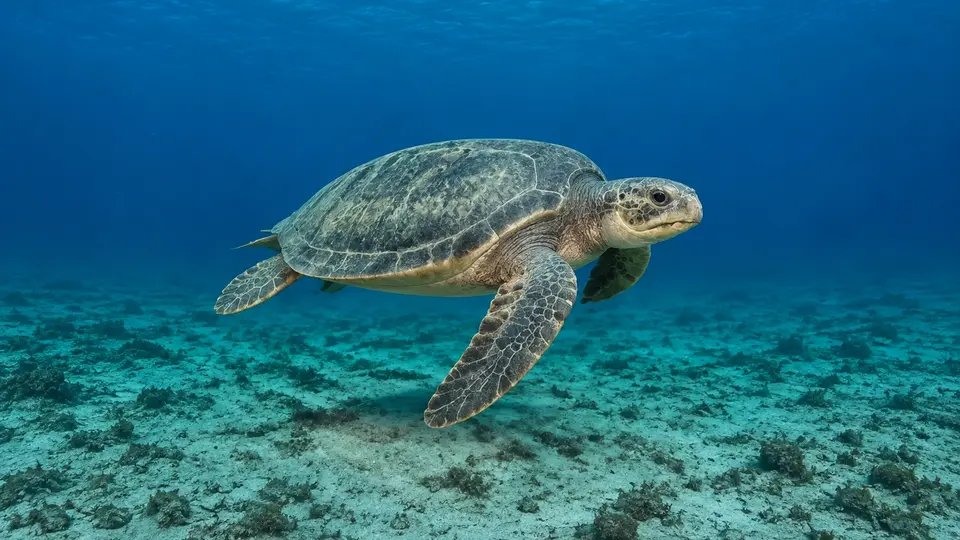
Olive Ridley Sea Turtle in its natural habitatAI-modified

Olive Ridley Sea TurtleLepidochelys olivaceaWhere and when to see them

Olive Ridley Sea Turtle at a glance

The olive ridley is a relatively small sea turtle inhabiting warm oceans worldwide. It is especially famous for arribadas, mass nesting events in which many females come ashore together, although numerous populations nest individually instead. Adults spend most of their lives at sea, and land-based observation centers on carefully managed nesting beaches. Fishing bycatch, egg collection, coastal development and disturbance continue to threaten populations despite very large nesting aggregations at a few locations.

Behaviour & reproduction

Size
60-75 cm (24-30 in) carapace length
Weight
35-50 kg (77-110 lb)
Lifespan
Not reliably established
Status
Vulnerable

Females crawl onto sandy beaches to excavate nests, lay eggs and cover the chamber before returning to sea. At arribada beaches, nesting can occur in dense waves over several days, but the timing is not reliably predictable far ahead. Elsewhere, solitary nesting is normal. Hatchlings emerge from the sand and orient toward the sea, a process vulnerable to artificial lighting, trampling and obstacles placed along the beach. Female olive ridleys exhibit unique synchronized mass nesting events called arribadas, during which thousands of turtles come ashore to lay eggs over several days. Outside of nesting, they are largely solitary and spend most of their time submerged, surfacing periodically to breathe. Hatchlings use magnetic cues and light gradients to navigate to the ocean after emerging from their nests.

Top wildlife locations

Costa Rica wildlife habitatAI-modified

Costa Rica

Managed Pacific nesting beaches, including established conservation areas, offer shore observation under local rules. Some require road excursions from coastal ports; mass nesting is episodic, and ordinary beach visits may reveal no turtles.

Mexico wildlife habitatAI-modified

Mexico

Protected sandy beaches along parts of Mexico's Pacific coast provide nesting habitat. Authorized shore programs may require a road excursion, and access can be restricted; neither nesting females nor hatchlings are assured.

Indonesia wildlife habitatAI-modified

Indonesia

Selected sandy nesting beaches, particularly on exposed island coasts, support conservation-led shore visits. A separate land excursion is often required, and remote beaches may be inaccessible or closed to protect turtles.

Destinations describe the species' habitat, not guaranteed cruise stops. Some animals require an optional inland excursion or are found in restricted reserves.

Fun facts about the Olive Ridley Sea Turtle

  • Arribada is a Spanish word meaning arrival.
  • Many olive ridleys nest alone rather than in mass events.
  • The number of shell scutes can vary between individuals.
  • Temperature during egg incubation influences hatchling sex.

Best time to see the Olive Ridley Sea Turtle

Nesting windows differ among countries and beaches. Pacific Costa Rican and Mexican sites often offer opportunities during wetter months, while Indonesian timing is strongly local. Consult licensed conservation programs for current access rather than treating country travel seasons or lunar dates as guaranteed nesting schedules. Peak nesting in Costa Rica often aligns with the rainy season, typically from July to November, particularly at Ostional. In Mexico, large arribadas are common from September to December at sites like La Escobilla. Nesting peaks in Indonesia are highly site-specific but often occur during dry seasons for certain populations.

Olive Ridley Sea Turtle: season matrix by destination

Travel and observation windows vary by region. Highlighted months are an orientation for planning, not confirmed sightings or a guarantee of access.

Costa Rica

These months overlap important Pacific nesting activity, but beach-specific timing varies and arribadas cannot be guaranteed; some sites receive nesting outside this window.

JanFebMarAprMayJunJulAugSepOctNovDec
Cruise ships in Costa Rica

Mexico

This broad window overlaps nesting at many Pacific sites, but local peaks and permitted viewing schedules differ substantially.

JanFebMarAprMayJunJulAugSepOctNovDec
Cruise ships in Mexico

Indonesia

Indonesia's nesting calendars vary among islands and beaches; no country-wide monthly observation window is sufficiently reliable without a specified site.

JanFebMarAprMayJunJulAugSepOctNovDec
Cruise ships in Indonesia

Where the Olive Ridley Sea Turtle lives

Olive ridleys use tropical and subtropical marine waters, including continental shelves and offshore feeding areas. Reproduction depends on accessible sandy beaches above the high-tide line. Nesting habitat quality is affected by erosion, lighting, development, beach furniture and vehicle traffic. They are often found in relatively shallow, nearshore waters and estuaries, though they also range widely in the open ocean. Critical habitats also include foraging grounds with abundant prey, such as those found on continental shelves. Coastal areas with dense mangrove forests can also serve as important foraging and developmental habitats for juveniles.

What the Olive Ridley Sea Turtle eats

They feed mainly on animal prey such as crustaceans, mollusks and other marine invertebrates, also taking fish and gelatinous organisms. Diet varies geographically and with available feeding habitat. Their relatively strong jaws help process prey, but plastic and fishing gear pose serious hazards. Their diet primarily consists of bottom-dwelling invertebrates, which they crush with their strong jaws. They are opportunistic feeders, consuming a variety of crabs, snails, and jellyfish depending on regional availability. This diverse diet reflects their adaptability to different marine environments.

Species at a glance

Common name
Olive Ridley Sea Turtle
Scientific name
Lepidochelys olivacea
Animal group
Reptiles
Size
60-75 cm (24-30 in) carapace length
Weight
35-50 kg (77-110 lb)
Lifespan
Not reliably established
Status
Vulnerable
Identification
Its rounded olive shell usually has more than five pairs of lateral scutes, helping distinguish it from green and hawksbill turtles, while Kemp's ridley is primarily Atlantic. Adult olive ridleys are relatively small for sea turtles, typically weighing between 75 to 100 pounds (34 to 45 kg (75 to 100 lb)) and having a carapace length of about 24 to 30 inches (60 to 75 cm (24 to 30 in)). Their carapace color can vary from olive green to brownish green. Hatchlings are uniformly dark grey or black, with a paler underside.

Olive Ridley Sea Turtle: frequently asked questions

Where can I see the Olive Ridley Sea Turtle?
Costa Rica, Mexico, Indonesia. Join authorized beach watches, remain behind nesting females and follow guide-set distances. Avoid flash, white lights and touching turtles or hatchlings; never stand between an animal and the sea. Always maintain a respectful distance of at least 15 feet (4.5 meters) from nesting turtles or hatchlings to avoid disturbance. Never use insect repellent or sunblock near the turtles, as chemicals can be harmful. Participate only in guided excursions that prioritize the well being of the animals.
When is the best time to see the Olive Ridley Sea Turtle?
Nesting windows differ among countries and beaches. Pacific Costa Rican and Mexican sites often offer opportunities during wetter months, while Indonesian timing is strongly local. Consult licensed conservation programs for current access rather than treating country travel seasons or lunar dates as guaranteed nesting schedules. Peak nesting in Costa Rica often aligns with the rainy season, typically from July to November, particularly at Ostional. In Mexico, large arribadas are common from September to December at sites like La Escobilla. Nesting peaks in Indonesia are highly site-specific but often occur during dry seasons for certain populations.
How big does the Olive Ridley Sea Turtle get?
60-75 cm (24-30 in) carapace length. Adult weight: 35-50 kg (77-110 lb). Size varies with age, sex and population.
How should I behave around the Olive Ridley Sea Turtle?
Join authorized beach watches, remain behind nesting females and follow guide-set distances. Avoid flash, white lights and touching turtles or hatchlings; never stand between an animal and the sea. Always maintain a respectful distance of at least 15 feet (4.5 meters) from nesting turtles or hatchlings to avoid disturbance. Never use insect repellent or sunblock near the turtles, as chemicals can be harmful. Participate only in guided excursions that prioritize the well being of the animals.
What does the Olive Ridley Sea Turtle eat?
They feed mainly on animal prey such as crustaceans, mollusks and other marine invertebrates, also taking fish and gelatinous organisms. Diet varies geographically and with available feeding habitat. Their relatively strong jaws help process prey, but plastic and fishing gear pose serious hazards. Their diet primarily consists of bottom-dwelling invertebrates, which they crush with their strong jaws. They are opportunistic feeders, consuming a variety of crabs, snails, and jellyfish depending on regional availability. This diverse diet reflects their adaptability to different marine environments.
Are wildlife sightings guaranteed on an adventure cruise?
No. Animals move freely and routes, weather, access restrictions and local conditions influence every outing. Confirm the actual itinerary and shore program before booking.

Compare wildlife in the same destinations

Explore other reptiles recorded in these destinations. Similar surroundings do not mean the animals share the same habits or viewing season.

Species comparison by animal group and destination
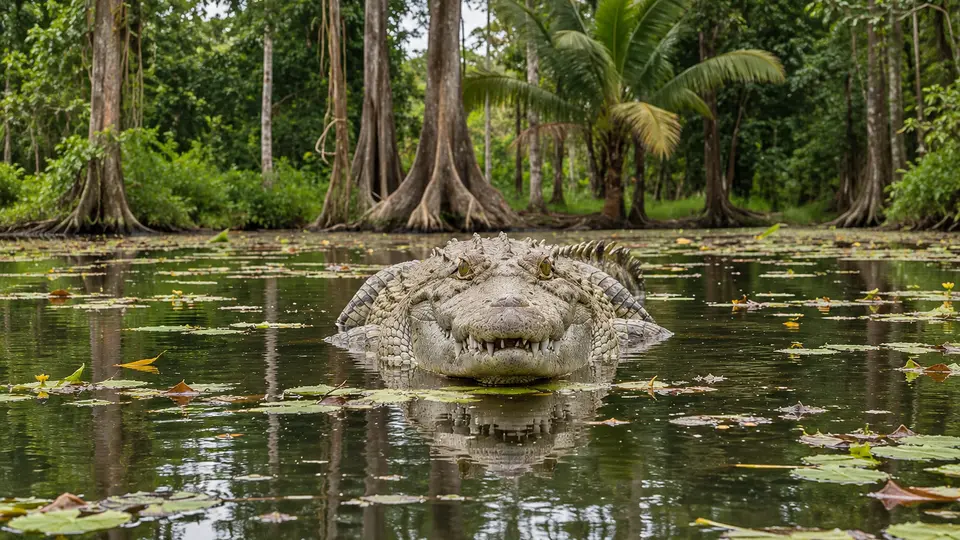
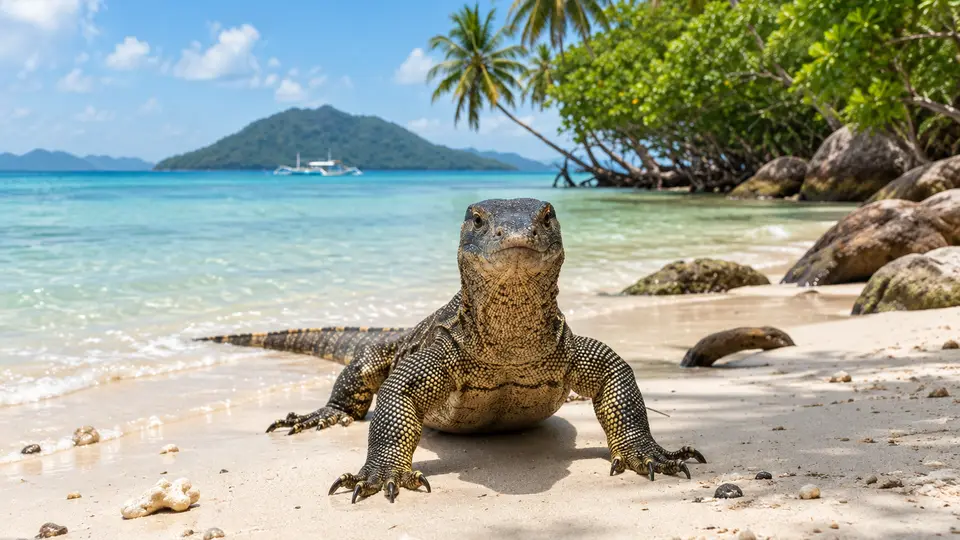
Olive Ridley Sea TurtleAI-modifiedOlive Ridley Sea TurtleAmerican CrocodileAI-modifiedAmerican CrocodileAsian water monitorAI-modifiedAsian water monitor
Animal groupReptilesAnimal groupReptilesAnimal groupReptiles
DestinationsCosta Rica, Mexico, IndonesiaDestinationsCosta Rica, FloridaDestinationsIndonesia
Scientific nameLepidochelys olivaceaScientific nameScientific name
All wildlife destinations
AI-modified
Plan your trip

Find your next wildlife adventure

Compare destinations, shore programs and dates with the animals and habitats you would love to see.

  • Naturalist-led shore excursions
  • Responsible wildlife watching
  • Small expedition ships