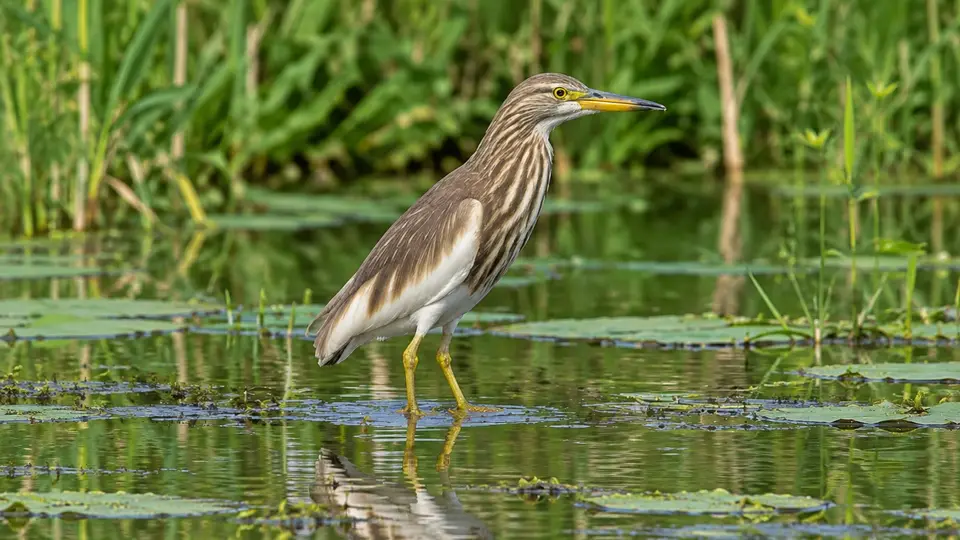
Maldivian pond heron in its natural habitatAI-modified

Maldivian pond heronArdeola grayiiWhere and when to see them

Maldivian pond heron at a glance

The Indian pond heron is a compact wading bird whose subdued standing appearance contrasts sharply with its bright white wings in flight. The catalog's Maldivian pond heron label refers here to Indian pond heron, not a separate recognised species. Birds can be remarkably difficult to notice against muddy edges until they move. Identification deserves care because other Asian pond herons have very similar nonbreeding plumage and may occur as visitors.

Behaviour & reproduction

Size
40–46 cm (15.7–18.1 in) long
Weight
230–280 g (8.1–9.9 oz)
Lifespan
Not reliably established
Status
Least Concern

Pond herons often hunt alone, remaining motionless beside shallow water before striking quickly at prey. They also creep slowly through low vegetation or exploit animals disturbed by other activity. When flushed, they reveal broad white wings and may relocate only a short distance. Breeding birds nest colonially in trees or shrubs, sometimes alongside other waterbirds, but local nesting should not be inferred merely from a bird's presence in the Maldives. The cryptic brown streaking on their back and head provides excellent camouflage when they stand still. They can appear almost invisible until they move or take flight, at which point their bright white wings become prominently displayed.

Top wildlife locations

Maldives wildlife habitatAI-modified

Maldives

Island wetlands, wet grass and sheltered lagoon margins provide plausible shore-accessible habitat. Suitable sites are patchy and birds can be overlooked; some freshwater areas require a short walk away from the coast.
Destinations describe the species' habitat, not guaranteed cruise stops. Some animals require an optional inland excursion or are found in restricted reserves.

Fun facts about the Maldivian pond heron

  • Its white wings can make a departing bird look unexpectedly different from the bird standing on the bank.
  • Adults develop elongated ornamental feathers during breeding.
  • It hunts with a rapid bill strike after long periods of apparent stillness.
  • Maldivian pond heron is not a separate accepted species name.

Best time to see the Maldivian pond heron

The drier visitor season offers comfortable conditions for checking accessible wetland edges, although water levels and local records are more informative than weather alone. Presence and abundance can vary among islands, and a Maldives travel season does not establish a breeding calendar. Early mornings and late afternoons are typically the most active feeding periods, offering prime viewing opportunities. Understanding the tidal patterns in coastal lagoons can also improve chances of observing feeding birds in exposed shallows.

Maldivian pond heron: season matrix by destination

Travel and observation windows vary by region. Highlighted months are an orientation for planning, not confirmed sightings or a guarantee of access.

Maldives

This is a practical dry-season observation window, not evidence of seasonal occupancy or breeding on every island; consult recent local records.

JanFebMarAprMayJunJulAugSepOctNovDec
Cruise ships in Maldives

Where the Maldivian pond heron lives

Shallow freshwater wetlands, marsh margins, ditches, wet grassland and sheltered coastal edges provide feeding habitat. On low islands, small wet depressions and vegetated lagoon margins may be important. Suitable habitat is patchy, especially where natural wetlands have been filled or disturbed. They are also frequently found in human modified aquatic environments such as paddy fields, irrigation canals, and village ponds. While primarily a freshwater species, its presence in the Maldives indicates a tolerance for brackish conditions in some coastal habitats.

What the Maldivian pond heron eats

Small fish, aquatic insects, crustaceans and amphibians are taken where available. Terrestrial insects and other small animals may also be caught along wet grass or exposed mud. The bird's short, deliberate strikes suit prey concentrated in shallow water and marginal vegetation. Their diet often includes larvae of various insects, small crabs, frogs, and sometimes even small reptiles or fish. The 'sit-and-wait' hunting strategy is highly effective for these varied prey items.

Species at a glance

Common name
Maldivian pond heron
Scientific name
Ardeola grayii
Animal group
Birds
Size
40–46 cm (15.7–18.1 in) long
Weight
230–280 g (8.1–9.9 oz)
Lifespan
Not reliably established
Status
Least Concern
Identification
Breeding Indian pond herons show a buff head and neck with a maroon-brown back, but nonbreeding birds may be inseparable in the field from Chinese or Javan pond herons. The streaky brown plumage of nonbreeding adults provides camouflage among wetland vegetation. In flight, the contrast between the dark body and bright white wings is a key diagnostic feature, distinct from many other heron species.

Maldivian pond heron: frequently asked questions

Where can I see the Maldivian pond heron?
Maldives. Scan wet margins from existing paths and avoid flushing a feeding bird repeatedly. Keep away from unstable mud and nesting trees; use photographs for difficult pond-heron identification rather than moving closer for a reaction. A good pair of binoculars is essential for observing these cryptically plumaged birds as they often blend seamlessly into their surroundings. When disturbed, their sudden flight reveals striking white wings, a characteristic flash that aids in their identification.
When is the best time to see the Maldivian pond heron?
The drier visitor season offers comfortable conditions for checking accessible wetland edges, although water levels and local records are more informative than weather alone. Presence and abundance can vary among islands, and a Maldives travel season does not establish a breeding calendar. Early mornings and late afternoons are typically the most active feeding periods, offering prime viewing opportunities. Understanding the tidal patterns in coastal lagoons can also improve chances of observing feeding birds in exposed shallows.
How big does the Maldivian pond heron get?
40–46 cm (15.7–18.1 in) long. Adult weight: 230–280 g (8.1–9.9 oz). Size varies with age, sex and population.
How should I behave around the Maldivian pond heron?
Scan wet margins from existing paths and avoid flushing a feeding bird repeatedly. Keep away from unstable mud and nesting trees; use photographs for difficult pond-heron identification rather than moving closer for a reaction. A good pair of binoculars is essential for observing these cryptically plumaged birds as they often blend seamlessly into their surroundings. When disturbed, their sudden flight reveals striking white wings, a characteristic flash that aids in their identification.
What does the Maldivian pond heron eat?
Small fish, aquatic insects, crustaceans and amphibians are taken where available. Terrestrial insects and other small animals may also be caught along wet grass or exposed mud. The bird's short, deliberate strikes suit prey concentrated in shallow water and marginal vegetation. Their diet often includes larvae of various insects, small crabs, frogs, and sometimes even small reptiles or fish. The 'sit-and-wait' hunting strategy is highly effective for these varied prey items.
Are wildlife sightings guaranteed on an adventure cruise?
No. Animals move freely and routes, weather, access restrictions and local conditions influence every outing. Confirm the actual itinerary and shore program before booking.

Compare wildlife in the same destinations

Explore other birds recorded in these destinations. Similar surroundings do not mean the animals share the same habits or viewing season.

Species comparison by animal group and destination
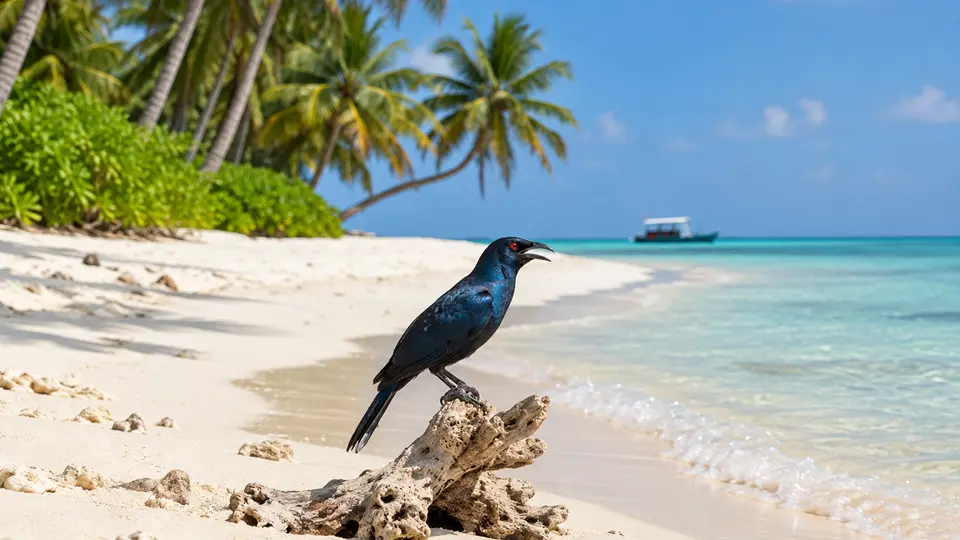
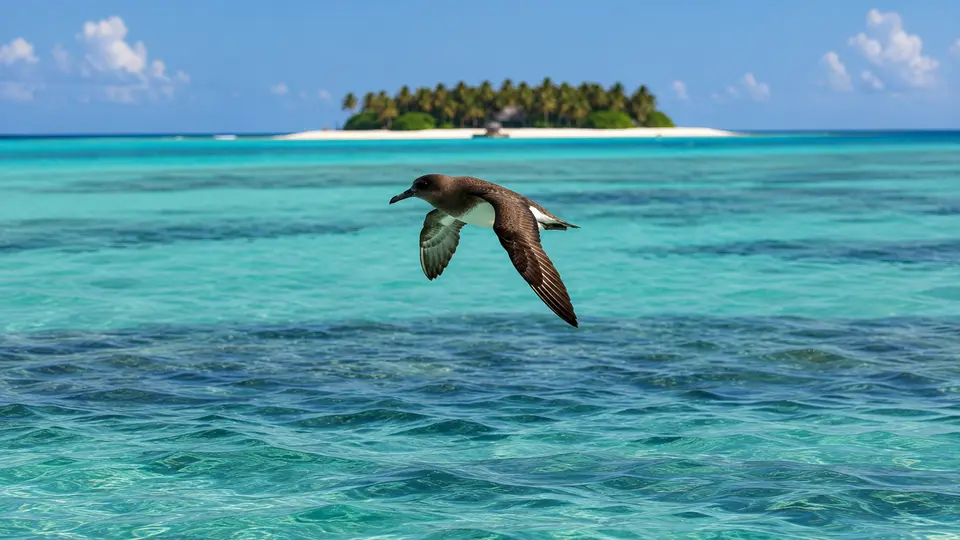
Maldivian pond heronAI-modifiedMaldivian pond heronAsian koelAI-modifiedAsian koelAudubon's shearwaterAI-modifiedAudubon's shearwater
Animal groupBirdsAnimal groupBirdsAnimal groupBirds
DestinationsMaldivesDestinationsMaldivesDestinationsMaldives
Scientific nameArdeola grayiiScientific nameScientific name
All wildlife destinations
AI-modified
Plan your trip

Find your next wildlife adventure

Compare destinations, shore programs and dates with the animals and habitats you would love to see.

  • Naturalist-led shore excursions
  • Responsible wildlife watching
  • Small expedition ships