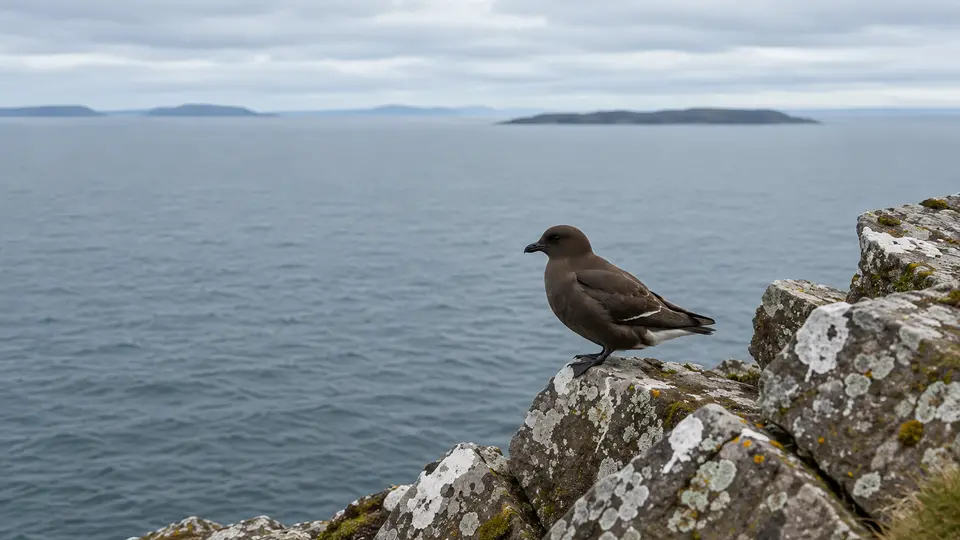
European Storm Petrel in its natural habitatAI-modified

European Storm PetrelHydrobates pelagicusWhere and when to see them

European Storm Petrel at a glance

The European storm petrel is a tiny ocean-going seabird that spends most of its life far from land. Dark plumage, a white rump and fluttering flight give distant birds a distinctive but easily overlooked appearance. Scotland supports important breeding colonies on suitable islands, where birds occupy concealed cavities and normally return after dark. A daytime coastal visitor may never see one, even near an occupied colony, because routine feeding takes place at sea.

Behaviour & reproduction

Size
14-18 cm (5.5-7.1 in) long
Weight
20-38 g (0.7-1.3 oz)
Lifespan
Up to 33.8 years in the wild
Status
Least Concern

At sea, storm petrels flutter close to the surface, sometimes pattering with their feet while taking small prey. They can gather where food is concentrated, but remain difficult to follow from a moving deck. Breeding birds approach colonies mainly at night, reducing exposure to predatory gulls. A single egg is incubated in a sheltered cavity, and chick development is prolonged. Adults use vocalizations and a well-developed sense of smell within their dark nesting environment. Courtship displays, although rarely observed, involve aerial pursuits and vocalizations over the breeding grounds at night. During incubation, adults share duties, with one bird foraging at sea while the other tends to the egg. The strong sense of smell helps adults locate their specific burrow in crowded, dark colonies, distinguishing it from other petrel species.

Top wildlife locations

Scotland wildlife habitatAI-modified

Scotland

Exposed headlands occasionally provide distant views, while offshore decks may offer better opportunities. Breeding colonies are largely on islands, many inaccessible or restricted, and casual daytime shore sightings are rare.
Destinations describe the species' habitat, not guaranteed cruise stops. Some animals require an optional inland excursion or are found in restricted reserves.

Fun facts about the European Storm Petrel

  • It normally lays only one egg per breeding attempt.
  • Nest cavities may occur in old stone walls on suitable islands.
  • Tubular nostrils are characteristic of its seabird order.
  • Nocturnal colony attendance helps reduce predation by large gulls.

Best time to see the European Storm Petrel

Late spring through early autumn overlaps Scottish breeding attendance and offers the most practical observation period. Deck sightings remain unpredictable, and coastal views usually require favourable conditions and patience. Night colony access is appropriate only where explicitly permitted and responsibly managed. While deck sightings are unpredictable, encounters can be more frequent during periods of strong winds or following stormy weather, which can concentrate prey. Shore excursions to specific protected reserves with authorized viewing points or hides can offer a more reliable, albeit still challenging, opportunity to glimpse nesting activity. Monitoring programs and research efforts often highlight late summer as a key period for observing fledglings leaving the colonies.

European Storm Petrel: season matrix by destination

Travel and observation windows vary by region. Highlighted months are an orientation for planning, not confirmed sightings or a guarantee of access.

Scotland

This window overlaps breeding attendance and practical travel conditions, but birds spend daylight at sea and neither shore nor deck sightings are dependable.

JanFebMarAprMayJunJulAugSepOctNovDec
Cruise ships in Scotland

Where the European Storm Petrel lives

Open marine waters provide feeding habitat, while predator-free islands with rock crevices, boulder cavities or suitable walls support breeding. Colonies are easily affected by introduced mammals. Ordinary beaches and busy harbours are not dependable places to observe this predominantly pelagic bird. Offshore waters are critical for foraging outside the breeding season, often covering vast oceanic distances. Breeding colonies in Scotland are typically found on remote, uninhabited islands and islets, providing essential protection from terrestrial predators. These nesting sites are often well-hidden in deep rock crevices or under boulders, making them hard to spot during the day.

What the European Storm Petrel eats

Small crustaceans, tiny fish and other plankton-associated marine animals form the diet. Food is collected near the sea surface, sometimes around floating material or productive current features. Adults transport concentrated food to the nest and can deliver energy-rich stomach oil to chicks. They employ a distinctive 'foot-pattering' technique on the water surface to stir up food items, making them more accessible. Stomach oil, a highly energetic substance, is also used to provision chicks, allowing adults to make longer foraging trips. Despite their small size, they consume a significant amount of lipid-rich prey to sustain their high metabolic rate.

Species at a glance

Common name
European Storm Petrel
Scientific name
Hydrobates pelagicus
Animal group
Birds
Size
14-18 cm (5.5-7.1 in) long
Weight
20-38 g (0.7-1.3 oz)
Lifespan
Up to 33.8 years in the wild
Status
Least Concern
Identification
Its small size, square-ended tail, white rump and conspicuous pale underwing bar separate it from the larger, longer-winged Leach's storm petrel, which has a distinctly forked tail. The pale underwing bar is a key field mark, contrasting with the dark underwing coverts and flight feathers, especially noticeable in flight. Its flight pattern is notably erratic and butterfly-like, characterized by short, shallow wing beats close to the water's surface. Unlike other small seabirds, its wings appear distinctly rounded at the tips.

European Storm Petrel: frequently asked questions

Where can I see the European Storm Petrel?
Scotland. Look from a stable deck or safe headland with binoculars, expecting distant views. Never use flash, lights or playback near colonies, and avoid night visits unless an authorized guide manages disturbance. Scanning the horizon from a vessel's bow or stern, especially in calm waters, can sometimes reveal their low, fluttering flight pattern. Observing storm petrels requires extreme patience and a keen eye, as their small size and rapid movements make them elusive targets. Always prioritize minimal disturbance, especially near any suspected breeding areas, by maintaining a respectful distance.
When is the best time to see the European Storm Petrel?
Late spring through early autumn overlaps Scottish breeding attendance and offers the most practical observation period. Deck sightings remain unpredictable, and coastal views usually require favourable conditions and patience. Night colony access is appropriate only where explicitly permitted and responsibly managed. While deck sightings are unpredictable, encounters can be more frequent during periods of strong winds or following stormy weather, which can concentrate prey. Shore excursions to specific protected reserves with authorized viewing points or hides can offer a more reliable, albeit still challenging, opportunity to glimpse nesting activity. Monitoring programs and research efforts often highlight late summer as a key period for observing fledglings leaving the colonies.
How big does the European Storm Petrel get?
14-18 cm (5.5-7.1 in) long. Adult weight: 20-38 g (0.7-1.3 oz). Size varies with age, sex and population.
How should I behave around the European Storm Petrel?
Look from a stable deck or safe headland with binoculars, expecting distant views. Never use flash, lights or playback near colonies, and avoid night visits unless an authorized guide manages disturbance. Scanning the horizon from a vessel's bow or stern, especially in calm waters, can sometimes reveal their low, fluttering flight pattern. Observing storm petrels requires extreme patience and a keen eye, as their small size and rapid movements make them elusive targets. Always prioritize minimal disturbance, especially near any suspected breeding areas, by maintaining a respectful distance.
What does the European Storm Petrel eat?
Small crustaceans, tiny fish and other plankton-associated marine animals form the diet. Food is collected near the sea surface, sometimes around floating material or productive current features. Adults transport concentrated food to the nest and can deliver energy-rich stomach oil to chicks. They employ a distinctive 'foot-pattering' technique on the water surface to stir up food items, making them more accessible. Stomach oil, a highly energetic substance, is also used to provision chicks, allowing adults to make longer foraging trips. Despite their small size, they consume a significant amount of lipid-rich prey to sustain their high metabolic rate.
Are wildlife sightings guaranteed on an adventure cruise?
No. Animals move freely and routes, weather, access restrictions and local conditions influence every outing. Confirm the actual itinerary and shore program before booking.

Compare wildlife in the same destinations

Explore other birds recorded in these destinations. Similar surroundings do not mean the animals share the same habits or viewing season.

Species comparison by animal group and destination
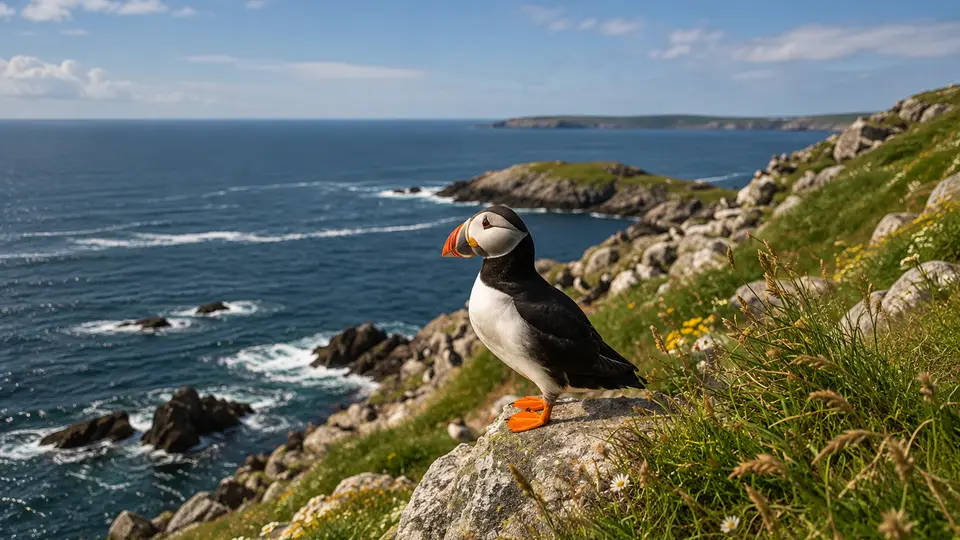
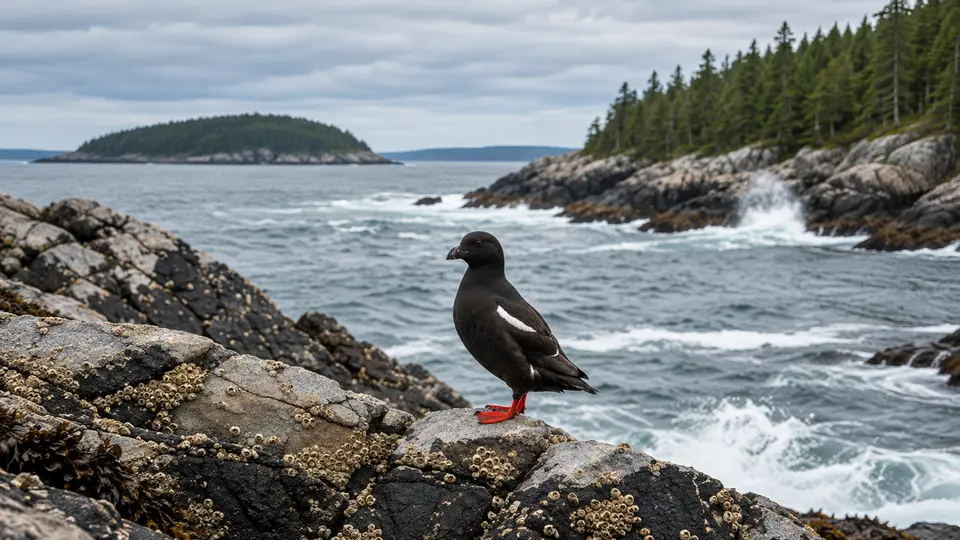
European Storm PetrelAI-modifiedEuropean Storm PetrelAtlantic PuffinAI-modifiedAtlantic PuffinBlack GuillemotAI-modifiedBlack Guillemot
Animal groupBirdsAnimal groupBirdsAnimal groupBirds
DestinationsScotlandDestinationsNew England, Norway, Scotland, ArcticDestinationsNew England, Norway, Scotland
Scientific nameHydrobates pelagicusScientific nameScientific name
All wildlife destinations
AI-modified
Plan your trip

Find your next wildlife adventure

Compare destinations, shore programs and dates with the animals and habitats you would love to see.

  • Naturalist-led shore excursions
  • Responsible wildlife watching
  • Small expedition ships