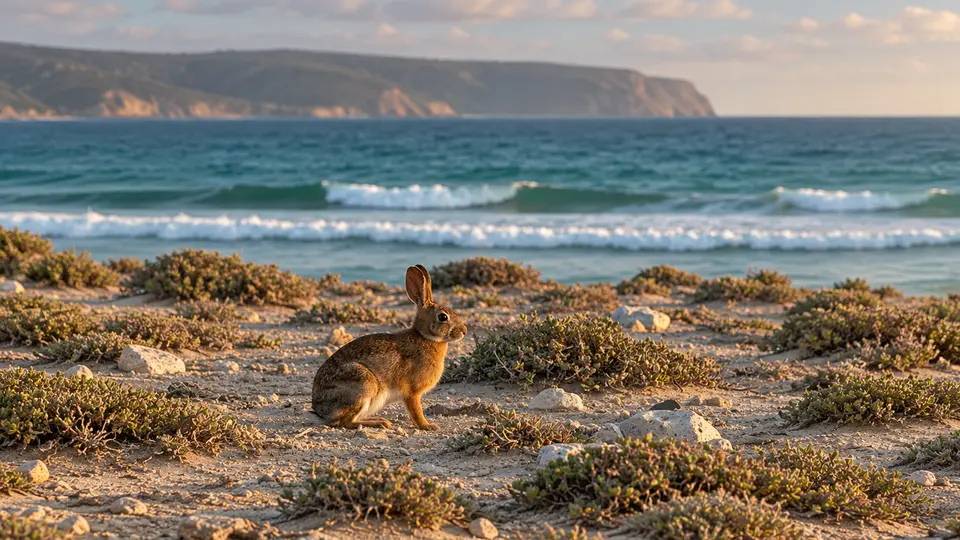
Espiritu Santo Rabbit in its natural habitat, AI illustration
Size52-60 cm longLifespanNot reliably establishedStatusNear Threatened

Espiritu Santo Rabbit: where and when to see them

Lepus insularis

Espiritu Santo Rabbit at a glance

The Espiritu Santo rabbit is more accurately called the black jackrabbit: it is a hare endemic to Espiritu Santo Island in Mexico's Gulf of California. Its dark coat and long ears distinguish it within the island's arid landscape. A very restricted range makes local habitat changes and introduced animals important conservation concerns. Although related to the widespread black-tailed jackrabbit, this island endemic represents a separate evolutionary history and should not be confused with mainland rabbits.

Behaviour & reproduction

Size
52-60 cm long
Weight
Not reliably established
Lifespan
Not reliably established
Status
Near Threatened

Black jackrabbits are most active during cooler periods, particularly around dusk and at night, and rest in sheltered places during the heat. Like other hares, they rely on alert senses, camouflage and rapid running rather than deep communal burrows. Their long ears help detect danger and exchange heat with the environment. Detailed field studies of social behavior and reproduction are limited, so mainland jackrabbit habits should not automatically be treated as established facts for this species. When alarmed, they can reach speeds up to 70 kilometers per hour in short bursts. Like other leporids, they engage in 'freezing' behavior, remaining motionless to avoid detection before fleeing.

Top wildlife locations

Mexico wildlife habitat

Mexico

Only Espiritu Santo Island offers natural-range opportunities, particularly in arid scrub behind permitted shore access areas. Sightings are uncommon, inland walking may be required, and protected-area rules can limit where visitors go.

Adventure cruises in Mexico
Destinations describe the species' habitat, not guaranteed cruise stops. Some animals require an optional inland excursion or are found in restricted reserves.

Fun facts about the Espiritu Santo Rabbit

  • Despite its catalog name, it belongs to the hare genus Lepus.
  • Its natural range is confined to Espiritu Santo Island.
  • The scientific epithet insularis refers to its island distribution.
  • Its dark coloration is unusual among the paler jackrabbits of nearby desert regions.

Best time to see the Espiritu Santo Rabbit

Cooler months from November through April can make authorized daytime island walks more comfortable. This is a visitor-comfort window, not a documented peak in rabbit abundance or breeding. Crepuscular activity, limited permitted access and dense scrub can make sightings difficult in any season. While cooler months are more comfortable for visitors, this species is active year-round. Dawn and dusk are generally the most productive times for observing wildlife on the island, regardless of the season.

Espiritu Santo Rabbit: season matrix by destination

Travel and observation windows vary by region. Highlighted months are an orientation for planning, not confirmed sightings or a guarantee of access.

Mexico

These cooler months suit authorized land visits; there is no established species-specific sighting peak, and activity often falls outside daytime access.

JanFebMarAprMayJunJulAugSepOctNovDec
Cruise ships in Mexico

Where the Espiritu Santo Rabbit lives

The species occupies the island's arid scrub, rocky slopes and open desert vegetation. Coastal scrub behind accessible shores may be suitable, but presence depends on local cover and disturbance. Its entire natural distribution is insular, rather than widespread across Mexican coastal deserts. This species is endemic to Espiritu Santo Island, Baja California Sur, Mexico, a protected natural area within the Gulf of California. Its restricted range makes it particularly vulnerable to habitat changes and introduced species.

What the Espiritu Santo Rabbit eats

It is a plant-eating hare that uses available desert vegetation, including grasses, herbs and shrub material. Detailed seasonal dietary data are limited. As in other hares, reingestion of soft fecal pellets helps recover nutrients from food that has undergone microbial fermentation. Their diet primarily consists of forbs and grasses, with succulents providing a crucial water source during dry periods. These hares are opportunistic foragers, adapting their diet to the availability of local plant species.

Species at a glance

Common name
Espiritu Santo Rabbit
Scientific name
Lepus insularis
Animal group
Mammals
Size
52-60 cm long
Weight
Not reliably established
Lifespan
Not reliably established
Status
Near Threatened
Identification
Its unusually dark overall coat distinguishes it from most mainland black-tailed jackrabbits, while its long ears and hare-like build separate it from cottontails. The Espiritu Santo rabbit's jet-black fur, unique among North American hares, is a primary field mark. Unlike most hares, its coat does not change color seasonally.

Espiritu Santo Rabbit: frequently asked questions

Where can I see the Espiritu Santo Rabbit?
Mexico. Stay on permitted routes and watch scrub edges quietly without pursuing animals into vegetation. Do not feed or spotlight hares, and avoid damaging desert plants. Follow island biosecurity requirements to reduce risks from introduced organisms. Maintain a respectful distance from wildlife and avoid sudden movements that could disturb the hares. Binoculars are highly recommended for detailed observation without encroaching on their space.
When is the best time to see the Espiritu Santo Rabbit?
Cooler months from November through April can make authorized daytime island walks more comfortable. This is a visitor-comfort window, not a documented peak in rabbit abundance or breeding. Crepuscular activity, limited permitted access and dense scrub can make sightings difficult in any season. While cooler months are more comfortable for visitors, this species is active year-round. Dawn and dusk are generally the most productive times for observing wildlife on the island, regardless of the season.
How big does the Espiritu Santo Rabbit get?
52-60 cm long. Adult weight: Not reliably established. Size varies with age, sex and population.
How should I behave around the Espiritu Santo Rabbit?
Stay on permitted routes and watch scrub edges quietly without pursuing animals into vegetation. Do not feed or spotlight hares, and avoid damaging desert plants. Follow island biosecurity requirements to reduce risks from introduced organisms. Maintain a respectful distance from wildlife and avoid sudden movements that could disturb the hares. Binoculars are highly recommended for detailed observation without encroaching on their space.
What does the Espiritu Santo Rabbit eat?
It is a plant-eating hare that uses available desert vegetation, including grasses, herbs and shrub material. Detailed seasonal dietary data are limited. As in other hares, reingestion of soft fecal pellets helps recover nutrients from food that has undergone microbial fermentation. Their diet primarily consists of forbs and grasses, with succulents providing a crucial water source during dry periods. These hares are opportunistic foragers, adapting their diet to the availability of local plant species.
Are wildlife sightings guaranteed on an adventure cruise?
No. Animals move freely and routes, weather, access restrictions and local conditions influence every outing. Confirm the actual itinerary and shore programme before booking.

Compare wildlife in the same destinations

Explore other mammals recorded in these destinations. Similar surroundings do not mean the animals share the same habits or viewing season.

Species comparison by animal group and destination
Espiritu Santo RabbitEspiritu Santo RabbitBaja California Rock SquirrelBaja California Rock SquirrelBlue WhaleBlue Whale
Animal groupMammalsAnimal groupMammalsAnimal groupMammals
DestinationsMexicoDestinationsMexicoDestinationsMexico, Norway, Portugal, Antarctica, Arctic, Maldives, New Zealand
All wildlife destinations
Plan your trip

Find your next wildlife adventure

Compare destinations, shore programmes and dates with the animals and habitats you would love to see.

  • Naturalist-led shore excursions
  • Responsible wildlife watching
  • Small expedition ships

Newsletter

Take Blue Rides with you

Adventure cruise offers, last-minute deals and trip inspiration.

Free, unsubscribe anytime. Details: Privacy Policy

Partner with Blue Rides

Affiliate Program

Recommend adventure cruises and earn commission on every confirmed booking.

Share. Track. Earn.