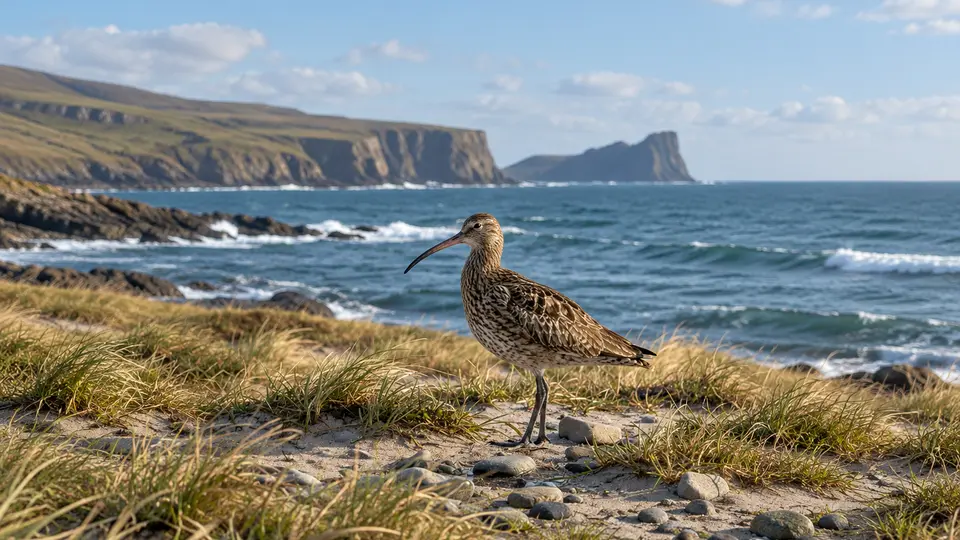
Eurasian Curlew in its natural habitatAI-modified

Eurasian CurlewNumenius arquataWhere and when to see them

Eurasian Curlew at a glance

The Eurasian curlew is a large wader whose long curved bill and haunting calls are familiar features of Scottish coasts and uplands. Scotland supports both breeding birds and wintering arrivals from elsewhere in Europe. Breeding populations have declined in many areas as land management changes, habitat loss and poor nesting success reduce recruitment. Coastal mudflats remain vital outside the breeding season, linking apparently separate landscapes through the movements of the same species.

Behaviour & reproduction

Size
50-60 cm (19.7-23.6 in) long
Weight
400-1,000 g (14.1-35.3 oz)
Lifespan
Up to 31.8 years in the wild (record)
Status
Near Threatened

On the coast, curlews forage across exposed flats and gather at communal roosts when the tide rises. Inland breeding birds establish territories with conspicuous calling flights and place well-camouflaged nests on the ground. Adults become noisy and defensive when people or predators approach chicks, which feed themselves but still require protection. Outside breeding, birds are often sociable, though individuals may defend feeding patches. Females' longer bills allow access to some deeper prey. Curlews are long-lived birds, with some individuals known to reach over 30 years in the wild. During migration, large flocks can travel considerable distances between breeding and wintering grounds. They exhibit strong site fidelity, often returning to the same breeding and wintering areas year after year.

Top wildlife locations

Scotland wildlife habitatAI-modified

Scotland

Estuary paths, sheltered firths and saltmarsh viewpoints provide practical shore-based opportunities outside breeding. Some high-tide roosts are inaccessible or protected; observing breeding birds on moorland usually requires a separate inland excursion.
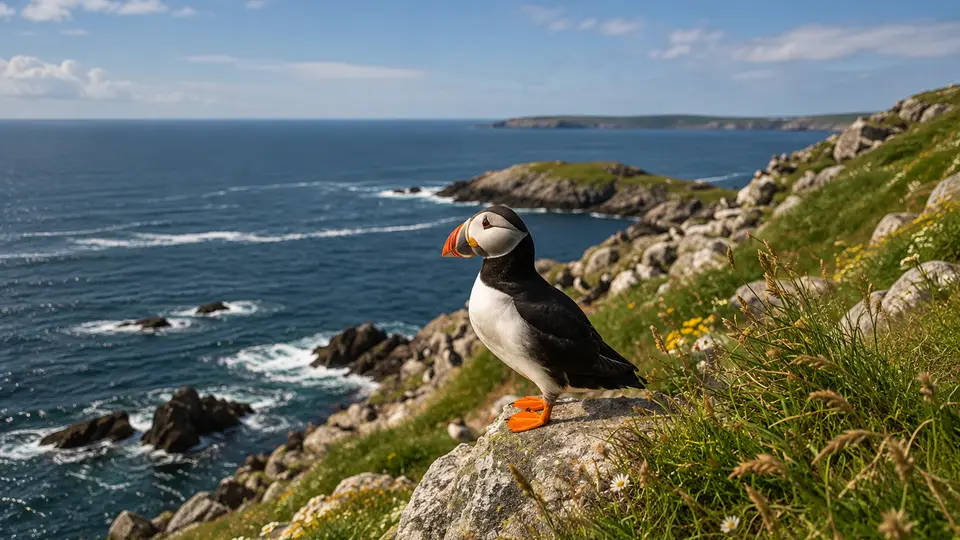

Destinations describe the species' habitat, not guaranteed cruise stops. Some animals require an optional inland excursion or are found in restricted reserves.

Fun facts about the Eurasian Curlew

  • Females generally have longer bills than males.
  • Chicks leave the nest soon after hatching and find their own food.
  • Its bubbling breeding call is often delivered during an aerial display.
  • Scottish winter flocks can include birds that bred elsewhere in northern Europe.

Best time to see the Eurasian Curlew

September through March is a useful window for Scottish coastal viewing, when resident and visiting birds use estuaries and sheltered shores. Spring and early summer offer inland breeding activity but require greater care around ground nests. Local tides determine when coastal birds feed or roost. The presence of wintering migrants significantly boosts curlew numbers on Scottish coasts, making late autumn to early spring an excellent time for viewing large flocks. Breeding season in Scotland typically runs from April to July, offering opportunities to observe territorial displays and nesting behaviour inland. Low tide cycles are critical for planning coastal observations, as this is when birds are most active in feeding areas.

Eurasian Curlew: season matrix by destination

Travel and observation windows vary by region. Highlighted months are an orientation for planning, not confirmed sightings or a guarantee of access.

Scotland

This is a broad coastal nonbreeding window, not an exclusive period of presence; tides, local movements and weather influence viewing.

JanFebMarAprMayJunJulAugSepOctNovDec
Cruise ships in Scotland

Where the Eurasian Curlew lives

Breeding habitat includes damp grassland, moorland, rough pasture and bog margins. In autumn and winter, Scottish birds use estuaries, saltmarsh, sheltered shores and nearby fields. Safe high-tide roosts and productive feeding flats are essential parts of the coastal habitat network. Coastal curlews prefer open, undisturbed estuarine habitats where they can find both feeding grounds and safe roosting sites. Agricultural fields adjacent to estuaries are also commonly used for foraging, especially at high tide or during severe weather. Inland, they often select areas with tussocky vegetation providing cover for nests and young.

What the Eurasian Curlew eats

Earthworms and other soil invertebrates are important inland, especially in damp grassland. Coastal birds take worms, crabs, molluscs and other intertidal animals. They locate food by probing with the long bill or picking visible prey from mud, sand and vegetation. In addition to a varied diet, curlews may occasionally consume small fish or amphibians, particularly in wetland breeding areas. Their diet shifts seasonally and geographically based on prey availability and habitat. The long, curved bill is perfectly adapted for extracting deeply buried invertebrates from soft substrates.

Species at a glance

Common name
Eurasian Curlew
Scientific name
Numenius arquata
Animal group
Birds
Size
50-60 cm (19.7-23.6 in) long
Weight
400-1,000 g (14.1-35.3 oz)
Lifespan
Up to 31.8 years in the wild (record)
Status
Near Threatened
Identification
Larger size, a longer evenly curved bill and an unstriped crown distinguish it from the whimbrel, while a white rump separates most Scottish birds from eastern curlews. Juvenile curlews have shorter bills and often appear lankier than adults, gradually developing their full bill length over their first year. The pale grey-brown streaked plumage provides excellent camouflage against many Scottish landscapes. Their characteristic mournful 'cur-lee' call is often heard before the bird is seen, and is a key identification feature.

Eurasian Curlew: frequently asked questions

Where can I see the Eurasian Curlew?
Scotland. Watch from shore paths or hides without approaching high-tide roosts. Keep dogs under close control, especially near nesting grassland. If breeding birds circle and alarm-call, leave the area rather than searching for a nest. When viewing from a boat, maintain a respectful distance to avoid flushing birds from their roosts or feeding areas. Binoculars or a spotting scope are highly recommended for detailed observation of their feeding techniques and plumage. Observing from elevated positions can provide a broader view of their coastal movements and flock dynamics.
When is the best time to see the Eurasian Curlew?
September through March is a useful window for Scottish coastal viewing, when resident and visiting birds use estuaries and sheltered shores. Spring and early summer offer inland breeding activity but require greater care around ground nests. Local tides determine when coastal birds feed or roost. The presence of wintering migrants significantly boosts curlew numbers on Scottish coasts, making late autumn to early spring an excellent time for viewing large flocks. Breeding season in Scotland typically runs from April to July, offering opportunities to observe territorial displays and nesting behaviour inland. Low tide cycles are critical for planning coastal observations, as this is when birds are most active in feeding areas.
How big does the Eurasian Curlew get?
50-60 cm (19.7-23.6 in) long. Adult weight: 400-1,000 g (14.1-35.3 oz). Size varies with age, sex and population.
How should I behave around the Eurasian Curlew?
Watch from shore paths or hides without approaching high-tide roosts. Keep dogs under close control, especially near nesting grassland. If breeding birds circle and alarm-call, leave the area rather than searching for a nest. When viewing from a boat, maintain a respectful distance to avoid flushing birds from their roosts or feeding areas. Binoculars or a spotting scope are highly recommended for detailed observation of their feeding techniques and plumage. Observing from elevated positions can provide a broader view of their coastal movements and flock dynamics.
What does the Eurasian Curlew eat?
Earthworms and other soil invertebrates are important inland, especially in damp grassland. Coastal birds take worms, crabs, molluscs and other intertidal animals. They locate food by probing with the long bill or picking visible prey from mud, sand and vegetation. In addition to a varied diet, curlews may occasionally consume small fish or amphibians, particularly in wetland breeding areas. Their diet shifts seasonally and geographically based on prey availability and habitat. The long, curved bill is perfectly adapted for extracting deeply buried invertebrates from soft substrates.
Are wildlife sightings guaranteed on an adventure cruise?
No. Animals move freely and routes, weather, access restrictions and local conditions influence every outing. Confirm the actual itinerary and shore program before booking.

Compare wildlife in the same destinations

Explore other birds recorded in these destinations. Similar surroundings do not mean the animals share the same habits or viewing season.

Species comparison by animal group and destination
Eurasian CurlewAI-modifiedEurasian CurlewAtlantic PuffinAI-modifiedAtlantic PuffinBlack GuillemotAI-modifiedBlack Guillemot
Animal groupBirdsAnimal groupBirdsAnimal groupBirds
DestinationsScotlandDestinationsNew England, Norway, Scotland, ArcticDestinationsNew England, Norway, Scotland
Scientific nameNumenius arquataScientific nameScientific name
All wildlife destinations
AI-modified
Plan your trip

Find your next wildlife adventure

Compare destinations, shore programs and dates with the animals and habitats you would love to see.

  • Naturalist-led shore excursions
  • Responsible wildlife watching
  • Small expedition ships