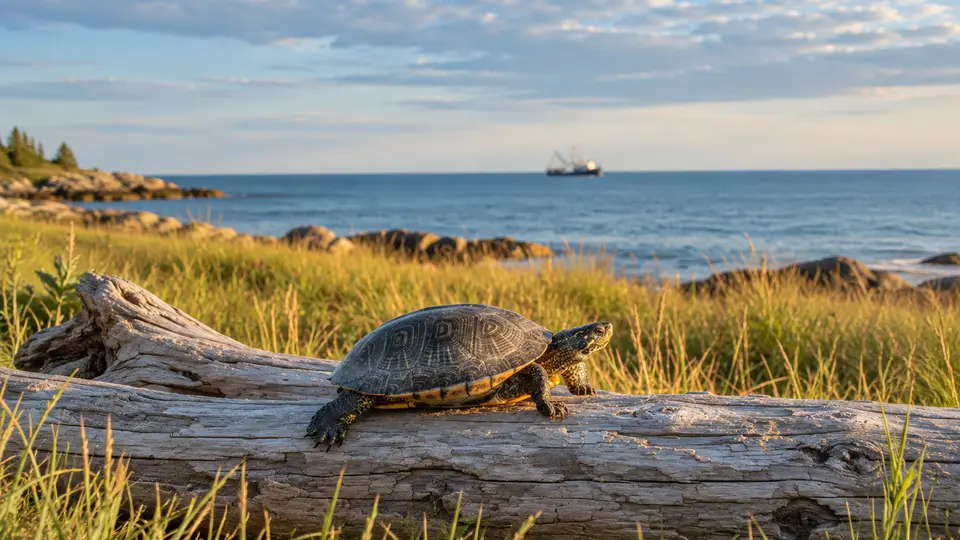
Diamondback Terrapin in its natural habitat, AI illustration

Diamondback Terrapin: where and when to see them

Malaclemys terrapin

Diamondback Terrapin at a glance

The diamondback terrapin is a coastal turtle specialized for the brackish waters of eastern and southern North America. In New England it reaches the northern part of its range, occupying suitable estuaries and salt marshes rather than ordinary freshwater ponds. Concentric shell markings and spotted skin make individuals strikingly variable. Road mortality, accidental capture in crab traps and loss of nesting habitat are important threats to local populations.

Behaviour & reproduction

Size
10–23 cm carapace length
Weight
0.2–1.2 kg
Lifespan
Not reliably established
Status
Vulnerable

Terrapins alternate between feeding in tidal creeks, resting in sheltered water and basking on exposed banks or other available surfaces. Females leave the water to nest in sandy or gravelly ground, sometimes crossing roads and developed areas. Northern populations spend the cold season largely inactive in muddy substrates. Individuals can be wary above water, and a brief head at the surface may be the only sign visible from shore. They possess specialized salt glands to excrete excess salt, a crucial adaptation for their brackish habitat. During winter, they often bury themselves in the mud at the bottom of creeks or estuaries, entering a state of brumation.

Top wildlife locations

New England wildlife habitat

New England

Southern New England salt-marsh boardwalks and sheltered estuary banks offer plausible shore observation. Distribution is localized near the range's northern edge, and nesting areas may be closed or carefully managed.

Adventure cruises in New England

Destinations describe the species' habitat, not guaranteed cruise stops. Some animals require an optional inland excursion or are found in restricted reserves.

Fun facts about the Diamondback Terrapin

  • Females grow substantially larger than males.
  • Specialized glands help remove excess salt.
  • Each shell scute can show concentric growth patterns.
  • Nest temperature influences the sex of developing hatchlings.

Best time to see the Diamondback Terrapin

Late spring through early autumn offers the best prospect of active terrapins in New England. Nesting movements often occur in late spring and early summer, but dates vary with weather. Warm, calm conditions improve surface visibility without justifying disturbance. Peak nesting activity, when females are most likely to be seen on land, typically occurs during June and July. Early morning and late afternoon are often the best times to spot them feeding in tidal creeks.

Diamondback Terrapin: season matrix by destination

Travel and observation windows vary by region. Highlighted months are an orientation for planning, not confirmed sightings or a guarantee of access.

New England

A warm-season activity window for northern populations; weather, tides and local distribution affect visibility, while nesting dates vary between years.

JanFebMarAprMayJunJulAugSepOctNovDec
Cruise ships in New England

Where the Diamondback Terrapin lives

Salt marshes, tidal creeks, sheltered estuaries and brackish embayments are characteristic habitats. Nearby elevated, well-drained ground is needed for nesting. In New England, suitable marsh systems are patchy, and public observation should remain on boardwalks, paths and authorized shoreline access. They are the only turtle species in North America that lives exclusively in brackish water. Their unique osmoregulation allows them to thrive in these saline environments, which freshwater turtles cannot tolerate.

What the Diamondback Terrapin eats

Terrapins eat molluscs, crustaceans and other small aquatic animals, including snails and crabs. Larger females can crush tougher prey than smaller males. Diet varies among estuaries, reflecting local prey communities and the size-dependent strength of the turtle's jaws. In New England, green crabs and blue mussels are often significant components of their diet, showcasing their adaptability to local prey. They also consume carrion and plant matter opportunistically.

Species at a glance

Common name
Diamondback Terrapin
Scientific name
Malaclemys terrapin
Animal group
Reptiles
Size
10–23 cm carapace length
Weight
0.2–1.2 kg
Lifespan
Not reliably established
Status
Vulnerable
Identification
Pale, dark-spotted skin and concentric diamond-like shell scutes distinguish it from the striped-headed freshwater turtles commonly seen elsewhere in New England. Adults typically range from 4 to 9 inches in shell length, with females being significantly larger than males. Their carapaces display a variety of colors, from gray to black, often with distinct growth rings.

Diamondback Terrapin: frequently asked questions

Where can I see the Diamondback Terrapin?
New England. Observe from marsh boardwalks and keep dogs away from nesting females. Never lift a terrapin by its tail or relocate it elsewhere. If one is endangered on a road, seek local wildlife guidance. Maintain a respectful distance and avoid making sudden movements to prevent startling them. Use binoculars or a spotting scope for a closer view without causing disturbance.
When is the best time to see the Diamondback Terrapin?
Late spring through early autumn offers the best prospect of active terrapins in New England. Nesting movements often occur in late spring and early summer, but dates vary with weather. Warm, calm conditions improve surface visibility without justifying disturbance. Peak nesting activity, when females are most likely to be seen on land, typically occurs during June and July. Early morning and late afternoon are often the best times to spot them feeding in tidal creeks.
How big does the Diamondback Terrapin get?
10–23 cm carapace length. Adult weight: 0.2–1.2 kg. Size varies with age, sex and population.
How should I behave around the Diamondback Terrapin?
Observe from marsh boardwalks and keep dogs away from nesting females. Never lift a terrapin by its tail or relocate it elsewhere. If one is endangered on a road, seek local wildlife guidance. Maintain a respectful distance and avoid making sudden movements to prevent startling them. Use binoculars or a spotting scope for a closer view without causing disturbance.
What does the Diamondback Terrapin eat?
Terrapins eat molluscs, crustaceans and other small aquatic animals, including snails and crabs. Larger females can crush tougher prey than smaller males. Diet varies among estuaries, reflecting local prey communities and the size-dependent strength of the turtle's jaws. In New England, green crabs and blue mussels are often significant components of their diet, showcasing their adaptability to local prey. They also consume carrion and plant matter opportunistically.
Are wildlife sightings guaranteed on an adventure cruise?
No. Animals move freely and routes, weather, access restrictions and local conditions influence every outing. Confirm the actual itinerary and shore programme before booking.

Compare wildlife in the same destinations

Explore other reptiles recorded in these destinations. Similar surroundings do not mean the animals share the same habits or viewing season.

Species comparison by animal group and destination
Diamondback TerrapinDiamondback Terrapin
Animal groupReptiles
DestinationsNew England
All wildlife destinations
Plan your trip

Find your next wildlife adventure

Compare destinations, shore programmes and dates with the animals and habitats you would love to see.

  • Naturalist-led shore excursions
  • Responsible wildlife watching
  • Small expedition ships

Newsletter

Take Blue Rides with you

Adventure cruise offers, last-minute deals and trip inspiration.

Free, unsubscribe anytime. Details: Privacy Policy

Partner with Blue Rides

Affiliate Program

Recommend adventure cruises and earn commission on every confirmed booking.

Share. Track. Earn.