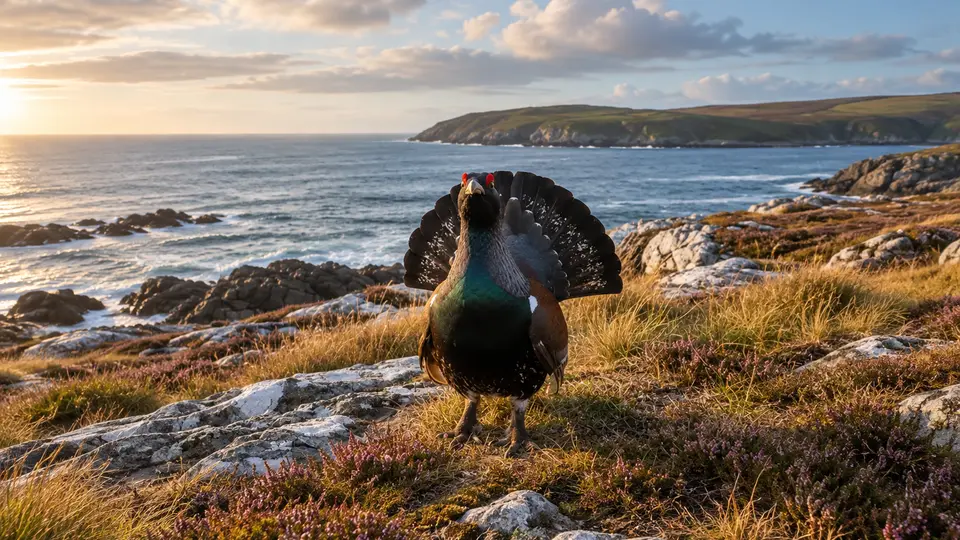
Western Capercaillie in its natural habitatAI-modified

Western CapercaillieTetrao urogallusWhere and when to see them

Western Capercaillie at a glance

The western capercaillie is the largest grouse, with a striking difference between the massive dark male and smaller, cryptically patterned female. Its broad Eurasian range contrasts with its precarious position in Scotland, where the surviving population is small and highly vulnerable. Scottish birds depend on extensive, structurally varied pine woodland. Disturbance, poor breeding success and habitat pressures make responsible viewing particularly important, even though the species is not globally classified as threatened.

Behaviour & reproduction

Size
54–90 cm (21.3–35.4 in) body length
Weight
1.5–5 kg (3.3–11.0 lb)
Lifespan
Not reliably established
Status
Least Concern

Males gather at traditional display grounds, or leks, where they fan their tails and deliver a distinctive sequence of clicks and other sounds. Females visit to mate, then nest and rear chicks without male assistance. Outside breeding displays, birds spend much time feeding quietly on the ground or in trees. Some males become unusually bold during the breeding season, but approaching or engaging these birds can disrupt behaviour and provoke defensive attacks. Male capercaillie display an elaborate courtship ritual at the lek, involving fanning their tail, dropping their wings, and puffing out chest feathers while emitting characteristic calls. Outside the breeding season, they are generally solitary and secretive, feeding quietly and relying on their camouflage to avoid detection.

Top wildlife locations

Scotland wildlife habitatAI-modified

Scotland

Suitable habitat lies in inland pinewoods, requiring an inland excursion rather than shore viewing. The Scottish population is exceptionally sensitive; independent lek searches are inappropriate, and authorised viewing opportunities may be unavailable.
Destinations describe the species' habitat, not guaranteed cruise stops. Some animals require an optional inland excursion or are found in restricted reserves.

Fun facts about the Western Capercaillie

  • Males can weigh more than twice as much as females.
  • Scottish capercaillie were reintroduced after an earlier national extinction.
  • Their winter diet can consist largely of pine needles.
  • Females raise the chicks without help from males.

Best time to see the Western Capercaillie

There is no responsible general-purpose peak viewing recommendation for Scotland's vulnerable population. Spring lekking is particularly disturbance-sensitive and should not motivate independent searches. Any observation should follow current conservation guidance through an authorised opportunity, if available, rather than a seasonal checklist target. Conservation efforts are paramount in Scotland, and viewing opportunities are extremely limited, often restricted to specific, monitored reserves. Any potential opportunity would typically be late autumn or winter when breeding pressures are reduced and birds are less sensitive to human presence, but this is still rare and guided.

Western Capercaillie: season matrix by destination

Travel and observation windows vary by region. Highlighted months are an orientation for planning, not confirmed sightings or a guarantee of access.

Scotland

No general shore-observation window is supported; conservation restrictions and any specifically authorised opportunities should determine access, especially during spring breeding.

JanFebMarAprMayJunJulAugSepOctNovDec
Cruise ships in Scotland

Where the Western Capercaillie lives

In Scotland, capercaillie mainly occupy mature pinewoods with open structure, varied ground vegetation and abundant bilberry. Connected woodland is important for movement and population resilience. This is an inland forest species, not a bird of beaches or ordinary coastal landing areas. The species requires diverse forest structures including old growth trees for roosting and canopy feeding, alongside dense understory for nesting and chick cover. Fragmentation of suitable woodland areas poses a significant threat to local populations by isolating genetic pools and limiting dispersal.

What the Western Capercaillie eats

Adults eat pine needles, buds, shoots, leaves and berries, with diet changing through the year. Winter feeding relies heavily on conifer needles. Young chicks require protein-rich invertebrates, making insect-rich ground vegetation particularly important during their earliest weeks of growth. In spring and summer, the diet includes a wider variety of plant matter like berries, shoots, and catkins, providing essential nutrients for breeding. Chicks additionally rely on arthropods such as caterpillars, spiders, and ants, which are crucial for their rapid growth and feather development.

Species at a glance

Common name
Western Capercaillie
Scientific name
Tetrao urogallus
Animal group
Birds
Size
54–90 cm (21.3–35.4 in) body length
Weight
1.5–5 kg (3.3–11.0 lb)
Lifespan
Not reliably established
Status
Least Concern
Identification
Males have a broad rounded fan-tail rather than the black grouse's lyre-shaped tail, while females are larger and show a conspicuous rusty breast patch. Males are significantly larger than females, with iridescent dark plumage that appears almost black, featuring a metallic green and blue sheen on the chest. Females are mottled brown with black barring, providing excellent camouflage in their woodland environment.

Western Capercaillie: frequently asked questions

Where can I see the Western Capercaillie?
Scotland. Do not seek out leks, playback calls or approach displaying males. Keep dogs away from sensitive woodland and follow seasonal restrictions. If encountered incidentally, retreat quietly, leaving the bird space rather than stopping for close photographs. Always maintain a significant distance, using binoculars or a spotting scope for observation, to prevent disturbance, especially during the breeding season. Participating in organised, low-impact wildlife tours led by experienced guides is the only responsible way to potentially observe these birds without causing harm.
When is the best time to see the Western Capercaillie?
There is no responsible general-purpose peak viewing recommendation for Scotland's vulnerable population. Spring lekking is particularly disturbance-sensitive and should not motivate independent searches. Any observation should follow current conservation guidance through an authorised opportunity, if available, rather than a seasonal checklist target. Conservation efforts are paramount in Scotland, and viewing opportunities are extremely limited, often restricted to specific, monitored reserves. Any potential opportunity would typically be late autumn or winter when breeding pressures are reduced and birds are less sensitive to human presence, but this is still rare and guided.
How big does the Western Capercaillie get?
54–90 cm (21.3–35.4 in) body length. Adult weight: 1.5–5 kg (3.3–11.0 lb). Size varies with age, sex and population.
How should I behave around the Western Capercaillie?
Do not seek out leks, playback calls or approach displaying males. Keep dogs away from sensitive woodland and follow seasonal restrictions. If encountered incidentally, retreat quietly, leaving the bird space rather than stopping for close photographs. Always maintain a significant distance, using binoculars or a spotting scope for observation, to prevent disturbance, especially during the breeding season. Participating in organised, low-impact wildlife tours led by experienced guides is the only responsible way to potentially observe these birds without causing harm.
What does the Western Capercaillie eat?
Adults eat pine needles, buds, shoots, leaves and berries, with diet changing through the year. Winter feeding relies heavily on conifer needles. Young chicks require protein-rich invertebrates, making insect-rich ground vegetation particularly important during their earliest weeks of growth. In spring and summer, the diet includes a wider variety of plant matter like berries, shoots, and catkins, providing essential nutrients for breeding. Chicks additionally rely on arthropods such as caterpillars, spiders, and ants, which are crucial for their rapid growth and feather development.
Are wildlife sightings guaranteed on an adventure cruise?
No. Animals move freely and routes, weather, access restrictions and local conditions influence every outing. Confirm the actual itinerary and shore program before booking.

Compare wildlife in the same destinations

Explore other birds recorded in these destinations. Similar surroundings do not mean the animals share the same habits or viewing season.

Species comparison by animal group and destination
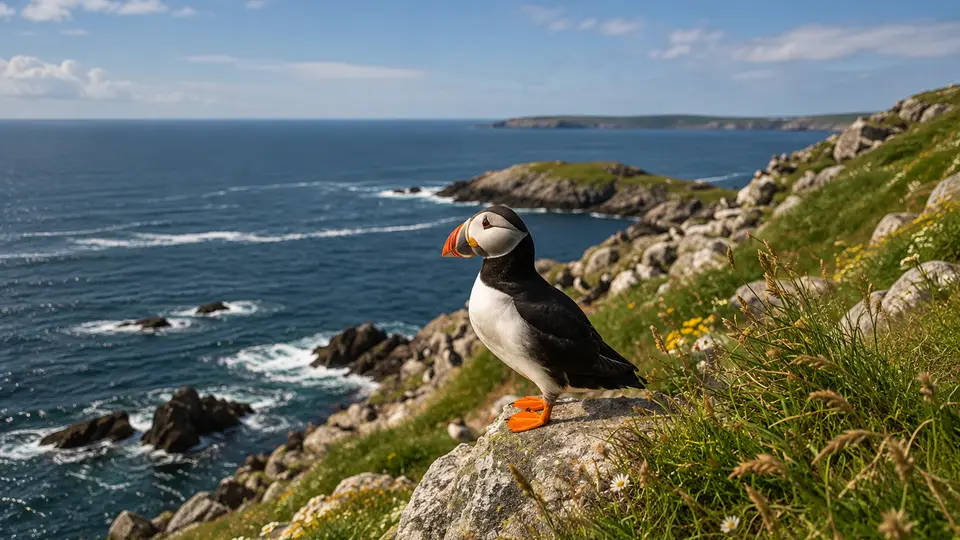
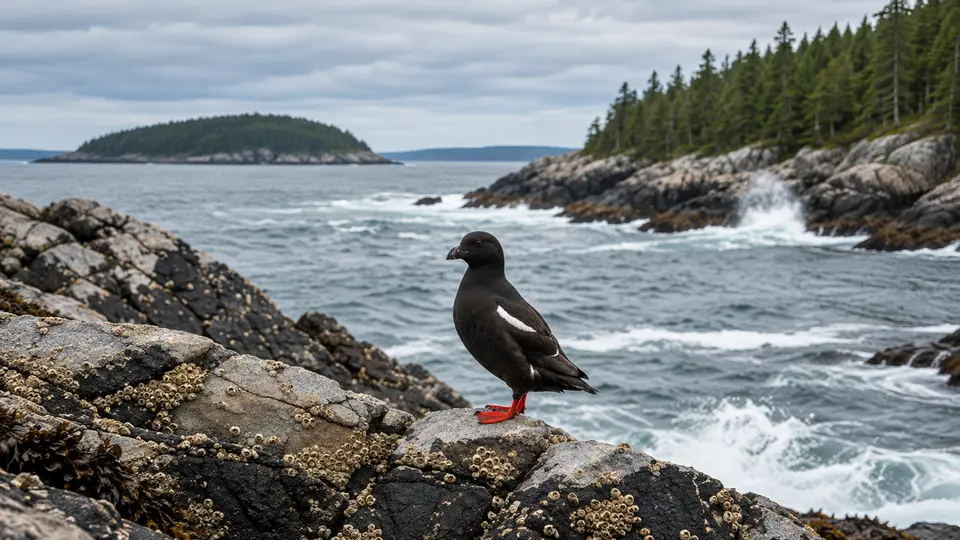
Western CapercaillieAI-modifiedWestern CapercaillieAtlantic PuffinAI-modifiedAtlantic PuffinBlack GuillemotAI-modifiedBlack Guillemot
Animal groupBirdsAnimal groupBirdsAnimal groupBirds
DestinationsScotlandDestinationsNew England, Norway, Scotland, ArcticDestinationsNew England, Norway, Scotland
Scientific nameTetrao urogallusScientific nameScientific name
All wildlife destinations
AI-modified
Plan your trip

Find your next wildlife adventure

Compare destinations, shore programs and dates with the animals and habitats you would love to see.

  • Naturalist-led shore excursions
  • Responsible wildlife watching
  • Small expedition ships