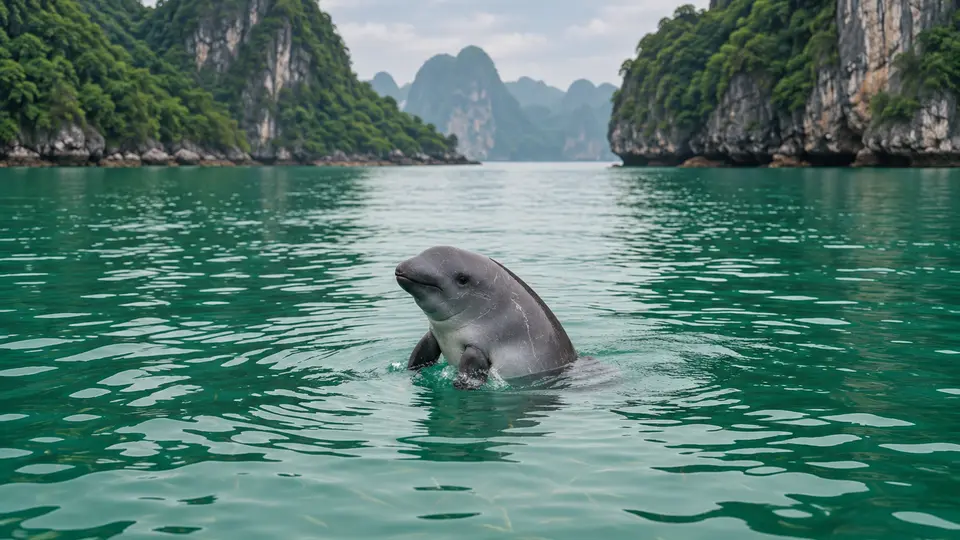
Indo-Pacific finless porpoise in its natural habitatAI-modified

Indo-Pacific finless porpoiseNeophocaena phocaenoidesWhere and when to see them

Indo-Pacific finless porpoise at a glance

The Indo-Pacific finless porpoise is a small coastal cetacean distinguished by the absence of a dorsal fin. It inhabits warm, shallow Asian waters, including parts of Vietnam's coast, and is separate from the narrow-ridged finless porpoise of more northerly waters. Its low, quiet surfacing makes it difficult to detect. Accidental capture in fishing gear, coastal development and habitat degradation are major concerns for populations living close to people.

Behaviour & reproduction

Size
1.4–1.9 m (4.6–6.2 ft) long
Weight
30–70 kg (66–154 lb)
Lifespan
Not reliably established
Status
Vulnerable

Finless porpoises usually appear alone or in small groups and surface with a subtle rolling motion. They seldom perform the conspicuous aerial displays associated with some dolphins. Echolocation supports navigation and hunting in turbid coastal water. Mothers keep calves close, and young animals may travel near the mother's back. Their brief surface appearances and lack of a tall fin mean observers can miss animals even in suitable habitat. Communication among individuals is achieved through high-frequency clicks and whistles, aiding in social cohesion and coordinating hunting. They have a relatively long lifespan, potentially reaching over 30 years in protected environments.

Top wildlife locations

Vietnam wildlife habitatAI-modified

Vietnam

Sheltered coastal bays and estuary mouths provide plausible shore-viewing habitat, but verified encounters are rare. Distribution is poorly documented locally, and ordinary coastal itineraries should not be presented as reliable porpoise opportunities.

Destinations describe the species' habitat, not guaranteed cruise stops. Some animals require an optional inland excursion or are found in restricted reserves.

Fun facts about the Indo-Pacific finless porpoise

  • A low ridge bearing small tubercles replaces the dorsal fin.
  • It is a porpoise rather than a dolphin and has characteristically flattened teeth.
  • The tropical species is taxonomically separate from the narrow-ridged finless porpoise.
  • Its subtle surfacing makes conventional visual surveys especially challenging.

Best time to see the Indo-Pacific finless porpoise

There is no well-supported nationwide Vietnamese shore-watching season for this elusive species. Choose locally calm weather and seek recent verified records before planning observation. Regional monsoon patterns differ, and a general beach holiday season cannot establish porpoise presence. Breeding and calving seasons for finless porpoises are generally during spring and summer months across their range. Higher encounter rates might occur in specific areas during these periods due to increased activity or mother-calf pairs.

Indo-Pacific finless porpoise: season matrix by destination

Travel and observation windows vary by region. Highlighted months are an orientation for planning, not confirmed sightings or a guarantee of access.

Vietnam

No robust species-specific shore window is established across Vietnam; regional weather and recent expert-confirmed records are needed.

JanFebMarAprMayJunJulAugSepOctNovDec
Cruise ships in Vietnam

Where the Indo-Pacific finless porpoise lives

Shallow coastal seas, estuaries, bays and waters near mangroves or river mouths are typical. Sandy or muddy seabeds and turbid water are frequently associated with the species. In Vietnam, occurrence is coastal and localised, not a general inland-river wildlife opportunity. They are tolerant of a wide range of salinity, often inhabiting brackish waters and sometimes even freshwater rivers for short periods. Their preferred depth is generally less than 50 meters, staying close to the coast.

What the Indo-Pacific finless porpoise eats

Small fish, squid, cuttlefish and crustaceans are taken according to local availability. Porpoises use echolocation to find prey in water where vision may be restricted. Their feeding grounds can overlap heavily with coastal fisheries, increasing the danger of accidental entanglement. Prey items are typically small and non-spiny, easily consumed whole. They are opportunistic feeders, adjusting their diet based on the availability of small schooling fish and benthic invertebrates.

Species at a glance

Common name
Indo-Pacific finless porpoise
Scientific name
Neophocaena phocaenoides
Animal group
Marine life
Size
1.4–1.9 m (4.6–6.2 ft) long
Weight
30–70 kg (66–154 lb)
Lifespan
Not reliably established
Status
Vulnerable
Identification
It lacks a dorsal fin and has a broad tubercled back ridge, unlike the narrower ridge of the narrow-ridged finless porpoise, although distant identification can be uncertain. The head is blunt with no discernible beak. Their small size, typically under 2 meters, also distinguishes them from most dolphins found in the same range.

Indo-Pacific finless porpoise: frequently asked questions

Where can I see the Indo-Pacific finless porpoise?
Vietnam. Scan calm estuary mouths from a safe shore viewpoint or vessel deck, looking for low rolling backs. Do not request pursuit after a brief surfacing, and remain clear of fishing gear and working boats. Focus on areas where water currents converge or around aquaculture pens, as these can be productive foraging grounds. Patience is key; sustained observation of a suitable area is more effective than continuous searching.
When is the best time to see the Indo-Pacific finless porpoise?
There is no well-supported nationwide Vietnamese shore-watching season for this elusive species. Choose locally calm weather and seek recent verified records before planning observation. Regional monsoon patterns differ, and a general beach holiday season cannot establish porpoise presence. Breeding and calving seasons for finless porpoises are generally during spring and summer months across their range. Higher encounter rates might occur in specific areas during these periods due to increased activity or mother-calf pairs.
How big does the Indo-Pacific finless porpoise get?
1.4–1.9 m (4.6–6.2 ft) long. Adult weight: 30–70 kg (66–154 lb). Size varies with age, sex and population.
How should I behave around the Indo-Pacific finless porpoise?
Scan calm estuary mouths from a safe shore viewpoint or vessel deck, looking for low rolling backs. Do not request pursuit after a brief surfacing, and remain clear of fishing gear and working boats. Focus on areas where water currents converge or around aquaculture pens, as these can be productive foraging grounds. Patience is key; sustained observation of a suitable area is more effective than continuous searching.
What does the Indo-Pacific finless porpoise eat?
Small fish, squid, cuttlefish and crustaceans are taken according to local availability. Porpoises use echolocation to find prey in water where vision may be restricted. Their feeding grounds can overlap heavily with coastal fisheries, increasing the danger of accidental entanglement. Prey items are typically small and non-spiny, easily consumed whole. They are opportunistic feeders, adjusting their diet based on the availability of small schooling fish and benthic invertebrates.
Are wildlife sightings guaranteed on an adventure cruise?
No. Animals move freely and routes, weather, access restrictions and local conditions influence every outing. Confirm the actual itinerary and shore program before booking.

Compare wildlife in the same destinations

Explore other marine life recorded in these destinations. Similar surroundings do not mean the animals share the same habits or viewing season.

Species comparison by animal group and destination
Indo-Pacific finless porpoiseAI-modifiedIndo-Pacific finless porpoise
Animal groupMarine life
DestinationsVietnam
Scientific nameNeophocaena phocaenoides
All wildlife destinations
AI-modified
Plan your trip

Find your next wildlife adventure

Compare destinations, shore programs and dates with the animals and habitats you would love to see.

  • Naturalist-led shore excursions
  • Responsible wildlife watching
  • Small expedition ships