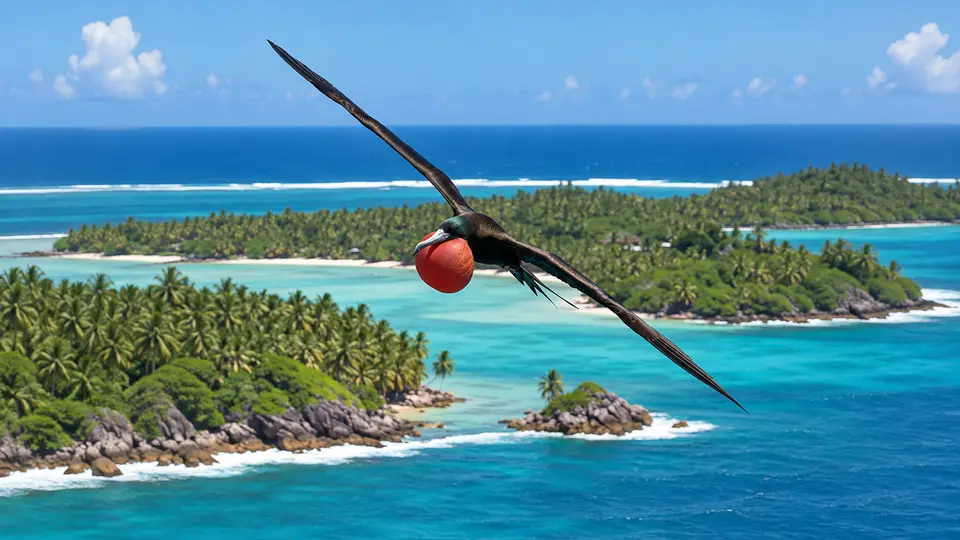
Greater Frigatebird in its natural habitatAI-modified

Greater FrigatebirdFregata minorWhere and when to see them

Greater Frigatebird at a glance

Usually called the great frigatebird, this tropical seabird combines exceptionally long wings with a deeply forked tail and a lightweight body. Males are predominantly black and display an inflatable red throat pouch, while females are larger and show a white breast. The Seychelles supports important breeding populations, particularly on remote islands. Birds seen above accessible coasts may be travelling or feeding, rather than indicating a nesting colony close to shore.

Behaviour & reproduction

Size
85–105 cm (33–41 in) long
Weight
1–1.6 kg (2.2–3.5 lb)
Lifespan
25–40 years
Status
Least Concern

Great frigatebirds spend long periods soaring, using rising air to travel with little flapping. They take prey at the sea surface and sometimes harass other seabirds until food is dropped or regurgitated. Breeding males advertise from vegetation by inflating their throat pouches and displaying their wings. Parents provide unusually prolonged care, with young remaining dependent well after fledging. Their reliance on aerial feeding makes favourable winds and productive surface waters especially important. Courtship involves elaborate aerial displays by males, showcasing their inflated gular pouch to attract females. Their exceptional flight capabilities allow them to cover vast distances at sea with minimal energy expenditure, sometimes staying airborne for weeks at a time.

Top wildlife locations

Seychelles wildlife habitatAI-modified

Seychelles

Coastal headlands and permitted deck routes may reveal soaring birds, especially near outer-island populations. Major colonies can be remote, inaccessible or tightly protected; standard island visits do not necessarily reach breeding habitat.
Destinations describe the species' habitat, not guaranteed cruise stops. Some animals require an optional inland excursion or are found in restricted reserves.

Fun facts about the Greater Frigatebird

  • Males inflate a red throat pouch during courtship.
  • Females are larger and heavier than males.
  • Young birds can depend on parental feeding for many months after leaving the nest.
  • Their very long wings allow extensive soaring with remarkably little flapping.

Best time to see the Greater Frigatebird

Seychelles observation can be possible in any month, especially near islands with resident breeding activity. However, nesting schedules and access differ among colonies. Select travel dates around authorized access and manageable weather rather than assuming a single archipelago-wide courtship or chick-rearing season. Prime viewing opportunities often coincide with active breeding seasons at specific colonies, which can vary locally. Local guides at designated sites can provide the most current information on accessibility and recent breeding activity.

Greater Frigatebird: season matrix by destination

Travel and observation windows vary by region. Highlighted months are an orientation for planning, not confirmed sightings or a guarantee of access.

Seychelles

A year-round aerial observation window is plausible, but colony access, winds and island-specific breeding cycles determine opportunities.

JanFebMarAprMayJunJulAugSepOctNovDec
Cruise ships in Seychelles

Where the Greater Frigatebird lives

This species ranges over tropical ocean waters but needs islands with suitable trees or shrubs for nesting and roosting. Breeding sites are often remote and protected. Coastal sightings are most plausible near established colonies, roosts or productive waters used by feeding seabirds. They often select small, predator-free islands or cays, sometimes forming mixed colonies with other seabirds. While widespread, their breeding success is highly dependent on the availability of suitable nesting sites and stable food sources in the surrounding waters.

What the Greater Frigatebird eats

Flying fish and squid are important foods, supplemented by other small marine animals and occasionally seabird chicks or eggs. Birds seize much of their own prey at the surface. Food stolen from other seabirds is conspicuous behavior, but does not represent their entire feeding strategy. They will readily consume carrion floating on the surface if available. Chicks are fed regurgitated, semi-digested fish by their parents.

Species at a glance

Common name
Greater Frigatebird
Scientific name
Fregata minor
Animal group
Birds
Size
85–105 cm (33–41 in) long
Weight
1–1.6 kg (2.2–3.5 lb)
Lifespan
25–40 years
Status
Least Concern
Identification
Compared with the lesser frigatebird, the great frigatebird is larger and adult males lack white flank patches, while females lack the lesser species' white extensions onto the underwings. Adult males are entirely black with an iridescent green or purple sheen on their back, while adult females have a white breast and throat, and a red eye-ring. Juveniles display significant white on the head and underparts, progressively darkening as they mature.

Greater Frigatebird: frequently asked questions

Where can I see the Greater Frigatebird?
Seychelles. Scan high above coastlines or watch distant birds from a stable deck. Keep away from nesting vegetation and do not provoke displaying males; colonies can be sensitive, and remote breeding islands may be restricted. From the deck of a ship, look for their distinctive W-shaped silhouette with long, pointed wings. On shore excursions, maintain a respectful distance to avoid disturbing nesting birds, especially during the breeding season.
When is the best time to see the Greater Frigatebird?
Seychelles observation can be possible in any month, especially near islands with resident breeding activity. However, nesting schedules and access differ among colonies. Select travel dates around authorized access and manageable weather rather than assuming a single archipelago-wide courtship or chick-rearing season. Prime viewing opportunities often coincide with active breeding seasons at specific colonies, which can vary locally. Local guides at designated sites can provide the most current information on accessibility and recent breeding activity.
How big does the Greater Frigatebird get?
85–105 cm (33–41 in) long. Adult weight: 1–1.6 kg (2.2–3.5 lb). Size varies with age, sex and population.
How should I behave around the Greater Frigatebird?
Scan high above coastlines or watch distant birds from a stable deck. Keep away from nesting vegetation and do not provoke displaying males; colonies can be sensitive, and remote breeding islands may be restricted. From the deck of a ship, look for their distinctive W-shaped silhouette with long, pointed wings. On shore excursions, maintain a respectful distance to avoid disturbing nesting birds, especially during the breeding season.
What does the Greater Frigatebird eat?
Flying fish and squid are important foods, supplemented by other small marine animals and occasionally seabird chicks or eggs. Birds seize much of their own prey at the surface. Food stolen from other seabirds is conspicuous behavior, but does not represent their entire feeding strategy. They will readily consume carrion floating on the surface if available. Chicks are fed regurgitated, semi-digested fish by their parents.
Are wildlife sightings guaranteed on an adventure cruise?
No. Animals move freely and routes, weather, access restrictions and local conditions influence every outing. Confirm the actual itinerary and shore program before booking.

Compare wildlife in the same destinations

Explore other birds recorded in these destinations. Similar surroundings do not mean the animals share the same habits or viewing season.

Species comparison by animal group and destination
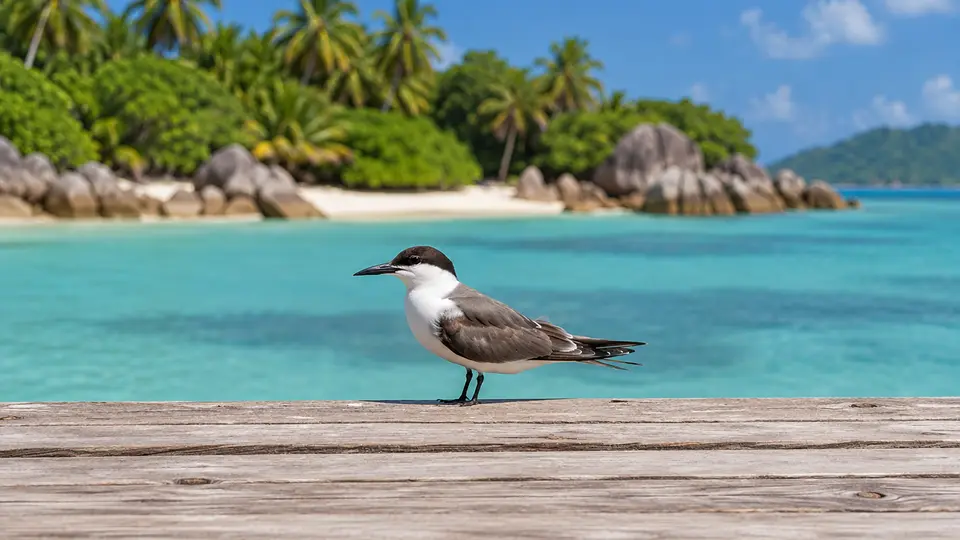
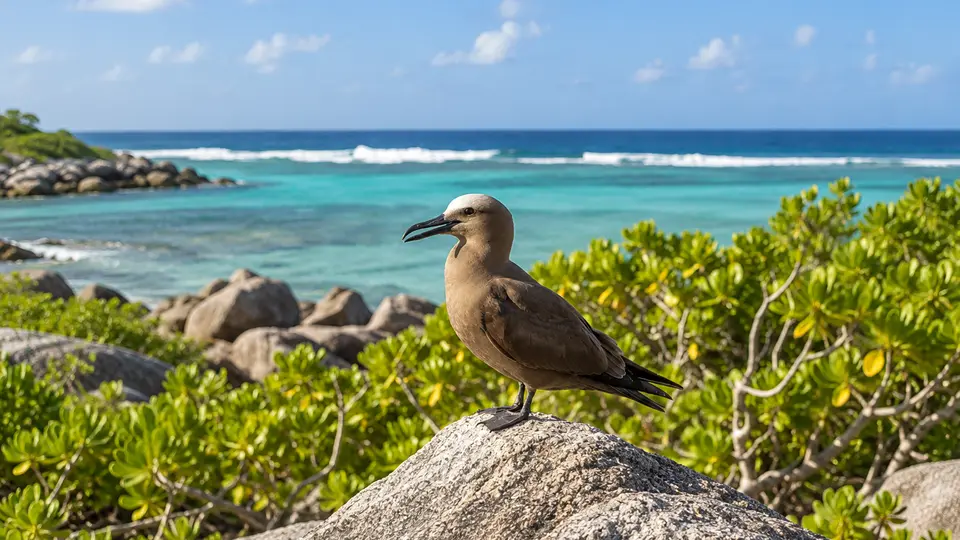
Greater FrigatebirdAI-modifiedGreater FrigatebirdBridled TernAI-modifiedBridled TernBrown NoddyAI-modifiedBrown Noddy
Animal groupBirdsAnimal groupBirdsAnimal groupBirds
DestinationsSeychellesDestinationsSeychellesDestinationsSeychelles, Maldives, Fiji
Scientific nameFregata minorScientific nameScientific name
All wildlife destinations
AI-modified
Plan your trip

Find your next wildlife adventure

Compare destinations, shore programs and dates with the animals and habitats you would love to see.

  • Naturalist-led shore excursions
  • Responsible wildlife watching
  • Small expedition ships