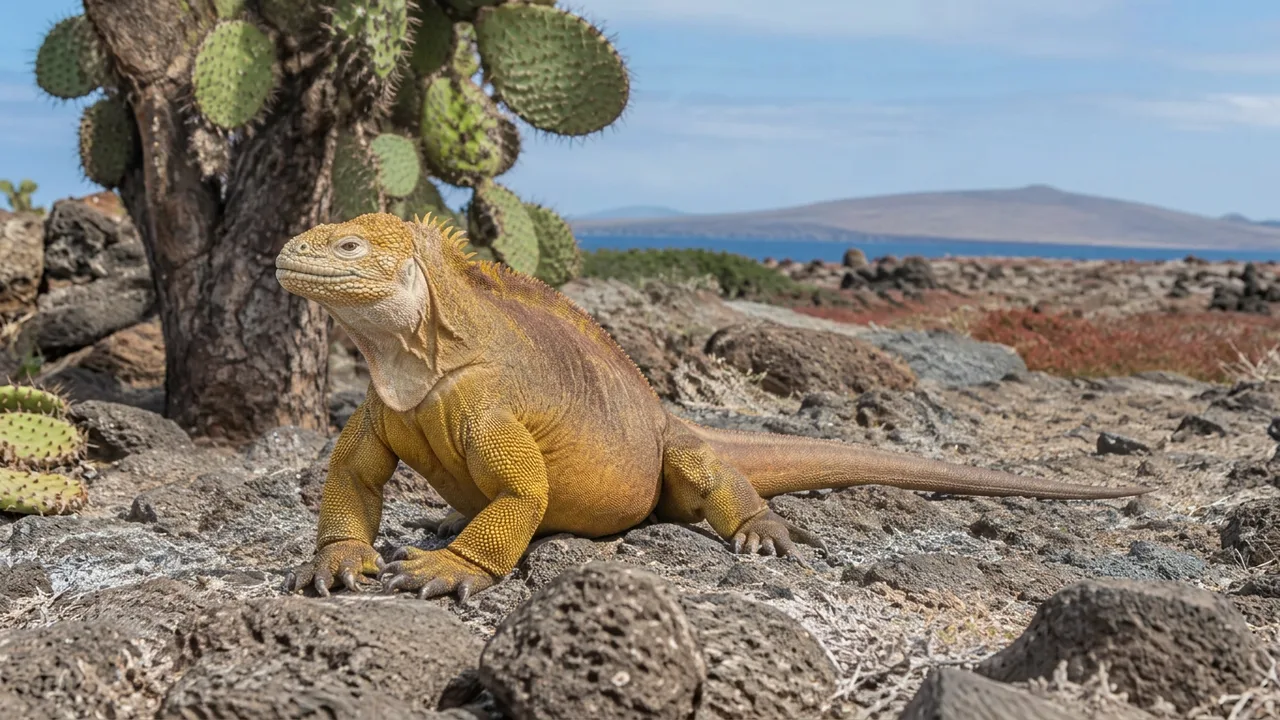
Galápagos Land Iguana in its natural habitatAI-modified

Galápagos Land IguanaConolophus subcristatusWhere and when to see them

Galápagos Land Iguana at a glance

The Galápagos land iguana is a large, mostly herbivorous lizard native to several islands in the archipelago. Yellowish adults move through dry scrub and cactus country, where they act as consumers and dispersers of plant material. Introduced predators and habitat changes have caused severe losses in parts of its range, prompting breeding and restoration programs. This species is distinct from both the Santa Fe land iguana and the exceptionally restricted pink land iguana.

Behaviour & reproduction

Size
0.9–1.2 m (3.0–3.9 ft) total length
Weight
5–13 kg (11–29 lb)
Lifespan
Not reliably established
Status
Vulnerable

Land iguanas warm themselves in the sun before feeding and retreat into shade or burrows when conditions become too hot. Males defend territories using head movements, posturing and occasional fights. Females excavate nesting burrows in suitable soil, sometimes traveling away from regular feeding areas to find them. Much of the day may involve quiet resting, so a motionless animal beside a path is not necessarily sick or inactive. They are largely diurnal, with peak activity during the morning and late afternoon when temperatures are most favorable. Juveniles often exhibit arboreal tendencies, climbing into cacti to feed on pads and fruits out of reach of larger adults.

Top wildlife locations

Galapagos wildlife habitatAI-modified

Galapagos

Authorized lowland trails through cactus and dry scrub on occupied islands offer plausible viewing. Some populations are remote or inaccessible; this profile does not refer to pink iguanas on restricted Wolf Volcano.
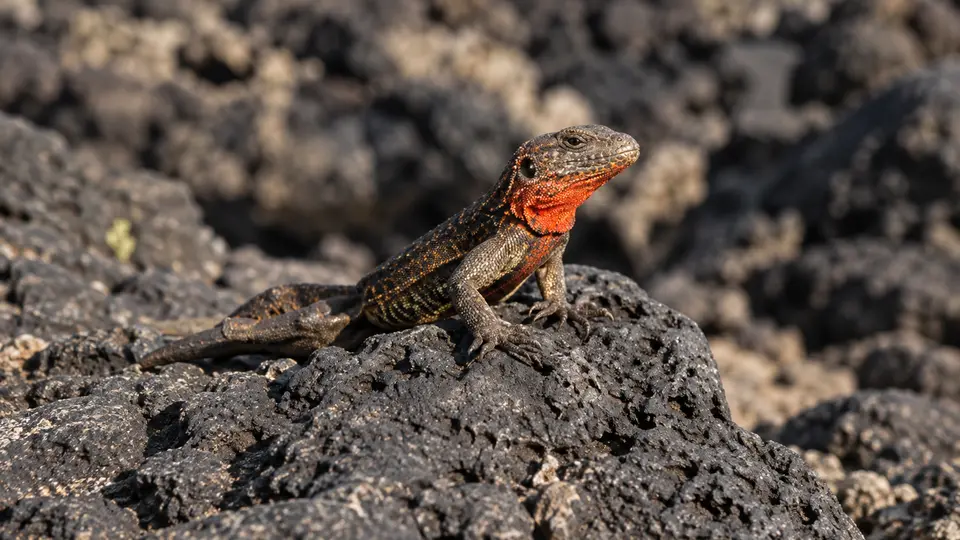
Destinations describe the species' habitat, not guaranteed cruise stops. Some animals require an optional inland excursion or are found in restricted reserves.

Fun facts about the Galápagos Land Iguana

  • Prickly pear cactus provides an important source of moisture.
  • Females bury their eggs in excavated soil nests.
  • Small birds sometimes remove ticks from resting iguanas.
  • The pink land iguana is a separate species confined to a restricted area, not standard visitor landings.

Best time to see the Galápagos Land Iguana

Resident animals may be seen throughout the year along permitted routes through occupied habitat. Daily temperature often matters more than month: warming periods encourage basking, while midday heat can drive retreat. Courtship and nesting schedules differ between island populations and local conditions. While resident year-round, the breeding season, typically from May to November depending on the island, can offer opportunities to observe territorial displays and nesting activities. During drier periods, they may concentrate around succulent vegetation or specific water sources if available.

Galápagos Land Iguana: season matrix by destination

Travel and observation windows vary by region. Highlighted months are an orientation for planning, not confirmed sightings or a guarantee of access.

Galapagos

Year-round travel and observation window where access is permitted; daily heat and island-specific population distribution affect visibility.

JanFebMarAprMayJunJulAugSepOctNovDec
Cruise ships in Galapagos

Where the Galápagos Land Iguana lives

Arid lowlands with scrub, scattered trees, cactus and open volcanic ground form the core habitat. Animals need sunny basking places, shade and workable soil for burrows or nests. Populations occur on particular islands and restored sites, not on every Galápagos visitor route. Historical records indicate a much wider past distribution, but introduced predators and habitat alteration significantly reduced their range. Successful reintroduction programs have established new populations on islands where they were previously extirpated, such as Baltra.

What the Galápagos Land Iguana eats

Leaves, flowers, fruits and cactus pads make up most of the diet. Prickly pear cactus supplies both food and moisture in dry conditions. Individuals also take occasional animal material, but describing them primarily as herbivores best reflects their normal feeding ecology. These iguanas play a vital role as keystone herbivores, consuming plant material that helps shape the island ecosystems. They have a particular tolerance for the spines and oxalic acid in prickly pear cacti, which few other animals can digest.

Species at a glance

Common name
Galápagos Land Iguana
Scientific name
Conolophus subcristatus
Animal group
Reptiles
Size
0.9–1.2 m (3.0–3.9 ft) total length
Weight
5–13 kg (11–29 lb)
Lifespan
Not reliably established
Status
Vulnerable
Identification
Its yellowish coloration, robust head and rounded tail distinguish it from the darker marine iguana with its flattened swimming tail. Their prominent dorsal crest of spiny scales is another key feature differentiating them from marine iguanas, which have a less pronounced crest. Unlike marine iguanas, land iguanas possess robust, conical teeth adapted for grinding fibrous plant matter.

Galápagos Land Iguana: frequently asked questions

Where can I see the Galápagos Land Iguana?
Galapagos. Give basking iguanas and burrow entrances a wide berth, following park distance rules. Never offer cactus or fruit, and avoid surrounding an animal or stepping across its route to shade. Always allow them to continue their natural behaviors undisturbed, especially when they are basking or digging. Remember that park regulations require maintaining a minimum distance, typically two meters, from all wildlife for both your safety and theirs.
When is the best time to see the Galápagos Land Iguana?
Resident animals may be seen throughout the year along permitted routes through occupied habitat. Daily temperature often matters more than month: warming periods encourage basking, while midday heat can drive retreat. Courtship and nesting schedules differ between island populations and local conditions. While resident year-round, the breeding season, typically from May to November depending on the island, can offer opportunities to observe territorial displays and nesting activities. During drier periods, they may concentrate around succulent vegetation or specific water sources if available.
How big does the Galápagos Land Iguana get?
0.9–1.2 m (3.0–3.9 ft) total length. Adult weight: 5–13 kg (11–29 lb). Size varies with age, sex and population.
How should I behave around the Galápagos Land Iguana?
Give basking iguanas and burrow entrances a wide berth, following park distance rules. Never offer cactus or fruit, and avoid surrounding an animal or stepping across its route to shade. Always allow them to continue their natural behaviors undisturbed, especially when they are basking or digging. Remember that park regulations require maintaining a minimum distance, typically two meters, from all wildlife for both your safety and theirs.
What does the Galápagos Land Iguana eat?
Leaves, flowers, fruits and cactus pads make up most of the diet. Prickly pear cactus supplies both food and moisture in dry conditions. Individuals also take occasional animal material, but describing them primarily as herbivores best reflects their normal feeding ecology. These iguanas play a vital role as keystone herbivores, consuming plant material that helps shape the island ecosystems. They have a particular tolerance for the spines and oxalic acid in prickly pear cacti, which few other animals can digest.
Are wildlife sightings guaranteed on an adventure cruise?
No. Animals move freely and routes, weather, access restrictions and local conditions influence every outing. Confirm the actual itinerary and shore program before booking.

Compare wildlife in the same destinations

Explore other reptiles recorded in these destinations. Similar surroundings do not mean the animals share the same habits or viewing season.

Species comparison by animal group and destination
Galápagos Land IguanaAI-modifiedGalápagos Land IguanaGalápagos Lava LizardAI-modifiedGalápagos Lava LizardGalápagos Pink Land IguanaAI-modifiedGalápagos Pink Land Iguana
Animal groupReptilesAnimal groupReptilesAnimal groupReptiles
DestinationsGalapagosDestinationsGalapagosDestinationsGalapagos
Scientific nameConolophus subcristatusScientific nameScientific name
All wildlife destinations
AI-modified
Plan your trip

Find your next wildlife adventure

Compare destinations, shore programs and dates with the animals and habitats you would love to see.

  • Naturalist-led shore excursions
  • Responsible wildlife watching
  • Small expedition ships