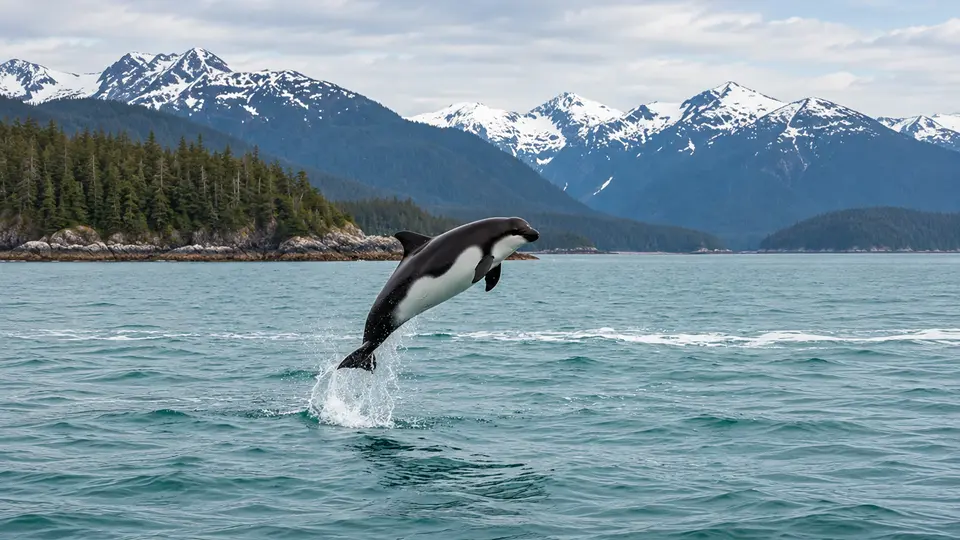
Dall's Porpoise in its natural habitatAI-modified

Dall's PorpoisePhocoenoides dalliWhere and when to see them

Dall's Porpoise at a glance

Dall's porpoise is a compact, powerful marine mammal of the North Pacific, including Alaska's cold coastal and offshore waters. Its sharply contrasting black-and-white pattern can suggest a miniature killer whale, but its build and surface movements are very different. This is a true porpoise rather than a dolphin. Fast-moving animals may be conspicuous, while slower individuals can appear only briefly as small dark backs among the waves.

Behaviour & reproduction

Size
1.7–2.3 m (5.6–7.5 ft) long
Weight
130–220 kg (287–485 lb)
Lifespan
16–17 years (average), up to 22 years in the wild
Status
Least Concern

Small groups are typical, although larger aggregations can develop where food is concentrated. Rapid travel produces a distinctive fan of spray around the head, often called a rooster tail. Some individuals approach moving vessels, but this behaviour is voluntary and unpredictable. They also travel quietly and can disappear between surface appearances. Social arrangements are flexible, and mothers with calves may behave differently from active groups encountered in open channels. A rapid swimming style often results in a V-shaped wake appearing behind them on the water's surface. They are among the fastest small cetaceans, capable of reaching speeds over 30 miles per hour.

Top wildlife locations

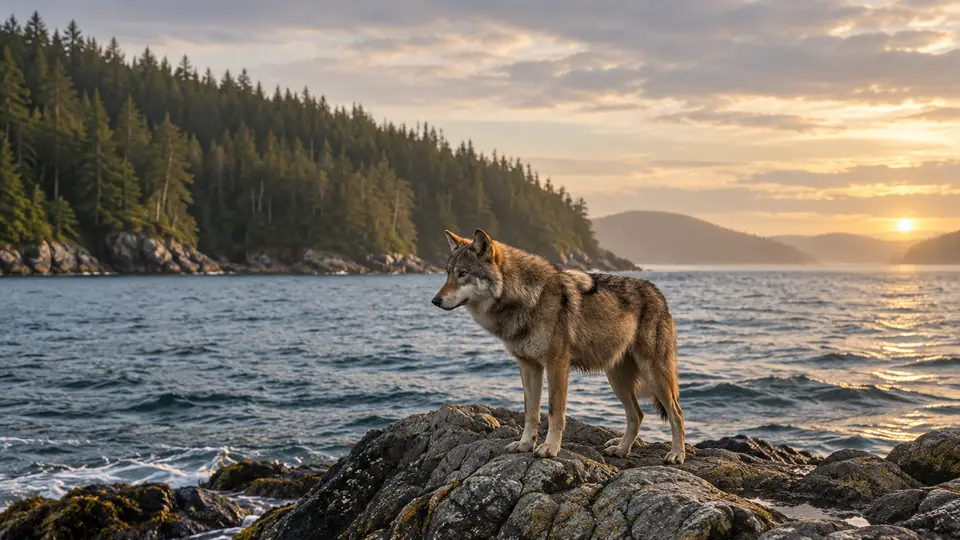
Alaska wildlife habitatAI-modified

Alaska

Deep coastal channels and exposed passages provide plausible viewing from shore overlooks or vessel decks. Encounters are unpredictable, and animals may be too distant or fast-moving for confident identification from land.

Destinations describe the species' habitat, not guaranteed cruise stops. Some animals require an optional inland excursion or are found in restricted reserves.

Fun facts about the Dall's Porpoise

  • Dall's porpoise is the only living species in its genus.
  • Its teeth are small and spade-shaped, characteristic of porpoises rather than typical dolphins.
  • The white flank pattern varies geographically across its North Pacific range.
  • A fast-moving animal can create a visible spray fan without making a high leap.

Best time to see the Dall's Porpoise

Late spring through early autumn offers longer daylight and more practical coastal travel in Alaska. Porpoises occur beyond this period, but rough weather and darkness reduce detection. Calm water greatly improves the chance of recognizing their brief surface movements. Prime viewing often coincides with abundant salmon runs or herring spawns which attract many marine predators. The lack of boat traffic in some areas during winter can also result in less disturbance for porpoises.

Dall's Porpoise: season matrix by destination

Travel and observation windows vary by region. Highlighted months are an orientation for planning, not confirmed sightings or a guarantee of access.

Alaska

These months offer useful daylight and coastal access, not a defined breeding or presence season; conditions and local prey strongly influence observations.

JanFebMarAprMayJunJulAugSepOctNovDec
Cruise ships in Alaska

Where the Dall's Porpoise lives

Cold, productive North Pacific waters support this species across continental shelves, steep coastal channels and offshore slopes. In Alaska it can occur in deep passages close to land, although shallow enclosed bays are less characteristic than open, well-flushed marine channels. While predominantly marine, they are occasionally documented entering larger estuaries or fjords for short periods. Their preferred range extends from California north to Alaska and across to Japan.

What the Dall's Porpoise eats

The diet includes schooling fish and squid, with prey varying by region and season. Herring, capelin and lanternfish are among recorded foods. Feeding can involve prey from considerable depths, so visible surface activity does not necessarily indicate the feeding location. Prey consumed are typically small, schooling species that can be swallowed whole. Studies indicate a high metabolic rate, suggesting they require frequent feeding throughout the day.

Species at a glance

Common name
Dall's Porpoise
Scientific name
Phocoenoides dalli
Animal group
Mammals
Size
1.7–2.3 m (5.6–7.5 ft) long
Weight
130–220 kg (287–485 lb)
Lifespan
16–17 years (average), up to 22 years in the wild
Status
Least Concern
Identification
Its stocky black body, large white flank patches and spray-producing sprint distinguish it from the smaller, uniformly muted harbour porpoise. The dorsal fin is small, triangular, and centrally placed on the back, often appearing like a shark fin from a distance. Their overall torpedo shaped body helps them slice through the water at high speeds.

Dall's Porpoise: frequently asked questions

Where can I see the Dall's Porpoise?
Alaska. Watch from an elevated shore viewpoint or remain securely behind deck rails. Do not encourage a vessel to chase porpoises or change course to attract them. Rapid approaches do not justify feeding or touching. Maintain a respectful distance of at least 100 yards (91 meters) from these marine mammals. Binoculars are essential for observing details of their distinctive markings and swimming patterns from a safe distance.
When is the best time to see the Dall's Porpoise?
Late spring through early autumn offers longer daylight and more practical coastal travel in Alaska. Porpoises occur beyond this period, but rough weather and darkness reduce detection. Calm water greatly improves the chance of recognizing their brief surface movements. Prime viewing often coincides with abundant salmon runs or herring spawns which attract many marine predators. The lack of boat traffic in some areas during winter can also result in less disturbance for porpoises.
How big does the Dall's Porpoise get?
1.7–2.3 m (5.6–7.5 ft) long. Adult weight: 130–220 kg (287–485 lb). Size varies with age, sex and population.
How should I behave around the Dall's Porpoise?
Watch from an elevated shore viewpoint or remain securely behind deck rails. Do not encourage a vessel to chase porpoises or change course to attract them. Rapid approaches do not justify feeding or touching. Maintain a respectful distance of at least 100 yards (91 meters) from these marine mammals. Binoculars are essential for observing details of their distinctive markings and swimming patterns from a safe distance.
What does the Dall's Porpoise eat?
The diet includes schooling fish and squid, with prey varying by region and season. Herring, capelin and lanternfish are among recorded foods. Feeding can involve prey from considerable depths, so visible surface activity does not necessarily indicate the feeding location. Prey consumed are typically small, schooling species that can be swallowed whole. Studies indicate a high metabolic rate, suggesting they require frequent feeding throughout the day.
Are wildlife sightings guaranteed on an adventure cruise?
No. Animals move freely and routes, weather, access restrictions and local conditions influence every outing. Confirm the actual itinerary and shore program before booking.

Compare wildlife in the same destinations

Explore other mammals recorded in these destinations. Similar surroundings do not mean the animals share the same habits or viewing season.

Species comparison by animal group and destination
Dall's PorpoiseAI-modifiedDall's PorpoiseAlexander Archipelago WolfAI-modifiedAlexander Archipelago WolfAmerican Black BearAI-modifiedAmerican Black Bear
Animal groupMammalsAnimal groupMammalsAnimal groupMammals
DestinationsAlaskaDestinationsAlaskaDestinationsAlaska, New England
Scientific namePhocoenoides dalliScientific nameScientific name
All wildlife destinations
AI-modified
Plan your trip

Find your next wildlife adventure

Compare destinations, shore programs and dates with the animals and habitats you would love to see.

  • Naturalist-led shore excursions
  • Responsible wildlife watching
  • Small expedition ships