Bluerides – Blue Rides - Book dykkecruise over hele verdenOCEAN ADVENTURES
ElvecruiseElverNatur & dyrelivVårt løfte
ElvecruiseElverNatur & dyrelivVårt løfteLogg inn

Elvedestinasjoner

  • Elvedestinasjoner
  • Amazonas
  • Donau
  • Rhinen
  • Mekong
  • Nilen

Skip og avganger

  • Søk etter elvecruise
  • Tilbud

Natur & dyreliv

  • Natur & dyreliv

Reisestøtte

  • Vårt løfte
  • Kontakt

Kontakt

Ta kontakt

Ta gjerne kontakt, vi hjelper deg med å finne riktig tur eller svare på spørsmål.

E-postSkriv til oss, vi svarer som regel i løpet av få timer.
contact@bluerides.com
WhatsAppSend oss en melding på WhatsApp, man–fre 10:00–16:00 (CET).
Start WhatsApp-chat
TelefonRing oss, vi hjelper deg gjerne.
Gratis samtale, man–fre 10:00–20:00 (CET).
Europa+49 800 1144 990USA+1 888 557 7735Storbritannia+44 800 707 4152Australia+61 2 8599 6113Canada+1 888 557 7735
Which river journey is yours?Answer 8 quick questions and find the river cruise that fits you.
8 questions, 1 minute·Plus Gift
Sikre betalingsmåterDine betalinger er fullt sikret med AES-256-kryptering.
Drevet avStripeWiseAMEXPayGoogle PaySEPABank
Kolofon·Vilkår og betingelser·Personvern·Om oss·Kontakt·Ansvarsfraskrivelse·Partnerprogram·Cruise·
Besøk oss her

© 2026 Blue Rides. Alle rettigheter reservert.·

Bluerides – Blue Rides - Book dykkecruise over hele verdenOCEAN ADVENTURES
ElvecruiseElverNatur & dyrelivVårt løfte
ElvecruiseElverNatur & dyrelivVårt løfteLogg inn
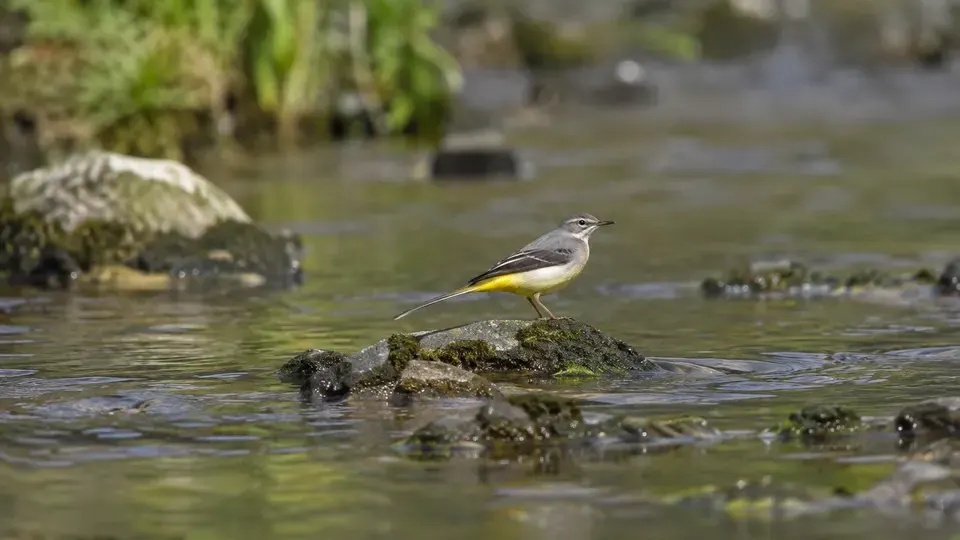
Grey wagtail i våtmark — Douro, dyreliv på elvecruise
Hjem›Elvecruise›Dyreliv langs elven›Grey Wagtail

Grey WagtailMotacilla cinereaHvor og når du kan se dem

Forrige artGrey HeronNeste artGreylag Goose

Kort om Grey Wagtail

Despite its name, the Grey Wagtail has an eye-catching yellow undertail that flashes as the bird moves along a water margin. BTO describes it as primarily associated with fast-flowing water, but also using slower rivers and urban lakes or ponds. This is particularly useful context for its registered location at the Douro estuary in Porto and Vila Nova de Gaia: a species associated with streams need not be restricted to a remote mountain reach. The relevant cruise opportunity is a shore visit around Afurada, Cabedelo and São Paio, not a claim for the inland Régua–Pinhão sector. Its small size and continuous movement make it a more demanding deck identification than a large heron. A local estuary guide also identifies it among birds attracted to low-tide margins. Species account: https://www.bto.org/learn/about-birds/birdfacts/grey-wagtail
Atferd og reproduksjon

Størrelse
not verified
Vekt
About 18.1 g; BTO species account.
Levetid
not verified
Status
Least Concern globally, as reported by BTO.

The long tail is repeatedly moved up and down, drawing attention even when the grey back merges into stone or wet mud. Watch a bird's progress along the immediate waterline rather than scanning only open water. BTO describes hunting for aquatic insects around rivers and other water bodies. Individuals may move between small feeding patches, briefly disappearing behind rocks or bank structures. Grey Wagtail is a partial migrant, which means the species' movements are not accurately described by assuming every population is either completely sedentary or entirely migratory. The BTO account concerns Britain and Ireland and cannot establish Porto's monthly pattern. For behaviour watching, a stationary position overlooking a short section of edge can reveal more than repeatedly walking after the same bird.

Beste steder for dyreliv

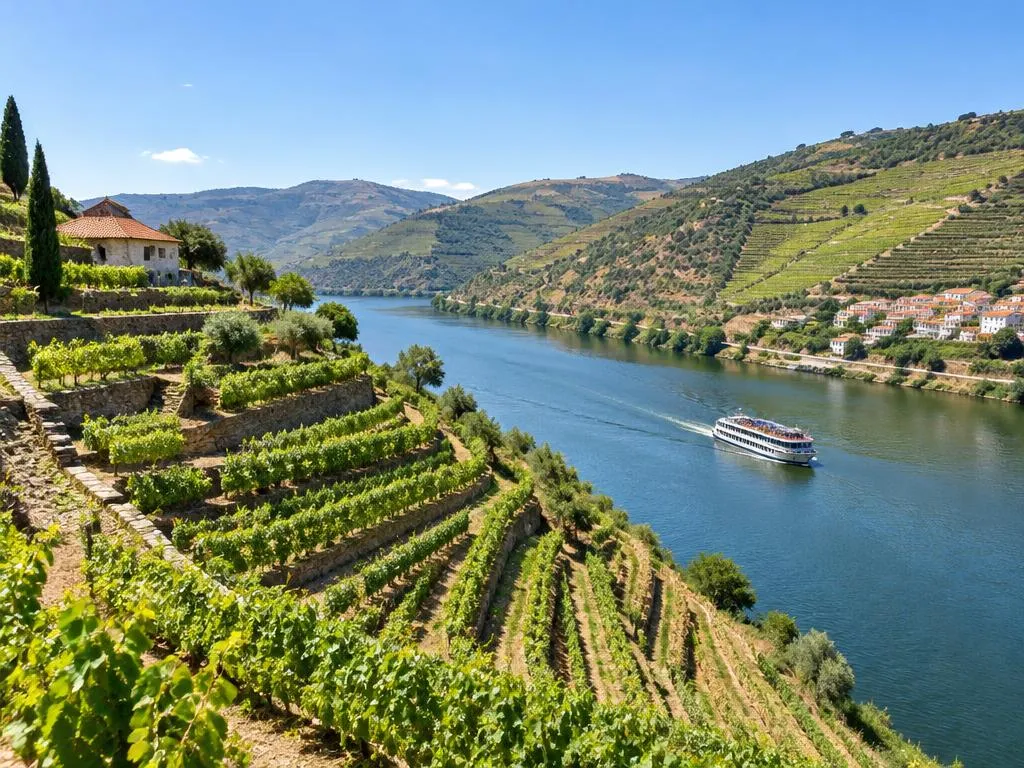
Elvelandskap Douro — leveområde på elvecruise

Douro

Porto / Vila Nova de Gaia: Douro estuary reserve, Afurada–Cabedelo–São Paio; NOT a claim for inland Régua–Pinhão Accessible Porto shore visit with paths and hides; waders/gulls concentrated at low tide and migration/winter. Osprey and Short-eared Owl irregular/seasonal; no guaranteed sightings.
Utforsk elvecruise

Destinasjonene beskriver artens leveområder, ikke garanterte stoppesteder for cruise. Enkelte dyr krever valgfrie utflukter inn i landet eller finnes kun i begrensede naturreservater.

Interessante fakta om Grey Wagtail

  • The yellow undertail contrasts with the grey back.
  • The tail is exceptionally long.
  • BTO reports a weight of about 18.1 g.
  • The species is a partial migrant.
  • Urban water margins can provide habitat.
  • Aquatic insects are important food.
  • The Douro evidence concerns the Porto estuary, not Pinhão.

Beste tid for å se Grey Wagtail

The local Douro guide highlights low tide, when exposed estuary features attract this species and other birds. This is recurring tidal guidance but does not state a numerical annual season for Grey Wagtail. BTO's description of partial migration and lower-altitude winter use in Britain cannot supply Portuguese months. The location therefore has no month values. For a Porto visit, tide timing and a clear view of the immediate bank may be more useful planning details than an unsupported claim that all winter or all summer months are best. Ask reserve staff where accessible feeding edges currently lie, and allow time for a small bird to appear. A calendar gap in this profile signals a lack of verified local seasonal evidence rather than a conclusion about year-round absence.

Grey Wagtail: sesongoversikt per destinasjon

Highlighted months reflect the stated local evidence, not guaranteed encounters. Neutral months mean no verified monthly viewing window, not absence. Observation records and recommended viewing windows are distinct.

Douro

A recurring local source with an explicit monthly observation calendar was not verified. Registry guidance: Accessible Porto shore visit with paths and hides; waders/gulls concentrated at low tide and migration/winter. Osprey and Short-eared Owl irregular/seasonal; no guaranteed sightings.

janfebmaraprmaijunjulaugsepoktnovdes
Utforsk elvecruise

Her lever Grey Wagtail

Flowing water is a prominent part of the species' habitat association, but BTO also records slower rivers, lakes and ponds in towns. At the registered Douro reach, concentrate on accessible estuary edges and nearby stream-mouth habitat rather than expecting a wagtail in the centre of a gull flock. The Ribeira da Granja observatory on the north bank is described by a local birding guide as overlooking sandbanks, mudflats and islands, with Grey Wagtail among species attracted at low tide. That provides useful viewing context within the estuary, not a quantified abundance estimate for every bank. Wet stone, small exposed margins and nearby cover should be inspected from public access points. Inland vineyard reaches are outside the verified scope of this registry association.

Dette spiser Grey Wagtail

Aquatic insects are the food category explicitly described by BTO. A wagtail works close to the water where small prey can be picked from exposed surfaces or intercepted during short movements. Its fine bill is quite unlike the heavy seed-cracking bill of a sparrow, and its association with water is linked to feeding opportunities rather than a habit of swimming for food. A Porto-specific prey inventory, seasonal food proportions and feeding rates were not verified. Do not infer that every peck captures an insect visible to the observer; small prey may be below the resolution of binoculars or a photograph. The best dietary observation is an undisturbed bird moving through its own feeding patch, not one drawn to the edge with food or followed until it abandons the site.

Arten kort fortalt

Vanlig navn
Grey Wagtail
Scientific name
Motacilla cinerea
Dyreart
Birds
Størrelse
not verified
Vekt
About 18.1 g; BTO species account.
Levetid
not verified
Status
Least Concern globally, as reported by BTO.
Identifisering
Look for slate-grey upperparts, yellow beneath the tail and an exceptionally long tail relative to the body. RSPB notes that the tail is longer than in Pied and Yellow Wagtails, a useful comparison when more than one wagtail type is present. Yellow colour alone is not diagnostic, and a bird seen from behind may hide the grey back. Obtain side and rear views if it continues feeding naturally. Plumage varies with age and season, so a neat illustration of one adult should not become a rigid checklist for every sighting. The repeated tail movement is supportive rather than exclusive to this species. At estuary distances, the combination of proportions, upperpart colour and undertail colour is much stronger than a single flash of yellow.

Grey Wagtail: ofte stilte spørsmål

Hvor kan jeg se Grey Wagtail?
Douro. Pause at a safe public viewpoint and check the narrow strip where water meets stone, mud or vegetation. The tail often catches the eye before the bird's body does. Use binoculars to confirm yellow under the tail and grey upperparts, and follow the bird only within the field of view rather than pursuing it along the bank. Low tide can improve exposure of feeding margins at the estuary, but do not descend onto mudflats or enter the reserve to shorten the distance. From a moving ship, a small grey bird can be extremely difficult to identify confidently. A Porto shore stop gives better opportunities to compare proportions with other wagtails and to listen for calls. Keep an uncertain distant bird as wagtail species if essential features were missed.
Når er den beste tiden for å se Grey Wagtail?
The local Douro guide highlights low tide, when exposed estuary features attract this species and other birds. This is recurring tidal guidance but does not state a numerical annual season for Grey Wagtail. BTO's description of partial migration and lower-altitude winter use in Britain cannot supply Portuguese months. The location therefore has no month values. For a Porto visit, tide timing and a clear view of the immediate bank may be more useful planning details than an unsupported claim that all winter or all summer months are best. Ask reserve staff where accessible feeding edges currently lie, and allow time for a small bird to appear. A calendar gap in this profile signals a lack of verified local seasonal evidence rather than a conclusion about year-round absence.
Hvor stor blir Grey Wagtail?
not verified. Vekt som voksen: About 18.1 g; BTO species account.. Størrelsen varierer med alder, kjønn og bestand.
Hvordan bør jeg oppføre meg i nærheten av Grey Wagtail?
Pause at a safe public viewpoint and check the narrow strip where water meets stone, mud or vegetation. The tail often catches the eye before the bird's body does. Use binoculars to confirm yellow under the tail and grey upperparts, and follow the bird only within the field of view rather than pursuing it along the bank. Low tide can improve exposure of feeding margins at the estuary, but do not descend onto mudflats or enter the reserve to shorten the distance. From a moving ship, a small grey bird can be extremely difficult to identify confidently. A Porto shore stop gives better opportunities to compare proportions with other wagtails and to listen for calls. Keep an uncertain distant bird as wagtail species if essential features were missed.
Hva spiser Grey Wagtail?
Aquatic insects are the food category explicitly described by BTO. A wagtail works close to the water where small prey can be picked from exposed surfaces or intercepted during short movements. Its fine bill is quite unlike the heavy seed-cracking bill of a sparrow, and its association with water is linked to feeding opportunities rather than a habit of swimming for food. A Porto-specific prey inventory, seasonal food proportions and feeding rates were not verified. Do not infer that every peck captures an insect visible to the observer; small prey may be below the resolution of binoculars or a photograph. The best dietary observation is an undisturbed bird moving through its own feeding patch, not one drawn to the edge with food or followed until it abandons the site.
Er man garantert å se dyreliv på et elvecruise?
Nei. Dyrene beveger seg fritt, og ruter, vær, adgangsbegrensninger og lokale forhold påvirker hver utflukt. Bekreft den faktiske reiseruten og programmet for landutflukter før du bestiller.

Sammenlign dyreliv på samme destinasjoner

Utforsk andre birds registrert på disse destinasjonene. Lignende omgivelser betyr ikke at dyrene har samme vaner eller observasjonssesong.

Arts-sammenligning etter dyregruppe og destinasjon
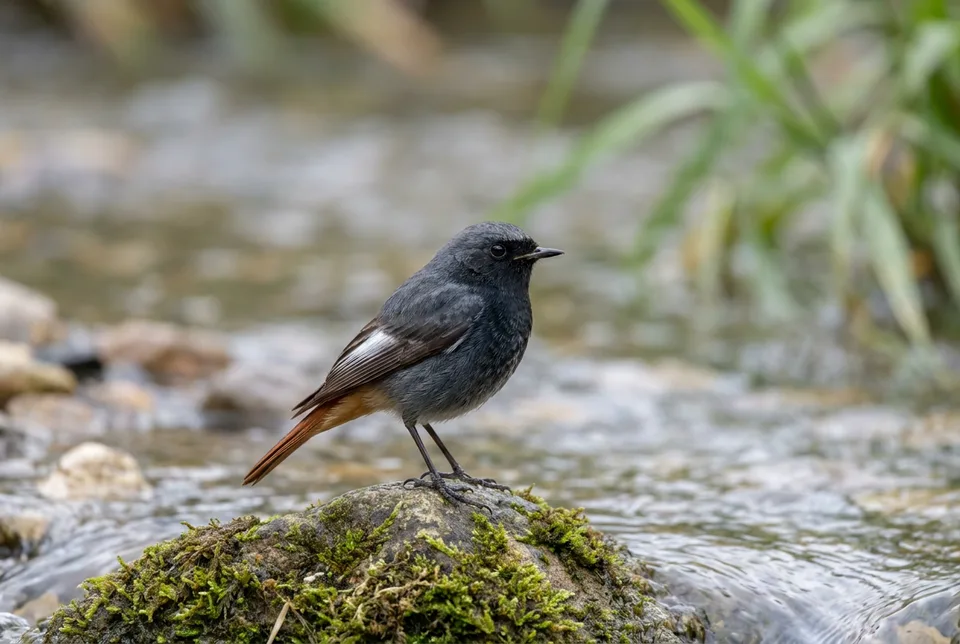
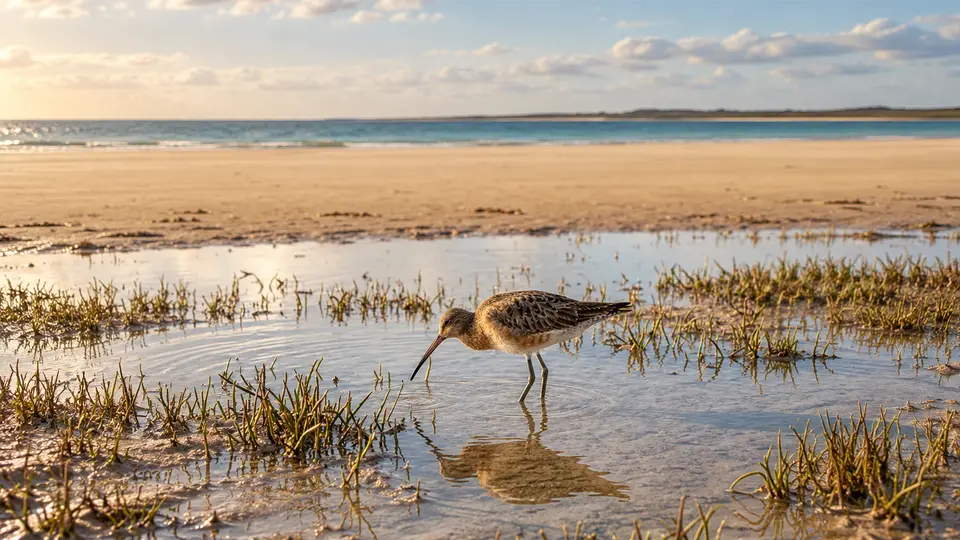
Grey wagtail i våtmark — Douro, dyreliv på elvecruiseGrey WagtailBar-tailed godwit i våtmark — Douro, dyreliv på elvecruiseBar-tailed godwitBlack Redstart i våtmark — Saone, Douro, dyreliv på elvecruiseBlack Redstart
DyreartBirdsDyreartBirdsDyreartBirds
ReisemålDouroReisemålDouroReisemålSaone, Douro
Scientific name
Motacilla cinerea

Motacilla cinerea

Scientific name
Scientific name
Størrelse
not verified
Størrelse
Størrelse
Vekt
About 18.1 g; BTO species account.
Vekt
Vekt
Levetid
not verified
Levetid
Levetid
Status
Least Concern globally, as reported by BTO.
Status
Status
Identifisering
Look for slate-grey upperparts, yellow beneath the tail and an exceptionally long tail relative to the body.

Look for slate-grey upperparts, yellow beneath the tail and an exceptionally long tail relative to the body. RSPB notes that the tail is longer than in Pied and Yellow Wagtails, a useful comparison when more than one wagtail type is present. Yellow colour alone is not diagnostic, and a bird seen from behind may hide the grey back. Obtain side and rear views if it continues feeding naturally. Plumage varies with age and season, so a neat illustration of one adult should not become a rigid checklist for every sighting. The repeated tail movement is supportive rather than exclusive to this species. At estuary distances, the combination of proportions, upperpart colour and undertail colour is much stronger than a single flash of yellow.

Identifisering
Identifisering
Leveområde
Flowing water is a prominent part of the species' habitat association, but BTO also records slower rivers, lakes and ponds in towns.

Flowing water is a prominent part of the species' habitat association, but BTO also records slower rivers, lakes and ponds in towns. At the registered Douro reach, concentrate on accessible estuary edges and nearby stream-mouth habitat rather than expecting a wagtail in the centre of a gull flock. The Ribeira da Granja observatory on the north bank is described by a local birding guide as overlooking sandbanks, mudflats and islands, with Grey Wagtail among species attracted at low tide. That provides useful viewing context within the estuary, not a quantified abundance estimate for every bank. Wet stone, small exposed margins and nearby cover should be inspected from public access points. Inland vineyard reaches are outside the verified scope of this registry association.

Leveområde
Leveområde
Kosthold
Aquatic insects are the food category explicitly described by BTO.

Aquatic insects are the food category explicitly described by BTO. A wagtail works close to the water where small prey can be picked from exposed surfaces or intercepted during short movements. Its fine bill is quite unlike the heavy seed-cracking bill of a sparrow, and its association with water is linked to feeding opportunities rather than a habit of swimming for food. A Porto-specific prey inventory, seasonal food proportions and feeding rates were not verified. Do not infer that every peck captures an insect visible to the observer; small prey may be below the resolution of binoculars or a photograph. The best dietary observation is an undisturbed bird moving through its own feeding patch, not one drawn to the edge with food or followed until it abandons the site.

Kosthold
Kosthold
Beste sesong
The local Douro guide highlights low tide, when exposed estuary features attract this species and other birds.

The local Douro guide highlights low tide, when exposed estuary features attract this species and other birds. This is recurring tidal guidance but does not state a numerical annual season for Grey Wagtail. BTO's description of partial migration and lower-altitude winter use in Britain cannot supply Portuguese months. The location therefore has no month values. For a Porto visit, tide timing and a clear view of the immediate bank may be more useful planning details than an unsupported claim that all winter or all summer months are best. Ask reserve staff where accessible feeding edges currently lie, and allow time for a small bird to appear. A calendar gap in this profile signals a lack of verified local seasonal evidence rather than a conclusion about year-round absence.

Beste sesong
Beste sesong
Sesongoversikt per destinasjon
DouroNo verified monthly viewing evidence

A recurring local source with an explicit monthly observation calendar was not verified. Registry guidance: Accessible Porto shore visit with paths and hides; waders/gulls concentrated at low tide and migration/winter. Osprey and Short-eared Owl irregular/seasonal; no guaranteed sightings.

Sesongoversikt per destinasjonSesongoversikt per destinasjon
Forrige artGrey HeronNeste artGreylag Goose
Alt dyreliv langs elven
On this page
  • 01Om
  • 02Atferd og reproduksjon
  • 03Beste steder for dyreliv
  • 04Morsomme fakta
  • 05Beste sesong
  • 06Sesongoversikt per destinasjon
  • 07Leveområde
  • 08Kosthold
  • 09Arten kort fortalt
  • 10Spørsmål og svar
  • 11Sammenlign

Find your river cruise

Planlegg reisen

Finn din neste elvereise

Sammenlign destinasjoner, utflukter og datoer med dyrene og habitatene du drømmer om å se.

  • Daglige utflukter på land
  • Ansvarlig dyrelivsobservasjon
  • Boutique-elveskip
Utforsk elvecruise