Over Camano Islet
Camano Islet biedt een toegankelijke en rustige duikervaring binnen de Galápagos-archipel en onderscheidt zich als een geschikte locatie voor minder ervaren duikers. In tegenstelling tot veel van de meer uitdagende plekken in de regio, biedt het nieuwere duikers de kans om de rijke onderwaterbiodiversiteit van de Galápagos te ontdekken in een kalme en comfortabele omgeving. De topografie wordt doorgaans gekenmerkt door milde stromingen en ondiepere dieptes, wat een ontspannen setting creëert voor degenen met minder gelogde duiken. Deze opzet stelt duikers in staat om comfortabel het onderwaterlandschap te verkennen zonder de veeleisende omstandigheden die je elders op de eilanden vindt. Hoewel specifieke structurele details niet in de bronnen worden vermeld, suggereert de algehele beschrijving een rifachtige omgeving die zich leent voor eenvoudige verkenning. Hoewel gedetailleerde waarnemingen van zeeleven niet expliciet worden vermeld voor Camano Islet, bieden duikplekken voor beginners in de Galápagos over het algemeen een verscheidenheid aan kleurrijke rifvissen en zeeschildpadden. Het is ook aannemelijk dat je er lokale haaiensoorten tegenkomt, waardoor duikers de iconische fauna van de Galápagos in een rustige omgeving kunnen bewonderen. In de praktijk wordt de duikplek gekenmerkt door doorgaans milde stromingen, wat het een ontspannen duik maakt die geschikt is voor de meeste gebrevetteerde duikers. Deze rustige omgeving zorgt voor een comfortabele te water lating en een plezierige duik, in tegenstelling tot de vaak sterke stromingen die je op andere locaties in de Galápagos tegenkomt. Het is een uitstekende plek voor duikers die een mildere kennismaking met de beroemde onderwaterwereld van de regio zoeken.
Hoogtepunten
Duikbestemming het hele jaar doorSamenvloeiing van belangrijke oceaanstromingenWalvishaaien (seizoensgebonden)Scholen hamerhaaienGalapagos zeeleeuwenZeeleguanen (seizoensgebonden)Sterke stromingen en thermoclinesUitzonderlijke mariene biodiversiteit
Seizoenskalender
Beste maanden om te duiken
Jan
Feb
Mrt
Apr
Mei
Jun
Jul
Aug
Sep
Okt
Nov
Dec
Uitstekend
Goed
Duikstek-feiten: Camano Islet
- Diepte
- 70–114 ft
- Stroming
- Matig tot Zeer sterk
- Zicht
- 15–30 m
- Watertemperatuur
- 19–26°C
- Instap
- Liveaboard / Bijboot
- Niveau
- Ervaren, stromingservaring vereist
- Type duik
- Big animals, Driftduik, Pelagisch
- Regio / haven
- Galápagos Islands
- Coördinaten
- -0.28386, -91.070359
Omstandigheden & stromingen
Bij Camano Islet zijn de stromingen doorgaans mild, wat bijdraagt aan een ontspannen duikomgeving die geschikt is voor de meeste gebrevetteerde duikers. Dit staat in schril contrast met veel andere duikplekken in de Galápagos, waar vaak sterke stromingen staan, vooral tijdens het koele seizoen van juni tot november. De rustigere omstandigheden betekenen dat minder ervaren duikers hun drijfvermogen en navigatie comfortabel kunnen beheersen zonder de noodzaak van geavanceerde stromingsduiktechnieken zoals negatieve entrees of rifhaken. Het zicht kan in de Galápagos variëren, maar de milde omstandigheden bij Camano Islet zorgen over het algemeen voor een aangename ervaring. Dit maakt het een ideale locatie voor duikers die een rustigere verkenning verkiezen zonder significante deining of de uitdagingen van sterke pelagische 'snelwegen', wat een plezierige duikervaring garandeert.
Onderwaterleven & kans op waarneming

Hammerhead sharks
Year-round, larger schools Dec-May · vaak
Whale sharks
June-November · soms
Manta rays
March-May · soms
Galapagos sharks
Year-round · vaak
Silky sharks
Year-round · soms
Sea lions
Year-round · vaak
Green sea turtles
Year-round · vaak
Moray eels
Year-round · vaak
White-tip reef sharks
Year-round · vaak
Galapagos grunts
Year-round · vaak
Bluestripe snappers
Year-round · vaakDuikprofiel & verloop
Galápagos diving often involves negative entries into strong currents, with dive leaders typically assessing the prevailing conditions to determine the best approach. Divers should expect to drift with the current for much of the dive, using reef hooks when observing marine life in stationary positions. The dive profile is often multi-level, starting deeper to seek out pelagics and then gradually ascending along reefs or walls. Given the strong surge and potential for downcurrents, maintaining neutral buoyancy and being prepared for rapid depth changes is crucial. Safety stops are typically performed in the blue, potentially deploying a surface marker buoy (SMB) upon ascent, as currents can carry divers a considerable distance from the initial entry point. Dive times are often limited by air consumption in strenuous conditions and cold water.
Onderwaterfotografie
Galápagos diving, with its strong currents and large pelagic subjects, demands careful planning for photography. Wide-angle lenses are essential for capturing schooling hammerheads, manta rays, and whale sharks. Due to often-turbid waters from nutrient-rich currents, close focus wide-angle techniques are beneficial. Strobes are crucial to add color and contrast, especially for deeper subjects or when visibility is reduced. Buoyancy control and efficient movement are paramount; flailing or uncontrolled movements will disturb marine life and compromise shot stability. Keeping a low profile close to rocks can help wildlife approach, but always be aware of potential hazards like scorpionfish. Photographing in strong surge requires anticipation and timing, often using the natural sway to position for shots.
Combineer met deze stekken
- North Seymour
Often a checkout dive site with diverse marine life and land tours.
- Gordon Rocks
Known for strong currents and hammerhead sharks.
- Cousin's Rock
Pinnacle dive with abundant reef fish and pelagic encounters.
- Kicker Rock (León Dormido)
Famous for shark encounters, including hammerheads and Galápagos sharks.
- Isla Tortuga - South Wall
Wall diving with potential for pelagic sightings.
Reizen & logistiek
Access to the Galápagos Islands typically begins with international flights into mainland Ecuador, either Guayaquil (GSP) or Quito (UIO), followed by a domestic flight to Baltra Island (GPS) or San Cristóbal Island (SCY). Most diving at premier sites, including Camano Islet, is conducted via liveaboard vessels, offering trips typically ranging from 7 to 10 nights. Liveaboards depart from and return to Baltra Island, near Santa Cruz, or San Cristóbal. Upon arrival at Baltra, divers transfer directly to their liveaboard. Park entry fees are required for all visitors to the Galápagos National Park, and a transit control card must also be purchased. Itineraries often combine dives at central islands with longer transits to more remote northern sites like Wolf and Darwin.
Veiligheid & milieu
Diving in the Galápagos demands a high level of diver preparedness due to strong currents, significant surge, and cold water thermoclines. Divers should hold advanced certifications and possess extensive experience in current diving. It is highly recommended to carry a surface marker buoy (SMB), an Emergency Position Indicating Radio Beacon (EPIRB), or a personal locator device for safety in case of separation from the group or boat. Decompression sickness is a risk, so strict adherence to dive plans and slow ascents are critical. The nearest recompression chamber is located in Puerto Ayora on Santa Cruz Island. Medical evacuation from remote dive sites can be challenging and time-consuming. Comprehensive dive accident insurance and travel insurance with emergency evacuation coverage are essential for all divers visiting the Galápagos.
Voor wie wel — en voor wie niet
Geschikt voor
- Experienced divers comfortable with strong currents
- Advanced Open Water Divers
- Divers seeking large pelagic encounters
- Underwater photographers with wide-angle setups
- Those equipped for cold water and thermoclines
Minder geschikt voor
- Beginner divers or those with limited experience
- Divers uncomfortable with negative entries
- Individuals prone to seasickness in choppy conditions
- Divers without excellent buoyancy control skills
- Those without proper thermal protection for cold water
Veelgestelde vragen
Camano Islet FAQ
What is the best time of year to dive in the Galápagos for whale sharks?
The peak season for whale shark encounters in the Galápagos is generally from June to November. During these cooler months, the nutrient-rich upwellings attract these majestic creatures to the islands. While sightings are never guaranteed, this period offers the highest probability for divers hoping to swim with whale sharks.
How strong are the currents in the Galápagos?
The currents in the Galápagos can be very strong, often exceeding 5 knots at popular dive sites. These powerful currents are a result of major oceanic flows converging around the islands. Divers must be proficient in drift diving techniques and prepared for vigorous conditions, sometimes requiring the use of reef hooks to stay in place.
Is the water cold in the Galápagos, and what wetsuit should I bring?
Water temperatures in the Galápagos can vary significantly, ranging from 19-23°C (66-73°F) during the cooler season (June-November) and 22-26°C (72-79°F) in the warmer months (December-May). Additionally, thermoclines can cause sudden drops to 12-15°C. A 7mm wetsuit, possibly with a hood and gloves, is highly recommended for thermal comfort, especially during the colder months or longer dives.
Do I need special certifications to dive in the Galápagos?
While PADI or SSI certification is mandatory, the Galápagos generally requires divers to be Advanced Open Water certified or equivalent, with significant experience in strong currents. Some sites may have minimum logged dive requirements of 10, 15, or even 30 dives. Beginner divers may find easier sites during the warmer months, but the destination is primarily suited for experienced divers.
What kind of marine life can I expect to see while diving in the Galápagos?
The Galápagos Islands are a hotspot for diverse marine life. Divers frequently encounter schooling hammerhead sharks, Galápagos sharks, and white-tip reef sharks. Depending on the season, you might also see whale sharks, giant manta rays, marine iguanas, playful sea lions, green sea turtles, and various schooling fish like bluestripe snappers and Galápagos grunts.
Waarom Camano Islet per liveaboard duiken?
Camano Islet is een van de iconische duikplekken van Galápagos. Een liveaboard laat je op het water slapen en biedt drie tot vier begeleide duiken per dag, inclusief dageraad- en nachtduiken die dagboten zelden aanbieden. Je slaat de dagelijkse terugreis naar de haven over en bereikt rustiger, minder drukke plekken in dezelfde regio in één reis.
Hieronder de liveaboards die Camano Islet opnemen in hun Galápagos-routes.
Liveaboards naar Camano Islet
Deze duiksafari's bezoeken Camano Islet mogelijk op geselecteerde routes — de exacte duikplekken hangen af van vertrek, weer en omstandigheden.
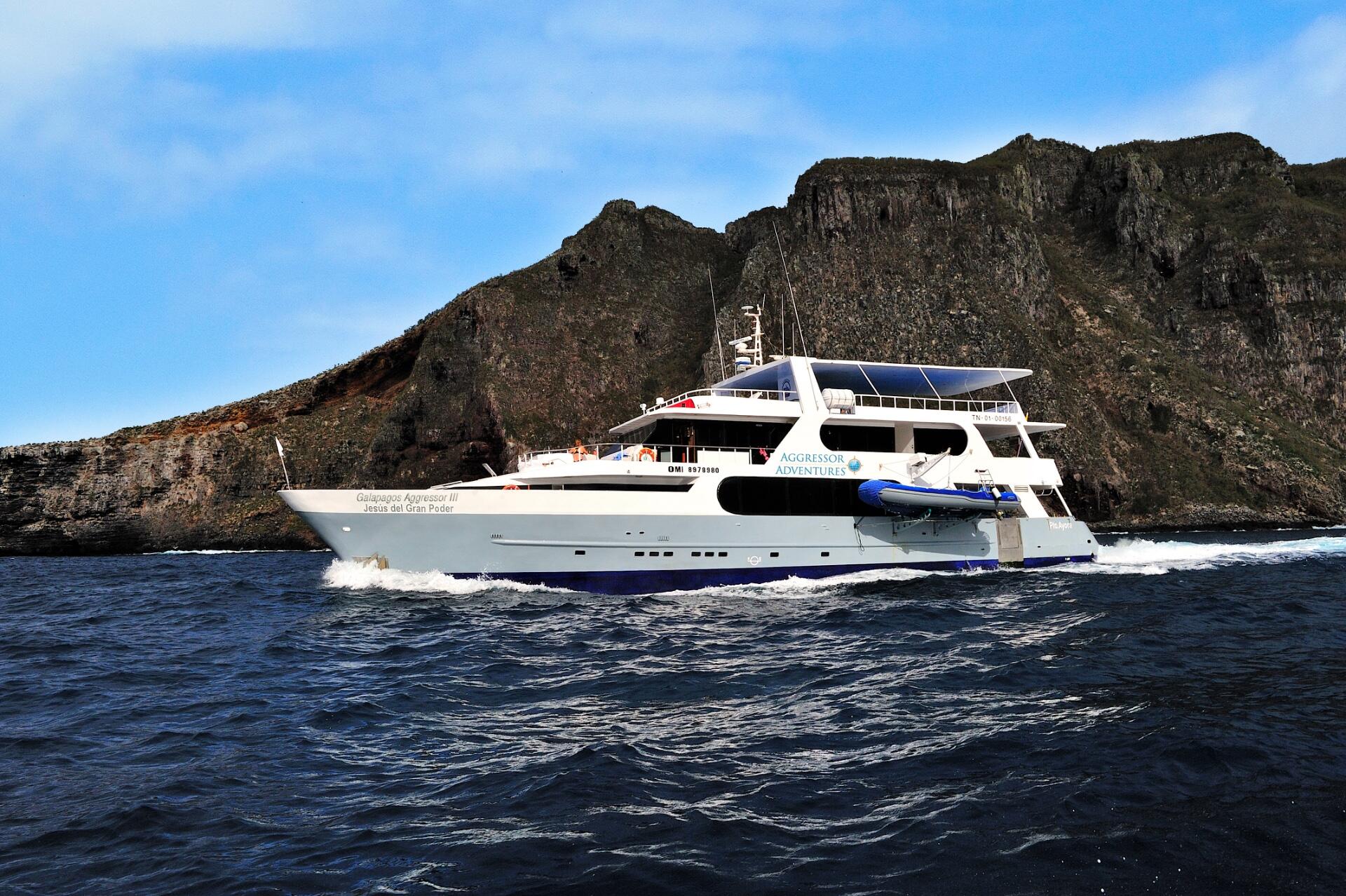
Galapagos Aggressor III
Galápagos
16 gasten30.5 m
€803/dag
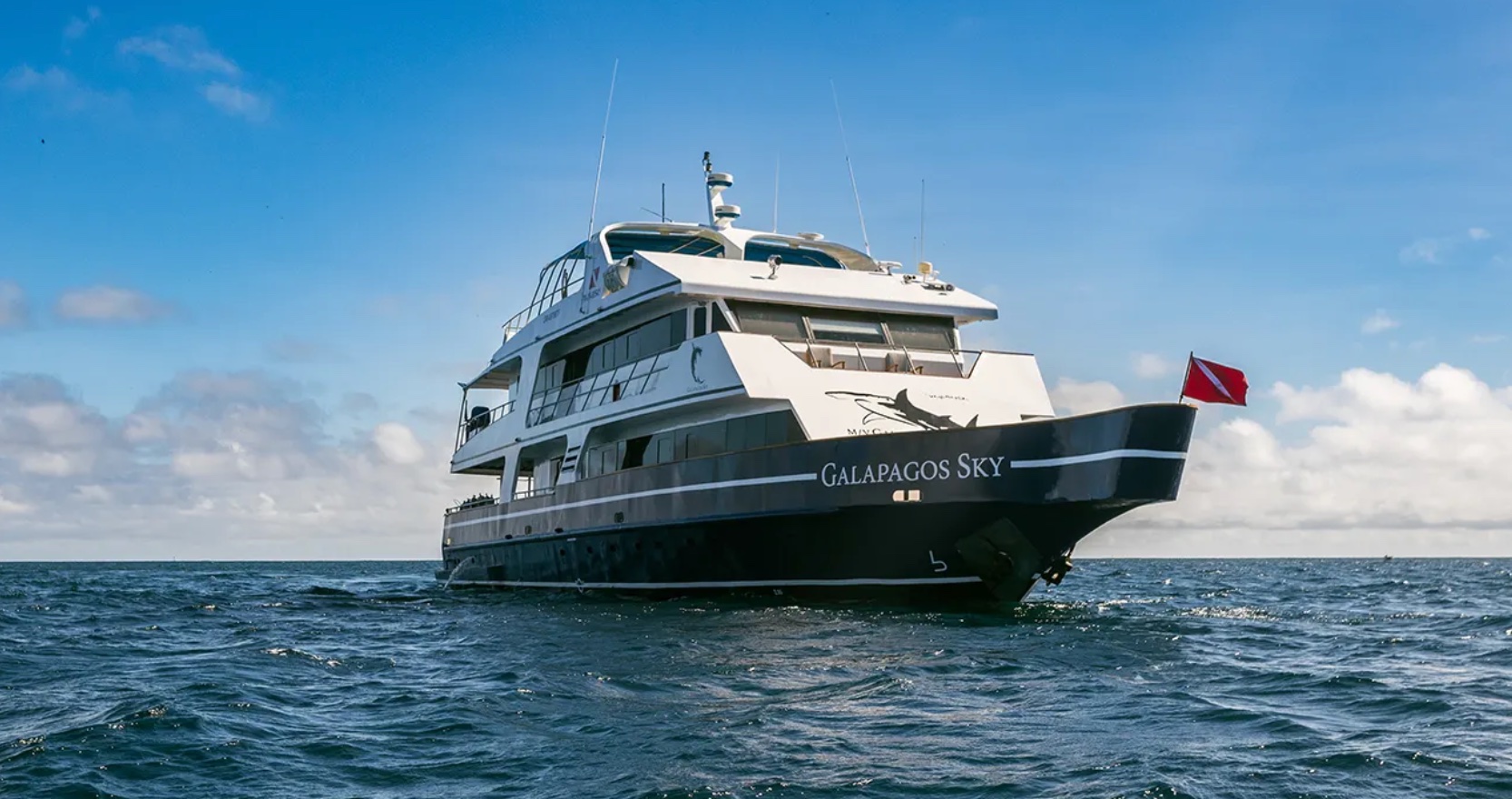
Galapagos Sky
Galápagos
16 gasten
€824/dag
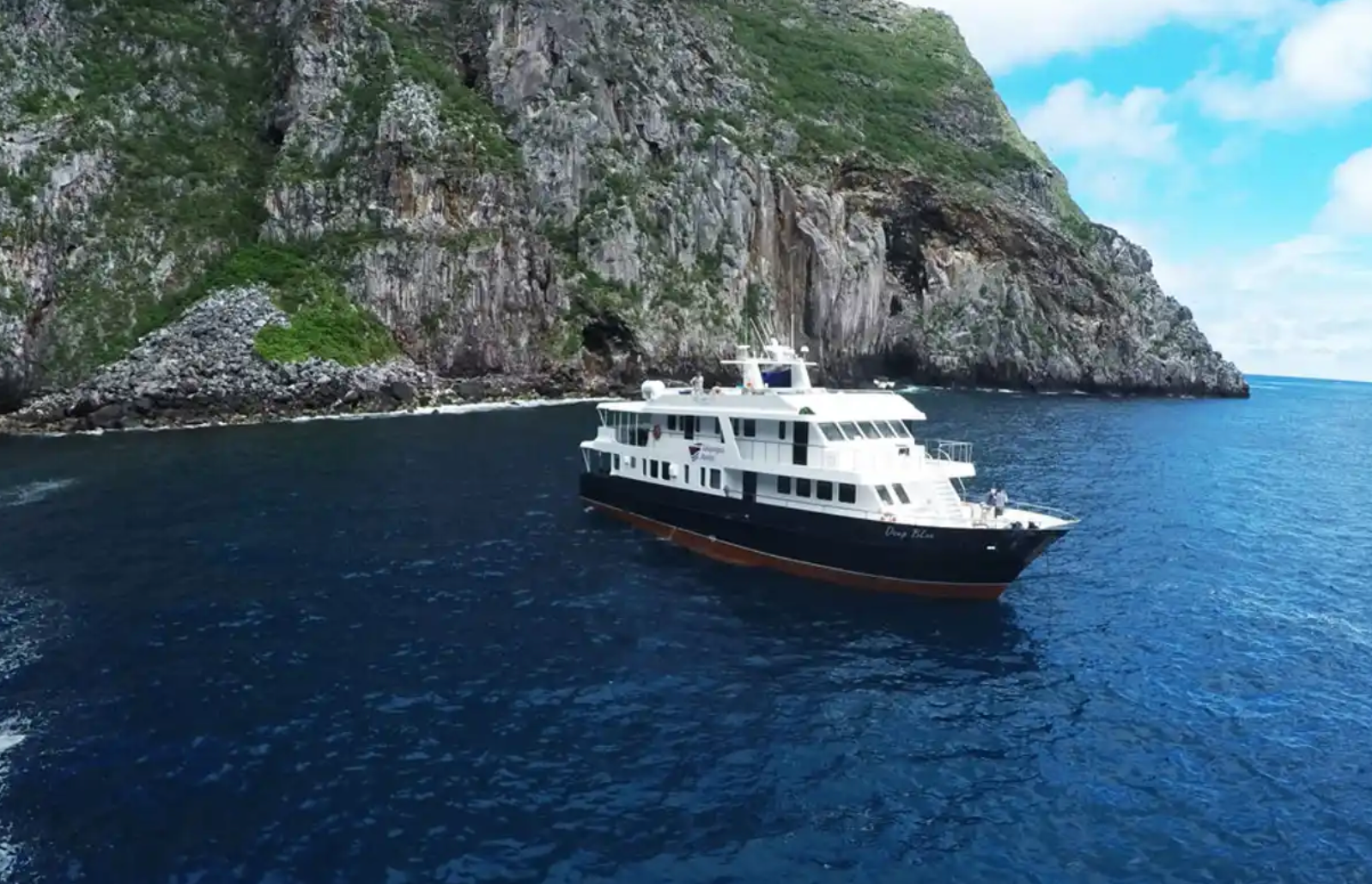
Galapagos Master
Galápagos
16 gasten
€589/dag
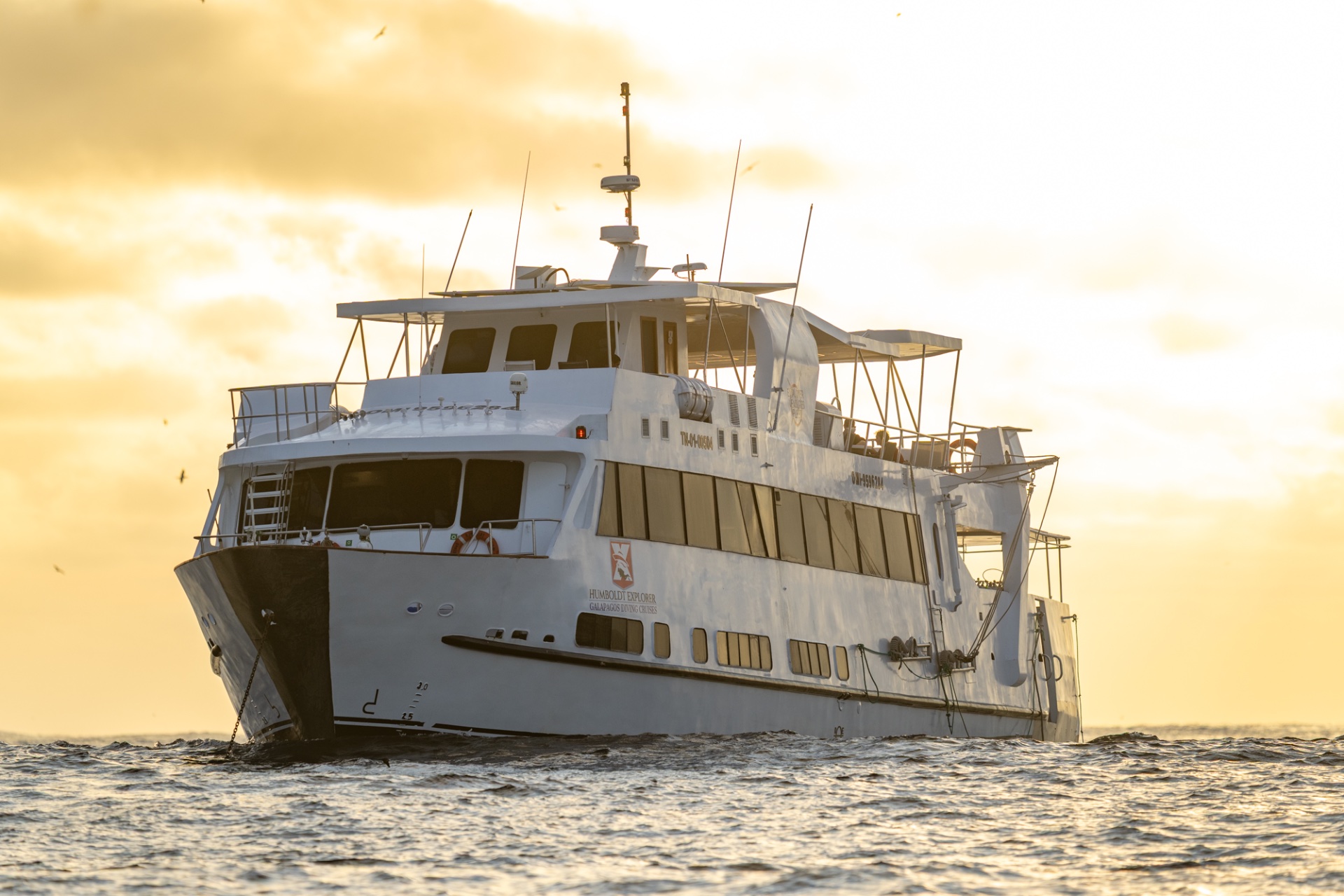
Humboldt Explorer
Galápagos
16 gasten
€538/dag
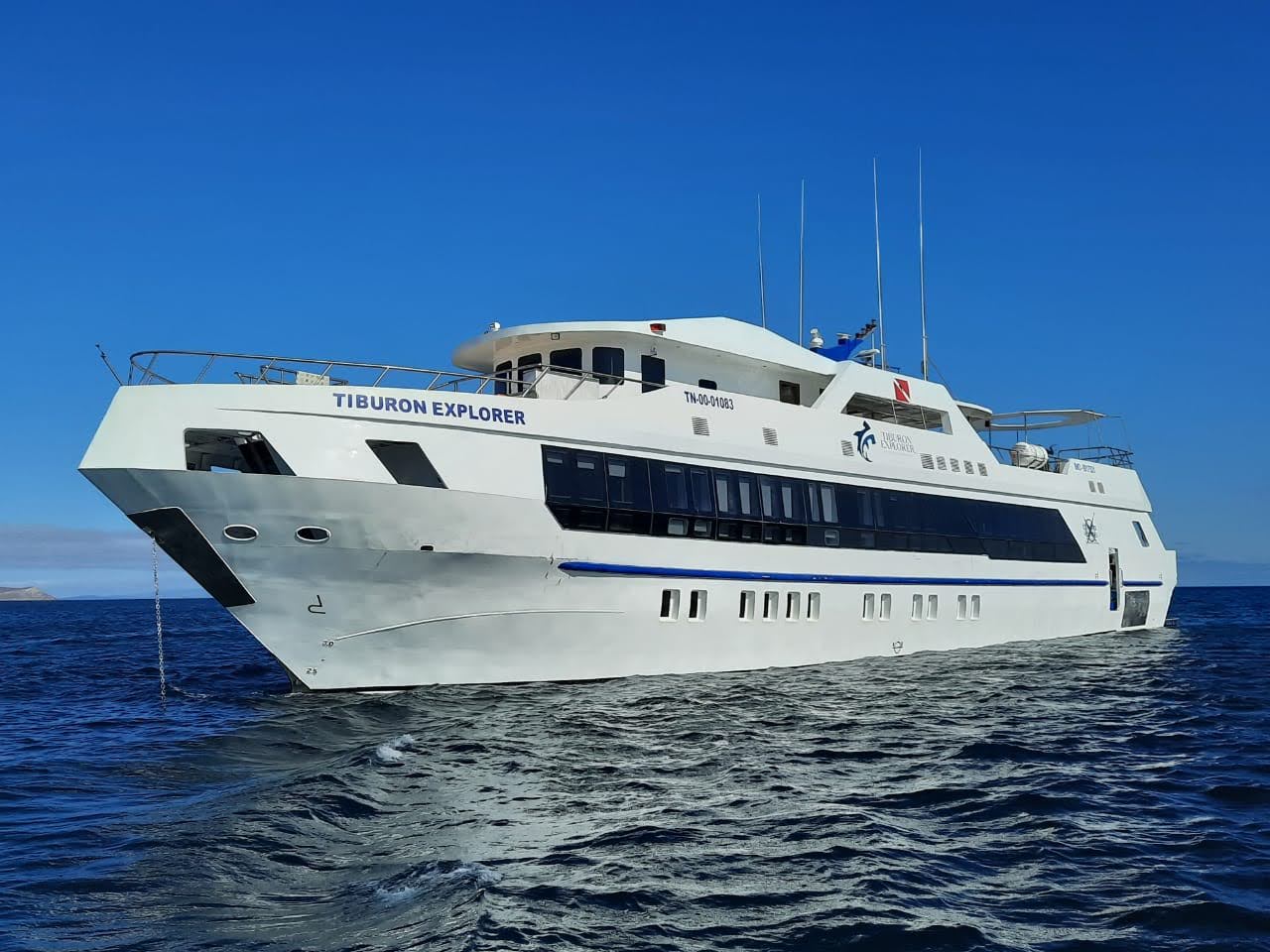
Tiburon Explorer
Galápagos
16 gasten
€813/dag
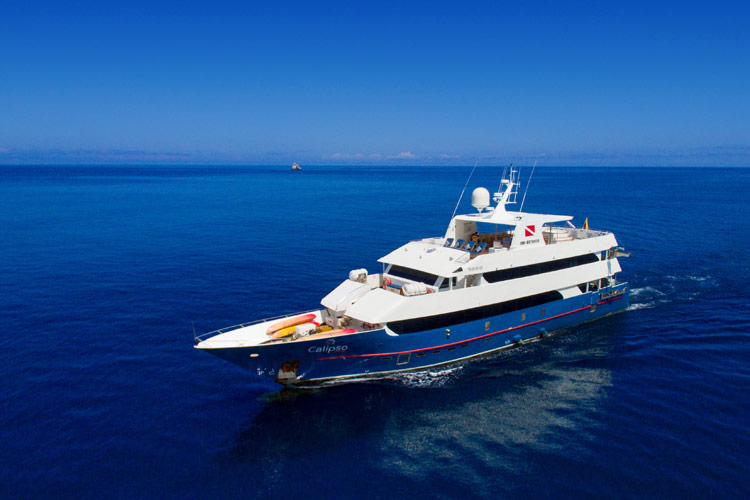
Calipso
Galápagos
16 gasten
€721/dag
Duikplekken vergelijkbaar met Camano Islet
Zelfde karakter, zelfde water — zes plekken die om dezelfde redenen geliefd zijn.Vergelijk seizoenen, toegang en liveaboard-routes en kies de plek die het beste bij je reis past.
© Esri — Maxar, Earthstar, GIS
Floreana - Devil's Crown
Galápagos
Devil's Crown, gelegen voor de kust van Floreana Island in de Galápagos, staat bekend als een van de belangrijkste duik- en snorkelbestemmingen van de archipel.
- Geschikt voor
- Beginner
- Stroming
- Sterk
- Toegang
- Alleen liveaboard
- Diepte
- 3–15 m
- Thema
- Rif
© Esri — Maxar, Earthstar, GIS
De Plaza-eilanden, en dan met name Zuid-Plaza, zijn een opmerkelijke duiklocatie binnen de Galápagos-archipel.
- Geschikt voor
- Beginner
- Stroming
- Licht
- Toegang
- Liveaboard of dagboot
- Diepte
- —
- Thema
- Rif
Pinzon ligt tussen de centrale eilanden van de Galápagos-archipel, een gebied dat wordt gekenmerkt door wateren die over het algemeen warmer en meer beschut zijn in vergelijking…
- Geschikt voor
- Ervaren
- Stroming
- Sterk
- Toegang
- Liveaboard of dagboot
- Diepte
- ≤ 18 m
- Thema
- Rif / Driftduik
Santa Fe, ook bekend onder zijn Engelse naam Barrington, is een unieke duiklocatie in de Galápagos-archipel.
- Geschikt voor
- Beginner
- Stroming
- Licht
- Toegang
- Liveaboard of dagboot
- Diepte
- 5–30 m
- Thema
- Rif
© Esri — Maxar, Earthstar, GIS
Caleta Iguana - Isabela
Galápagos
Caleta Iguana, gelegen op Isabela Island in de Galápagos, is een opmerkelijke duiklocatie die vooral bekendstaat om haar unieke populatie Galápagospinguïns. In tegenstelling tot…
- Geschikt voor
- Beginner
- Stroming
- Licht
- Toegang
- Alleen liveaboard
- Diepte
- 3–52 m
- Thema
- Rif
© Esri — Maxar, Earthstar, GIS
Bartolomé Island
Galápagos
Bartolomé Island in de Galápagos-archipel is een kenmerkende duikstek, bekend om zijn iconische Pinnacle Rock en toegankelijk vanaf Santa Cruz.
- Geschikt voor
- Beginner
- Stroming
- Sterk
- Toegang
- Alleen liveaboard
- Diepte
- 5–18 m
- Thema
- Driftduik / Rif