Bluerides – Blue Rides - 전 세계 다이빙 리브어보드 예약OCEAN ADVENTURES
리버 크루즈강자연과 야생동물우리의 약속
리버 크루즈강자연과 야생동물우리의 약속로그인

강 여행지

  • 강 여행지
  • Amazon
  • Danube
  • Rhine
  • Mekong
  • Nile

선박 및 출발 일정

  • 리버 크루즈 검색
  • 특가

자연과 야생동물

  • 자연과 야생동물

여행 지원

  • 우리의 약속
  • 문의하기

문의

문의하기

언제든 연락 주세요, 여행 선택부터 궁금한 점까지 기꺼이 도와드립니다.

이메일메일을 보내주세요. 보통 몇 시간 내에 답변드립니다.
contact@bluerides.com
WhatsAppWhatsApp으로 문의 주세요. 월–금 10:00–16:00 (CET).
WhatsApp 채팅 시작
전화전화 주세요, 기꺼이 도와드립니다.
무료 통화, 월–금 10:00–20:00 (CET).
유럽+49 800 1144 990미국+1 888 557 7735영국+44 800 707 4152호주+61 2 8599 6113캐나다+1 888 557 7735
Which river journey is yours?Answer 8 quick questions and find the river cruise that fits you.
8 questions, 1 minute·Plus Gift
안전한 결제 수단결제는 AES-256 암호화로 완벽하게 보호됩니다.
제공StripeWiseAMEXPayGoogle PaySEPABank
각인·이용약관·개인정보 처리방침·회사 소개·문의하기·책임 면제 동의서·제휴 프로그램·Cruise·
여기서 팔로우하세요

© 2026 Blue Rides. 모든 권리 보유.·

Bluerides – Blue Rides - 전 세계 다이빙 리브어보드 예약OCEAN ADVENTURES
리버 크루즈강자연과 야생동물우리의 약속
리버 크루즈강자연과 야생동물우리의 약속로그인
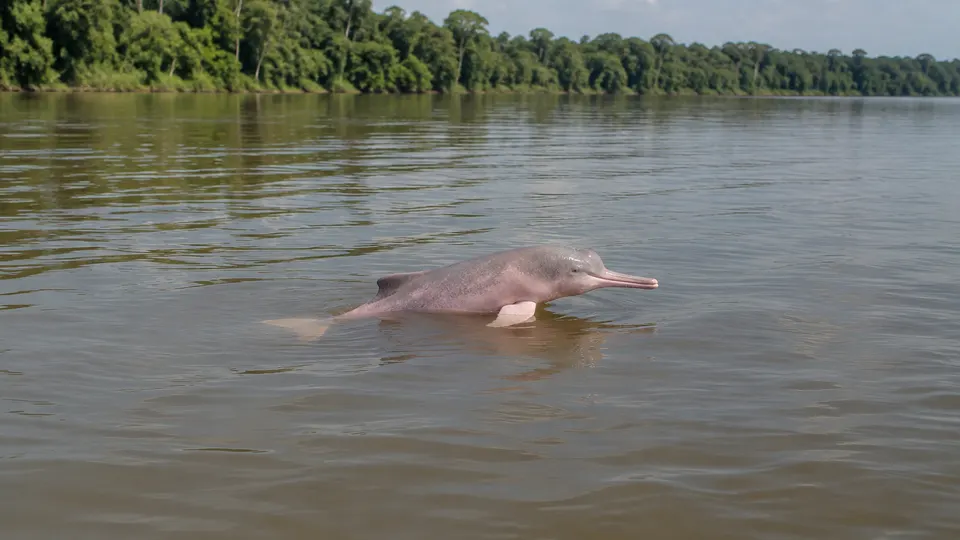
습지의 Amazon river dolphin — Amazon, 리버 크루즈 야생동물
홈›리버 크루즈›강의 야생동물›Amazon River Dolphin

Amazon River DolphinInia geoffrensis만날 수 있는 장소와 시기

이전 종African Swamphen다음 종Asian Openbill

Amazon River Dolphin 요약

The Amazon river dolphin, also called boto or pink river dolphin, is a freshwater toothed whale rather than a marine dolphin visiting inland waters. Its elongated beak, flexible neck and broad flippers suit a complex landscape of rivers, channels, lakes and seasonally flooded vegetation. Pink is not a uniform identification rule: young animals are grey, and adult coloration varies. For the registered Amazon destination, the strongest itinerary-specific evidence here comes from a March 2017 naturalist cruise around Iquitos and Nauta, including the Ucayali and connected waterways. The observers reported pink river dolphins almost daily, but did not assign every encounter to an individual tributary. That supports historical occurrence on this Peruvian itinerary, not guaranteed sightings at every stop. The destination also includes a separate Brazilian Rio Negro–Anavilhanas reach; the Peru report cannot establish observations there. Broad species distribution, an actual cruise record and a validated viewing calendar are three different kinds of information.
행동 및 번식

크기
Not verified
무게
Not verified
수명
Not verified
상태
See sourced assessment

Botos are often encountered singly or in small groups; a close pair may be a mother and calf rather than part of a large, permanent school. Loose gatherings can form around feeding opportunities, so group size alone says little about the number of dolphins using an entire river reach. They are active by day and night and adjust local movements as water levels change access to habitat and redistribute fish. Their flexible necks and mobile flippers help them manoeuvre around submerged vegetation. A surfacing animal may reveal its beak, forehead and low dorsal ridge in a brief rolling movement, without the conspicuous leap visitors associate with ocean dolphins. The university species account describes curiosity and object play, but such behaviour is not an invitation to interact. On Iquitos-area excursions, let the guide interpret repeated surfacings from a stationary or slowly moving boat. Do not follow an individual into a narrow channel or separate closely travelling animals.

주요 야생동물 관찰지

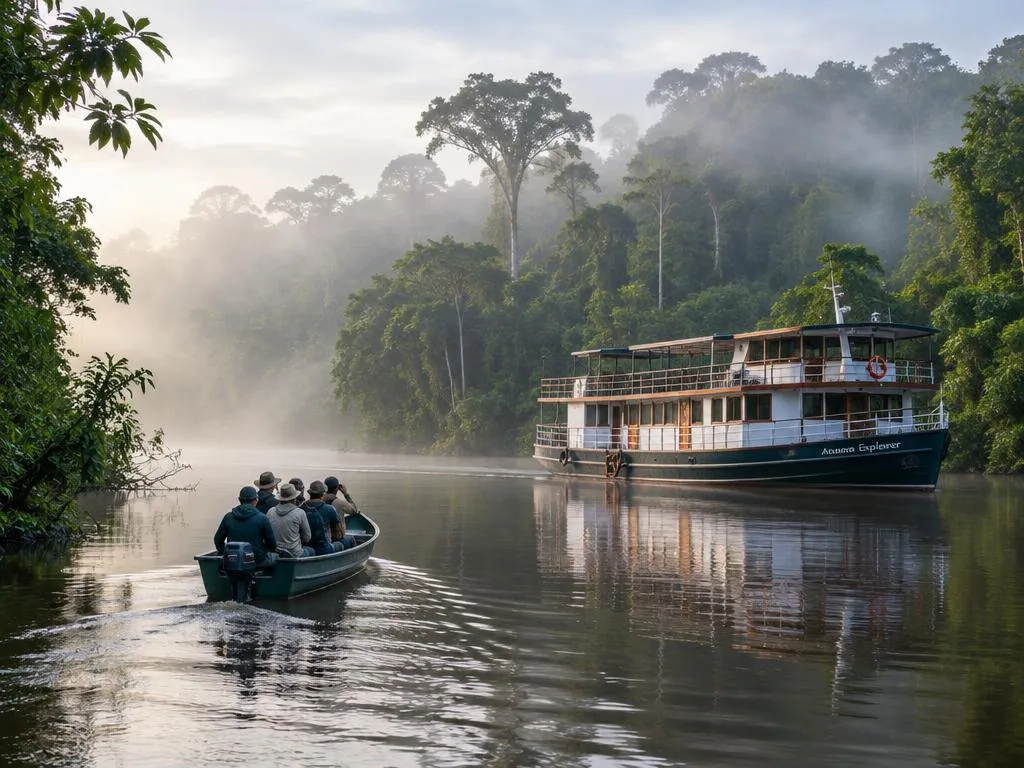
Amazon 강 풍경 — 리버 크루즈 야생동물 서식지

Amazon

Peru only for the validated itinerary record: Iquitos/Nauta, the Ucayali and connected tributaries on a March 2017 cruise. Pink river dolphins were reported almost daily, without tributary-by-tributary allocation. Do not extend this observation record to Brazil's separate Rio Negro–Anavilhanas reach.

리버 크루즈 둘러보기

목적지는 해당 종의 서식지를 설명하며, 크루즈의 기항을 보장하지 않습니다. 일부 동물은 선택 관광인 내륙 탐방이 필요하거나 제한된 보호구역에서만 발견됩니다.

Amazon River Dolphin에 관한 재미있는 사실

  • It is a toothed whale that lives in freshwater.
  • Young animals are generally grey rather than uniformly pink.
  • Adult males are larger than females in the university species account.
  • Its unfused neck vertebrae allow unusually flexible head movement.
  • Its dorsal structure is a low ridge rather than a tall triangular fin.
  • Broad flippers help it manoeuvre through structurally complex flooded habitat.
  • It uses echolocation to investigate its surroundings and locate prey.
  • Its front and rear teeth have different forms.
  • Loose feeding gatherings do not necessarily constitute a permanent social school.

Amazon River Dolphin 관찰하기 가장 좋은 시기

The locally dated evidence is a naturalist cruise species list covering 18–26 March 2017. It records pink river dolphins almost daily on the Peruvian Iquitos–Nauta and Ucayali-connected itinerary. This is useful evidence that March encounters occurred, but it does not establish March as the best month, define an annual season or compare sighting probabilities across months. No recurring local viewing calendar was validated here, so the month array remains empty. General statements about high-water forest access or low-water concentration of fish are ecological context, not a substitute for animal-specific seasonal observations. Nor should a Peruvian trip month be transferred to Rio Negro–Anavilhanas in Brazil. Before booking, ask which waterways the actual sailing visits, whether recent unbaited dolphin observations exist and how excursions avoid disturbing animals. Weather comfort, navigable channels and the operator's departure calendar should be presented separately from evidence about dolphin viewing.

Amazon River Dolphin: 목적지별 시즌 매트릭스

Highlighted months reflect the stated local evidence, not guaranteed encounters. Neutral months mean no verified monthly viewing window, not absence. Observation records and recommended viewing windows are distinct.

Amazon

March 2017 is a historical observation month, not a validated recurring viewing season. No local comparative monthly calendar was established.

Season evidence: Peru — Iquitos/Nauta, Ucayali and connected tributaries (2017 cruise)
1월2월3월4월5월6월7월8월9월10월11월12월
리버 크루즈 둘러보기

Amazon River Dolphin 서식지

Suitable habitat includes main river channels, tributary mouths, quieter side channels and floodplain lakes, with seasonal access to flooded forest. These habitats are connected but not interchangeable: changing water levels alter routes, prey distribution and the places a dolphin can enter. Around Iquitos and Nauta, the registered evidence concerns a cruise using the Ucayali and connected tributaries, rather than an unrestricted claim for every Amazonian waterway. Its itinerary names Yarapa, Yanallpa Creek, Zapote, Pacaya, El Dorado and Supay Creek, but the dolphin entry does not allocate observations among them. These names should describe the surveyed itinerary, not become invented sighting sites. The separate Rio Negro–Anavilhanas component of the Amazon destination must likewise remain geographically distinct. Protecting connections between rivers, lakes and flooded habitats matters more than assuming that a broad river name defines one uniform dolphin habitat. Fishing activity, disturbance and safe navigational access also influence where responsible observation is possible.

Amazon River Dolphin 먹이

Amazon river dolphins principally eat fish, using echolocation and close-range searching in waters where visibility can be limited. The university account describes a diverse diet spanning numerous fish families, rather than dependence on one iconic prey such as piranhas. Their teeth are not all identical: front teeth help grasp prey, while more complex rear teeth can process harder items. Crustaceans and small aquatic turtles are also reported in the species literature. The available prey mixture changes with habitat and the flood cycle, as fish disperse into connected floodplains or occupy more restricted waterways. None of these biological observations establishes a local feeding timetable for an Iquitos cruise. A visible gathering may be temporary and should not be approached as a scheduled attraction. Never throw fish, discard bait to attract dolphins or encourage operators to provision them. Natural feeding behaviour is more informative than a close encounter produced by food, pursuit or repeated repositioning.

종 요약

일반 명칭
Amazon River Dolphin
Scientific name
Inia geoffrensis
동물 그룹
Mammals
크기
Published maxima differ: the University of Michigan account reports males to 2.55 m; WWF gives an overall maximum of about 2.8 m. These are upper limits, not typical sighting sizes.
무게
The University of Michigan account reports males to 207 kg and females to 154 kg; size varies with sex and population.
수명
Wild lifespan not securely established here; the university account contains conflicting longevity summaries, so no numerical wild-life expectancy is adopted.
상태
Endangered, as reported by WWF for Inia geoffrensis. Older accounts and differently scoped river-dolphin classifications should not replace that category; this is not a local abundance estimate.
식별 특징
Look for a long, slender beak, a rounded forehead, a relatively robust body and a low, elongated dorsal ridge rather than a tall triangular fin. Adults may appear pink, mottled or grey, while young animals are generally darker grey; colour alone can therefore mislead. The head has greater mobility than in many familiar marine dolphins, although that feature may be difficult to judge during a short encounter. The same Peruvian trip list separately recorded the grey river dolphin or tucuxi, Sotalia fluviatilis, so not every dolphin seen on the itinerary was identified as Inia. A smaller-looking animal with a more conventional triangular dorsal fin warrants careful comparison rather than automatic assignment to boto. Distance, glare and only partial exposure can make apparent size unreliable. Record the combination of beak, dorsal profile, colour and surfacing sequence, and retain an unidentified-dolphin record if those features were not seen clearly enough.

Amazon River Dolphin: 자주 묻는 질문

Amazon River Dolphin은(는) 어디에서 볼 수 있니?
Amazon. Watch for repeated low surfacings rather than waiting only for jumps or a bright pink body. A brief view of the long beak, rounded forehead and low dorsal ridge can be more useful than apparent colour in reflected light. From a guided skiff, scan a broad area and allow animals to approach or pass without changing course to intercept them. Keep speed and noise low, leave room between the boat and the bank, and never block a channel entrance or a dolphin's route. Do not surround animals with several boats, feed them, touch them or enter the water to seek contact. If a mother and calf are suspected, give additional space rather than trying to obtain a closer photograph. The 2017 report supports encounters during a particular itinerary, not a reliable ship-deck spectacle. Ask the guide to distinguish an observed boto from another local cetacean and accept uncertain identification when the view is inadequate.
Amazon River Dolphin을(는) 관찰하기 가장 좋은 시기는 언제니?
The locally dated evidence is a naturalist cruise species list covering 18–26 March 2017. It records pink river dolphins almost daily on the Peruvian Iquitos–Nauta and Ucayali-connected itinerary. This is useful evidence that March encounters occurred, but it does not establish March as the best month, define an annual season or compare sighting probabilities across months. No recurring local viewing calendar was validated here, so the month array remains empty. General statements about high-water forest access or low-water concentration of fish are ecological context, not a substitute for animal-specific seasonal observations. Nor should a Peruvian trip month be transferred to Rio Negro–Anavilhanas in Brazil. Before booking, ask which waterways the actual sailing visits, whether recent unbaited dolphin observations exist and how excursions avoid disturbing animals. Weather comfort, navigable channels and the operator's departure calendar should be presented separately from evidence about dolphin viewing.
Amazon River Dolphin은(는) 얼마나 크게 자라니?
Published maxima differ: the University of Michigan account reports males to 2.55 m; WWF gives an overall maximum of about 2.8 m. These are upper limits, not typical sighting sizes.. 성체 무게: The University of Michigan account reports males to 207 kg and females to 154 kg; size varies with sex and population.. 크기는 연령, 성별 및 개체군에 따라 달라져.
Amazon River Dolphin 근처에서는 어떻게 행동해야 하니?
Watch for repeated low surfacings rather than waiting only for jumps or a bright pink body. A brief view of the long beak, rounded forehead and low dorsal ridge can be more useful than apparent colour in reflected light. From a guided skiff, scan a broad area and allow animals to approach or pass without changing course to intercept them. Keep speed and noise low, leave room between the boat and the bank, and never block a channel entrance or a dolphin's route. Do not surround animals with several boats, feed them, touch them or enter the water to seek contact. If a mother and calf are suspected, give additional space rather than trying to obtain a closer photograph. The 2017 report supports encounters during a particular itinerary, not a reliable ship-deck spectacle. Ask the guide to distinguish an observed boto from another local cetacean and accept uncertain identification when the view is inadequate.
Amazon River Dolphin은(는) 무엇을 먹니?
Amazon river dolphins principally eat fish, using echolocation and close-range searching in waters where visibility can be limited. The university account describes a diverse diet spanning numerous fish families, rather than dependence on one iconic prey such as piranhas. Their teeth are not all identical: front teeth help grasp prey, while more complex rear teeth can process harder items. Crustaceans and small aquatic turtles are also reported in the species literature. The available prey mixture changes with habitat and the flood cycle, as fish disperse into connected floodplains or occupy more restricted waterways. None of these biological observations establishes a local feeding timetable for an Iquitos cruise. A visible gathering may be temporary and should not be approached as a scheduled attraction. Never throw fish, discard bait to attract dolphins or encourage operators to provision them. Natural feeding behaviour is more informative than a close encounter produced by food, pursuit or repeated repositioning.
리버 크루즈에서 야생동물 관찰이 보장되니?
아니. 동물들은 자유롭게 이동하며 경로, 날씨, 접근 제한 및 현지 상황이 모든 일정에 영향을 미쳐. 예약 전에 실제 여정과 기항지 프로그램을 확인해 줘.

같은 목적지의 야생동물 비교

이 목적지들에서 기록된 다른 mammals 종들을 탐색해 봐. 주변 환경이 비슷하다고 해서 동물의 습성이나 관찰 시즌이 같다는 것을 의미하지는 않아.

동물 그룹 및 목적지별 종 비교
습지의 Amazon river dolphin — Amazon, 리버 크루즈 야생동물Amazon River Dolphin
동물 그룹Mammals
여행지Amazon
이전 종African Swamphen다음 종Asian Openbill
모든 강 야생동물
On this page
  • 01약
  • 02행동 및 번식
  • 03주요 야생동물 관찰지
  • 04재미있는 사실
  • 05최적의 시즌
  • 06목적지별 시즌 매트릭스
  • 07서식지
  • 08먹이
  • 09종 요약
  • 10질문 및 답변
  • 11비교

Find your river cruise

여행을 계획하세요

다음 리버 크루즈 여행을 찾아보세요

보고 싶은 동물과 서식지에 맞춰 목적지, 기항지 프로그램, 일정을 비교해 보세요.

  • 매일 진행되는 기항지 관광
  • 책임감 있는 야생동물 관찰
  • 부티크 리버 쉽
리버 크루즈 둘러보기