Bluerides – Blue Rides - 世界中のダイビングクルーズを予約OCEAN ADVENTURES
リバークルーズ河川自然と野生動物私たちの約束
リバークルーズ河川自然と野生動物私たちの約束ログイン

リバークルーズの目的地

  • リバークルーズの目的地
  • Amazon
  • Danube
  • Rhine
  • Mekong
  • Nile

客船と出発日

  • リバークルーズ検索
  • お得な情報

自然と野生動物

  • 自然と野生動物

トラベルサポート

  • 私たちの約束
  • お問い合わせ

お問い合わせ

お問い合わせ

いつでもお気軽にご連絡ください。旅選びからご質問まで喜んでお手伝いします。

メールメールでどうぞ。通常は数時間以内に返信します。
contact@bluerides.com
WhatsAppWhatsAppでご連絡ください。月〜金 10:00〜16:00(CET)。
WhatsAppでチャットを始める
電話お電話ください,ご質問に喜んでお答えします。
通話無料、月〜金 10:00〜20:00(CET)。
ヨーロッパ+49 800 1144 990アメリカ+1 888 557 7735イギリス+44 800 707 4152オーストラリア+61 2 8599 6113カナダ+1 888 557 7735
Which river journey is yours?Answer 8 quick questions and find the river cruise that fits you.
8 questions, 1 minute·Plus Gift
安全なお支払い方法お支払いはAES-256暗号化により完全に保護されています。
提供元StripeWiseAMEXPayGoogle PaySEPABank
特定商取引法に基づく表記·利用規約·プライバシーポリシー·私たちについて·お問い合わせ·免責同意書·アフィリエイトプログラム·Cruise·
こちらでフォロー

© 2026 Blue Rides. 無断複製・転載を禁じます。·

Bluerides – Blue Rides - 世界中のダイビングクルーズを予約OCEAN ADVENTURES
リバークルーズ河川自然と野生動物私たちの約束
リバークルーズ河川自然と野生動物私たちの約束ログイン
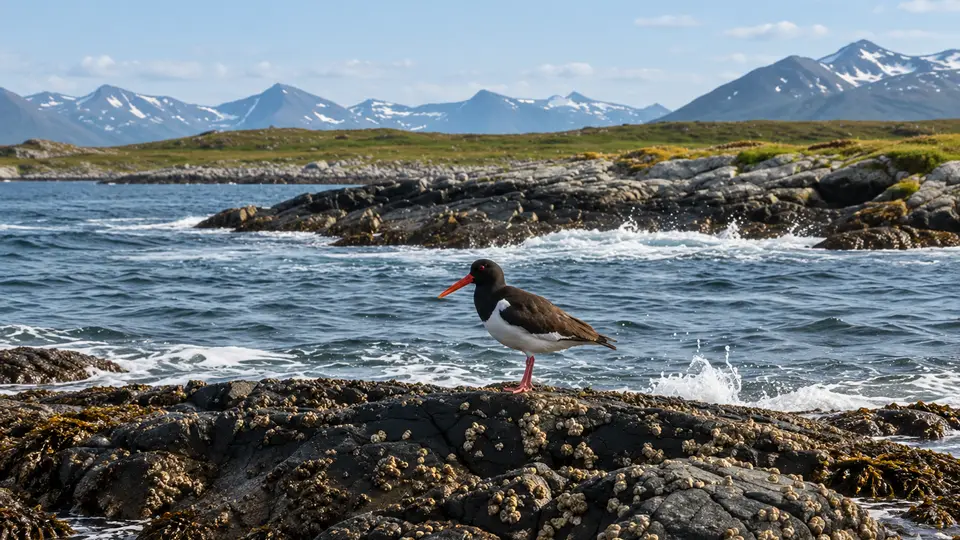
湿地のEurasian oystercatcher — Seine、リバークルーズの野生動物
ホーム›リバークルーズ›リバー・ワイルドライフ›Eurasian Oystercatcher

Eurasian OystercatcherHaematopus ostralegus出会える場所と時期

前の種Eurasian Nuthatch次の種Eurasian Spoonbill

ひと目でわかるEurasian Oystercatcher

The Eurasian oystercatcher is a shorebird whose feeding skills link it closely to the condition of intertidal food supplies. Its name is narrower than its diet: cockles and other shellfish matter, but worms and other invertebrates also support birds in different habitats. Outside breeding, estuaries can hold conspicuous communal flocks. Breeding birds may occupy coasts or inland ground, so an inland nesting record and a coastal winter gathering describe different parts of the same life cycle. Both parents participate in incubation, and the downy chicks leave the scrape while still flightless. Unlike a simple picture of self-sufficient wader chicks, young oystercatchers depend on parental food provision. The Seine association in this registry is restricted to the optional lower estuary towards Honfleur and Le Havre, including protected flats beyond the port; it is not a wildlife claim for central Paris.
行動と繁殖

サイズ
40–45 cm body length (RSPB)
体重
Species-specific weight not verified
寿命
Species-specific lifespan not verified
ステータス
See sourced assessment

Outside the nesting period, oystercatchers often feed and rest in groups, their sharp piping calls making a moving flock conspicuous. Territorial encounters can involve noisy gatherings rather than the quiet spacing of feeding individuals. A pair nests in a shallow scrape and normally lays two or three eggs. BTO gives incubation by both sexes for twenty-four to twenty-seven days, with fledging roughly five weeks after hatching. The downy young can walk early but still require parental attention and food. Feeding technique is a learned and practised skill, particularly where hard-shelled prey must be opened. On an estuary, daily activity is structured by the tide: birds spread over usable feeding surfaces and regroup when water removes access. A dense high-water flock should therefore be interpreted as a roosting concentration, not automatically as evidence of rich feeding directly beneath it.

野生動物観察のベストスポット

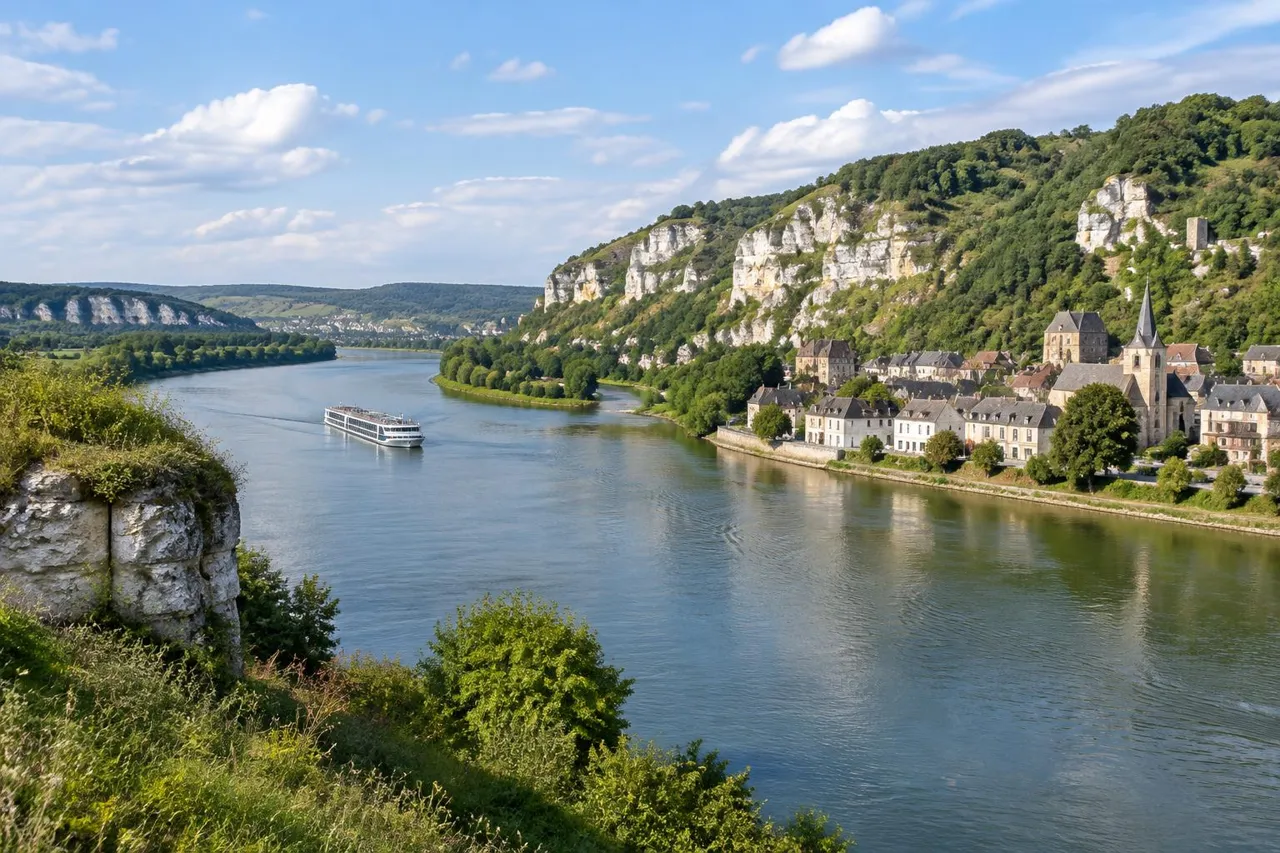
Seineの河川風景 — リバークルーズの生息地

Seine

OPTIONAL ESTUARY: ZPS Estuaire et marais de la Basse-Seine, lower tidal Seine toward Honfleur/Le Havre; includes protected flats beyond port, not Paris freshwater reaches.
リバークルーズを探す

目的地は該当する種の生息地を示しており、必ずしもクルーズの寄港地とは限りません。一部の動物は、オプションの陸上観光や制限された保護区でのみ見ることができます。

Eurasian Oystercatcherに関する豆知識

  • Shellfish harvesting can reduce important cockle food supplies.
  • Individuals use different shell-opening techniques.
  • Some birds hammer shells while others prise them open.
  • Both parents incubate the eggs.
  • The usual clutch contains two or three eggs.
  • Downy chicks leave the scrape before flying.
  • Parents provide food to their young.
  • High tide concentrates birds away from feeding flats.
  • Atlantic and continental populations show limited interchange.

Eurasian Oystercatcherのベストシーズン

Large coastal gatherings are particularly associated with the nonbreeding part of the year, but the retrieved local Seine evidence does not establish an exact species-specific monthly viewing calendar. British and Irish data show strong estuarine winter use, while ringing demonstrates that Atlantic and continental populations do not exchange freely. That population structure is another reason not to copy a British schedule into northern France. The registry therefore retains an empty numerical month list. At a shorter timescale, visit timing should account for the tide: falling water reveals feeding habitat, whereas high water may concentrate birds at a roost that is visible only from particular viewpoints. Either state can be productive if the observer knows which area is accessible. Current estuary counts or reserve advice would be needed to rank local seasons with confidence rather than merely infer them from the species' wider ecology.

Eurasian Oystercatcher:目的地別のシーズン一覧

Highlighted months reflect the stated local evidence, not guaranteed encounters. Neutral months mean no verified monthly viewing window, not absence. Observation records and recommended viewing windows are distinct.

Seine

Exact local species-specific monthly viewing evidence has not been verified; no monthly calendar is inferred.

1月2月3月4月5月6月7月8月9月10月11月12月
リバークルーズを探す

Eurasian Oystercatcherの生息地

Oystercatchers use a variety of coastal substrates, including muddy estuaries, sandy shores, shellfish beds and rocky edges. The critical details are accessible prey and a secure resting place as the tide rises. A flat with shellfish is not continuously usable, and a nearby undisturbed roost can be as important as the feeding area itself. Inland breeding habitats may include open farmland and river-associated ground, but those general possibilities do not extend the registered Seine reach upstream. For this entry, the relevant setting is the lower tidal estuary and its protected shore mosaic towards Honfleur and Le Havre. Look beyond the deep port channels to exposed flats and appropriate high-water margins. Dense reed cover and wooded freshwater banks are not equivalent habitat. The boundaries of the optional estuary excursion matter because a city-centre river cruise does not sample the same ecological landscape.

Eurasian Oystercatcherの食べ物

Cockles are a documented food and explain why shellfish harvesting can affect oystercatcher populations. Mussels and other bivalves, marine worms and additional shore invertebrates broaden the menu; inland birds can exploit earthworms. Birds do not all handle shellfish identically: some hammer shells, while others insert the bill to prise prey open. Repeated handling of hard food can influence bill-tip form, so the bill is both a feeding implement and a record of use. A bird probing soft sediment may be exploiting a different resource from one working over a shell bed. Feeding success depends on prey accessibility and handling time, not simply on the visible number of shells. At the lower Seine, a telescope can reveal whether a bird probes, hammers or carries food, but an exact prey identification should be withheld when the item is too small to resolve.

種の特徴まとめ

一般的な名称
Eurasian Oystercatcher
Scientific name
Haematopus ostralegus
動物グループ
Birds
サイズ
40–45 cm body length (RSPB)
体重
Species-specific weight not verified
寿命
Species-specific lifespan not verified
ステータス
Current global category not independently verified; regional conservation statements must not be presented as a global assessment.
識別方法
Look for a stocky black-and-white wader with a strong orange-red bill and reddish-pink legs. In flight, the broad white wing stripe and white rump are especially helpful; the rump extends forward between the wings, contrasting with the black tail. The sharp whistled call often draws attention before a flock is located. Adult males and females look much alike in ordinary field conditions, so apparent bill differences are not a dependable way to sex a distant bird. Immatures can have duller bills and browner-looking upperparts than mature adults. Nonbreeding birds may show a pale throat collar, so the neck need not look uniformly black. Avoid confusing a distant pied flock with avocets: oystercatchers are more compact and carry a stout, essentially straight bill rather than a fine upturned one. Wait for a standing or flying view when roosting birds conceal their bills.

Eurasian Oystercatcher:よくある質問

Eurasian Oystercatcherはどこで見られる?
Seine. On the optional lower-Seine outing, scan exposed flats for compact pied birds before searching more distant roosts. Their calls and the bright bills can stand out even when the black upperparts blend with a dark shore. Once a bird is located, compare its feeding action with neighbouring individuals: hammering, probing and carrying food tell different stories. Use a telescope to watch shell handling without moving onto the feeding ground. At high water, work along the roost from a fixed permitted viewpoint and check for birds with bills tucked into back feathers. A low-flying flock offers a good opportunity to confirm the broad white wing stripe. Keep the sighting tied to its actual estuary locality towards Honfleur or Le Havre, not to the entire Seine itinerary. Approaching closely enough to make a resting flock stand or fly has already compromised the observation.
Eurasian Oystercatcherを見るのに最適な時期は?
Large coastal gatherings are particularly associated with the nonbreeding part of the year, but the retrieved local Seine evidence does not establish an exact species-specific monthly viewing calendar. British and Irish data show strong estuarine winter use, while ringing demonstrates that Atlantic and continental populations do not exchange freely. That population structure is another reason not to copy a British schedule into northern France. The registry therefore retains an empty numerical month list. At a shorter timescale, visit timing should account for the tide: falling water reveals feeding habitat, whereas high water may concentrate birds at a roost that is visible only from particular viewpoints. Either state can be productive if the observer knows which area is accessible. Current estuary counts or reserve advice would be needed to rank local seasons with confidence rather than merely infer them from the species' wider ecology.
Eurasian Oystercatcherはどのくらいの大きさになる?
40–45 cm body length (RSPB)。成体の体重:Species-specific weight not verified。サイズは年齢、性別、個体群によって異なるよ。
Eurasian Oystercatcherの近くではどう振る舞えばいい?
On the optional lower-Seine outing, scan exposed flats for compact pied birds before searching more distant roosts. Their calls and the bright bills can stand out even when the black upperparts blend with a dark shore. Once a bird is located, compare its feeding action with neighbouring individuals: hammering, probing and carrying food tell different stories. Use a telescope to watch shell handling without moving onto the feeding ground. At high water, work along the roost from a fixed permitted viewpoint and check for birds with bills tucked into back feathers. A low-flying flock offers a good opportunity to confirm the broad white wing stripe. Keep the sighting tied to its actual estuary locality towards Honfleur or Le Havre, not to the entire Seine itinerary. Approaching closely enough to make a resting flock stand or fly has already compromised the observation.
Eurasian Oystercatcherは何を食べる?
Cockles are a documented food and explain why shellfish harvesting can affect oystercatcher populations. Mussels and other bivalves, marine worms and additional shore invertebrates broaden the menu; inland birds can exploit earthworms. Birds do not all handle shellfish identically: some hammer shells, while others insert the bill to prise prey open. Repeated handling of hard food can influence bill-tip form, so the bill is both a feeding implement and a record of use. A bird probing soft sediment may be exploiting a different resource from one working over a shell bed. Feeding success depends on prey accessibility and handling time, not simply on the visible number of shells. At the lower Seine, a telescope can reveal whether a bird probes, hammers or carries food, but an exact prey identification should be withheld when the item is too small to resolve.
リバークルーズで野生動物の遭遇は保証されている?
いいえ。動物は自由に移動するし、ルート、天候、立ち入り制限、現地の状況がすべての外出に影響するんだ。予約前に実際の旅程と岸上プログラムを確認してね。

同じ目的地の野生動物を比較する

これらの目的地で記録されている他のbirdsを見てみよう。似たような環境であっても、動物の習性や観測時期が同じとは限りません。

動物グループと目的地別の種比較
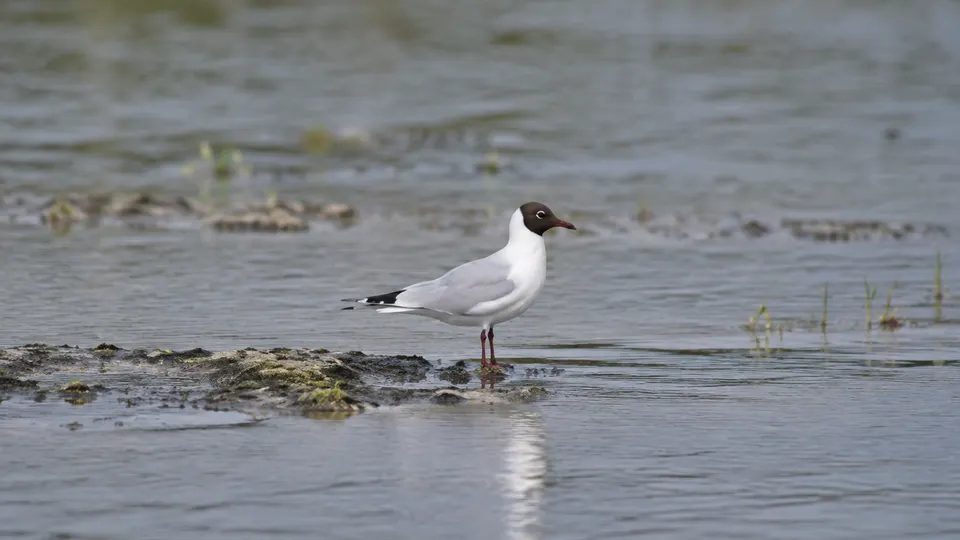
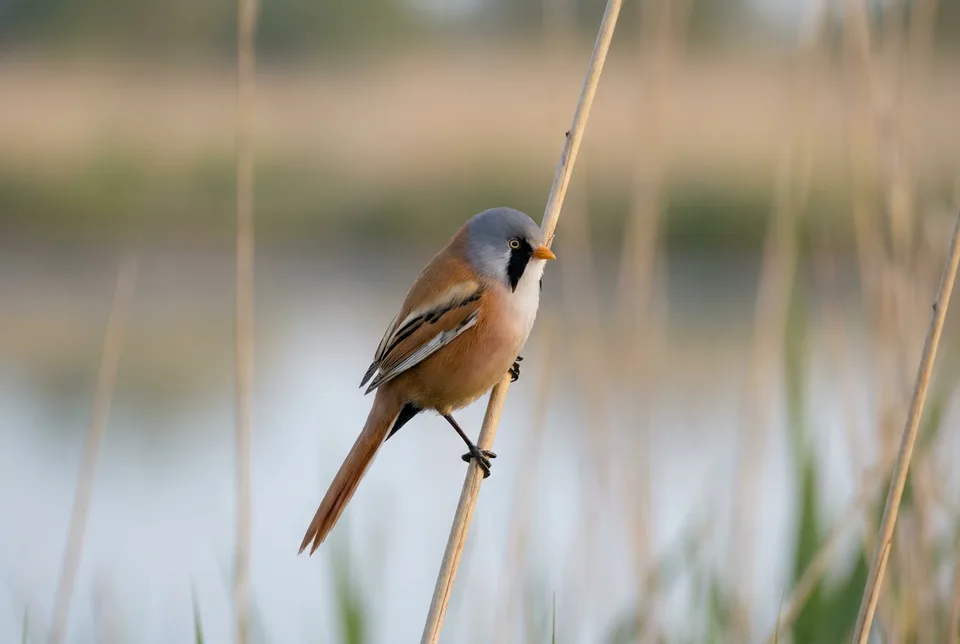
湿地のEurasian oystercatcher — Seine、リバークルーズの野生動物Eurasian Oystercatcher湿地のBearded Reedling — Seine、リバークルーズの野生動物Bearded Reedling湿地のBlack-headed gull — Saone, Seine, Nile, Douro、リバークルーズの野生動物Black-Headed Gull
動物グループBirds動物グループBirds動物グループBirds
目的地Seine目的地Seine目的地Saone, Seine, Nile, Douro
Scientific name
Haematopus ostralegus

Haematopus ostralegus

Scientific name
Scientific name
サイズ
40–45 cm body length (RSPB)
サイズ
サイズ
体重
Species-specific weight not verified
体重
体重
寿命
Species-specific lifespan not verified
寿命
寿命
ステータス
See sourced assessment
ステータス
ステータス
識別方法
Look for a stocky black-and-white wader with a strong orange-red bill and reddish-pink legs.

Look for a stocky black-and-white wader with a strong orange-red bill and reddish-pink legs. In flight, the broad white wing stripe and white rump are especially helpful; the rump extends forward between the wings, contrasting with the black tail. The sharp whistled call often draws attention before a flock is located. Adult males and females look much alike in ordinary field conditions, so apparent bill differences are not a dependable way to sex a distant bird. Immatures can have duller bills and browner-looking upperparts than mature adults. Nonbreeding birds may show a pale throat collar, so the neck need not look uniformly black. Avoid confusing a distant pied flock with avocets: oystercatchers are more compact and carry a stout, essentially straight bill rather than a fine upturned one. Wait for a standing or flying view when roosting birds conceal their bills.

識別方法
識別方法
生息地
Oystercatchers use a variety of coastal substrates, including muddy estuaries, sandy shores, shellfish beds and rocky edges.

Oystercatchers use a variety of coastal substrates, including muddy estuaries, sandy shores, shellfish beds and rocky edges. The critical details are accessible prey and a secure resting place as the tide rises. A flat with shellfish is not continuously usable, and a nearby undisturbed roost can be as important as the feeding area itself. Inland breeding habitats may include open farmland and river-associated ground, but those general possibilities do not extend the registered Seine reach upstream. For this entry, the relevant setting is the lower tidal estuary and its protected shore mosaic towards Honfleur and Le Havre. Look beyond the deep port channels to exposed flats and appropriate high-water margins. Dense reed cover and wooded freshwater banks are not equivalent habitat. The boundaries of the optional estuary excursion matter because a city-centre river cruise does not sample the same ecological landscape.

生息地
生息地
食性
Cockles are a documented food and explain why shellfish harvesting can affect oystercatcher populations.

Cockles are a documented food and explain why shellfish harvesting can affect oystercatcher populations. Mussels and other bivalves, marine worms and additional shore invertebrates broaden the menu; inland birds can exploit earthworms. Birds do not all handle shellfish identically: some hammer shells, while others insert the bill to prise prey open. Repeated handling of hard food can influence bill-tip form, so the bill is both a feeding implement and a record of use. A bird probing soft sediment may be exploiting a different resource from one working over a shell bed. Feeding success depends on prey accessibility and handling time, not simply on the visible number of shells. At the lower Seine, a telescope can reveal whether a bird probes, hammers or carries food, but an exact prey identification should be withheld when the item is too small to resolve.

食性
食性
ベストシーズン
Large coastal gatherings are particularly associated with the nonbreeding part of the year, but the retrieved local Seine evidence does not establish an exact species-specific monthly viewing calendar.

Large coastal gatherings are particularly associated with the nonbreeding part of the year, but the retrieved local Seine evidence does not establish an exact species-specific monthly viewing calendar. British and Irish data show strong estuarine winter use, while ringing demonstrates that Atlantic and continental populations do not exchange freely. That population structure is another reason not to copy a British schedule into northern France. The registry therefore retains an empty numerical month list. At a shorter timescale, visit timing should account for the tide: falling water reveals feeding habitat, whereas high water may concentrate birds at a roost that is visible only from particular viewpoints. Either state can be productive if the observer knows which area is accessible. Current estuary counts or reserve advice would be needed to rank local seasons with confidence rather than merely infer them from the species' wider ecology.

ベストシーズン
ベストシーズン
目的地別シーズン表
SeineNo verified monthly viewing evidence

Exact local species-specific monthly viewing evidence has not been verified; no monthly calendar is inferred.

目的地別シーズン表目的地別シーズン表
前の種Eurasian Nuthatch次の種Eurasian Spoonbill
すべての川の野生動物
On this page
  • 01約
  • 02行動と繁殖
  • 03野生動物観察のベストスポット
  • 04豆知識
  • 05ベストシーズン
  • 06目的地別シーズン表
  • 07生息地
  • 08食性
  • 09種の特徴まとめ
  • 10よくある質問
  • 11比較する

Find your river cruise

旅行を計画する

次のリバークルーズを探す

見たい動物や生息地に合わせて、目的地、岸上プログラム、日程を比較しましょう。

  • 毎日の岸上観光
  • 責任ある野生動物ウォッチング
  • ブティック・リバーシップ
リバークルーズを探す