Bluerides – Blue Rides - Tauchsafaris weltweit buchenOCEAN ADVENTURES
River CruisesRiversNature & WildlifeOur Promise
River CruisesRiversNature & WildlifeOur PromiseAnmelden

Flussreiseziele

  • Flussreiseziele
  • Amazonas
  • Donau
  • Rhein
  • Mekong
  • Nil

Schiffe & Abfahrten

  • Flusskreuzfahrt-Suche
  • Angebote

Natur & Tierwelt

  • Natur & Tierwelt

Reiseberatung

  • Unser Versprechen
  • Kontakt

Kontakt

Kontaktiere uns

Melde dich jederzeit, wir helfen dir gerne weiter, egal ob Reisewahl oder offene Frage.

E-MailSchreib uns, meist antworten wir binnen weniger Stunden.
kontakt@bluerides.com
WhatsAppSchreib uns per WhatsApp, Mo–Fr 10:00–16:00 Uhr (MEZ).
WhatsApp-Chat starten
TelefonRuf uns an, wir helfen dir gerne weiter.
Kostenlos anrufen, Mo–Fr 10–20 Uhr (MEZ).
Europa+49 800 1144 990USA+1 888 557 7735UK+44 800 707 4152Australien+61 2 8599 6113Kanada+1 888 557 7735
Which river journey is yours?Answer 8 quick questions and find the river cruise that fits you.
8 questions, 1 minute·Plus Gift
Sichere ZahlungsmethodenDeine Zahlungen sind vollständig geschützt durch AES-256-Verschlüsselung.
Unterstützt vonStripeWiseAMEXPayGoogle PaySEPABank
Impressum·AGB·Datenschutz·Über uns·Kontakt·Haftungsausschluss·Partnerprogramm·Cruise·
Besucht uns hier

© 2026 Blue Rides. Alle Rechte vorbehalten.·

Bluerides – Blue Rides - Tauchsafaris weltweit buchenOCEAN ADVENTURES
River CruisesRiversNature & WildlifeOur Promise
River CruisesRiversNature & WildlifeOur PromiseAnmelden
Common Snipe im Feuchtgebiet — Douro, Tierwelt auf Flusskreuzfahrten
Startseite›River Cruises›River Wildlife›Common Snipe

Common SnipeGallinago gallinagoWo und wann du sie sehen kannst

Previous speciesCommon sandpiperNext speciesCommon Swift

Common Snipe at a glance

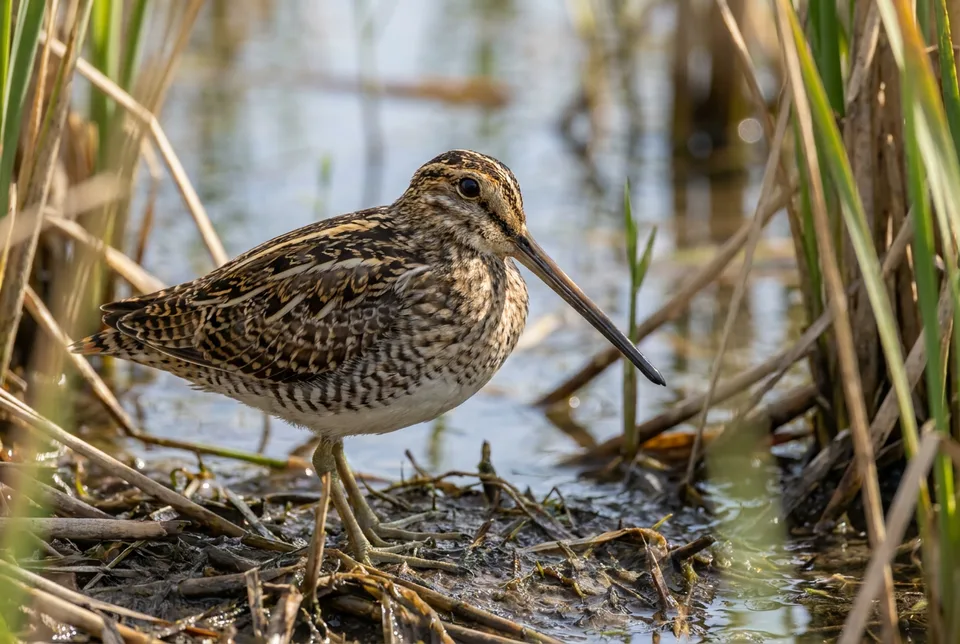
The Common Snipe is a cryptically patterned wader, registered as Gallinago gallinago. Its very long straight bill, relatively short legs and brown-striped plumage distinguish it from the more exposed, long-legged waders often seen on open mud. Buff stripes along the back help break up the bird’s outline among wet vegetation. Snipe can remain concealed at close range and may be detected only when they move or call. The Portuguese local name is narceja-comum. The registered Douro association is restricted to the Porto and Vila Nova de Gaia estuary reserve at Afurada–Cabedelo–São Paio. The original site guide names snipe among the birds of the estuary and describes it as a more elusive species in the marsh habitat. This does not establish occurrence along inland Régua–Pinhão or guarantee a view from the navigation channel.
Behaviour & reproduction

Size
Not independently verified in the retrieved evidence
Weight
Not independently verified in the retrieved evidence
Lifespan
Not independently verified in the retrieved evidence
Status
See sourced assessment

Snipe spend much of their time concealed near wet ground, probing for food rather than standing conspicuously in open water. A stationary bird can be remarkably difficult to separate from reeds, dead stems and reflected shadows. Its long bill may move rhythmically while much of the body remains hidden. When disturbed, a snipe can leave abruptly in irregular, zigzagging flight, often with a short harsh call. Deliberately flushing it to obtain that view is inappropriate. During breeding, the species is also known for aerial display, but national descriptions of that behaviour should not be presented as proof of breeding at the Douro estuary. Patient observation from an existing path or hide is the better approach. Watch small gaps in vegetation and allow movement to reveal a bird. A failure to see snipe on one visit says little about whether concealed birds are present nearby.

Top wildlife locations

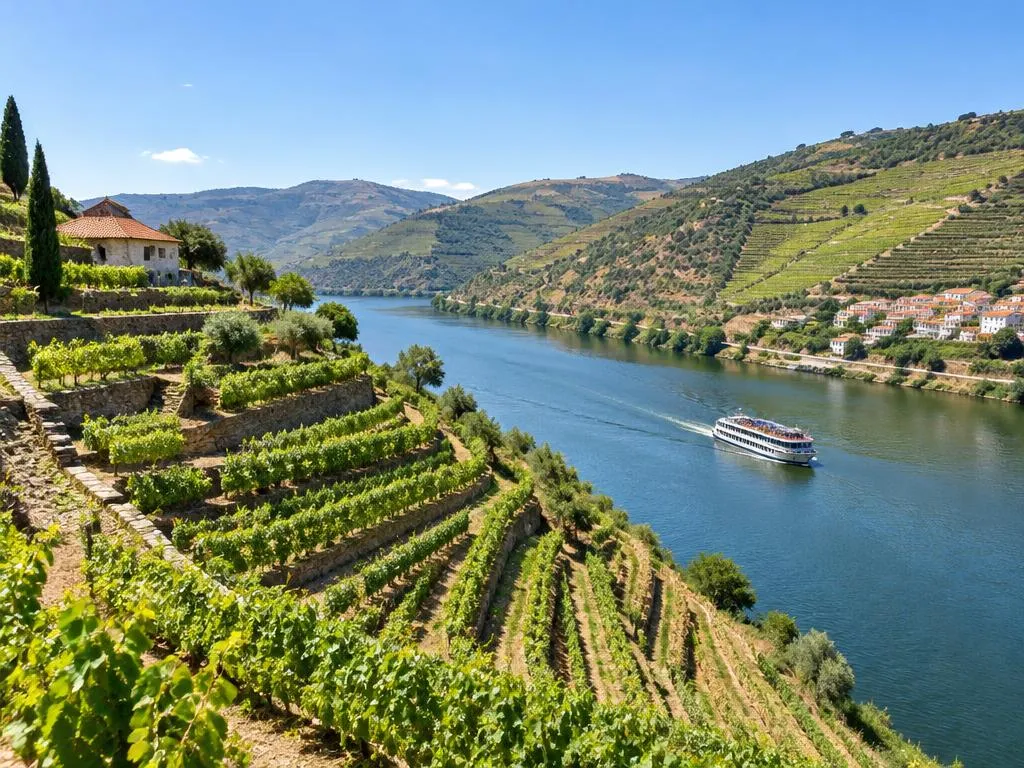
Flusslandschaft Douro — Lebensraum auf Flusskreuzfahrten

Douro

Porto / Vila Nova de Gaia: Douro estuary reserve, Afurada–Cabedelo–São Paio; NOT a claim for inland Régua–Pinhão
Explore river cruises

Destinations describe the species' habitat, not guaranteed cruise stops. Some animals require an optional inland excursion or are found in restricted reserves.

Fun facts about the Common Snipe

  • The registry identity is Gallinago gallinago.
  • The Portuguese name is narceja-comum.
  • The bill is unusually long and straight.
  • Buff back stripes aid camouflage.
  • Both sexes have similar plumage.
  • Soft wet ground is important for probing.
  • A disturbed bird may fly in an irregular zigzag.
  • Portuguese breeding and wintering populations have different national threat categories.
  • The registered Douro source describes snipe as an elusive marsh bird.

Best time to see the Common Snipe

Aves de Portugal describes Common Snipe as a familiar autumn and winter wetland bird nationally and gives a broad Portuguese occurrence period from September into early April. That national calendar is not direct proof of exact months at the registered Douro estuary reserve, so it is not entered into the monthly array. The local estuary account supports occurrence and marsh use but does not provide a complete species-specific monthly series. The array remains empty. Water availability, vegetation height and concealment affect whether birds can be seen even when present. A shore visit should therefore combine recent local observations with patient watching of wet margins rather than treating a national wintering pattern as a sighting forecast. The Portuguese account also distinguishes a very restricted breeding population elsewhere from widespread wintering occurrence; those breeding localities must not be imported into the Porto and Gaia river profile.

Common Snipe: season matrix by destination

Highlighted months reflect the stated local evidence, not guaranteed encounters. Neutral months mean no verified monthly viewing window, not absence. Observation records and recommended viewing windows are distinct.

Douro

Local marsh occurrence is supported. The national September–early April calendar is not treated as exact local month proof.

JanFebMärAprMaiJunJulAugSepOktNovDez
Explore river cruises

Where the Common Snipe lives

Common Snipe favour wet ground where soft substrates support probing and vegetation provides concealment. Marshes, flooded fields, wet grassland and similar habitats can be suitable, whereas a dry open quay offers little of the same feeding opportunity. The Douro estuary guide specifically points to elusive birds such as snipe in its marsh discussion. This makes sheltered vegetated margins more relevant than scanning only the broadest open mudflat. Use the established reserve routes around Afurada, Cabedelo and São Paio and avoid entering wet cover. A small patch of marsh can be disturbed disproportionately by one observer trying to improve a view. The registered local evidence is estuary-specific and must not be extended to the inland wine-growing reaches. Portuguese national distribution and winter abundance are useful background, but they do not substitute for observations from a separate Douro locality or a particular cruise landing.

What the Common Snipe eats

Common Snipe obtain much of their food by probing soft wet substrates with the long bill. Worms and other small invertebrates are important components of the diet. Feeding depends on access to penetrable ground, which helps explain the value of saturated soils and shallow wetland margins. The bill may disappear almost completely into the substrate while the body remains partly concealed. An observer usually cannot identify prey from the probing action alone, so avoid describing every feeding movement as worm capture. The local Douro guide confirms the species in marsh habitat but does not quantify its diet there. Watch natural feeding from a path or hide without trampling the wet margin or moving vegetation. Never pour water, dig into mud or place food to bring birds into view. Such manipulation changes the conditions being observed and can damage the small feeding patches that make the site useful.

Species at a glance

Common name
Common Snipe
Scientific name
Gallinago gallinago
Animal group
Birds
Size
Not independently verified in the retrieved evidence
Weight
Not independently verified in the retrieved evidence
Lifespan
Not independently verified in the retrieved evidence
Status
RSPB UK Birds of Conservation Concern: Amber. Aves de Portugal distinguishes Critically Endangered resident breeders from Least Concern wintering birds in Portugal.
Identification
A Common Snipe combines a very long straight bill, relatively short legs, a compact body and complex brown, black and buff patterning. Pale buff stripes on the back are especially useful when the bird is crouched among vegetation. The chest is streaked, with paler underparts. Both sexes look similar, so plumage alone is not a practical way to assign sex during a shore visit. Jack Snipe is a potential comparison and should not be ruled out merely because Common Snipe is on the site list; size, bill proportions, head pattern and behaviour need careful assessment. Woodcock has a different overall shape and habitat context. A flushed bird’s irregular flight and harsh call can support identification, but should never be deliberately induced. For a partly concealed individual, wait for a natural turn or movement rather than forcing a view by approaching its cover.

Common Snipe: frequently asked questions

Where can I see the Common Snipe?
Douro. Use the public reserve paths and hides around the registered Douro estuary area, focusing on damp vegetated edges and small open gaps. Scan slowly with binoculars before moving to another viewpoint. A telescope can help once a partly hidden bird has been located, but it is less useful for searching a dense foreground at very close range. Look for the long bill and buff back stripes rather than expecting a complete unobstructed silhouette. Do not walk into marsh vegetation to flush birds, and do not interpret a sudden departure as a successful low-impact encounter. Keep dogs and other disturbance away in accordance with local rules. Record the exact reserve locality and whether the bird was feeding, resting or flushed accidentally. The evidence supports Porto and Vila Nova de Gaia estuary viewing only; it is not a claim for inland Régua–Pinhão or for birds alongside every Douro vessel.
When is the best time to see the Common Snipe?
Aves de Portugal describes Common Snipe as a familiar autumn and winter wetland bird nationally and gives a broad Portuguese occurrence period from September into early April. That national calendar is not direct proof of exact months at the registered Douro estuary reserve, so it is not entered into the monthly array. The local estuary account supports occurrence and marsh use but does not provide a complete species-specific monthly series. The array remains empty. Water availability, vegetation height and concealment affect whether birds can be seen even when present. A shore visit should therefore combine recent local observations with patient watching of wet margins rather than treating a national wintering pattern as a sighting forecast. The Portuguese account also distinguishes a very restricted breeding population elsewhere from widespread wintering occurrence; those breeding localities must not be imported into the Porto and Gaia river profile.
How big does the Common Snipe get?
Not independently verified in the retrieved evidence. Adult weight: Not independently verified in the retrieved evidence. Size varies with age, sex and population.
How should I behave around the Common Snipe?
Use the public reserve paths and hides around the registered Douro estuary area, focusing on damp vegetated edges and small open gaps. Scan slowly with binoculars before moving to another viewpoint. A telescope can help once a partly hidden bird has been located, but it is less useful for searching a dense foreground at very close range. Look for the long bill and buff back stripes rather than expecting a complete unobstructed silhouette. Do not walk into marsh vegetation to flush birds, and do not interpret a sudden departure as a successful low-impact encounter. Keep dogs and other disturbance away in accordance with local rules. Record the exact reserve locality and whether the bird was feeding, resting or flushed accidentally. The evidence supports Porto and Vila Nova de Gaia estuary viewing only; it is not a claim for inland Régua–Pinhão or for birds alongside every Douro vessel.
What does the Common Snipe eat?
Common Snipe obtain much of their food by probing soft wet substrates with the long bill. Worms and other small invertebrates are important components of the diet. Feeding depends on access to penetrable ground, which helps explain the value of saturated soils and shallow wetland margins. The bill may disappear almost completely into the substrate while the body remains partly concealed. An observer usually cannot identify prey from the probing action alone, so avoid describing every feeding movement as worm capture. The local Douro guide confirms the species in marsh habitat but does not quantify its diet there. Watch natural feeding from a path or hide without trampling the wet margin or moving vegetation. Never pour water, dig into mud or place food to bring birds into view. Such manipulation changes the conditions being observed and can damage the small feeding patches that make the site useful.
Are wildlife sightings guaranteed on a river cruise?
No. Animals move freely and routes, weather, access restrictions and local conditions influence every outing. Confirm the actual itinerary and shore program before booking.

Compare wildlife in the same destinations

Explore other birds recorded in these destinations. Similar surroundings do not mean the animals share the same habits or viewing season.

Species comparison by animal group and destination
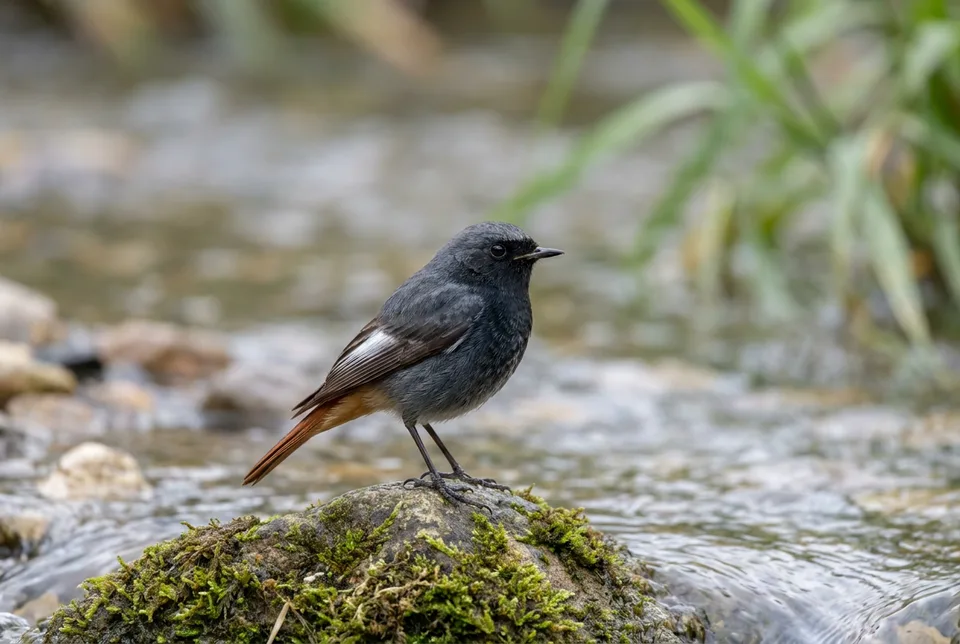
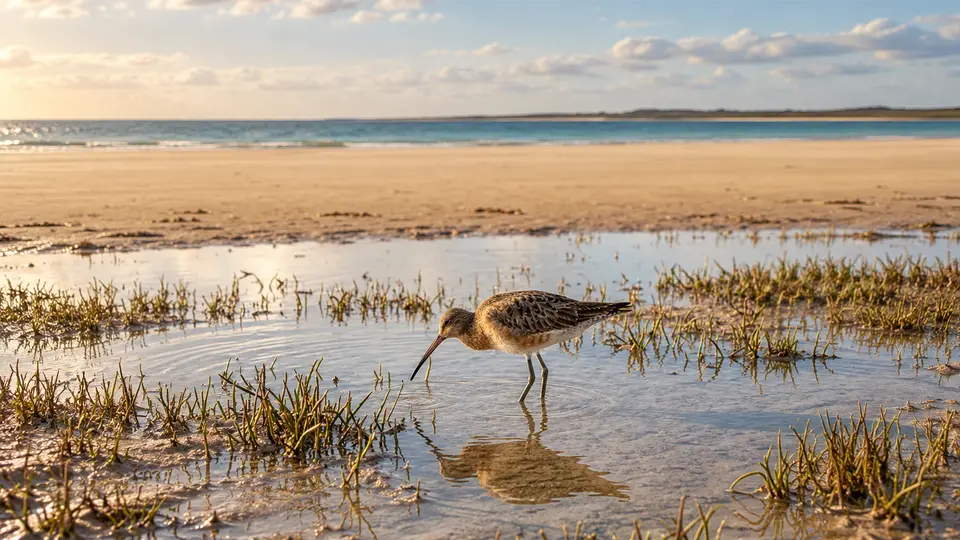
Common Snipe im Feuchtgebiet — Douro, Tierwelt auf FlusskreuzfahrtenCommon SnipeBar-tailed godwit im Feuchtgebiet — Douro, Tierwelt auf FlusskreuzfahrtenBar-tailed godwitBlack Redstart im Feuchtgebiet — Saone, Douro, Tierwelt auf FlusskreuzfahrtenBlack Redstart
Animal groupBirdsAnimal groupBirdsAnimal groupBirds
DestinationsDouroDestinationsDouroDestinationsSaone, Douro
Scientific name
Gallinago gallinago

Gallinago gallinago

Scientific name
Scientific name
Size
Not independently verified in the retrieved evidence
Size
Size
Weight
Not independently verified in the retrieved evidence
Weight
Weight
Lifespan
Not independently verified in the retrieved evidence
Lifespan
Lifespan
Status
See sourced assessment
Status
Status
Identification
A Common Snipe combines a very long straight bill, relatively short legs, a compact body and complex brown, black and buff patterning.

A Common Snipe combines a very long straight bill, relatively short legs, a compact body and complex brown, black and buff patterning. Pale buff stripes on the back are especially useful when the bird is crouched among vegetation. The chest is streaked, with paler underparts. Both sexes look similar, so plumage alone is not a practical way to assign sex during a shore visit. Jack Snipe is a potential comparison and should not be ruled out merely because Common Snipe is on the site list; size, bill proportions, head pattern and behaviour need careful assessment. Woodcock has a different overall shape and habitat context. A flushed bird’s irregular flight and harsh call can support identification, but should never be deliberately induced. For a partly concealed individual, wait for a natural turn or movement rather than forcing a view by approaching its cover.

Identification
Identification
Habitat
Common Snipe favour wet ground where soft substrates support probing and vegetation provides concealment.

Common Snipe favour wet ground where soft substrates support probing and vegetation provides concealment. Marshes, flooded fields, wet grassland and similar habitats can be suitable, whereas a dry open quay offers little of the same feeding opportunity. The Douro estuary guide specifically points to elusive birds such as snipe in its marsh discussion. This makes sheltered vegetated margins more relevant than scanning only the broadest open mudflat. Use the established reserve routes around Afurada, Cabedelo and São Paio and avoid entering wet cover. A small patch of marsh can be disturbed disproportionately by one observer trying to improve a view. The registered local evidence is estuary-specific and must not be extended to the inland wine-growing reaches. Portuguese national distribution and winter abundance are useful background, but they do not substitute for observations from a separate Douro locality or a particular cruise landing.

Habitat
Habitat
Diet
Common Snipe obtain much of their food by probing soft wet substrates with the long bill.

Common Snipe obtain much of their food by probing soft wet substrates with the long bill. Worms and other small invertebrates are important components of the diet. Feeding depends on access to penetrable ground, which helps explain the value of saturated soils and shallow wetland margins. The bill may disappear almost completely into the substrate while the body remains partly concealed. An observer usually cannot identify prey from the probing action alone, so avoid describing every feeding movement as worm capture. The local Douro guide confirms the species in marsh habitat but does not quantify its diet there. Watch natural feeding from a path or hide without trampling the wet margin or moving vegetation. Never pour water, dig into mud or place food to bring birds into view. Such manipulation changes the conditions being observed and can damage the small feeding patches that make the site useful.

Diet
Diet
Best season
Aves de Portugal describes Common Snipe as a familiar autumn and winter wetland bird nationally and gives a broad Portuguese occurrence period from September into early April.

Aves de Portugal describes Common Snipe as a familiar autumn and winter wetland bird nationally and gives a broad Portuguese occurrence period from September into early April. That national calendar is not direct proof of exact months at the registered Douro estuary reserve, so it is not entered into the monthly array. The local estuary account supports occurrence and marsh use but does not provide a complete species-specific monthly series. The array remains empty. Water availability, vegetation height and concealment affect whether birds can be seen even when present. A shore visit should therefore combine recent local observations with patient watching of wet margins rather than treating a national wintering pattern as a sighting forecast. The Portuguese account also distinguishes a very restricted breeding population elsewhere from widespread wintering occurrence; those breeding localities must not be imported into the Porto and Gaia river profile.

Best season
Best season
Season matrix by destination
DouroNo verified monthly viewing evidence

Local marsh occurrence is supported. The national September–early April calendar is not treated as exact local month proof.

Season matrix by destinationSeason matrix by destination
Previous speciesCommon sandpiperNext speciesCommon Swift
All river wildlife
On this page
  • 01About
  • 02Behaviour & reproduction
  • 03Top wildlife locations
  • 04Fun facts
  • 05Best season
  • 06Season matrix by destination
  • 07Habitat
  • 08Diet
  • 09Species at a glance
  • 10Questions & answers
  • 11Compare

Find your river cruise

Plan deine Reise

Find your next river journey

Compare destinations, shore programs and dates with the animals and habitats you would love to see.

  • Daily shore excursions
  • Responsible wildlife watching
  • Boutique river ships
Explore river cruises