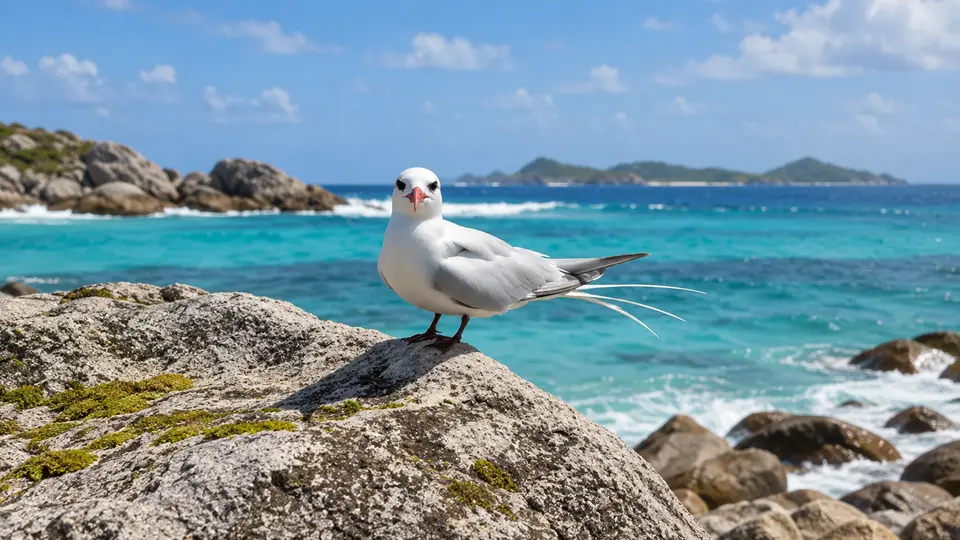
White-tailed Tropicbird in its natural habitatAI-modified

White-tailed TropicbirdPhaethon lepturusWhere and when to see them

White-tailed Tropicbird at a glance

The white-tailed tropicbird is a tropical seabird whose exceptionally long central tail feathers give adults an unmistakable silhouette. Its largely white plumage is marked by black across the wings and through the eyes. Although it nests on islands, it spends much of its life over warm ocean waters. In Seychelles, birds may be visible circling forested islands or approaching nest cavities, making careful observation from established coastal paths particularly rewarding.

Behaviour & reproduction

Size
70-90 cm (28-35 in) total length, including tail streamers
Weight
220-420 g (7.8-14.8 oz)
Lifespan
Not reliably established
Status
Least Concern

Pairs perform conspicuous aerial courtship, climbing and circling together near breeding islands with their tail streamers trailing behind. Nesting takes place in sheltered cavities, rock crevices or protected ground sites, where a single chick is raised. Adults alternate incubation and feeding duties, returning from offshore foraging trips with food carried internally. On land they move awkwardly, so an occupied nest should never be approached closely or blocked by observers. Courtship flights are an impressive display of aerial agility, involving rapid wing beats and graceful glides. Unlike many seabirds, they do not form large colonies but nest in isolated pairs or small groups.

Top wildlife locations

Seychelles wildlife habitatAI-modified

Seychelles

Wooded coastal slopes and rocky island margins offer possible views of birds circling above nesting terrain. Use established public paths or authorized reserve access; individual nest cavities may be inaccessible or protected.
Destinations describe the species' habitat, not guaranteed cruise stops. Some animals require an optional inland excursion or are found in restricted reserves.

Fun facts about the White-tailed Tropicbird

  • The two central tail feathers account for roughly half an adult's total length.
  • Each nesting attempt normally produces a single egg.
  • Its feet are positioned far back on the body, making walking difficult.
  • Young birds have barred upperparts and lack the adults' long tail streamers.

Best time to see the White-tailed Tropicbird

Observation is possible throughout the year in Seychelles because breeding is not confined to one short archipelago-wide season. April-May and October-November often offer gentler coastal conditions. Local nesting schedules, wind and access restrictions matter more than a single universal peak month. Breeding pairs may raise more than one chick in a calendar year, further contributing to their year-round presence. Strong winds can make foraging difficult for these birds, so calm conditions are often preferred for viewing them at sea.

White-tailed Tropicbird: season matrix by destination

Travel and observation windows vary by region. Highlighted months are an orientation for planning, not confirmed sightings or a guarantee of access.

Seychelles

Resident birds can be observed year-round; April-May and October-November often have calmer conditions, but breeding timing differs among sites.

JanFebMarAprMayJunJulAugSepOctNovDec
Cruise ships in Seychelles

Where the White-tailed Tropicbird lives

This species feeds over tropical and subtropical seas and breeds on oceanic islands. Nest sites include cliff holes, cavities beneath roots and sheltered spaces among rocks. In Seychelles, wooded island slopes and rocky coastal margins can provide suitable nesting terrain. Though primarily marine, they are occasionally seen inland over forested areas, especially during adverse weather or for nesting. Their preference for inaccessible cliff faces and remote island vegetation helps protect them from land predators.

What the White-tailed Tropicbird eats

Flying fish, other small surface-associated fish and squid form much of its diet. Birds locate prey in flight and capture it by plunging into the sea. Feeding usually occurs offshore, often beyond the distance at which individual prey can be identified from land. These birds have specialized salt glands to excrete excess salt, allowing them to drink seawater while at sea. They often forage in association with tuna or other predatory fish, which drive prey closer to the surface.

Species at a glance

Common name
White-tailed Tropicbird
Scientific name
Phaethon lepturus
Animal group
Birds
Size
70-90 cm (28-35 in) total length, including tail streamers
Weight
220-420 g (7.8-14.8 oz)
Lifespan
Not reliably established
Status
Least Concern
Identification
Its yellowish bill, black upperwing bars and white tail streamers distinguish it from the larger red-tailed tropicbird, which has red streamers and a red bill. Juveniles lack the adult's long tail streamers and have more extensive black barring on their upperparts. The black patch around the eye extends only slightly behind the eye, a useful feature when distinguishing from other tropicbird species.

White-tailed Tropicbird: frequently asked questions

Where can I see the White-tailed Tropicbird?
Seychelles. Watch circling birds from established coastal paths or open decks using binoculars. Keep clear of nest cavities and their flight approaches, avoid cliff edges, and never use calls or food to draw birds closer. Their striking plumage and long tail streamers make them easily identifiable even at a distance when they fly. From a moving vessel, focus on birds flying against the wind as they tend to hold their position longer.
When is the best time to see the White-tailed Tropicbird?
Observation is possible throughout the year in Seychelles because breeding is not confined to one short archipelago-wide season. April-May and October-November often offer gentler coastal conditions. Local nesting schedules, wind and access restrictions matter more than a single universal peak month. Breeding pairs may raise more than one chick in a calendar year, further contributing to their year-round presence. Strong winds can make foraging difficult for these birds, so calm conditions are often preferred for viewing them at sea.
How big does the White-tailed Tropicbird get?
70-90 cm (28-35 in) total length, including tail streamers. Adult weight: 220-420 g (7.8-14.8 oz). Size varies with age, sex and population.
How should I behave around the White-tailed Tropicbird?
Watch circling birds from established coastal paths or open decks using binoculars. Keep clear of nest cavities and their flight approaches, avoid cliff edges, and never use calls or food to draw birds closer. Their striking plumage and long tail streamers make them easily identifiable even at a distance when they fly. From a moving vessel, focus on birds flying against the wind as they tend to hold their position longer.
What does the White-tailed Tropicbird eat?
Flying fish, other small surface-associated fish and squid form much of its diet. Birds locate prey in flight and capture it by plunging into the sea. Feeding usually occurs offshore, often beyond the distance at which individual prey can be identified from land. These birds have specialized salt glands to excrete excess salt, allowing them to drink seawater while at sea. They often forage in association with tuna or other predatory fish, which drive prey closer to the surface.
Are wildlife sightings guaranteed on an adventure cruise?
No. Animals move freely and routes, weather, access restrictions and local conditions influence every outing. Confirm the actual itinerary and shore program before booking.

Compare wildlife in the same destinations

Explore other birds recorded in these destinations. Similar surroundings do not mean the animals share the same habits or viewing season.

Species comparison by animal group and destination
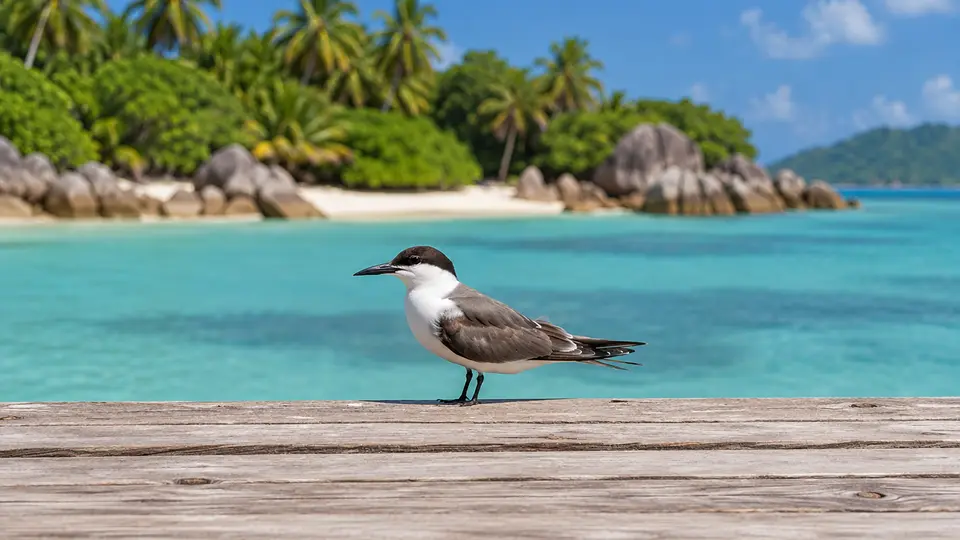
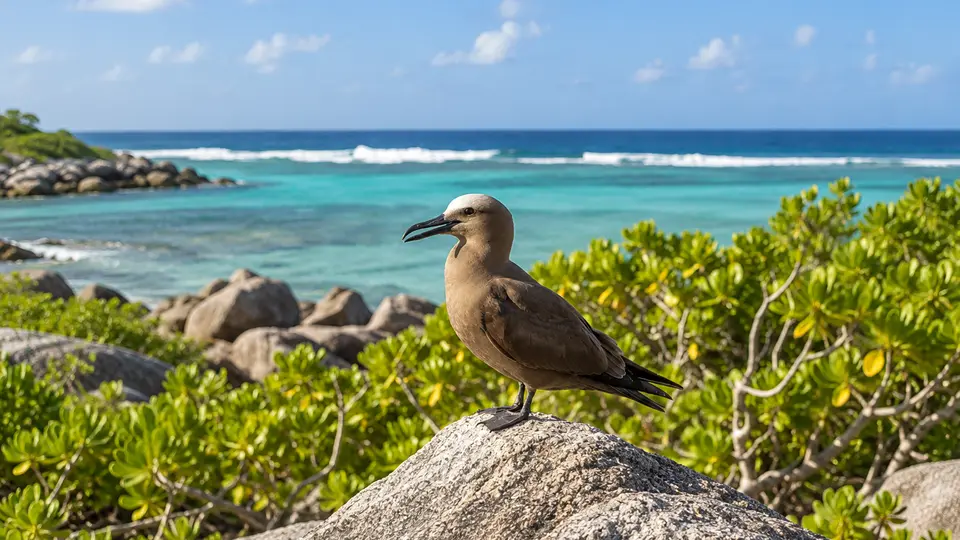
White-tailed TropicbirdAI-modifiedWhite-tailed TropicbirdBridled TernAI-modifiedBridled TernBrown NoddyAI-modifiedBrown Noddy
Animal groupBirdsAnimal groupBirdsAnimal groupBirds
DestinationsSeychellesDestinationsSeychellesDestinationsSeychelles, Maldives, Fiji
Scientific namePhaethon lepturusScientific nameScientific name
All wildlife destinations
AI-modified
Plan your trip

Find your next wildlife adventure

Compare destinations, shore programs and dates with the animals and habitats you would love to see.

  • Naturalist-led shore excursions
  • Responsible wildlife watching
  • Small expedition ships