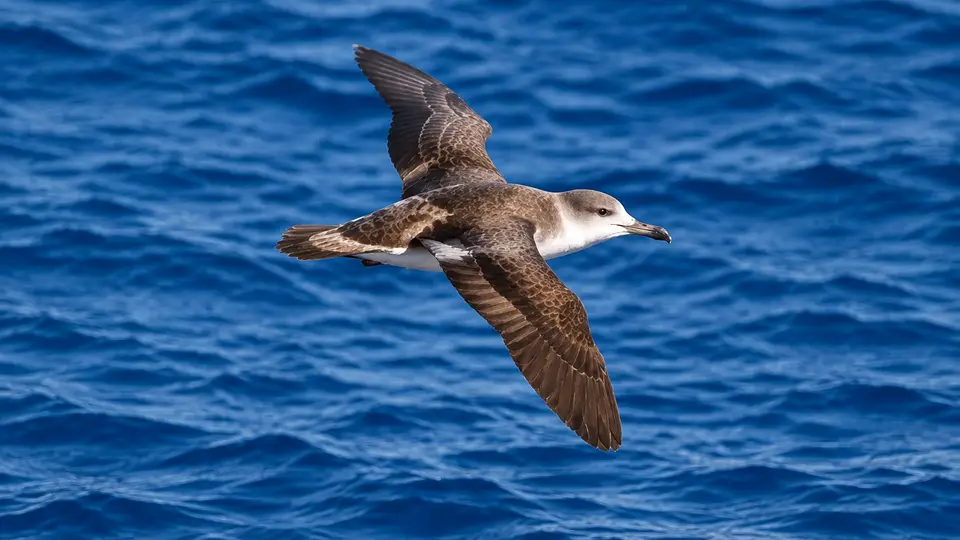
Wedge-tailed shearwater in its natural habitatAI-modified

Wedge-tailed shearwaterArdenna pacificaWhere and when to see them

Wedge-tailed shearwater at a glance

The wedge-tailed shearwater is a widespread tropical and subtropical seabird that nests on islands around Australia and across the Indian and Pacific oceans. Its long, pointed tail and relaxed, banking flight are useful clues when birds pass coastal headlands. Both dark and pale-bellied forms occur across its range. Although globally numerous, individual colonies can suffer from introduced predators, artificial lighting, trampling and the loss of secure ground suitable for nesting burrows.

Behaviour & reproduction

Size
38–47 cm (15–18.5 in) body length; 97–109 cm (38.2–42.9 in) wingspan
Weight
300–570 g (10.6–20.1 oz)
Lifespan
Not reliably established
Status
Least Concern

At sea, wedge-tailed shearwaters alternate glides with loose wingbeats, often gathering where other predators concentrate prey. Breeding birds return to colonies mainly after dark, reducing exposure to daytime predators. Their eerie calls carry from burrows and surrounding vegetation during the night. Pairs share incubation and chick provisioning, with adults sometimes making extended feeding journeys. Fledglings leave independently and may become disoriented by bright coastal lights during their first departure. The nocturnal activity at colonies helps them avoid aerial predators like gulls and raptors. Their distinctive moaning and wailing calls at night are a hallmark of their breeding colonies, serving for pair bonding and territorial defense.

Top wildlife locations

Australia wildlife habitatAI-modified

Australia

Subtropical headlands and permitted island lookouts can offer distant views near breeding waters. Many colonies are offshore, inaccessible or seasonally restricted; accessible burrow areas require marked paths to prevent nest damage.
Destinations describe the species' habitat, not guaranteed cruise stops. Some animals require an optional inland excursion or are found in restricted reserves.

Fun facts about the Wedge-tailed shearwater

  • Its long tail forms a conspicuous wedge when spread.
  • Both dark and pale-bellied plumage forms exist.
  • Breeding pairs lay just one egg per attempt.
  • Its nocturnal colony calls can sound like moaning or wailing.

Best time to see the Wedge-tailed shearwater

Many Australian colonies are occupied from roughly September to May, but timing differs across the country's broad latitude range. Coastal passage and evening returns depend on local breeding schedules. Check colony-specific access information rather than assuming all Australian sites share one peak season. Outside the breeding season, many birds undertake extensive migrations across the Pacific and Indian Oceans. Timing of egg-laying and fledging can vary by several weeks even within the same general region due to local environmental conditions.

Wedge-tailed shearwater: season matrix by destination

Travel and observation windows vary by region. Highlighted months are an orientation for planning, not confirmed sightings or a guarantee of access.

Australia

This broad window covers colony attendance at many Australian sites, but northern and southern breeding schedules differ.

JanFebMarAprMayJunJulAugSepOctNovDec
Cruise ships in Australia

Where the Wedge-tailed shearwater lives

The species feeds over tropical and subtropical seas, from coastal waters to offshore feeding grounds. Breeding colonies occupy islands with diggable soil, grassy slopes, scrub or rock crevices. Fragile burrow networks make apparently open colony ground unsuitable for unrestricted walking. The species shows strong philopatry, returning to the same breeding islands and often the same burrows year after year. These burrows can be substantial, sometimes extending several meters underground.

What the Wedge-tailed shearwater eats

Small fish and squid dominate the diet, supplemented by crustaceans. Birds exploit prey concentrated near the surface, sometimes alongside tuna and other marine predators. Food is carried back to chicks in the stomach, allowing adults to provision nests after offshore feeding trips. They employ pursuit-plunging from the air to catch prey close to the surface, but do not typically dive deep underwater. Regurgitated stomach oil, a nutrient-rich substance, is fed to chicks and can also be ejected as a defense mechanism.

Species at a glance

Common name
Wedge-tailed shearwater
Scientific name
Ardenna pacifica
Animal group
Birds
Size
38–47 cm (15–18.5 in) body length; 97–109 cm (38.2–42.9 in) wingspan
Weight
300–570 g (10.6–20.1 oz)
Lifespan
Not reliably established
Status
Least Concern
Identification
Its long wedge-shaped tail and relatively languid flight help separate it from the shorter-tailed, faster-flapping short-tailed shearwater. Body plumage is uniformly dark sooty-brown or black, with a slightly paler chin, lacking prominent white underparts typical of many other shearwater species. They have a slender body, long wings, and a dark bill.

Wedge-tailed shearwater: frequently asked questions

Where can I see the Wedge-tailed shearwater?
Australia. Watch offshore birds from headlands or established coastal lookouts. Near accessible colonies, remain on marked paths to avoid collapsing burrows, keep lights dim under local guidance, and never handle grounded fledglings unless directed by wildlife rescuers. When viewing from a boat, watch for their characteristic flight pattern as they shear over wave crests. Look for large rafts of birds congregating on the water, especially at dusk, near breeding colonies before they come ashore.
When is the best time to see the Wedge-tailed shearwater?
Many Australian colonies are occupied from roughly September to May, but timing differs across the country's broad latitude range. Coastal passage and evening returns depend on local breeding schedules. Check colony-specific access information rather than assuming all Australian sites share one peak season. Outside the breeding season, many birds undertake extensive migrations across the Pacific and Indian Oceans. Timing of egg-laying and fledging can vary by several weeks even within the same general region due to local environmental conditions.
How big does the Wedge-tailed shearwater get?
38–47 cm (15–18.5 in) body length; 97–109 cm (38.2–42.9 in) wingspan. Adult weight: 300–570 g (10.6–20.1 oz). Size varies with age, sex and population.
How should I behave around the Wedge-tailed shearwater?
Watch offshore birds from headlands or established coastal lookouts. Near accessible colonies, remain on marked paths to avoid collapsing burrows, keep lights dim under local guidance, and never handle grounded fledglings unless directed by wildlife rescuers. When viewing from a boat, watch for their characteristic flight pattern as they shear over wave crests. Look for large rafts of birds congregating on the water, especially at dusk, near breeding colonies before they come ashore.
What does the Wedge-tailed shearwater eat?
Small fish and squid dominate the diet, supplemented by crustaceans. Birds exploit prey concentrated near the surface, sometimes alongside tuna and other marine predators. Food is carried back to chicks in the stomach, allowing adults to provision nests after offshore feeding trips. They employ pursuit-plunging from the air to catch prey close to the surface, but do not typically dive deep underwater. Regurgitated stomach oil, a nutrient-rich substance, is fed to chicks and can also be ejected as a defense mechanism.
Are wildlife sightings guaranteed on an adventure cruise?
No. Animals move freely and routes, weather, access restrictions and local conditions influence every outing. Confirm the actual itinerary and shore program before booking.

Compare wildlife in the same destinations

Explore other birds recorded in these destinations. Similar surroundings do not mean the animals share the same habits or viewing season.

Species comparison by animal group and destination
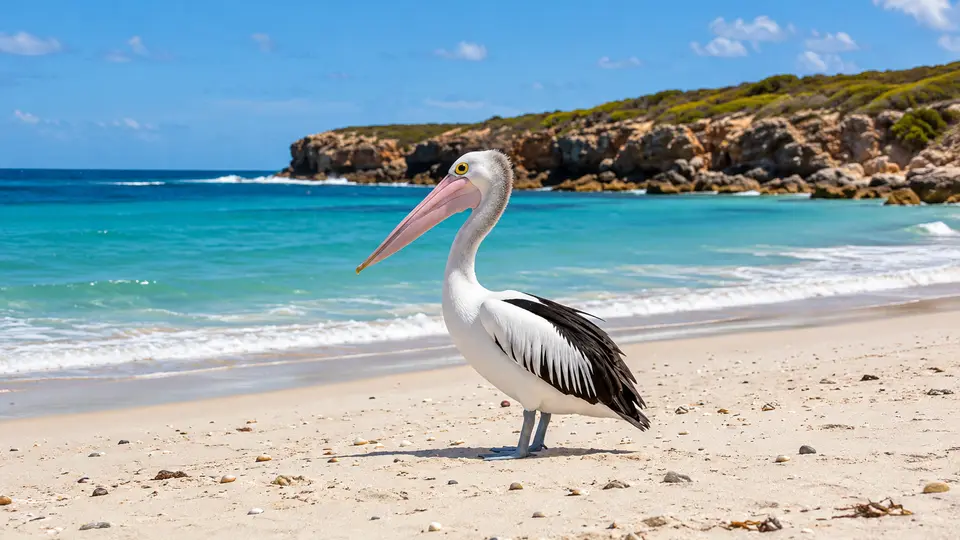
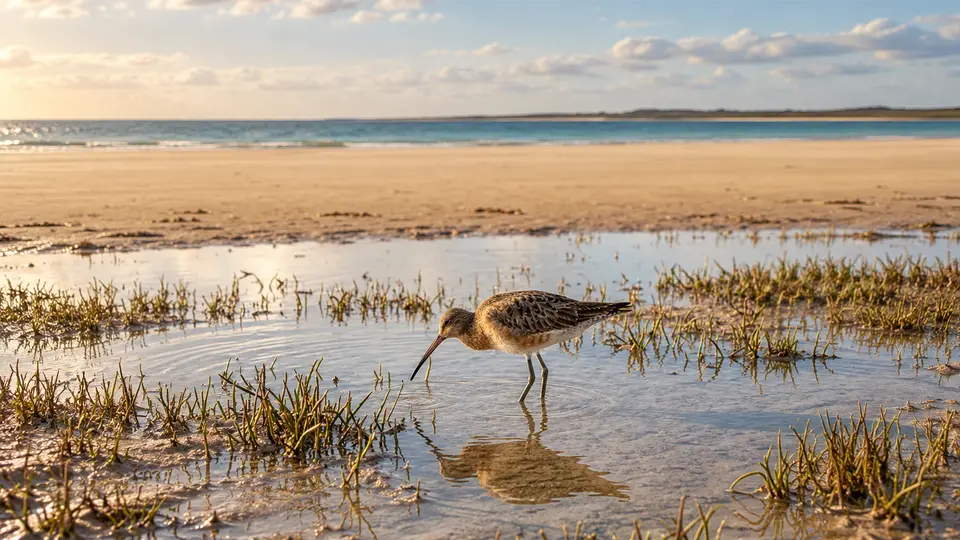
Wedge-tailed shearwaterAI-modifiedWedge-tailed shearwaterAustralian pelicanAI-modifiedAustralian pelicanBar-tailed godwitAI-modifiedBar-tailed godwit
Animal groupBirdsAnimal groupBirdsAnimal groupBirds
DestinationsAustraliaDestinationsAustraliaDestinationsAustralia, New Zealand
Scientific nameArdenna pacificaScientific nameScientific name
All wildlife destinations
AI-modified
Plan your trip

Find your next wildlife adventure

Compare destinations, shore programs and dates with the animals and habitats you would love to see.

  • Naturalist-led shore excursions
  • Responsible wildlife watching
  • Small expedition ships