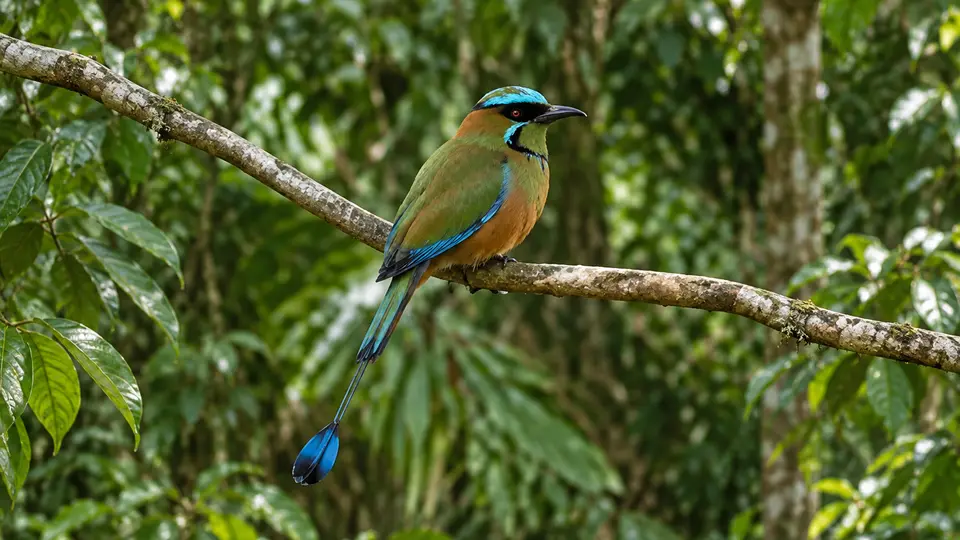
Turquoise-browed Motmot in its natural habitatAI-modified

Turquoise-browed MotmotEumomota superciliosaWhere and when to see them

Turquoise-browed Motmot at a glance

The turquoise-browed motmot is a striking Central American bird with a turquoise eyebrow, warm cinnamon underparts and a long, racket-tipped tail. In Costa Rica it is particularly associated with the seasonally dry northwest, rather than the wettest Caribbean forests. It often sits conspicuously on an exposed branch or wire, scanning the ground for prey. Despite its brilliant colors, its stillness and shaded perches can make it surprisingly easy to overlook.

Behaviour & reproduction

Size
34–38 cm (13.4–15.0 in) length
Weight
60–70 g (2.1–2.5 oz)
Lifespan
Not reliably established
Status
Least Concern

A motmot typically hunts from a stationary perch, dropping to the ground or making a short flight to seize prey before returning to a lookout. Its tail sometimes swings from side to side like a pendulum. This movement can signal awareness of a potential predator rather than simply expressing excitement. Pairs excavate nesting tunnels in earthen banks, and several pairs may nest near one another where suitable banks are limited. Courtship involves mutual tail-wagging displays and the offering of food items from the male to the female. When disturbed, they may produce a distinctive "mot-mot" call, which gives the family its common name.

Top wildlife locations

Costa Rica wildlife habitatAI-modified

Costa Rica

Northwestern Pacific dry-forest edges and wooded coastal hinterlands provide plausible viewing from paths or quiet roads. A short excursion away from the beach is usually needed; wet Caribbean coastal forest is less suitable.
Destinations describe the species' habitat, not guaranteed cruise stops. Some animals require an optional inland excursion or are found in restricted reserves.

Fun facts about the Turquoise-browed Motmot

  • Both sexes possess racket-tipped central tail feathers.
  • Weakly attached feather barbs are shed to produce the bare tail shafts.
  • Side-to-side tail wagging can advertise that a predator has been detected.
  • It nests in tunnels excavated into earthen banks.

Best time to see the Turquoise-browed Motmot

The northwestern Costa Rican dry season often provides easier walking and clearer views through sparse foliage. Birds are resident, however, and remain present during wetter months. Nesting activity follows local seasonal conditions and should not be equated automatically with the easiest tourist travel period. The breeding season typically runs from March to July, correlating with the onset of rains which soften the soil for tunnel excavation. Despite seasonal variations, their striking appearance makes them a highlight year-round for birdwatchers.

Turquoise-browed Motmot: season matrix by destination

Travel and observation windows vary by region. Highlighted months are an orientation for planning, not confirmed sightings or a guarantee of access.

Costa Rica

The northwestern dry season favors access and visibility, not seasonal arrival. Resident birds can also be observed outside this window where local conditions permit.

JanFebMarAprMayJunJulAugSepOctNovDec
Cruise ships in Costa Rica

Where the Turquoise-browed Motmot lives

It favors tropical dry forest, open woodland, scrub, pasture edges and gardens with scattered trees. Earthen banks provide nesting opportunities. In Costa Rica, Pacific lowlands of the northwest are especially suitable, including some coastal hinterlands accessible without entering dense rainforest. Though adaptable, it shows a strong preference for dry deciduous forests and semi-open areas, often near water sources. Its range extends from southeastern Mexico through Central America, making it a widespread and familiar sight in its preferred habitats.

What the Turquoise-browed Motmot eats

Large insects form much of the diet, including beetles, grasshoppers and other conspicuous arthropods. Spiders, small lizards and occasional fruit may also be taken. Prey is usually spotted from a perch, then captured in a quick movement toward the ground or nearby vegetation. Larger prey items are often smashed against a branch before consumption. The diet can also include small amphibians or even smaller birds, especially during nesting season when protein needs are higher.

Species at a glance

Common name
Turquoise-browed Motmot
Scientific name
Eumomota superciliosa
Animal group
Birds
Size
34–38 cm (13.4–15.0 in) length
Weight
60–70 g (2.1–2.5 oz)
Lifespan
Not reliably established
Status
Least Concern
Identification
Its broad turquoise eyebrow, black throat patch and long bare tail shafts separate it from the larger, greener Lesson’s motmot found in Costa Rica. Look for the two elongated, bare tail feathers ending in racquets, a distinctive feature among motmots. The bright green body plumage and rufous underparts are also key field marks for this species.

Turquoise-browed Motmot: frequently asked questions

Where can I see the Turquoise-browed Motmot?
Costa Rica. Watch exposed perches quietly from public paths and avoid approaching earthen nesting banks. Keep clear of road traffic when birds use roadside wires. Do not disturb banks or use playback to draw adults from tunnels. Their vibrant plumage is often camouflaged by dense foliage, making patience key to spotting them. Early morning and late afternoon are generally the most active times for foraging and display.
When is the best time to see the Turquoise-browed Motmot?
The northwestern Costa Rican dry season often provides easier walking and clearer views through sparse foliage. Birds are resident, however, and remain present during wetter months. Nesting activity follows local seasonal conditions and should not be equated automatically with the easiest tourist travel period. The breeding season typically runs from March to July, correlating with the onset of rains which soften the soil for tunnel excavation. Despite seasonal variations, their striking appearance makes them a highlight year-round for birdwatchers.
How big does the Turquoise-browed Motmot get?
34–38 cm (13.4–15.0 in) length. Adult weight: 60–70 g (2.1–2.5 oz). Size varies with age, sex and population.
How should I behave around the Turquoise-browed Motmot?
Watch exposed perches quietly from public paths and avoid approaching earthen nesting banks. Keep clear of road traffic when birds use roadside wires. Do not disturb banks or use playback to draw adults from tunnels. Their vibrant plumage is often camouflaged by dense foliage, making patience key to spotting them. Early morning and late afternoon are generally the most active times for foraging and display.
What does the Turquoise-browed Motmot eat?
Large insects form much of the diet, including beetles, grasshoppers and other conspicuous arthropods. Spiders, small lizards and occasional fruit may also be taken. Prey is usually spotted from a perch, then captured in a quick movement toward the ground or nearby vegetation. Larger prey items are often smashed against a branch before consumption. The diet can also include small amphibians or even smaller birds, especially during nesting season when protein needs are higher.
Are wildlife sightings guaranteed on an adventure cruise?
No. Animals move freely and routes, weather, access restrictions and local conditions influence every outing. Confirm the actual itinerary and shore program before booking.

Compare wildlife in the same destinations

Explore other birds recorded in these destinations. Similar surroundings do not mean the animals share the same habits or viewing season.

Species comparison by animal group and destination
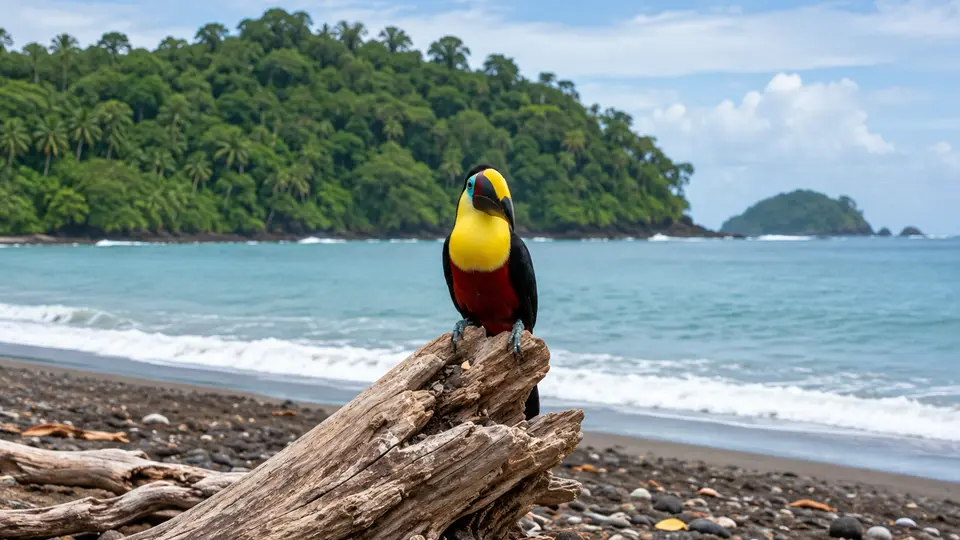
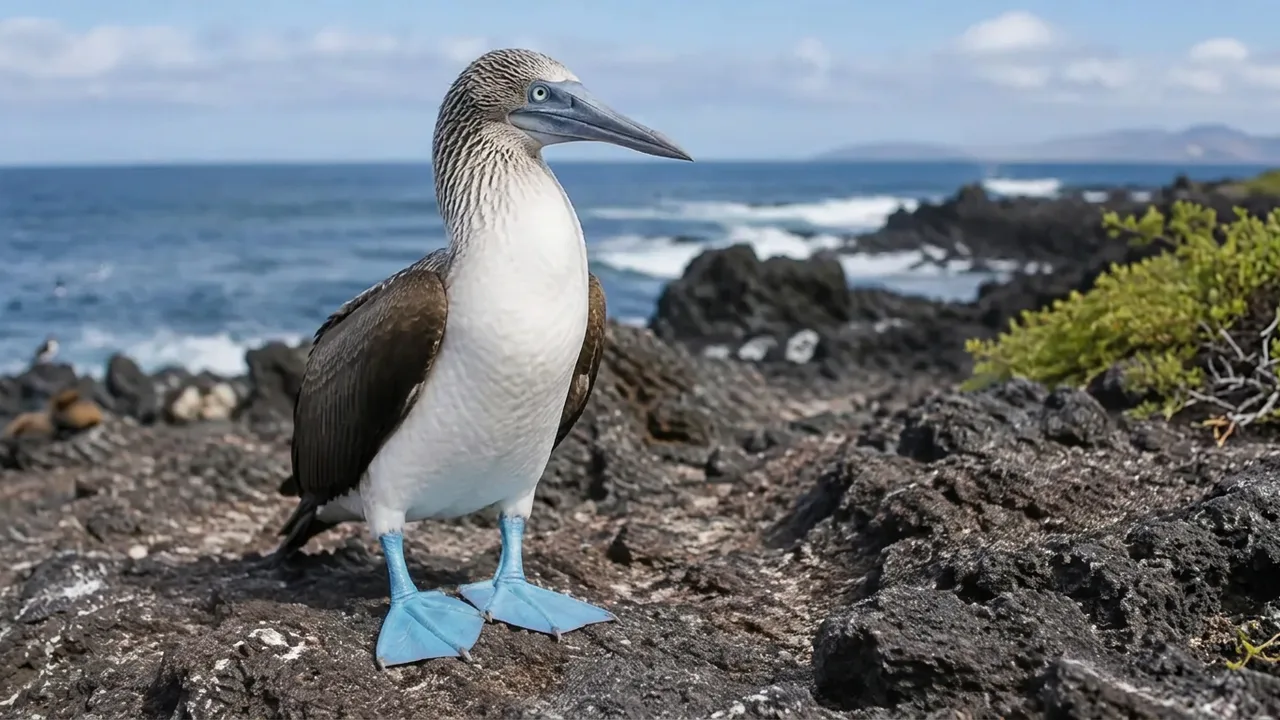
Turquoise-browed MotmotAI-modifiedTurquoise-browed MotmotBlack-mandibled ToucanAI-modifiedBlack-mandibled ToucanBlue-footed BoobyAI-modifiedBlue-footed Booby
Animal groupBirdsAnimal groupBirdsAnimal groupBirds
DestinationsCosta RicaDestinationsCosta RicaDestinationsCosta Rica, Galapagos, Mexico
Scientific nameEumomota superciliosaScientific nameScientific name
All wildlife destinations
AI-modified
Plan your trip

Find your next wildlife adventure

Compare destinations, shore programs and dates with the animals and habitats you would love to see.

  • Naturalist-led shore excursions
  • Responsible wildlife watching
  • Small expedition ships