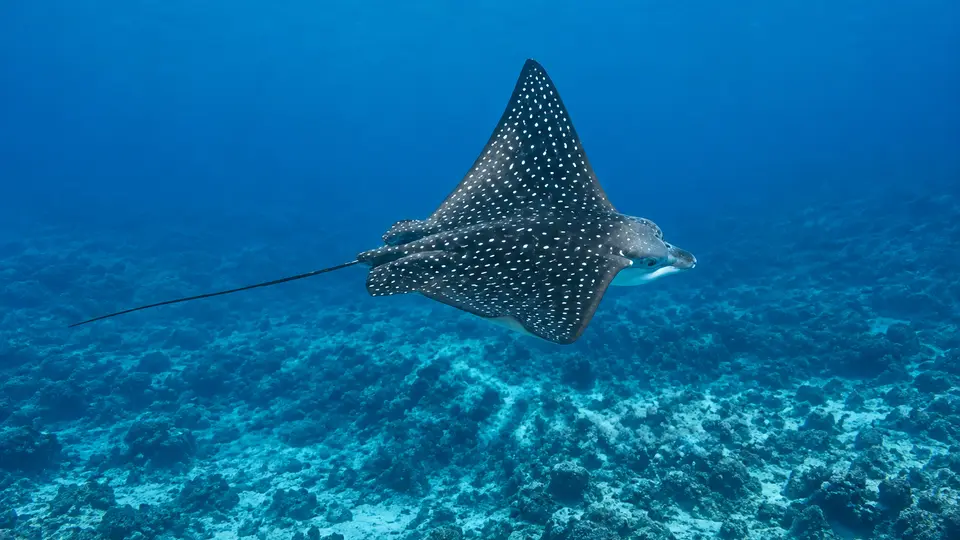
Spotted Eagle Ray in its natural habitat

Spotted Eagle RayAetobatus narinariWhere and when to see them

Spotted Eagle Ray at a glance

The spotted eagle ray is a large, wing-shaped fish of the Atlantic, including Florida's coastal waters. White spots cover its dark upper surface, and its pointed snout projects beyond the broad disc. Formerly grouped with similar rays from other oceans, it is now recognised more narrowly as an Atlantic species. It remains fully aquatic; occasional surface movements or leaps may be noticed from shore, bridges or a distant vessel deck.

Behaviour & reproduction

Size
Disc width 1–2.3 m (3.3–7.5 ft)
Weight
Not reliably established
Lifespan
Not reliably established
Status
Endangered

Spotted eagle rays travel alone or in groups, using steady movements of their enlarged pectoral fins. They search bottom sediments for buried prey and can make conspicuous leaps clear of the surface. Group formation varies with location and season rather than following one universal pattern. Females give birth to live young after embryos develop internally, producing relatively few offspring, a life-history feature that limits recovery from heavy fishing pressure. Their dramatic leaps, often seen in open water, are thought to be related to social display, evading predators, or dislodging parasites. While generally solitary or in small groups, large aggregations of hundreds of individuals have been observed during migration or breeding events.

Top wildlife locations

Florida wildlife habitat

Florida

Clear coastal channels, bay margins and ocean-facing piers offer occasional views from above. Shore sightings are unpredictable, and lawful deck observation may reveal passing rays without requiring access to remote or restricted habitat.
Destinations describe the species' habitat, not guaranteed cruise stops. Some animals require an optional inland excursion or are found in restricted reserves.

Fun facts about the Spotted Eagle Ray

  • Its broad swimming wings are enlarged pectoral fins.
  • Flattened tooth plates crush mollusc shells.
  • The tail may extend well beyond the length of the disc.
  • Similar spotted eagle rays in other oceans are now treated as separate species.

Best time to see the Spotted Eagle Ray

Warmer months generally offer more plausible Florida surface-viewing opportunities, especially where clear water meets coastal channels. Local movements are strongly influenced by temperature and conditions. Calm weather and low glare improve visibility from land or decks, but there is no dependable shoreline sighting season. Peak viewing coincides with periods when these rays aggregate in shallower waters, often in spring and early summer in Florida, before potentially moving to deeper, cooler areas. Observing their distinctive patterns requires calm seas and clear conditions, which are more prevalent during stable weather periods.

Spotted Eagle Ray: season matrix by destination

Travel and observation windows vary by region. Highlighted months are an orientation for planning, not confirmed sightings or a guarantee of access.

Florida

A broad warm-water observation window, varying between northern and southern Florida; storms, glare and water clarity can negate opportunities.

JanFebMarAprMayJunJulAugSepOctNovDec
Cruise ships in Florida

Where the Spotted Eagle Ray lives

Coastal bays, sandy channels, seagrass margins and reef-associated waters provide feeding and movement habitat. Rays also cross more open water. In Florida, clear shallow coastal areas can occasionally permit a view from above, but glare, depth and turbidity frequently prevent reliable identification. They are commonly found in tropical and warm temperate waters worldwide, often migrating seasonally between different regions. Their preference for shallow, coastal waters makes them accessible to observation in areas like Florida's Gulf and Atlantic coasts.

What the Spotted Eagle Ray eats

Hard-shelled bottom animals dominate the diet, especially bivalves and marine snails, alongside crustaceans and other prey. Broad dental plates crush shells. The projecting snout helps uncover buried food, and feeding activity can leave disturbed patches in sand or soft sediment. Their powerful jaws and dental plates are perfectly adapted for crushing the shells of mollusks and crustaceans, which they excavate from the seabed using their snout. These foraging activities are a key part of their ecological role, stirring up sediments and making nutrients available.

Species at a glance

Common name
Spotted Eagle Ray
Scientific name
Aetobatus narinari
Animal group
Marine life
Size
Disc width 1–2.3 m (3.3–7.5 ft)
Weight
Not reliably established
Lifespan
Not reliably established
Status
Endangered
Identification
Its dark, white-spotted upper surface, projecting duckbill-like snout and extremely long thin tail distinguish it from Florida's unspotted cownose ray. Beyond their characteristic spots, their unique flattened head and long, whip-like tail distinguish them clearly from other ray species. Unlike some rays, they possess a distinct, almost bird-like, pointed snout that aids in bottom feeding.

Spotted Eagle Ray: frequently asked questions

Where can I see the Spotted Eagle Ray?
Florida. Look from secure piers, bridges or decks without leaning over barriers. Never touch or feed a ray; the long tail carries venomous spines, and leaping animals should be given ample space. When viewing from a boat, maintain a safe distance and avoid disturbing their natural movements, especially if multiple rays are present. Look for their distinct dark shapes and white spots moving just beneath the surface or breaching the water during their spectacular leaps.
When is the best time to see the Spotted Eagle Ray?
Warmer months generally offer more plausible Florida surface-viewing opportunities, especially where clear water meets coastal channels. Local movements are strongly influenced by temperature and conditions. Calm weather and low glare improve visibility from land or decks, but there is no dependable shoreline sighting season. Peak viewing coincides with periods when these rays aggregate in shallower waters, often in spring and early summer in Florida, before potentially moving to deeper, cooler areas. Observing their distinctive patterns requires calm seas and clear conditions, which are more prevalent during stable weather periods.
How big does the Spotted Eagle Ray get?
Disc width 1–2.3 m (3.3–7.5 ft). Adult weight: Not reliably established. Size varies with age, sex and population.
How should I behave around the Spotted Eagle Ray?
Look from secure piers, bridges or decks without leaning over barriers. Never touch or feed a ray; the long tail carries venomous spines, and leaping animals should be given ample space. When viewing from a boat, maintain a safe distance and avoid disturbing their natural movements, especially if multiple rays are present. Look for their distinct dark shapes and white spots moving just beneath the surface or breaching the water during their spectacular leaps.
What does the Spotted Eagle Ray eat?
Hard-shelled bottom animals dominate the diet, especially bivalves and marine snails, alongside crustaceans and other prey. Broad dental plates crush shells. The projecting snout helps uncover buried food, and feeding activity can leave disturbed patches in sand or soft sediment. Their powerful jaws and dental plates are perfectly adapted for crushing the shells of mollusks and crustaceans, which they excavate from the seabed using their snout. These foraging activities are a key part of their ecological role, stirring up sediments and making nutrients available.
Are wildlife sightings guaranteed on an adventure cruise?
No. Animals move freely and routes, weather, access restrictions and local conditions influence every outing. Confirm the actual itinerary and shore program before booking.

Compare wildlife in the same destinations

Explore other marine life recorded in these destinations. Similar surroundings do not mean the animals share the same habits or viewing season.

Species comparison by animal group and destination
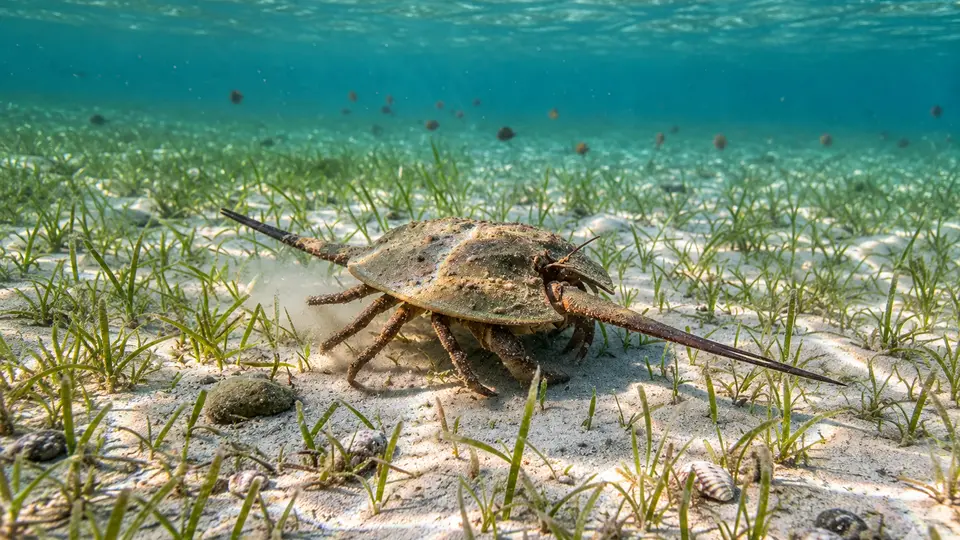
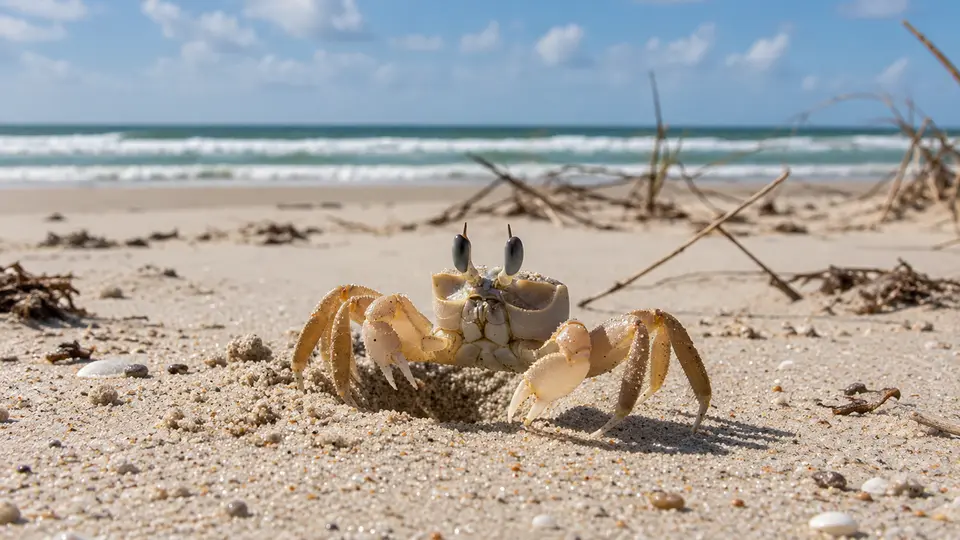
Spotted Eagle RaySpotted Eagle RayAtlantic Ghost CrabAtlantic Ghost CrabAtlantic Horseshoe CrabAtlantic Horseshoe Crab
Animal groupMarine lifeAnimal groupMarine lifeAnimal groupMarine life
DestinationsFloridaDestinationsFloridaDestinationsFlorida, New England
Scientific nameAetobatus narinariScientific nameScientific name
All wildlife destinations
Plan your trip

Find your next wildlife adventure

Compare destinations, shore programs and dates with the animals and habitats you would love to see.

  • Naturalist-led shore excursions
  • Responsible wildlife watching
  • Small expedition ships