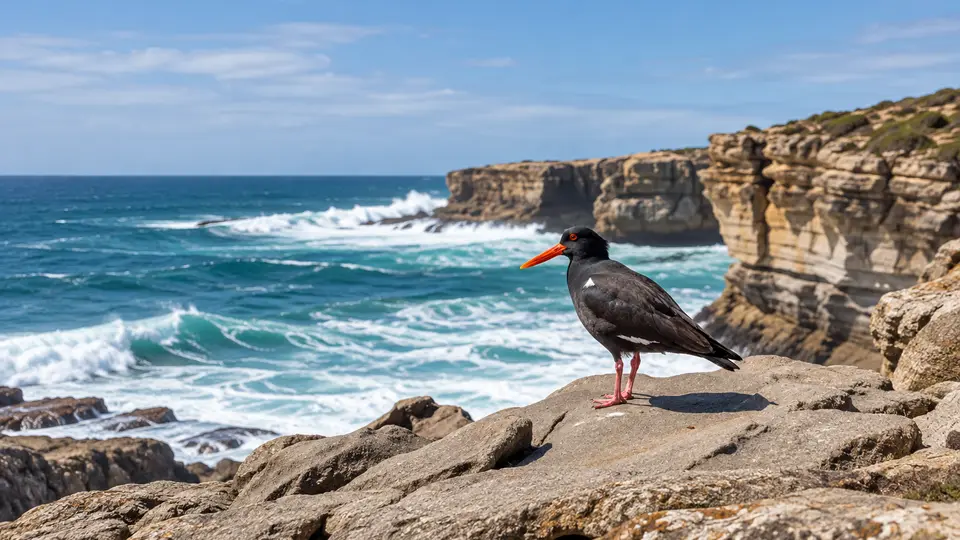
Sooty oystercatcher in its natural habitatAI-modified

Sooty oystercatcherHaematopus fuliginosusWhere and when to see them

Sooty oystercatcher at a glance

Australia's sooty oystercatcher is a sturdy, black shorebird with a vivid red-orange bill and pink legs. It is strongly associated with rocky coastal feeding grounds, where its bill gives access to tough-shelled prey. The species occurs around much of Australia's coastline and nearby islands, including Tasmania. Despite its broad distribution, pairs can be sparse, and undisturbed nesting and roosting areas remain important wherever recreation overlaps with the narrow coastal strip it occupies.

Behaviour & reproduction

Size
42-52 cm (16.5-20.5 in) long
Weight
500-980 g (17.6-34.6 oz)
Lifespan
Not reliably established
Status
Least Concern

Pairs often maintain coastal territories and advertise their presence with loud piping calls. Birds walk carefully across rock platforms, probing cracks and testing shellfish before using the bill to prise or cut them open. Their feeding schedule follows tidal access rather than ordinary human mealtimes. Nests are simple ground scrapes, and adults may call or perform distraction displays when disturbed. Outside breeding, some individuals gather in small groups at safe high-tide roosts. Pairs defend their breeding territories vigorously, often using elaborate alarm calls and displays to deter intruders. During high tide, they commonly rest on elevated rocks or sandy spits, sometimes preening or sleeping to conserve energy.

Top wildlife locations

Australia wildlife habitatAI-modified

Australia

Rocky mainland shores and Tasmanian headlands provide plausible viewing from established coastal paths. Some island territories are inaccessible, but an inland excursion is unnecessary; local occurrence remains patchy despite the broad coastal range.
Destinations describe the species' habitat, not guaranteed cruise stops. Some animals require an optional inland excursion or are found in restricted reserves.

Fun facts about the Sooty oystercatcher

  • Two subspecies are recognized around Australia's coasts.
  • Northern and southern forms differ notably in the color of the bare eye ring.
  • Its nest is a shallow scrape rather than a constructed cup.
  • The bill is used as several tools, including a probe, chisel and lever.

Best time to see the Sooty oystercatcher

Birds may be present throughout the year, so local tide and sea conditions often matter more than month. Calm weather and a falling tide improve visibility of feeding platforms. Southern breeding commonly falls in spring and summer, when nest disturbance needs particular care. During the non-breeding season, especially in winter, larger aggregations can sometimes be observed at communal roost sites. Migratory movements are generally limited, with most populations remaining in their home regions year-round, though some local dispersal occurs.

Sooty oystercatcher: season matrix by destination

Travel and observation windows vary by region. Highlighted months are an orientation for planning, not confirmed sightings or a guarantee of access.

Australia

Year-round coastal presence supports a broad window; choose safe tides and regional weather rather than treating all Australian coasts as seasonally identical.

JanFebMarAprMayJunJulAugSepOctNovDec
Cruise ships in Australia

Where the Sooty oystercatcher lives

Wave-washed rock platforms, rocky headlands, offshore islands and beaches with exposed reef are characteristic habitats. Sandy or shingle stretches may serve as nesting or resting areas beside richer feeding grounds. It is much less associated with inland wetlands than many other waders. While predominantly coastal, these birds may occasionally be seen around coastal lagoons or estuaries where suitable foraging areas exist. They are particularly fond of areas with abundant intertidal rocks and reefs that provide diverse feeding opportunities.

What the Sooty oystercatcher eats

Mussels, limpets, other mollusks, crabs and additional intertidal invertebrates dominate its food. The strong bill can probe, hammer or prise depending on the prey. Feeding opportunities shift with the tide, wave exposure and the shellfish communities present along each stretch of coast. Their diet can also include small fish, marine worms, and even carrion found along the shoreline. The specialized bill allows them to open bivalves like oysters and mussels by either hammering a hole or inserting the bill to cut the adductor muscle.

Species at a glance

Common name
Sooty oystercatcher
Scientific name
Haematopus fuliginosus
Animal group
Birds
Size
42-52 cm (16.5-20.5 in) long
Weight
500-980 g (17.6-34.6 oz)
Lifespan
Not reliably established
Status
Least Concern
Identification
Its entirely black plumage distinguishes it from the Australian pied oystercatcher, which has conspicuous white underparts and wing patches. Juveniles have duller black plumage, sometimes with a brownish tinge, and a bill that is initially dark before developing the adult's bright orange-red coloration. Their robust, all-black body and strong, straight, red bill distinguish them readily from other shorebirds.

Sooty oystercatcher: frequently asked questions

Where can I see the Sooty oystercatcher?
Australia. Observe from stable headland paths rather than wave-washed platforms. Give piping pairs and camouflaged ground nests ample space, keep dogs away, and never cross slippery rocks or approach an exposed edge for a closer photograph. From a ship or zodiac, look for them foraging on exposed rocks at low tide or roosting quietly on sandy cays. Binoculars are essential to observe their feeding techniques and confirm identification from a distance without disturbance.
When is the best time to see the Sooty oystercatcher?
Birds may be present throughout the year, so local tide and sea conditions often matter more than month. Calm weather and a falling tide improve visibility of feeding platforms. Southern breeding commonly falls in spring and summer, when nest disturbance needs particular care. During the non-breeding season, especially in winter, larger aggregations can sometimes be observed at communal roost sites. Migratory movements are generally limited, with most populations remaining in their home regions year-round, though some local dispersal occurs.
How big does the Sooty oystercatcher get?
42-52 cm (16.5-20.5 in) long. Adult weight: 500-980 g (17.6-34.6 oz). Size varies with age, sex and population.
How should I behave around the Sooty oystercatcher?
Observe from stable headland paths rather than wave-washed platforms. Give piping pairs and camouflaged ground nests ample space, keep dogs away, and never cross slippery rocks or approach an exposed edge for a closer photograph. From a ship or zodiac, look for them foraging on exposed rocks at low tide or roosting quietly on sandy cays. Binoculars are essential to observe their feeding techniques and confirm identification from a distance without disturbance.
What does the Sooty oystercatcher eat?
Mussels, limpets, other mollusks, crabs and additional intertidal invertebrates dominate its food. The strong bill can probe, hammer or prise depending on the prey. Feeding opportunities shift with the tide, wave exposure and the shellfish communities present along each stretch of coast. Their diet can also include small fish, marine worms, and even carrion found along the shoreline. The specialized bill allows them to open bivalves like oysters and mussels by either hammering a hole or inserting the bill to cut the adductor muscle.
Are wildlife sightings guaranteed on an adventure cruise?
No. Animals move freely and routes, weather, access restrictions and local conditions influence every outing. Confirm the actual itinerary and shore program before booking.

Compare wildlife in the same destinations

Explore other birds recorded in these destinations. Similar surroundings do not mean the animals share the same habits or viewing season.

Species comparison by animal group and destination
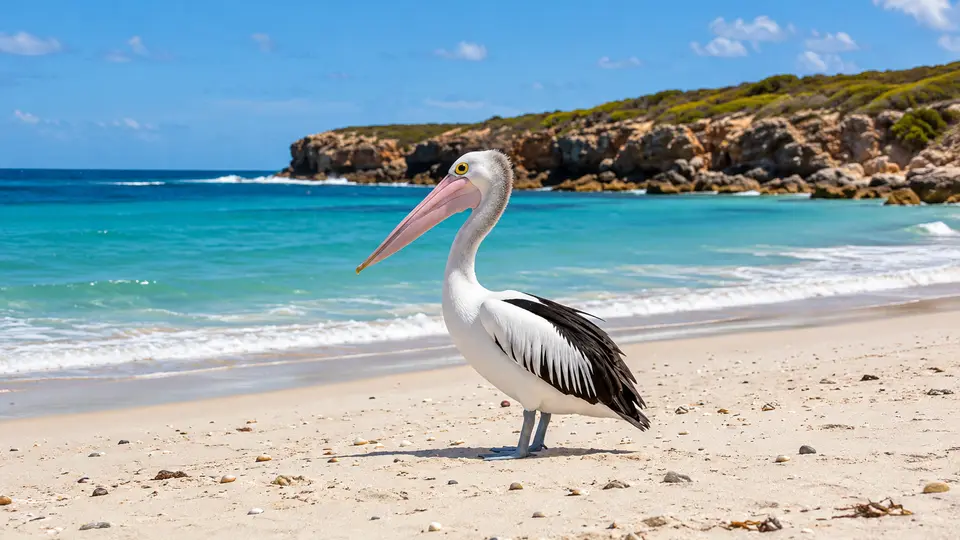
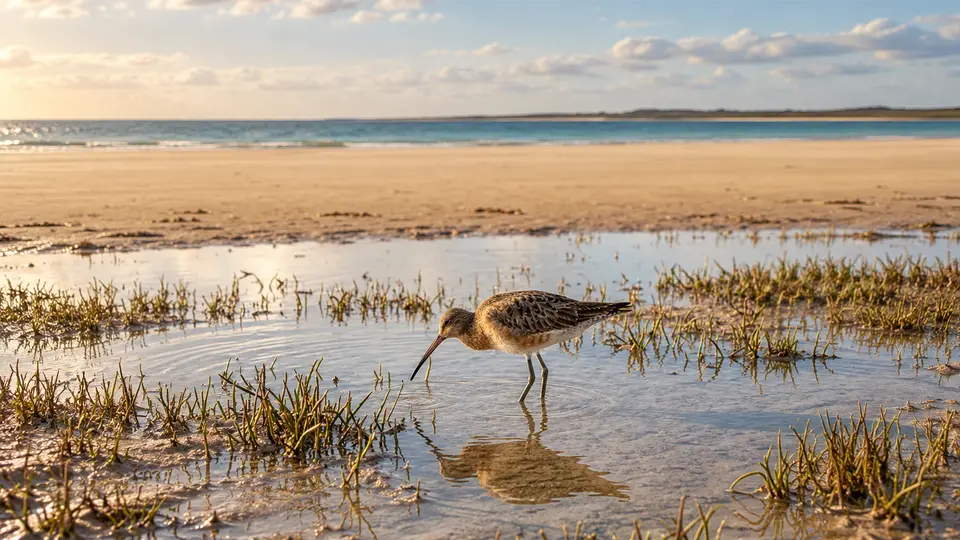
Sooty oystercatcherAI-modifiedSooty oystercatcherAustralian pelicanAI-modifiedAustralian pelicanBar-tailed godwitAI-modifiedBar-tailed godwit
Animal groupBirdsAnimal groupBirdsAnimal groupBirds
DestinationsAustraliaDestinationsAustraliaDestinationsAustralia, New Zealand
Scientific nameHaematopus fuliginosusScientific nameScientific name
All wildlife destinations
AI-modified
Plan your trip

Find your next wildlife adventure

Compare destinations, shore programs and dates with the animals and habitats you would love to see.

  • Naturalist-led shore excursions
  • Responsible wildlife watching
  • Small expedition ships