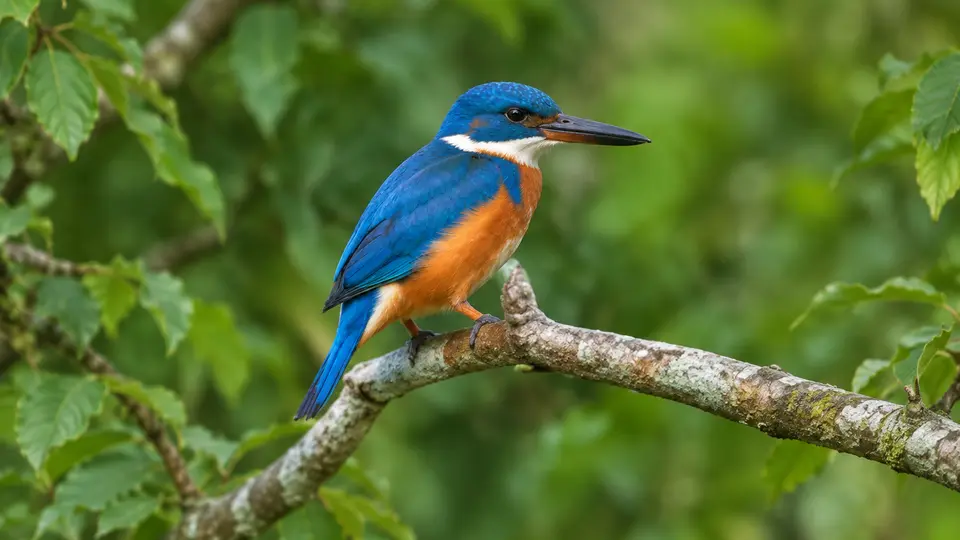
Society Islands kingfisher in its natural habitatAI-modified

Society Islands kingfisherTodiramphus veneratusWhere and when to see them

Society Islands kingfisher at a glance

Here, Society Islands kingfisher refers to the Tahiti kingfisher, Todiramphus veneratus, rather than every kingfisher occurring across the archipelago. This compact island bird inhabits Tahiti, where wooded valleys and forest edges provide hunting perches. Unlike the familiar image of a kingfisher catching fish beside a river, it principally takes terrestrial prey. Its restricted island distribution makes the condition of local forests particularly important, even where birds tolerate some modified vegetation.

Behaviour & reproduction

Size
21-24 cm (8.3-9.4 in) long
Weight
Not reliably established
Lifespan
Not reliably established
Status
Least Concern

A bird typically waits on an exposed branch, watching the ground or nearby foliage before dropping onto prey. It returns to a perch to handle larger captures, sometimes striking them against the branch. Pairs communicate with repeated, carrying calls and defend breeding territories. Nesting involves excavating a cavity in suitable soft or decaying wood. Activity can be conspicuous around favored perches, but individuals may remain quiet and easily overlooked within dense valley vegetation. A bird typically waits on an exposed branch, watching the ground or nearby foliage before dropping onto prey. It returns to a perch to handle larger captures, sometimes striking them against the branch. Pairs communicate with repeated, carrying calls and defend breeding territories. Nesting involves excavating a cavity in suitable soft or decaying wood. Activity can be conspicuous around favored perches, but individuals may remain quiet and easily overlooked within dense valley vegetation. Its vocalizations are a series of sharp, repeated 'kek-kek-kek' notes or a trilling whistle. Both parents participate in excavating the nest cavity and raising the young.

Top wildlife locations

Polynesia wildlife habitatAI-modified

Polynesia

On Tahiti, wooded lower valleys and forest edges are more plausible than open shorelines. Viewing normally requires an inland excursion from the coast; occurrence should not be assumed on other Polynesian islands.
Destinations describe the species' habitat, not guaranteed cruise stops. Some animals require an optional inland excursion or are found in restricted reserves.

Fun facts about the Society Islands kingfisher

  • Its scientific epithet, veneratus, means revered or honored.
  • This species is endemic to Tahiti under the current narrow species treatment.
  • Its hunting behavior is often more like that of a woodland flycatcher than a fish-catching kingfisher.
  • A breeding cavity is excavated rather than assembled as an open cup nest.

Best time to see the Society Islands kingfisher

Tahiti can be visited throughout the year, but the generally drier period from May through October often makes valley walks easier. This is a practical access window, not a confirmed peak in kingfisher abundance or a statement about its breeding season. Tahiti can be visited throughout the year, but the generally drier period from May through October often makes valley walks easier. This is a practical access window, not a confirmed peak in kingfisher abundance or a statement about its breeding season. Breeding activity, including nest construction and chick rearing, typically occurs during the wetter months from November to April. The species is resident year-round within its habitat, so observation is possible in any season.

Society Islands kingfisher: season matrix by destination

Travel and observation windows vary by region. Highlighted months are an orientation for planning, not confirmed sightings or a guarantee of access.

Polynesia

These generally drier Tahiti months favor trail access, not a verified seasonal concentration; the regional catalog name should be checked against the intended island.

JanFebMarAprMayJunJulAugSepOctNovDec
Cruise ships in Polynesia

Where the Society Islands kingfisher lives

Wooded valleys, secondary growth, forest margins and plantations on Tahiti provide suitable cover and elevated lookout points. It is not a general beach bird. Accessible lower valleys may offer opportunities, while reaching better forest habitat can require a separate inland excursion. Wooded valleys, secondary growth, forest margins and plantations on Tahiti provide suitable cover and elevated lookout points. It is not a general beach bird. Accessible lower valleys may offer opportunities, while reaching better forest habitat can require a separate inland excursion. This species is endemic to Tahiti and is not found on other islands within the Society Islands archipelago. It prefers areas with a mosaic of dense vegetation and more open foraging sites, often near streams or rivers.

What the Society Islands kingfisher eats

The diet centers on terrestrial invertebrates and small vertebrates rather than fish. Insects, other arthropods and small lizards are taken from the ground or vegetation. Hunting usually starts from a stationary perch, with short flights used to seize visible prey. The diet centers on terrestrial invertebrates and small vertebrates rather than fish. Insects, other arthropods and small lizards are taken from the ground or vegetation. Hunting usually starts from a stationary perch, with short flights used to seize visible prey. While primarily insectivorous, it has also been observed consuming small frogs and geckos. Its hunting strategy involves keen observation from a vantage point before a rapid strike.

Species at a glance

Common name
Society Islands kingfisher
Scientific name
Todiramphus veneratus
Animal group
Birds
Size
21-24 cm (8.3-9.4 in) long
Weight
Not reliably established
Lifespan
Not reliably established
Status
Least Concern
Identification
A dark-capped, blue-green kingfisher with pale underparts, it is separated from other Society Islands kingfishers by plumage details and its Tahiti distribution, not by the regional common name alone. A dark-capped, blue-green kingfisher with pale underparts, it is separated from other Society Islands kingfishers by plumage details and its Tahiti distribution, not by the regional common name alone. The male typically has a more vivid blue-green back and crown, while the female may show duller coloration. Juveniles have a buffier wash to their underparts and may exhibit some dusky scaling on the breast.

Society Islands kingfisher: frequently asked questions

Where can I see the Society Islands kingfisher?
Polynesia. Search wooded valley edges from public paths, listening before scanning exposed branches. Avoid playback and nest cavities, and do not enter private land. Wet trails and sudden stream rises can make inland access unsafe. Search wooded valley edges from public paths, listening before scanning exposed branches. Avoid playback and nest cavities, and do not enter private land. Wet trails and sudden stream rises can make inland access unsafe. Patience is key when observing this species, as it can be cryptic despite its striking plumage. Binoculars are essential for spotting individuals perched high in the canopy or deep within vegetation.
When is the best time to see the Society Islands kingfisher?
Tahiti can be visited throughout the year, but the generally drier period from May through October often makes valley walks easier. This is a practical access window, not a confirmed peak in kingfisher abundance or a statement about its breeding season. Tahiti can be visited throughout the year, but the generally drier period from May through October often makes valley walks easier. This is a practical access window, not a confirmed peak in kingfisher abundance or a statement about its breeding season. Breeding activity, including nest construction and chick rearing, typically occurs during the wetter months from November to April. The species is resident year-round within its habitat, so observation is possible in any season.
How big does the Society Islands kingfisher get?
21-24 cm (8.3-9.4 in) long. Adult weight: Not reliably established. Size varies with age, sex and population.
How should I behave around the Society Islands kingfisher?
Search wooded valley edges from public paths, listening before scanning exposed branches. Avoid playback and nest cavities, and do not enter private land. Wet trails and sudden stream rises can make inland access unsafe. Search wooded valley edges from public paths, listening before scanning exposed branches. Avoid playback and nest cavities, and do not enter private land. Wet trails and sudden stream rises can make inland access unsafe. Patience is key when observing this species, as it can be cryptic despite its striking plumage. Binoculars are essential for spotting individuals perched high in the canopy or deep within vegetation.
What does the Society Islands kingfisher eat?
The diet centers on terrestrial invertebrates and small vertebrates rather than fish. Insects, other arthropods and small lizards are taken from the ground or vegetation. Hunting usually starts from a stationary perch, with short flights used to seize visible prey. The diet centers on terrestrial invertebrates and small vertebrates rather than fish. Insects, other arthropods and small lizards are taken from the ground or vegetation. Hunting usually starts from a stationary perch, with short flights used to seize visible prey. While primarily insectivorous, it has also been observed consuming small frogs and geckos. Its hunting strategy involves keen observation from a vantage point before a rapid strike.
Are wildlife sightings guaranteed on an adventure cruise?
No. Animals move freely and routes, weather, access restrictions and local conditions influence every outing. Confirm the actual itinerary and shore program before booking.

Compare wildlife in the same destinations

Explore other birds recorded in these destinations. Similar surroundings do not mean the animals share the same habits or viewing season.

Species comparison by animal group and destination
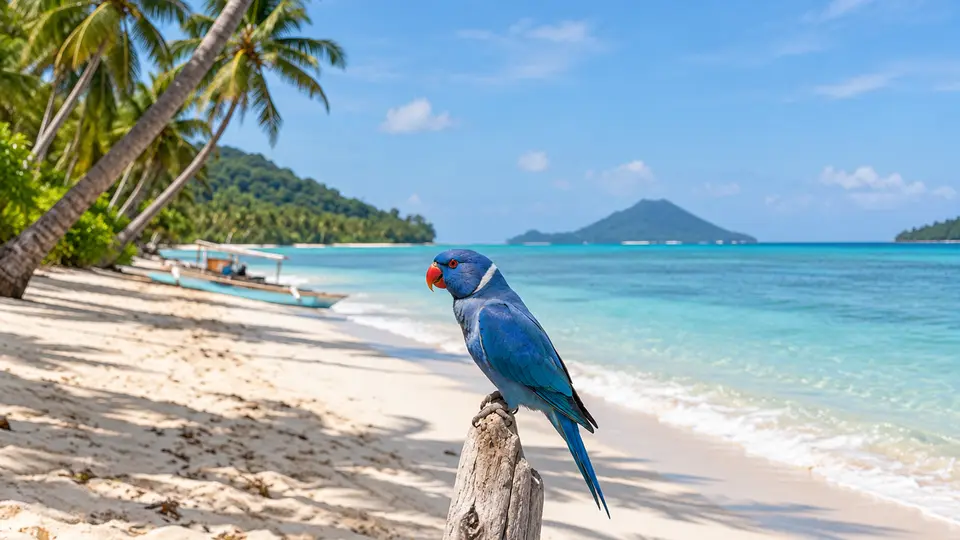
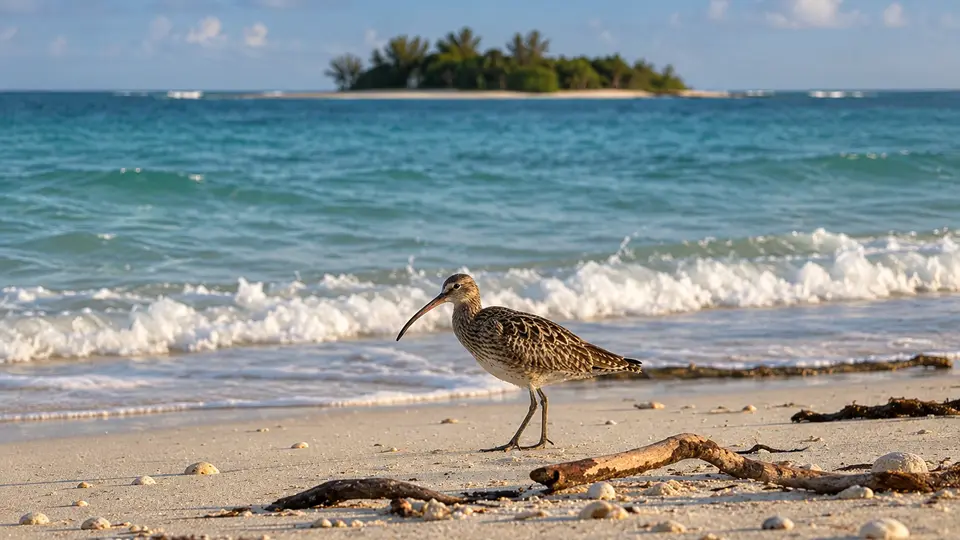
Society Islands kingfisherAI-modifiedSociety Islands kingfisherBlue lorikeetAI-modifiedBlue lorikeetBristle-thighed curlewAI-modifiedBristle-thighed curlew
Animal groupBirdsAnimal groupBirdsAnimal groupBirds
DestinationsPolynesiaDestinationsPolynesiaDestinationsPolynesia
Scientific nameTodiramphus veneratusScientific nameScientific name
All wildlife destinations
AI-modified
Plan your trip

Find your next wildlife adventure

Compare destinations, shore programs and dates with the animals and habitats you would love to see.

  • Naturalist-led shore excursions
  • Responsible wildlife watching
  • Small expedition ships