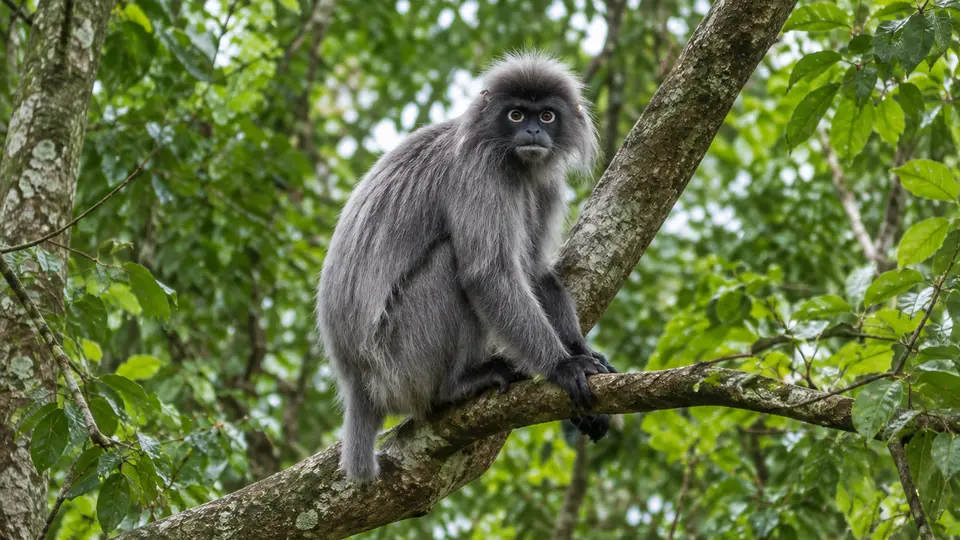
Silvery lutung in its natural habitatAI-modified

Silvery lutungTrachypithecus cristatusWhere and when to see them

Silvery lutung at a glance

The silvery lutung is a leaf-eating monkey of coastal and lowland forests in parts of Southeast Asia, including Sumatra and Borneo. Pale tips on dark hairs create its distinctive silvered appearance, while a pointed crown and long tail give it a recognizable silhouette. It depends on connected tree cover and is threatened by forest conversion, hunting and capture. Its complex stomach helps process fibrous plant foods that many other primates cannot use efficiently.

Behaviour & reproduction

Size
46-58 cm (18-23 in) head-body length; 67-75 cm (26-30 in) tail
Weight
5-8 kg (11-18 lb)
Lifespan
Not reliably established
Status
Vulnerable

Groups commonly contain one adult male, several females and their young, although social arrangements vary. Individuals spend much of the day feeding and resting in trees, moving between crowns with deliberate climbs and leaps. Grooming reinforces social relationships, and females may handle infants other than their own. Their quiet demeanor should not be mistaken for tameness, especially where human feeding has altered normal behavior. Communication involves a range of soft vocalizations, including coos and alarm calls, though they are generally quiet primates. Females often engage in alloparenting, where other group members assist in caring for infants, fostering strong social bonds.

Top wildlife locations

Indonesia wildlife habitatAI-modified

Indonesia

Mangrove edges and riverine forests in parts of Sumatra and Kalimantan provide plausible viewing habitat. A locally arranged forest excursion may be required; it is not widespread across all Indonesian islands.
Destinations describe the species' habitat, not guaranteed cruise stops. Some animals require an optional inland excursion or are found in restricted reserves.

Fun facts about the Silvery lutung

  • Infants are born with orange coats that later darken.
  • Its long tail assists balance but cannot grip branches.
  • Foregut fermentation allows it to obtain nutrients from fibrous leaves.
  • Females sometimes share infant-handling duties within their group.

Best time to see the Silvery lutung

The species is resident rather than seasonally migratory, so local access and rainfall determine practical viewing periods. Relatively drier conditions can make forest paths easier to use, but rainfall patterns differ considerably between Indonesian islands and coastal districts. Prime viewing opportunities often coincide with local dry seasons when trails are more accessible and river levels are lower for boat excursions. However, daily rain showers can occur even during dry periods, particularly in tropical rainforests.

Silvery lutung: season matrix by destination

Travel and observation windows vary by region. Highlighted months are an orientation for planning, not confirmed sightings or a guarantee of access.

Indonesia

No single Indonesian month range is defensible without an island and site; resident groups can be observed year-round where access, weather and conservation rules permit.

JanFebMarAprMayJunJulAugSepOctNovDec
Cruise ships in Indonesia

Where the Silvery lutung lives

Silvery lutungs inhabit mangroves, riverine forest, coastal swamp forest and other lowland wooded habitats. They can use some modified landscapes where canopy connections remain, but extensive clearance isolates groups and removes feeding trees, shelter and safe routes through their home range. They are found on the islands of Sumatra, Borneo, and Peninsular Malaysia, preferring coastal and estuarine environments. Habitat fragmentation due to agricultural expansion and logging is a significant threat, isolating populations and reducing genetic flow.

What the Silvery lutung eats

Young leaves are particularly important, supplemented by mature foliage, fruit, flowers and seeds. Microbes in a compartmentalized stomach ferment plant material. Human snack foods are unsuitable and can disrupt digestion, change group behavior and increase dangerous contact with people. Their diet requires a delicate balance of plant compounds, and they possess specialized salivary glands to help neutralize plant toxins. This fiber rich diet means they spend a large portion of their day foraging to meet their nutritional needs.

Species at a glance

Common name
Silvery lutung
Scientific name
Trachypithecus cristatus
Animal group
Mammals
Size
46-58 cm (18-23 in) head-body length; 67-75 cm (26-30 in) tail
Weight
5-8 kg (11-18 lb)
Lifespan
Not reliably established
Status
Vulnerable
Identification
Silvery lutungs have black faces, pointed crests and silver-tipped dark fur, unlike the bold white facial markings of some related leaf monkeys, while newborns are strikingly orange. The striking orange natal coat of infants lasts for about three to five months before transitioning to the adult coloration. Adults typically weigh between 5 and 8 kilograms, with males often slightly larger than females.

Silvery lutung: frequently asked questions

Where can I see the Silvery lutung?
Indonesia. Observe quietly from established paths without feeding or surrounding a group. Keep food packed away, allow monkeys an unobstructed route through the canopy, and never approach an infant or attempt contact. Be alert for rustling leaves and movements in the canopy, indicating their presence in the trees above. Maintain a respectful distance of at least 20 meters to avoid disturbing their natural activities and stress levels.
When is the best time to see the Silvery lutung?
The species is resident rather than seasonally migratory, so local access and rainfall determine practical viewing periods. Relatively drier conditions can make forest paths easier to use, but rainfall patterns differ considerably between Indonesian islands and coastal districts. Prime viewing opportunities often coincide with local dry seasons when trails are more accessible and river levels are lower for boat excursions. However, daily rain showers can occur even during dry periods, particularly in tropical rainforests.
How big does the Silvery lutung get?
46-58 cm (18-23 in) head-body length; 67-75 cm (26-30 in) tail. Adult weight: 5-8 kg (11-18 lb). Size varies with age, sex and population.
How should I behave around the Silvery lutung?
Observe quietly from established paths without feeding or surrounding a group. Keep food packed away, allow monkeys an unobstructed route through the canopy, and never approach an infant or attempt contact. Be alert for rustling leaves and movements in the canopy, indicating their presence in the trees above. Maintain a respectful distance of at least 20 meters to avoid disturbing their natural activities and stress levels.
What does the Silvery lutung eat?
Young leaves are particularly important, supplemented by mature foliage, fruit, flowers and seeds. Microbes in a compartmentalized stomach ferment plant material. Human snack foods are unsuitable and can disrupt digestion, change group behavior and increase dangerous contact with people. Their diet requires a delicate balance of plant compounds, and they possess specialized salivary glands to help neutralize plant toxins. This fiber rich diet means they spend a large portion of their day foraging to meet their nutritional needs.
Are wildlife sightings guaranteed on an adventure cruise?
No. Animals move freely and routes, weather, access restrictions and local conditions influence every outing. Confirm the actual itinerary and shore program before booking.

Compare wildlife in the same destinations

Explore other mammals recorded in these destinations. Similar surroundings do not mean the animals share the same habits or viewing season.

Species comparison by animal group and destination
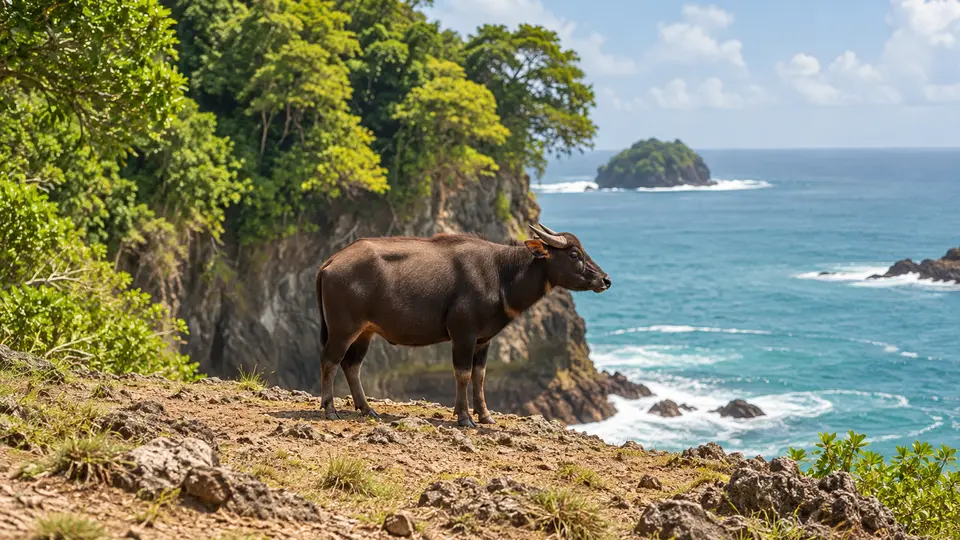
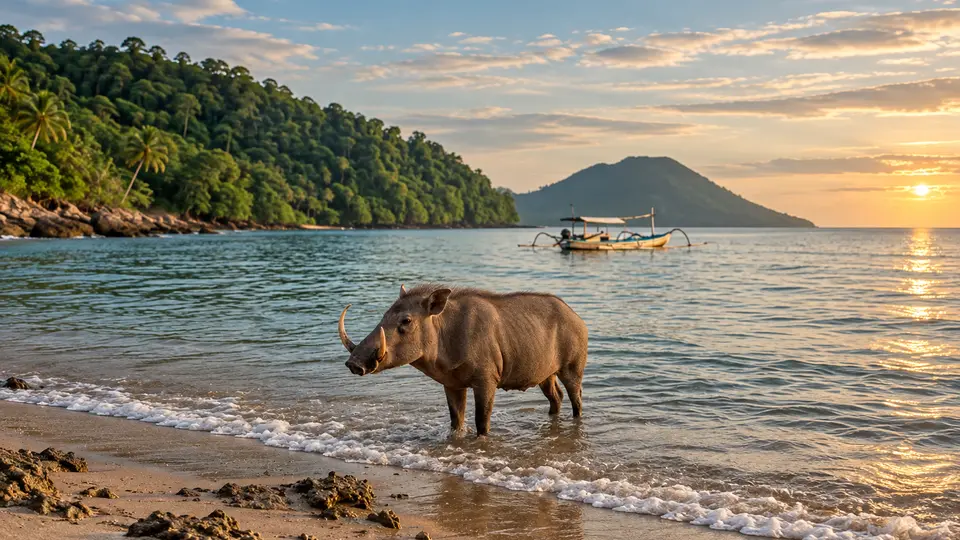
Silvery lutungAI-modifiedSilvery lutungAnoaAI-modifiedAnoaBabirusaAI-modifiedBabirusa
Animal groupMammalsAnimal groupMammalsAnimal groupMammals
DestinationsIndonesiaDestinationsIndonesiaDestinationsIndonesia
Scientific nameTrachypithecus cristatusScientific nameScientific name
All wildlife destinations
AI-modified
Plan your trip

Find your next wildlife adventure

Compare destinations, shore programs and dates with the animals and habitats you would love to see.

  • Naturalist-led shore excursions
  • Responsible wildlife watching
  • Small expedition ships