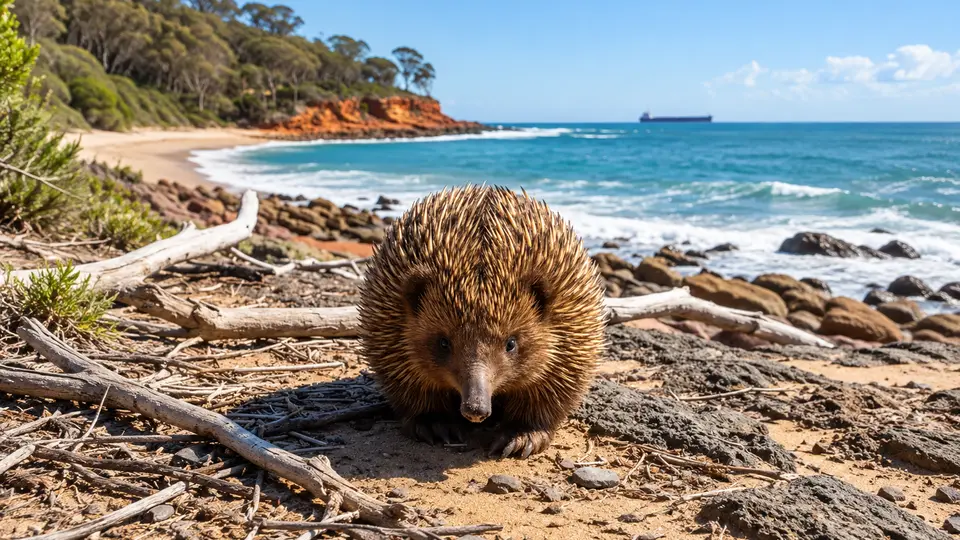
Short-beaked echidna in its natural habitatAI-modified

Short-beaked echidnaTachyglossus aculeatusWhere and when to see them

Short-beaked echidna at a glance

The short-beaked echidna is a spiny, egg-laying mammal native to Australia and New Guinea. Beneath its defensive coat is a powerful digger with a narrow snout and a long, sticky tongue specialized for collecting insects. It occupies an unusually broad range of environments, from dry country to cool forests. Although widespread, individuals are often inconspicuous, and road traffic, habitat disruption and attacks by domestic animals can cause serious local harm.

Behaviour & reproduction

Size
30–45 cm (11.8–17.7 in) long
Weight
2–6 kg (4.4–13.2 lb)
Lifespan
20–40 years
Status
Least Concern

Usually solitary, echidnas move slowly while searching for insect colonies, then dig forcefully with their strong forelimbs. When threatened, they may wedge beneath roots, dig downward or curl to protect their softer underside. Activity shifts with temperature, often becoming more nocturnal in hot weather. During courtship, several males may follow one female in an echidna train. Females lay a single egg into a temporary pouch where the young initially develops. Echidnas have a low body temperature, typically around 32°C (90°F), and can enter a state of torpor to conserve energy during food scarcity or extreme weather. They possess a keen sense of smell, which they use extensively for locating food and detecting predators.

Top wildlife locations

Australia wildlife habitatAI-modified

Australia

Coastal heath and woodland reserves, including those in southern Australia and Tasmania, provide plausible walking habitat. Sightings are sporadic rather than beach-based, and some destinations require an inland excursion to suitable vegetation.
Destinations describe the species' habitat, not guaranteed cruise stops. Some animals require an optional inland excursion or are found in restricted reserves.

Fun facts about the Short-beaked echidna

  • It is a monotreme, a mammal that lays eggs.
  • The young is commonly called a puggle.
  • Milk is released onto mammary patches because females lack nipples.
  • Backward-facing hind feet help with digging and grooming among the spines.

Best time to see the Short-beaked echidna

There is no single Australian viewing season because climate varies greatly across the range. Mild days often favor daytime activity, while heat drives feeding toward cooler hours. In southern Australia, cooler seasons can suit coastal walks, but local rainfall, temperature and reserve conditions should guide plans. In Tasmania and cooler parts of mainland Australia, spring and autumn can offer ideal viewing conditions as animals are more active. Specific local information on echidna activity peaks is best obtained from park rangers or local guides.

Short-beaked echidna: season matrix by destination

Travel and observation windows vary by region. Highlighted months are an orientation for planning, not confirmed sightings or a guarantee of access.

Australia

Australia's climatic range prevents a reliable nationwide monthly window; choose mild local conditions and seek current reserve advice rather than assuming one season fits all regions.

JanFebMarAprMayJunJulAugSepOctNovDec
Cruise ships in Australia

Where the Short-beaked echidna lives

Echidnas inhabit woodland, heath, grassland, arid scrub and forest, including coastal reserves and some suburban margins. They need accessible insect prey and shelter such as logs, rock crevices or dense vegetation. Their broad habitat tolerance does not mean exposed beaches or busy lawns are consistently suitable. They are found throughout mainland Australia and Tasmania, adapting to various elevations and climates. Though adaptable, habitat loss and fragmentation due to human development pose a threat in some areas.

What the Short-beaked echidna eats

Ants and termites dominate the diet, with other small invertebrates taken opportunistically. The snout probes soil and decaying wood, while a sticky tongue gathers prey. Lacking teeth, echidnas crush food between hard surfaces in the mouth and swallow considerable soil during feeding. Their highly specialized diet requires a long, sticky tongue that can extend up to 18 cm (7 inches) to capture prey. Echidnas can consume a large quantity of insects daily, essential for their high metabolic rate.

Species at a glance

Common name
Short-beaked echidna
Scientific name
Tachyglossus aculeatus
Animal group
Mammals
Size
30–45 cm (11.8–17.7 in) long
Weight
2–6 kg (4.4–13.2 lb)
Lifespan
20–40 years
Status
Least Concern
Identification
Its dense spines and short tubular snout distinguish it from the furred, duck-billed platypus and the larger, longer-snouted echidnas of New Guinea. Adult short-beaked echidnas typically weigh between 2 to 5 kilograms (4.4 to 11 pounds) and measure 30 to 45 centimeters (12 to 18 inches) in length. Their distinctive quills are modified hairs, providing protection against predators like dingoes and foxes.

Short-beaked echidna: frequently asked questions

Where can I see the Short-beaked echidna?
Australia. Keep several metres away and give digging animals an unobstructed escape route. Never lift an echidna by its spines or pull it from soil. Keep dogs restrained and watch carefully when driving through coastal reserves. Shore excursions in suitable habitats, particularly during cooler parts of the day, offer the best chance to spot an echidna foraging. Look for disturbed soil or small burrows, which can indicate their recent presence.
When is the best time to see the Short-beaked echidna?
There is no single Australian viewing season because climate varies greatly across the range. Mild days often favor daytime activity, while heat drives feeding toward cooler hours. In southern Australia, cooler seasons can suit coastal walks, but local rainfall, temperature and reserve conditions should guide plans. In Tasmania and cooler parts of mainland Australia, spring and autumn can offer ideal viewing conditions as animals are more active. Specific local information on echidna activity peaks is best obtained from park rangers or local guides.
How big does the Short-beaked echidna get?
30–45 cm (11.8–17.7 in) long. Adult weight: 2–6 kg (4.4–13.2 lb). Size varies with age, sex and population.
How should I behave around the Short-beaked echidna?
Keep several metres away and give digging animals an unobstructed escape route. Never lift an echidna by its spines or pull it from soil. Keep dogs restrained and watch carefully when driving through coastal reserves. Shore excursions in suitable habitats, particularly during cooler parts of the day, offer the best chance to spot an echidna foraging. Look for disturbed soil or small burrows, which can indicate their recent presence.
What does the Short-beaked echidna eat?
Ants and termites dominate the diet, with other small invertebrates taken opportunistically. The snout probes soil and decaying wood, while a sticky tongue gathers prey. Lacking teeth, echidnas crush food between hard surfaces in the mouth and swallow considerable soil during feeding. Their highly specialized diet requires a long, sticky tongue that can extend up to 18 cm (7 inches) to capture prey. Echidnas can consume a large quantity of insects daily, essential for their high metabolic rate.
Are wildlife sightings guaranteed on an adventure cruise?
No. Animals move freely and routes, weather, access restrictions and local conditions influence every outing. Confirm the actual itinerary and shore program before booking.

Compare wildlife in the same destinations

Explore other mammals recorded in these destinations. Similar surroundings do not mean the animals share the same habits or viewing season.

Species comparison by animal group and destination
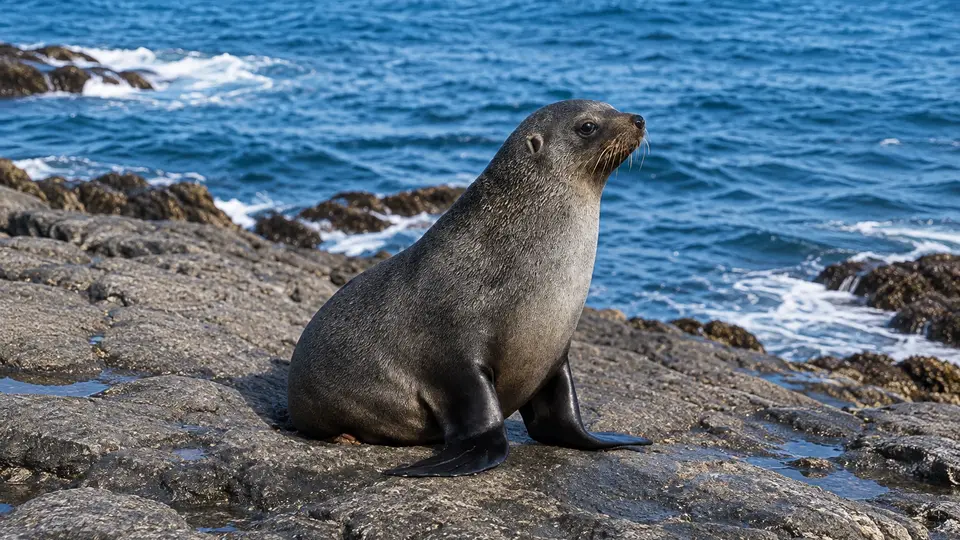
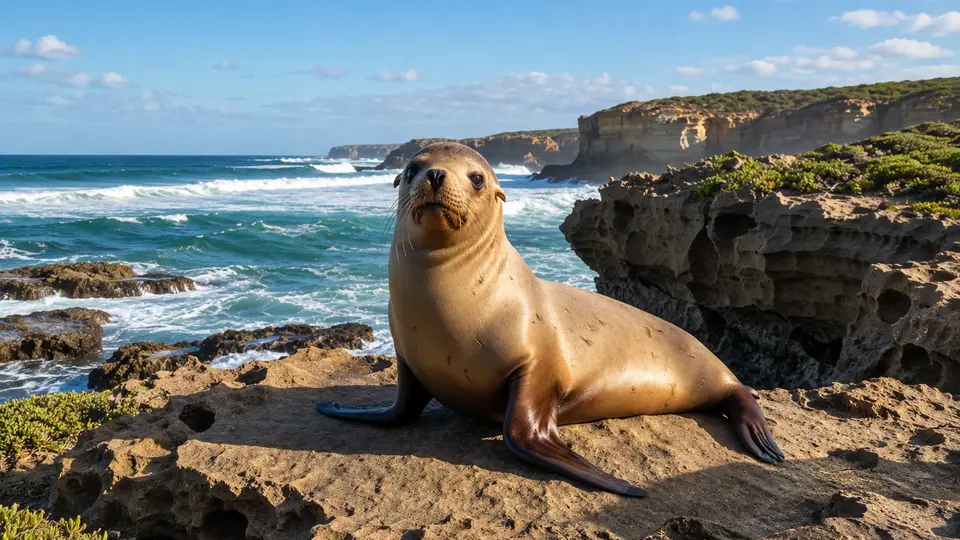
Short-beaked echidnaAI-modifiedShort-beaked echidnaAustralian fur sealAI-modifiedAustralian fur sealAustralian sea lionAI-modifiedAustralian sea lion
Animal groupMammalsAnimal groupMammalsAnimal groupMammals
DestinationsAustraliaDestinationsAustraliaDestinationsAustralia
Scientific nameTachyglossus aculeatusScientific nameScientific name
All wildlife destinations
AI-modified
Plan your trip

Find your next wildlife adventure

Compare destinations, shore programs and dates with the animals and habitats you would love to see.

  • Naturalist-led shore excursions
  • Responsible wildlife watching
  • Small expedition ships