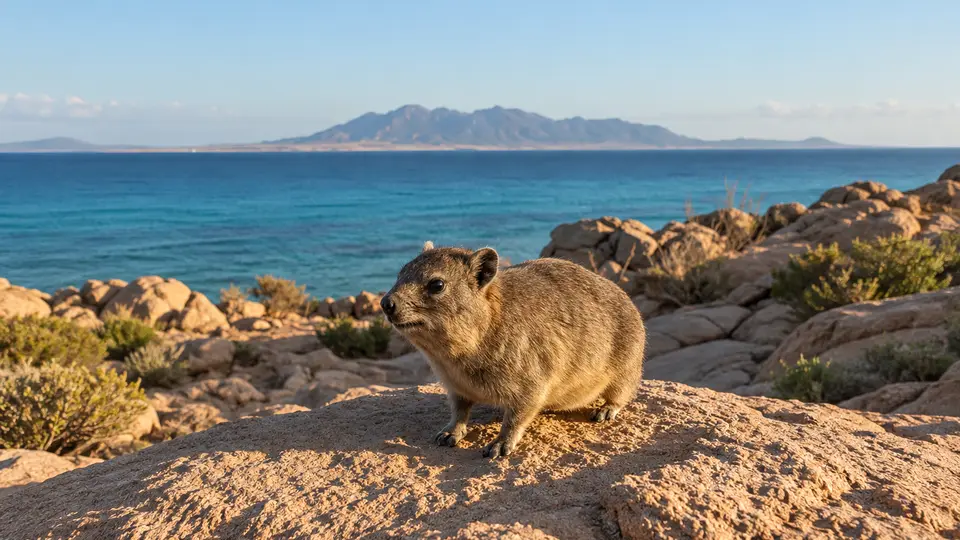
Rock Hyrax in its natural habitat

Rock HyraxProcavia capensisWhere and when to see them

Rock Hyrax at a glance

The rock hyrax is a compact, hoof-related mammal that superficially resembles a large guinea pig but belongs to a very different evolutionary lineage. It lives among rocks where narrow crevices provide refuge from predators and harsh weather. In Egypt its distribution is localized, with suitable rocky landscapes more relevant than open sand or cultivated riverbanks. Social groups, sunbathing behavior and conspicuous lookout positions can make established colonies noticeable from a respectful distance.

Behaviour & reproduction

Size
40-60 cm (15.7-23.6 in) long
Weight
2-5 kg (4.4-11.0 lb)
Lifespan
8-12 years in the wild
Status
Least Concern

Hyraxes spend substantial periods resting near shelters and often bask in sunlight before feeding. Their temperature regulation is less precise than that of many similarly sized mammals, making shade, sunshine and communal resting useful. Group members remain alert for danger and retreat rapidly into crevices after alarm calls. Males produce elaborate territorial songs in some contexts. Feeding excursions usually remain connected to dependable rocky escape routes rather than crossing extensive exposed ground. They are highly social animals, often living in colonies that can number from a few individuals to dozens. Vocalizations are varied, including alarm calls, territorial songs by males, and complex social calls maintaining group cohesion. Group members share communal latrines, which are visible as dark, urine-stained streaks on rocks.

Top wildlife locations

Egypt wildlife habitat

Egypt

Rocky Sinai wadis and mountain slopes offer plausible habitat, usually requiring an inland excursion from the coast. Colonies are localized, and protected-area permissions or security restrictions may limit access.

Destinations describe the species' habitat, not guaranteed cruise stops. Some animals require an optional inland excursion or are found in restricted reserves.

Fun facts about the Rock Hyrax

  • Hyraxes share a broader evolutionary grouping with elephants and sea cows.
  • Moist, specialized foot pads help them grip steep rock.
  • A dorsal scent gland is surrounded by a patch of distinctive hair.
  • Communal latrines can accumulate layered deposits that preserve environmental information.

Best time to see the Rock Hyrax

Cooler months generally make rocky desert excursions in Egypt safer and more comfortable. Early morning can be useful when animals emerge near shelters, although cold or windy conditions may delay activity. There is no established nationwide hyrax-viewing season or guaranteed coastal observation circuit. In cooler months, the lower ambient temperatures allow for more prolonged periods of activity and foraging, increasing the chances of observation. The cooler air also improves visibility by reducing heat haze over rocky landscapes. Spring and autumn can offer comfortable conditions for both observers and animals.

Rock Hyrax: season matrix by destination

Travel and observation windows vary by region. Highlighted months are an orientation for planning, not confirmed sightings or a guarantee of access.

Egypt

These cooler months favor desert walking rather than a documented population peak; local access and known colony presence must be checked separately.

JanFebMarAprMayJunJulAugSepOctNovDec
Cruise ships in Egypt

Where the Rock Hyrax lives

Rock hyraxes occupy cliffs, boulder fields, rocky hillsides and rugged wadis with secure crevices. Nearby vegetation must provide food, even in dry landscapes. In Egypt, suitable habitat occurs locally in mountainous desert regions, including parts of Sinai, rather than uniformly along the coast. They prefer habitats with an abundance of rock crevices for shelter, which are crucial for evading predators. Their distribution in Egypt is primarily restricted to the Eastern Desert and Sinai Peninsula, where suitable rocky terrains exist. These microhabitats provide essential thermoregulation opportunities in the harsh desert environment.

What the Rock Hyrax eats

Leaves, grasses, shoots, flowers and fruits contribute to the diet, with seasonal changes in plant availability. Hyraxes can obtain much of their moisture from food. Their complex digestive system supports microbial fermentation, allowing them to extract nutrients from fibrous vegetation. Their broad diet makes them adaptable, but they can be selective, favoring certain plant species. Hyraxes have a long gut retention time, which, combined with their microbial fermentation, allows for efficient digestion of tough plant material. They often feed in groups, allowing some individuals to forage while others scan for predators.

Species at a glance

Common name
Rock Hyrax
Scientific name
Procavia capensis
Animal group
Mammals
Size
40-60 cm (15.7-23.6 in) long
Weight
2-5 kg (4.4-11.0 lb)
Lifespan
8-12 years in the wild
Status
Least Concern
Identification
Unlike rodents, rock hyraxes have short rounded ears, no conspicuous tail and hooflike nails on most toes, with long upper incisors resembling small tusks. A unique feature is their foot structure, with four toes on the front feet and three on the hind feet, ending in blunt, hoof-like nails with a soft pad in the center for grip. Their small, internal testicles in males are another distinctive biological trait, differentiating them from other small mammals. The dark dorsal spot, an area with modified scent glands, can sometimes be visible, especially during social interactions.

Rock Hyrax: frequently asked questions

Where can I see the Rock Hyrax?
Egypt. Watch boulders quietly from secure paths and leave crevice entrances unobstructed. Do not feed or corner animals, and avoid climbing unstable slopes for a closer view; desert heat also requires careful planning. Use binoculars to scan rocky outcrops and ledges for their characteristic brown-grey fur and compact bodies, as they often blend seamlessly with their surroundings. Patience is key, as hyraxes can remain motionless for long periods, sunning themselves on rocks. Maintain a respectful distance to avoid causing stress or altering their natural behavior.
When is the best time to see the Rock Hyrax?
Cooler months generally make rocky desert excursions in Egypt safer and more comfortable. Early morning can be useful when animals emerge near shelters, although cold or windy conditions may delay activity. There is no established nationwide hyrax-viewing season or guaranteed coastal observation circuit. In cooler months, the lower ambient temperatures allow for more prolonged periods of activity and foraging, increasing the chances of observation. The cooler air also improves visibility by reducing heat haze over rocky landscapes. Spring and autumn can offer comfortable conditions for both observers and animals.
How big does the Rock Hyrax get?
40-60 cm (15.7-23.6 in) long. Adult weight: 2-5 kg (4.4-11.0 lb). Size varies with age, sex and population.
How should I behave around the Rock Hyrax?
Watch boulders quietly from secure paths and leave crevice entrances unobstructed. Do not feed or corner animals, and avoid climbing unstable slopes for a closer view; desert heat also requires careful planning. Use binoculars to scan rocky outcrops and ledges for their characteristic brown-grey fur and compact bodies, as they often blend seamlessly with their surroundings. Patience is key, as hyraxes can remain motionless for long periods, sunning themselves on rocks. Maintain a respectful distance to avoid causing stress or altering their natural behavior.
What does the Rock Hyrax eat?
Leaves, grasses, shoots, flowers and fruits contribute to the diet, with seasonal changes in plant availability. Hyraxes can obtain much of their moisture from food. Their complex digestive system supports microbial fermentation, allowing them to extract nutrients from fibrous vegetation. Their broad diet makes them adaptable, but they can be selective, favoring certain plant species. Hyraxes have a long gut retention time, which, combined with their microbial fermentation, allows for efficient digestion of tough plant material. They often feed in groups, allowing some individuals to forage while others scan for predators.
Are wildlife sightings guaranteed on an adventure cruise?
No. Animals move freely and routes, weather, access restrictions and local conditions influence every outing. Confirm the actual itinerary and shore program before booking.

Compare wildlife in the same destinations

Explore other mammals recorded in these destinations. Similar surroundings do not mean the animals share the same habits or viewing season.

Species comparison by animal group and destination
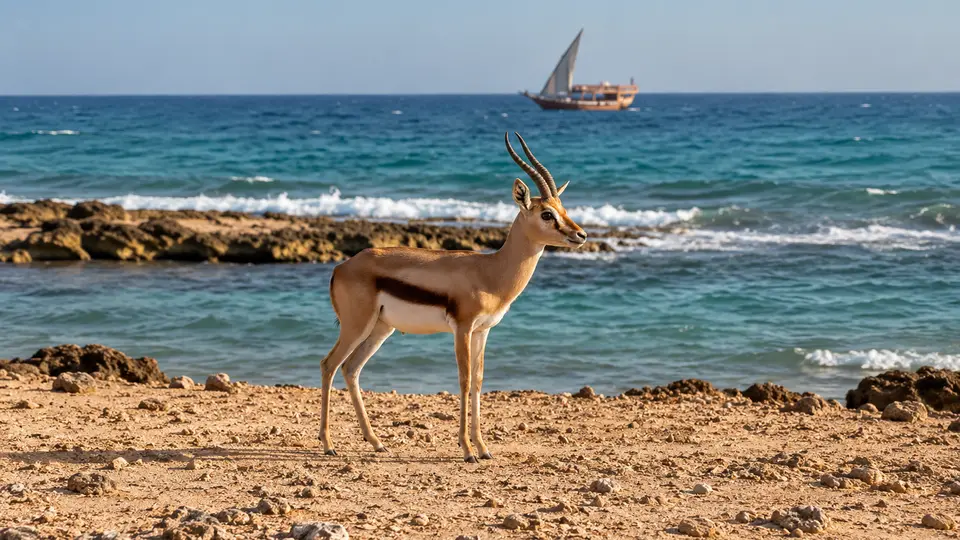
Rock HyraxRock HyraxBryde's WhaleBryde's WhaleDorcas GazelleDorcas Gazelle
Animal groupMammalsAnimal groupMammalsAnimal groupMammals
DestinationsEgyptDestinationsGalapagos, Mexico, Egypt, Thailand, VietnamDestinationsEgypt
Scientific nameProcavia capensisScientific nameScientific name
All wildlife destinations
Plan your trip

Find your next wildlife adventure

Compare destinations, shore programs and dates with the animals and habitats you would love to see.

  • Naturalist-led shore excursions
  • Responsible wildlife watching
  • Small expedition ships