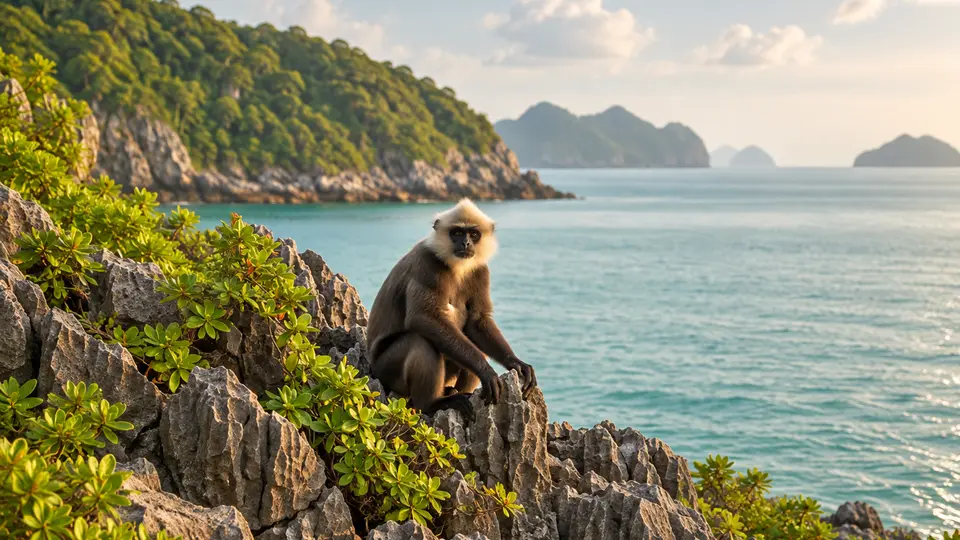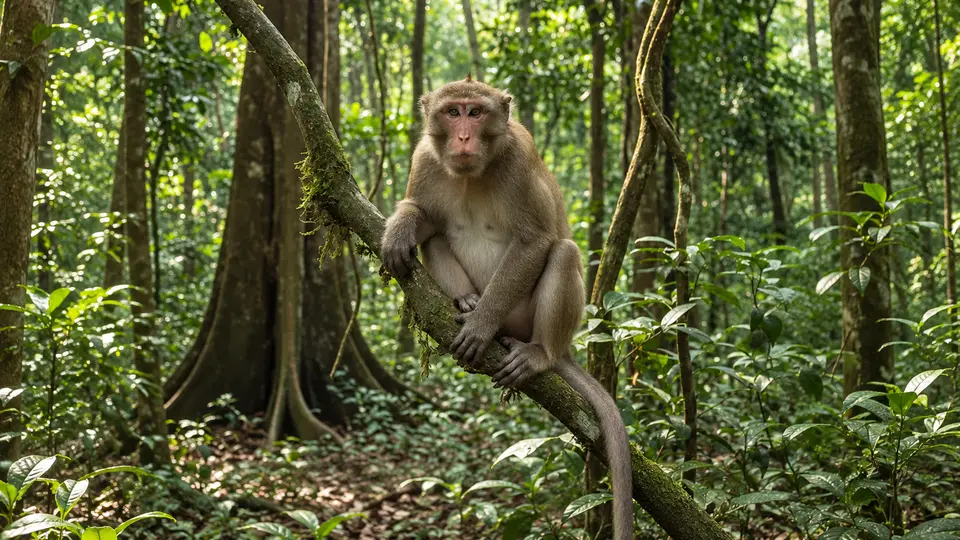
Rhesus macaque in its natural habitat

Rhesus macaqueMacaca mulattaWhere and when to see them

Rhesus macaque at a glance

The rhesus macaque is an adaptable Asian monkey with a pinkish face, brown-gray coat and a relatively short tail. Its broad geographic range includes northern Vietnam, where identification requires care because other macaques also occur. Familiarity with people can make some groups seem approachable, but these are socially complex wild animals capable of serious bites. Their success in modified habitats does not eliminate local threats from capture, persecution and habitat change.

Behaviour & reproduction

Size
45-65 cm (17.7-25.6 in) body length
Weight
5-12 kg (11-26.5 lb)
Lifespan
15-25 years in the wild
Status
Least Concern

Rhesus macaques live in groups containing multiple adult males and females, with social rank influencing feeding opportunities and interactions. Females usually remain in their natal group, while males commonly disperse. Grooming helps maintain relationships, and facial expressions, calls and body postures communicate tension or affiliation. Individuals forage both on the ground and in trees. Where people supply food, groups may become assertive, creating conflict and changing natural ranging patterns. Rhesus macaque groups can be quite large, sometimes exceeding 100 individuals, demonstrating complex social hierarchies and alliances. Males typically disperse from their natal group around puberty to join new groups, while females are philopatric, forming stable matrilineal lineages. Vocalizations are diverse, ranging from alarm calls to affiliative chirps, and play a crucial role in maintaining group cohesion and conveying information.

Top wildlife locations

Vietnam wildlife habitat

Vietnam

Northern wooded limestone coasts and islands offer plausible habitat, while many populations require inland excursions. Coastal macaques need careful identification because other species occur, and access to protected habitats may be restricted.
Destinations describe the species' habitat, not guaranteed cruise stops. Some animals require an optional inland excursion or are found in restricted reserves.

Fun facts about the Rhesus macaque

  • Females commonly remain within their birth group throughout life.
  • Cheek pouches temporarily hold food collected during foraging.
  • The rhesus name persists in the historical terminology of the Rh blood-group system.
  • Social grooming serves relationship maintenance as well as coat care.

Best time to see the Rhesus macaque

Cooler, relatively dry months can improve comfort on northern Vietnamese forest paths and rocky viewpoints. There is no universal macaque-viewing season, and animals may be active year-round. Local access, group movements and reliable identification are more useful than assuming a breeding-related observation peak. Early mornings and late afternoons often offer the best viewing opportunities as macaques are most active during these times. Their activity patterns are often influenced by local human presence, sometimes leading to crepuscular or nocturnal foraging in high-disturbance areas. Cooler temperatures can reduce heat stress, potentially increasing their visible activity during midday hours.

Rhesus macaque: season matrix by destination

Travel and observation windows vary by region. Highlighted months are an orientation for planning, not confirmed sightings or a guarantee of access.

Vietnam

This is a broad northern Vietnam walking-weather window, not a breeding season or assurance that a particular coastal group is rhesus macaques.

JanFebMarAprMayJunJulAugSepOctNovDec
Cruise ships in Vietnam

Where the Rhesus macaque lives

The species uses a wide range of habitats, including broadleaf forest, scrub, rocky slopes, agricultural edges and settlements. In Vietnam, northern localities are most relevant. Some coastal island habitats can be suitable, but a macaque seen there should not be identified by location alone. In Vietnam, their presence is often associated with disturbed and fragmented forests, and they can be found near human settlements due to their adaptability. They are highly adaptable and thrive in both primary and secondary forest types, often preferring areas with access to water sources. While common on the mainland, isolated island populations are also known, warranting careful identification given the potential for other macaque species.

What the Rhesus macaque eats

Fruits, seeds, leaves, buds and other plant foods form much of the diet, supplemented by insects and occasional small animals. Cheek pouches allow temporary food storage. Human food and refuse may be exploited, but feeding encourages aggression and can undermine health and natural behavior. Their opportunistic diet includes a wide array of plant matter, making them effective seed dispersers in many ecosystems. They are known to raid crops like corn, wheat, and fruits, which can lead to human-wildlife conflict. Opportunistic carnivory extends to small vertebrates like lizards or bird eggs, especially when protein sources are scarce.

Species at a glance

Common name
Rhesus macaque
Scientific name
Macaca mulatta
Animal group
Mammals
Size
45-65 cm (17.7-25.6 in) body length
Weight
5-12 kg (11-26.5 lb)
Lifespan
15-25 years in the wild
Status
Least Concern
Identification
Compared with long-tailed macaques, rhesus macaques have a much shorter tail, usually less than half their head-and-body length, and often warmer reddish-brown hindquarters. Adult rhesus macaques typically have a uniform brownish or reddish-brown fur color, with paler undersides and a distinctly pinkish or reddish face that can darken with age. Their bare faces lack the prominent cheek tufts or crests seen in some other macaque species. Unlike long-tailed macaques, their tail is not prehensile and serves more for balance than grasping.

Rhesus macaque: frequently asked questions

Where can I see the Rhesus macaque?
Vietnam. Keep food concealed, secure bags and never feed or touch macaques. Avoid direct staring and give mothers with infants extra space. Any bite or scratch requires prompt medical assessment, including rabies-risk evaluation. Be mindful of their strong hierarchical social structure; dominant individuals may exhibit more assertive behaviors. Keep a safe distance, as even seemingly calm individuals can react unpredictably if they feel threatened. Observe group dynamics from a distance, noting how individuals interact, groom, and communicate vocally without disturbing them.
When is the best time to see the Rhesus macaque?
Cooler, relatively dry months can improve comfort on northern Vietnamese forest paths and rocky viewpoints. There is no universal macaque-viewing season, and animals may be active year-round. Local access, group movements and reliable identification are more useful than assuming a breeding-related observation peak. Early mornings and late afternoons often offer the best viewing opportunities as macaques are most active during these times. Their activity patterns are often influenced by local human presence, sometimes leading to crepuscular or nocturnal foraging in high-disturbance areas. Cooler temperatures can reduce heat stress, potentially increasing their visible activity during midday hours.
How big does the Rhesus macaque get?
45-65 cm (17.7-25.6 in) body length. Adult weight: 5-12 kg (11-26.5 lb). Size varies with age, sex and population.
How should I behave around the Rhesus macaque?
Keep food concealed, secure bags and never feed or touch macaques. Avoid direct staring and give mothers with infants extra space. Any bite or scratch requires prompt medical assessment, including rabies-risk evaluation. Be mindful of their strong hierarchical social structure; dominant individuals may exhibit more assertive behaviors. Keep a safe distance, as even seemingly calm individuals can react unpredictably if they feel threatened. Observe group dynamics from a distance, noting how individuals interact, groom, and communicate vocally without disturbing them.
What does the Rhesus macaque eat?
Fruits, seeds, leaves, buds and other plant foods form much of the diet, supplemented by insects and occasional small animals. Cheek pouches allow temporary food storage. Human food and refuse may be exploited, but feeding encourages aggression and can undermine health and natural behavior. Their opportunistic diet includes a wide array of plant matter, making them effective seed dispersers in many ecosystems. They are known to raid crops like corn, wheat, and fruits, which can lead to human-wildlife conflict. Opportunistic carnivory extends to small vertebrates like lizards or bird eggs, especially when protein sources are scarce.
Are wildlife sightings guaranteed on an adventure cruise?
No. Animals move freely and routes, weather, access restrictions and local conditions influence every outing. Confirm the actual itinerary and shore program before booking.

Compare wildlife in the same destinations

Explore other mammals recorded in these destinations. Similar surroundings do not mean the animals share the same habits or viewing season.

Species comparison by animal group and destination
Rhesus macaqueRhesus macaqueBryde's WhaleBryde's WhaleCat Ba langurCat Ba langur
Animal groupMammalsAnimal groupMammalsAnimal groupMammals
DestinationsVietnamDestinationsGalapagos, Mexico, Egypt, Thailand, VietnamDestinationsVietnam
Scientific nameMacaca mulattaScientific nameScientific name
All wildlife destinations
Plan your trip

Find your next wildlife adventure

Compare destinations, shore programs and dates with the animals and habitats you would love to see.

  • Naturalist-led shore excursions
  • Responsible wildlife watching
  • Small expedition ships