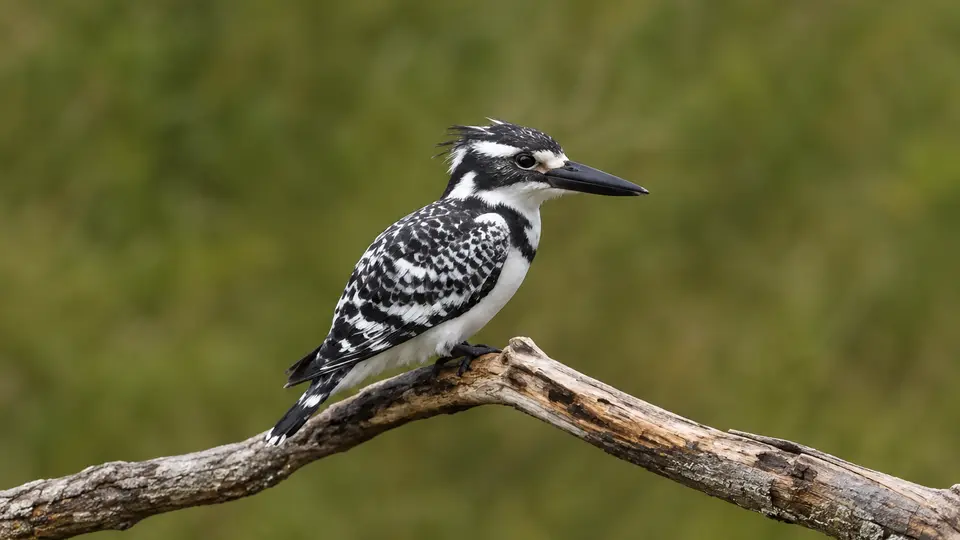
Pied Kingfisher in its natural habitatAI-modified

Pied KingfisherCeryle rudisWhere and when to see them

Pied Kingfisher at a glance

The pied kingfisher is a conspicuous black-and-white fishing bird found across much of Africa and parts of Asia. It is especially recognizable when hovering above open water, apparently suspended before dropping toward a fish. A shaggy crest and heavy pointed bill give perched birds a purposeful profile. Unlike kingfishers that depend heavily on overhanging branches, it can exploit broad waterways with few elevated hunting perches.

Behaviour & reproduction

Size
25–29 cm (9.8–11.4 in) body length
Weight
70–100 g (2.5–3.5 oz)
Lifespan
Not reliably established
Status
Least Concern

Pied kingfishers hunt from perches or hover into the wind, adjusting position before a rapid plunge. Small fish may be swallowed in flight, while larger catches are often carried to a perch and struck against it. Pairs excavate nesting tunnels in earthen banks. In some populations, additional birds help feed chicks. Outside nesting activity, several individuals may gather at productive feeding sites or use communal roosts near water. Pied kingfishers typically hunt within a few meters of the water surface, often making multiple rapid plunges before securing a fish. They are often seen in pairs or small family groups, particularly outside of the breeding season. Cooperative breeding, where juveniles from previous broods assist parents, is a well-documented behaviour in some populations.

Top wildlife locations

Egypt wildlife habitatAI-modified

Egypt

Public Nile banks, canals and accessible lake margins offer plausible viewing habitat. Many opportunities require a riverfront or inland excursion rather than a Red Sea coastal stop; local distribution should be checked.


Thailand wildlife habitatAI-modified

Thailand

Seek verified local records before visiting open rivers, reservoirs or wetland banks. The species is localized, and an inland excursion is usually more realistic than expecting it along a typical coastal promenade.

Destinations describe the species' habitat, not guaranteed cruise stops. Some animals require an optional inland excursion or are found in restricted reserves.

Fun facts about the Pied Kingfisher

  • Males normally show two dark breast bands, while females have one interrupted band.
  • It can hover over water without needing a nearby perch.
  • Some nesting pairs receive help from additional birds.
  • Nest tunnels are excavated into earthen banks.

Best time to see the Pied Kingfisher

Observation is possible throughout the year where the species is resident. Cooler months often make Egyptian waterside walks more comfortable, while Thailand's dry season can improve access to suitable riverbanks. Neither travel window represents a uniform breeding season across these different populations. Breeding seasons vary regionally, with some populations having multiple broods annually depending on resource availability. For specific cruises, consulting local birding guides or ranger services can provide precise timing for peak activity or nesting observations. The extended presence of resident populations ensures year-round viewing opportunities, though specific activities like breeding may be seasonal.

Pied Kingfisher: season matrix by destination

Travel and observation windows vary by region. Highlighted months are an orientation for planning, not confirmed sightings or a guarantee of access.

Egypt

These months favor comfortable waterside observation; resident birds may occur year-round, and breeding timing should be checked locally.

JanFebMarAprMayJunJulAugSepOctNovDec
Cruise ships in Egypt

Thailand

The dry season often improves bank access and visibility, but these months do not establish presence at any particular Thai site.

JanFebMarAprMayJunJulAugSepOctNovDec
Cruise ships in Thailand

Where the Pied Kingfisher lives

Suitable habitat includes rivers, lakes, reservoirs, irrigation canals, lagoons and sheltered estuarine waters. Clear enough water for detecting fish and accessible nesting banks are important locally. It can occur beside busy settlements, but abundance varies greatly between waterways and across its Asian range. The species shows adaptability to modified habitats, readily colonising man-made water bodies such as dams and aquaculture ponds. Its wide distribution across Africa and Asia attests to its flexibility in utilising various freshwater and brackuarine environments. In some regions, its presence can even indicate relatively healthy aquatic ecosystems with sufficient fish populations.

What the Pied Kingfisher eats

Small fish form the overwhelming majority of the diet. Aquatic insects and crustaceans may also be taken. Prey size is limited by what the bird can handle and swallow, and hunting success depends on water clarity, surface conditions and the depth of available fish. Prey is typically consumed headfirst, preventing fin-related injuries during swallowing. While primarily piscivorous, they are opportunistic and may occasionally take tadpoles or large aquatic insects if fish are scarce. Successful foraging is often linked to clear water allowing for better prey detection from above.

Species at a glance

Common name
Pied Kingfisher
Scientific name
Ceryle rudis
Animal group
Birds
Size
25–29 cm (9.8–11.4 in) body length
Weight
70–100 g (2.5–3.5 oz)
Lifespan
Not reliably established
Status
Least Concern
Identification
Its entirely black-and-white plumage, shaggy crest and frequent sustained hovering distinguish it from the blue-and-orange common kingfisher and the larger, boldly billed stork-billed kingfisher. Both male and female share the striking black and white plumage, but males possess two complete black breast bands, while females typically have one complete and one broken or incomplete lower band. Their distinctive shaggy crest is often raised, especially when agitated or alert. When perched, their relatively large head and short tail, typical of kingfishers, are noticeable features.

Pied Kingfisher: frequently asked questions

Where can I see the Pied Kingfisher?
Egypt, Thailand. Watch from stable riverbanks or public waterfronts, keeping back from steep edges. Do not approach nesting holes in sandy banks, and avoid repeatedly flushing a bird from its preferred fishing perch. From a deck, look for their characteristic hovering flight over open water, a clear indication of active hunting. Binoculars are highly recommended to appreciate their distinctive plumage and observe feeding techniques from a distance. Observing from a boat allows for unique perspectives of their riverside nesting sites without disturbance, maintaining a respectful distance.
When is the best time to see the Pied Kingfisher?
Observation is possible throughout the year where the species is resident. Cooler months often make Egyptian waterside walks more comfortable, while Thailand's dry season can improve access to suitable riverbanks. Neither travel window represents a uniform breeding season across these different populations. Breeding seasons vary regionally, with some populations having multiple broods annually depending on resource availability. For specific cruises, consulting local birding guides or ranger services can provide precise timing for peak activity or nesting observations. The extended presence of resident populations ensures year-round viewing opportunities, though specific activities like breeding may be seasonal.
How big does the Pied Kingfisher get?
25–29 cm (9.8–11.4 in) body length. Adult weight: 70–100 g (2.5–3.5 oz). Size varies with age, sex and population.
How should I behave around the Pied Kingfisher?
Watch from stable riverbanks or public waterfronts, keeping back from steep edges. Do not approach nesting holes in sandy banks, and avoid repeatedly flushing a bird from its preferred fishing perch. From a deck, look for their characteristic hovering flight over open water, a clear indication of active hunting. Binoculars are highly recommended to appreciate their distinctive plumage and observe feeding techniques from a distance. Observing from a boat allows for unique perspectives of their riverside nesting sites without disturbance, maintaining a respectful distance.
What does the Pied Kingfisher eat?
Small fish form the overwhelming majority of the diet. Aquatic insects and crustaceans may also be taken. Prey size is limited by what the bird can handle and swallow, and hunting success depends on water clarity, surface conditions and the depth of available fish. Prey is typically consumed headfirst, preventing fin-related injuries during swallowing. While primarily piscivorous, they are opportunistic and may occasionally take tadpoles or large aquatic insects if fish are scarce. Successful foraging is often linked to clear water allowing for better prey detection from above.
Are wildlife sightings guaranteed on an adventure cruise?
No. Animals move freely and routes, weather, access restrictions and local conditions influence every outing. Confirm the actual itinerary and shore program before booking.

Compare wildlife in the same destinations

Explore other birds recorded in these destinations. Similar surroundings do not mean the animals share the same habits or viewing season.

Species comparison by animal group and destination
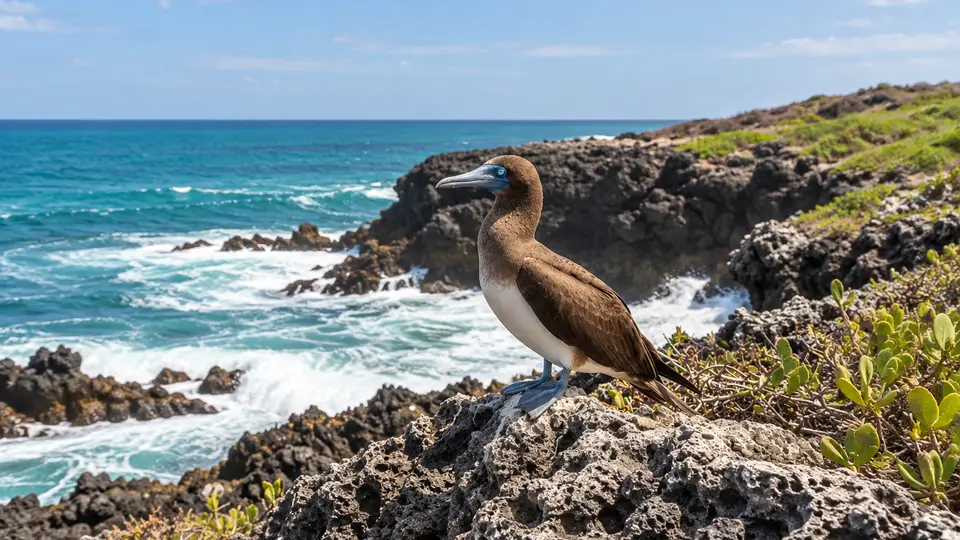
Pied KingfisherAI-modifiedPied KingfisherBrahminy kiteAI-modifiedBrahminy kiteBrown BoobyAI-modifiedBrown Booby
Animal groupBirdsAnimal groupBirdsAnimal groupBirds
DestinationsEgypt, ThailandDestinationsIndonesia, Thailand, VietnamDestinationsCosta Rica, Cape Verde, Egypt, Fiji, Polynesia
Scientific nameCeryle rudisScientific nameScientific name
All wildlife destinations
AI-modified
Plan your trip

Find your next wildlife adventure

Compare destinations, shore programs and dates with the animals and habitats you would love to see.

  • Naturalist-led shore excursions
  • Responsible wildlife watching
  • Small expedition ships