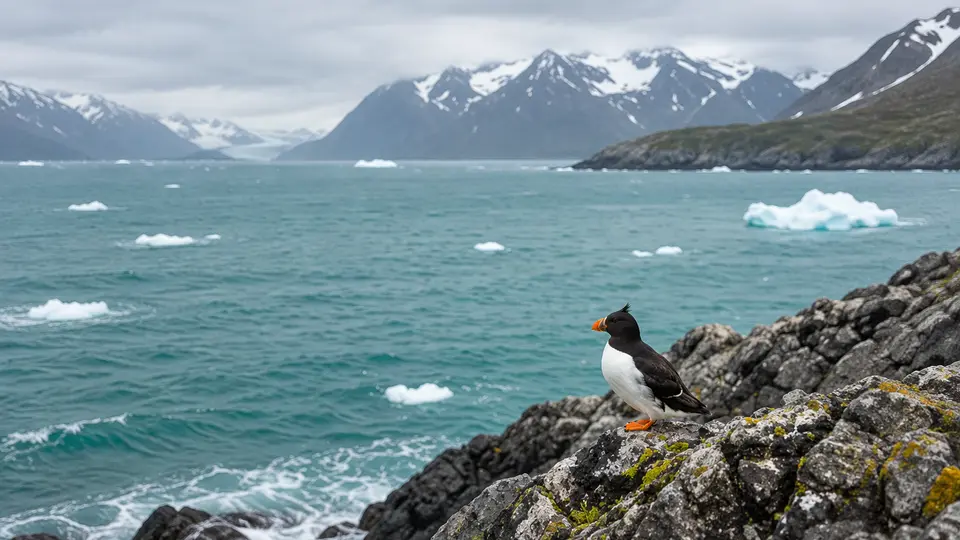
Parakeet Auklet in its natural habitat

Parakeet AukletAethia psittaculaWhere and when to see them

Parakeet Auklet at a glance

The parakeet auklet is a small North Pacific seabird named for its unusually deep, rounded bill. Breeding adults have dark upperparts, white underparts and a fine white plume extending behind the eye. It spends much of its life at sea, coming ashore principally to nest among coastal rocks. Compared with some other auklets, it often appears in smaller, more dispersed groups, making its presence less immediately obvious around mixed seabird colonies.

Behaviour & reproduction

Size
23-25 cm long
Weight
250-350 g
Lifespan
Not reliably established
Status
Least Concern

Pairs nest in cavities among boulders, scree or rocky crevices, where a single egg is laid without an elaborate nest. Adults commute between colonies and marine feeding areas, flying with rapid wingbeats. At sea they propel themselves with their wings while pursuing food. Colony visits can be inconspicuous, and birds sometimes sit upright on rocks near entrances. Their distinctive calls include soft, unusual sounds often described as whistling or squeaky. Courtship displays involve vocalizations and sometimes mutual preening, strengthening pair bonds before egg-laying. Their flight is rapid and direct, often close to the water surface when traveling between foraging grounds and breeding sites.

Top wildlife locations

Alaska wildlife habitat

Alaska

Remote Aleutian and Bering Sea island coasts provide breeding habitat visible from permitted shores or decks. Many colonies are inaccessible, and ordinary mainland coastal stops are not reliable places to seek it.
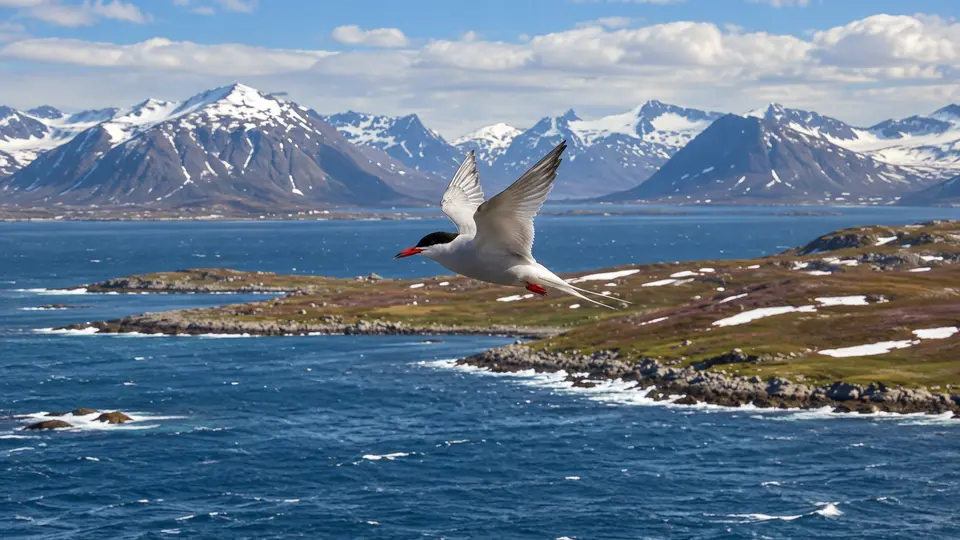
Destinations describe the species' habitat, not guaranteed cruise stops. Some animals require an optional inland excursion or are found in restricted reserves.

Fun facts about the Parakeet Auklet

  • Each breeding attempt normally involves a single egg.
  • Its genus name Aethia is associated with seabirds in ancient Greek.
  • The rounded bill gives the species its parakeet comparison.
  • Soft-bodied gelatinous prey can form a substantial part of its food.

Best time to see the Parakeet Auklet

Late spring through summer offers the best chance of observing birds near Alaskan breeding colonies. June and July are particularly useful for colony attendance, although weather and access remain limiting. Outside this period, offshore dispersal greatly reduces predictable shore-based opportunities. Prime viewing opportunities often coincide with calmer sea conditions, making observations from smaller Zodiac boats more feasible near colony fringes. Early morning and late evening can be particularly active times for birds arriving at or departing from colonies.

Parakeet Auklet: season matrix by destination

Travel and observation windows vary by region. Highlighted months are an orientation for planning, not confirmed sightings or a guarantee of access.

Alaska

A broad colony-attendance and regional access window; local schedules, weather and landing restrictions determine practical opportunities.

JanFebMarAprMayJunJulAugSepOctNovDec
Cruise ships in Alaska

Where the Parakeet Auklet lives

Remote North Pacific islands and rocky coasts provide breeding sites, especially talus slopes and crevice-rich cliffs. Feeding occurs in adjacent marine waters and farther offshore. Outside the breeding season, birds disperse at sea and become much less accessible to shore observers. Despite their preference for rocky coasts, they have also been documented nesting in unusual locations like abandoned burrows of other seabirds or even under driftwood. Breeding colonies are typically found on islands or mainland cliffs inaccessible to terrestrial predators.

What the Parakeet Auklet eats

Gelatinous zooplankton, including jellyfish and related organisms, can be important, alongside crustaceans and small fish. Diet varies with location and season. The unusually shaped bill is associated with handling soft-bodied prey rather than the seed-cracking function its parakeet-like appearance might suggest. Their specialized bill design allows them to efficiently capture and manipulate delicate, soft-bodied prey like pteropods and ctenophores. This unique feeding strategy sets them apart from many other planktivorous auklets that primarily target crustaceans.

Species at a glance

Common name
Parakeet Auklet
Scientific name
Aethia psittacula
Animal group
Birds
Size
23-25 cm long
Weight
250-350 g
Lifespan
Not reliably established
Status
Least Concern
Identification
Its deep reddish bill, white belly and single narrow white eye plume distinguish it from the darker crested and least auklets. The deep, almost parrot-like, reddish-orange bill is a striking feature, especially noticeable in good light. Juveniles have a smaller, duller bill and lack the distinct eye plume, making them more challenging to identify without comparison.

Parakeet Auklet: frequently asked questions

Where can I see the Parakeet Auklet?
Alaska. Use binoculars from authorized coastal viewpoints or passing vessel decks. Stay off unstable colony scree and never inspect occupied crevices. Keep distance from mixed seabird colonies, where disturbance can expose eggs or chicks to predators. When viewing from a vessel, scanning close to rocky shorelines and cliff bases can reveal birds resting on ledges or entering and exiting nest sites. Patience is key, as these birds can be elusive and blend well with their surroundings.
When is the best time to see the Parakeet Auklet?
Late spring through summer offers the best chance of observing birds near Alaskan breeding colonies. June and July are particularly useful for colony attendance, although weather and access remain limiting. Outside this period, offshore dispersal greatly reduces predictable shore-based opportunities. Prime viewing opportunities often coincide with calmer sea conditions, making observations from smaller Zodiac boats more feasible near colony fringes. Early morning and late evening can be particularly active times for birds arriving at or departing from colonies.
How big does the Parakeet Auklet get?
23-25 cm long. Adult weight: 250-350 g. Size varies with age, sex and population.
How should I behave around the Parakeet Auklet?
Use binoculars from authorized coastal viewpoints or passing vessel decks. Stay off unstable colony scree and never inspect occupied crevices. Keep distance from mixed seabird colonies, where disturbance can expose eggs or chicks to predators. When viewing from a vessel, scanning close to rocky shorelines and cliff bases can reveal birds resting on ledges or entering and exiting nest sites. Patience is key, as these birds can be elusive and blend well with their surroundings.
What does the Parakeet Auklet eat?
Gelatinous zooplankton, including jellyfish and related organisms, can be important, alongside crustaceans and small fish. Diet varies with location and season. The unusually shaped bill is associated with handling soft-bodied prey rather than the seed-cracking function its parakeet-like appearance might suggest. Their specialized bill design allows them to efficiently capture and manipulate delicate, soft-bodied prey like pteropods and ctenophores. This unique feeding strategy sets them apart from many other planktivorous auklets that primarily target crustaceans.
Are wildlife sightings guaranteed on an adventure cruise?
No. Animals move freely and routes, weather, access restrictions and local conditions influence every outing. Confirm the actual itinerary and shore program before booking.

Compare wildlife in the same destinations

Explore other birds recorded in these destinations. Similar surroundings do not mean the animals share the same habits or viewing season.

Species comparison by animal group and destination
Parakeet AukletParakeet AukletArctic TernArctic TernBald EagleBald Eagle
Animal groupBirdsAnimal groupBirdsAnimal groupBirds
DestinationsAlaskaDestinationsAlaska, Norway, ArcticDestinationsAlaska, Florida, New England
All wildlife destinations
Plan your trip

Find your next wildlife adventure

Compare destinations, shore programs and dates with the animals and habitats you would love to see.

  • Naturalist-led shore excursions
  • Responsible wildlife watching
  • Small expedition ships