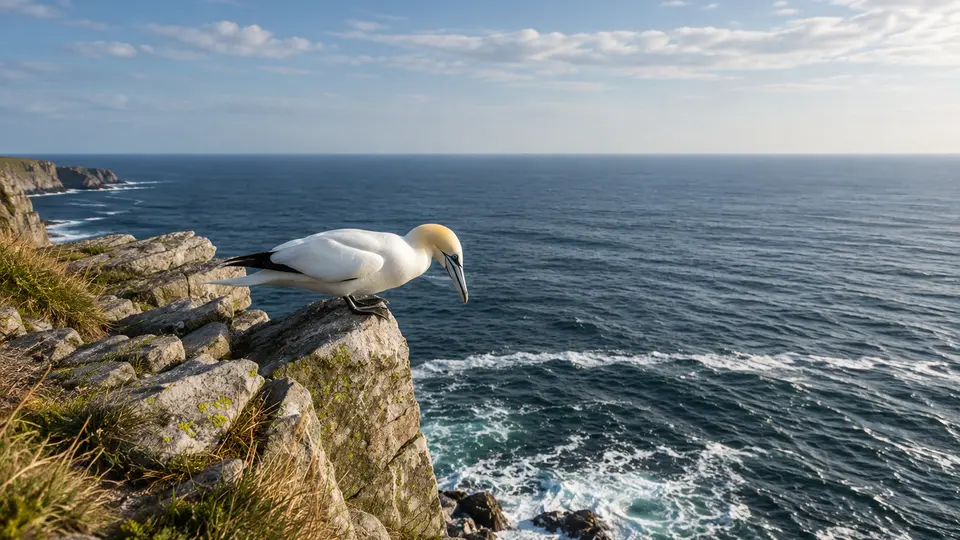
Northern Gannet in its natural habitatAI-modified

Northern GannetMorus bassanusWhere and when to see them

Northern Gannet at a glance

The northern gannet is a large North Atlantic seabird whose brilliant adult plumage contrasts sharply with its dark coastal colonies. It breeds on exposed islands and sea cliffs, gathering in dense groups that can contain thousands of pairs. Adults range widely over marine waters to find schooling fish. Although globally assessed as Least Concern, gannets face serious regional pressures, including fishing interactions, food shortages and outbreaks of highly pathogenic avian influenza.

Behaviour & reproduction

Size
87–100 cm (34–39 in) long; 165–180 cm (65–71 in) wingspan
Weight
2.3–3.6 kg (5.1–7.9 lb)
Lifespan
15–25 years
Status
Least Concern

Gannets alternate strong wingbeats with long glides, often travelling in loose lines above the waves. During feeding, birds fold their wings and plunge headfirst after fish. At colonies, paired adults greet one another with bill fencing and head movements, while neighbours defend tightly packed nest territories. Both parents incubate the single egg and provision the chick. Young birds disperse widely, and many do not return to breed until several years old. Courtship displays at the colony involve head bowing and mutual preening, reinforcing pair bonds. Nesting colonies are extremely dense, with pairs often nesting just outside pecking distance of their neighbors. Young gannets make their first flight at around 90 days old, after which they leave the colony and become fully independent. Their social nature extends to foraging, where groups often target the same fish shoals.

Top wildlife locations

New England wildlife habitatAI-modified

New England

Exposed headlands and ocean-facing beaches offer possible views of gannets passing offshore, especially during migration. They do not breed in New England, and birds may remain distant or absent from sheltered coastal waters.

Norway wildlife habitatAI-modified

Norway

Outer-coast headlands and permitted viewpoints near seabird islands can provide distant views. Many colonies occupy inaccessible or protected rocks, so shore visibility depends on local geography and birds travelling past the coast.

Portugal wildlife habitatAI-modified

Portugal

Atlantic-facing capes and exposed coastal promenades provide opportunities to scan for passing or feeding gannets. Portugal is principally a migration and wintering destination for this species, with no routine breeding-colony viewing.

Scotland wildlife habitatAI-modified

Scotland

Established cliff viewpoints, including mainland overlooks near major colonies, can offer gannet views without entering nesting areas. Offshore colonies may be inaccessible from land, and exposed coastal paths require care in strong winds.

Destinations describe the species' habitat, not guaranteed cruise stops. Some animals require an optional inland excursion or are found in restricted reserves.

Fun facts about the Northern Gannet

  • A gannet incubates its egg beneath its highly vascular feet rather than against a conventional brood patch.
  • Young birds begin mostly brown and acquire full adult plumage gradually over several years.
  • Air sacs beneath the skin help cushion the impact of high-speed entries into the sea.
  • Pairs usually raise just one chick in a breeding season.

Best time to see the Northern Gannet

Spring and summer offer the strongest opportunities around accessible breeding colonies in Scotland and Norway. Passage and winter are generally more relevant in Portugal and New England. Local weather, fish movements and colony access strongly influence whether birds are visible from shore. In New England, significant numbers can be observed during spring and fall migration, especially along the Outer Banks and offshore islands. Scotland's Bass Rock hosts the largest Northern gannet colony in the world, making it a prime summer viewing location. Off the coast of Portugal, gannets are often seen in winter foraging offshore in warmer Atlantic waters. Look for them feeding in fjords and along the coast of Norway during the breeding season.

Northern Gannet: season matrix by destination

Travel and observation windows vary by region. Highlighted months are an orientation for planning, not confirmed sightings or a guarantee of access.

New England

Spring and late autumn into early winter are useful coastal passage windows, not a local breeding season; abundance and viewing distance vary with weather.

JanFebMarAprMayJunJulAugSepOctNovDec
Cruise ships in New England

Norway

These months overlap breeding activity and longer daylight, but individual colonies may be inaccessible and local restrictions can change.

JanFebMarAprMayJunJulAugSepOctNovDec
Cruise ships in Norway

Portugal

Autumn through early spring is a credible coastal observation window; offshore movements depend on winds and prey, rather than breeding activity in Portugal.

JanFebMarAprMayJunJulAugSepOctNovDec
Cruise ships in Portugal

Scotland

Spring through early autumn overlaps colony attendance, although arrival, departure and access vary by site and seabird-health restrictions.

JanFebMarAprMayJunJulAugSepOctNovDec
Cruise ships in Scotland

Where the Northern Gannet lives

Breeding habitat consists chiefly of offshore rock stacks, islands and steep coastal cliffs with open access to the sea. Away from colonies, gannets use continental-shelf waters, tidal fronts and productive coastal seas, sometimes passing close enough to headlands for shore observation. The species requires clear flight paths to its nesting ledges, preferring sites free from ground predators. Outside the breeding season, many gannets undertake extensive migrations, often traveling thousands of kilometers to warmer waters. Juveniles typically spend their first years offshore in open ocean environments.

What the Northern Gannet eats

Northern gannets eat schooling marine fish, including herring, mackerel, sprats and sand eels. Prey choice changes with local availability and season. Birds also take fishery discards, which can bring them into dangerous contact with hooks, lines and nets around working vessels. Gannets locate prey visually from the air, often in cooperation with other seabirds or cetaceans, which can drive fish closer to the surface. Their diet is largely dictated by the availability of abundant shoals in their feeding grounds, reflecting seasonal shifts in prey distribution. Despite their broad diet, gannets show a preference for oily fish species, which provide high energy content.

Species at a glance

Common name
Northern Gannet
Scientific name
Morus bassanus
Animal group
Birds
Size
87–100 cm (34–39 in) long; 165–180 cm (65–71 in) wingspan
Weight
2.3–3.6 kg (5.1–7.9 lb)
Lifespan
15–25 years
Status
Least Concern
Identification
Adults combine white plumage, black outer wings, a buff-yellow head and a long pointed bill, unlike smaller boobies or the mostly dark immature gannets. Adult gannets have pale blue eyes ringed with black, and fine black lines extending from the gape. Immature birds transition through several mottled brown and white plumages over five years before achieving full adult coloration. The dark, pointed wingtips are a key field mark for adults in flight, distinguishing them from other large white seabirds.

Northern Gannet: frequently asked questions

Where can I see the Northern Gannet?
New England, Norway, Portugal, Scotland. Watch from established cliff paths, designated viewpoints or a vessel's deck using binoculars. Keep well back from unstable edges and nesting birds, and never touch sick or dead gannets because avian influenza can affect colonies. Offshore excursions or pelagic trips are often necessary to observe foraging gannets at sea, especially during non-breeding periods. From a vessel, their powerful flight and dramatic plunges are unmistakable indicators of their presence. When visiting colonies, maintain a respectful distance to minimize disturbance to nesting birds and follow all posted guidelines.
When is the best time to see the Northern Gannet?
Spring and summer offer the strongest opportunities around accessible breeding colonies in Scotland and Norway. Passage and winter are generally more relevant in Portugal and New England. Local weather, fish movements and colony access strongly influence whether birds are visible from shore. In New England, significant numbers can be observed during spring and fall migration, especially along the Outer Banks and offshore islands. Scotland's Bass Rock hosts the largest Northern gannet colony in the world, making it a prime summer viewing location. Off the coast of Portugal, gannets are often seen in winter foraging offshore in warmer Atlantic waters. Look for them feeding in fjords and along the coast of Norway during the breeding season.
How big does the Northern Gannet get?
87–100 cm (34–39 in) long; 165–180 cm (65–71 in) wingspan. Adult weight: 2.3–3.6 kg (5.1–7.9 lb). Size varies with age, sex and population.
How should I behave around the Northern Gannet?
Watch from established cliff paths, designated viewpoints or a vessel's deck using binoculars. Keep well back from unstable edges and nesting birds, and never touch sick or dead gannets because avian influenza can affect colonies. Offshore excursions or pelagic trips are often necessary to observe foraging gannets at sea, especially during non-breeding periods. From a vessel, their powerful flight and dramatic plunges are unmistakable indicators of their presence. When visiting colonies, maintain a respectful distance to minimize disturbance to nesting birds and follow all posted guidelines.
What does the Northern Gannet eat?
Northern gannets eat schooling marine fish, including herring, mackerel, sprats and sand eels. Prey choice changes with local availability and season. Birds also take fishery discards, which can bring them into dangerous contact with hooks, lines and nets around working vessels. Gannets locate prey visually from the air, often in cooperation with other seabirds or cetaceans, which can drive fish closer to the surface. Their diet is largely dictated by the availability of abundant shoals in their feeding grounds, reflecting seasonal shifts in prey distribution. Despite their broad diet, gannets show a preference for oily fish species, which provide high energy content.
Are wildlife sightings guaranteed on an adventure cruise?
No. Animals move freely and routes, weather, access restrictions and local conditions influence every outing. Confirm the actual itinerary and shore program before booking.

Compare wildlife in the same destinations

Explore other birds recorded in these destinations. Similar surroundings do not mean the animals share the same habits or viewing season.

Species comparison by animal group and destination
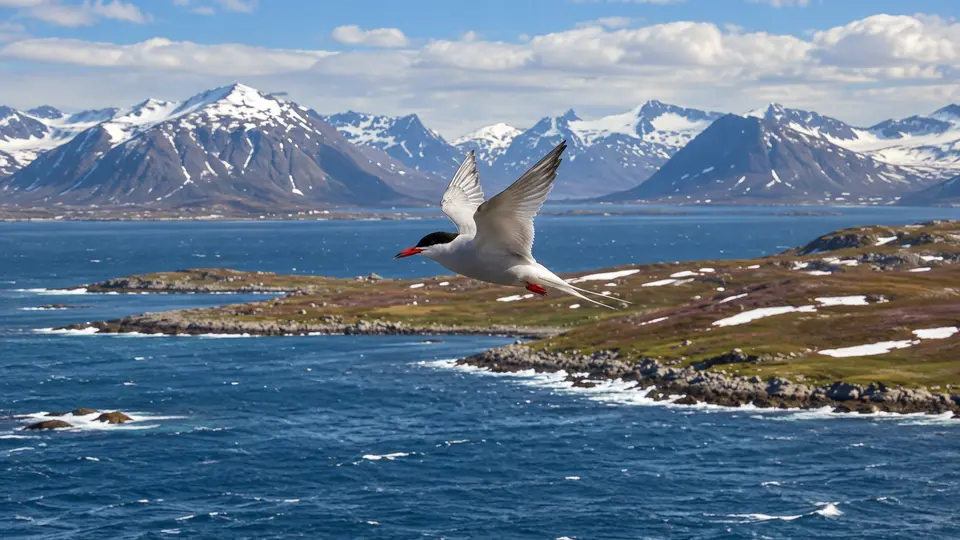
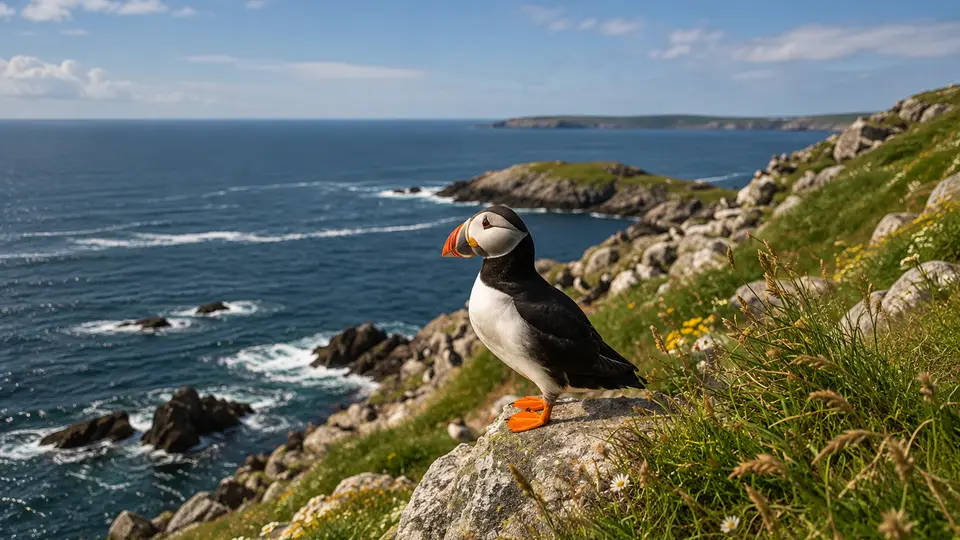
Northern GannetAI-modifiedNorthern GannetArctic TernAI-modifiedArctic TernAtlantic PuffinAI-modifiedAtlantic Puffin
Animal groupBirdsAnimal groupBirdsAnimal groupBirds
DestinationsNew England, Norway, Portugal, ScotlandDestinationsAlaska, Norway, ArcticDestinationsNew England, Norway, Scotland, Arctic
Scientific nameMorus bassanusScientific nameScientific name
All wildlife destinations
AI-modified
Plan your trip

Find your next wildlife adventure

Compare destinations, shore programs and dates with the animals and habitats you would love to see.

  • Naturalist-led shore excursions
  • Responsible wildlife watching
  • Small expedition ships